
Direct From Vineyard Portuguese Wine Shipping: 2026 Guide
Table of Contents
- Step 1: Choose Your Portuguese Wine Supplier
- Step 2: Importing Wine From Portugal to UK Post-Brexit
- Step 3: Calculate Import Duties and Excise Duty
- Step 4: Packaging and Breakage Protection for Transit
- Step 5: Temperature-Controlled Transport and Delivery
- Best Portuguese Wine Importers UK
- Frequently Asked Questions
Last Updated: October 1, 2026
Step 1: Choose Your Portuguese Wine Supplier
Finding the right supplier is the single most important decision in the direct from vineyard portuguese wine shipping process. Get it wrong and you inherit customs headaches, inconsistent stock, and wines that never quite sell through. Get it right and you build a list your competitors cannot copy.
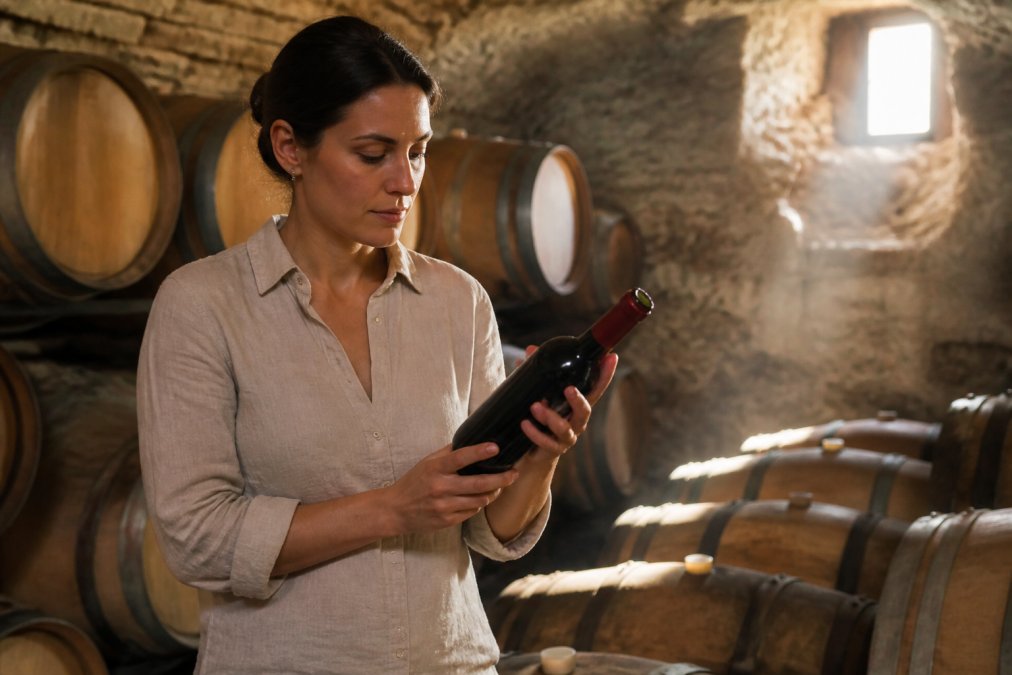
A common mistake is chasing the lowest wholesale price.
When vetting a supplier, ask four questions:
- Can they provide export documentation and a certificate of origin?
- Do they hold stock in a bonded warehouse, or ship only to order?
- What are their minimum order quantities per SKU?
- Will they hold allocation for you across a vintage?
Step 2: Importing Wine From Portugal to UK Post-Brexit
Importing wine from Portugal to UK post-Brexit means every shipment now needs a full customs declaration, a commodity code, and an EORI number. The trade agreement removed tariffs on most EU wine, but it did not remove the paperwork.
Three documents travel with every shipment:
- A commercial invoice showing value, volume, and alcohol strength
- A certificate of origin confirming Portuguese production
- A VI-1 certificate, where the receiving country requires it
Step 3: Calculate Import Duties and Excise Duty
Import duties on Portuguese wine are zero under the UK-EU trade agreement, provided the origin rules are met. The real cost is UK excise duty, which is charged per litre of pure alcohol, not per bottle. That distinction matters more than most buyers realise: a 15% ABV red carries noticeably more duty than a 12% white, even though the bottles look identical on the shelf.
The duty calculation, step by step
HMRC sets alcohol duty in bands by strength and by still, sparkling, or fortified style. To estimate the duty on a consignment, you need four figures:
- Bottles, the number of 75cl units in the shipment.
- ABV, the alcohol by volume on the label, expressed as a decimal (12% = 0.12).
- Litres of pure alcohol (LPA), bottles × 0.75 × ABV. A 12-bottle case of 13% ABV red is 12 × 0.75 × 0.13 = 1.17 LPA.
- Duty rate, the current £ per litre of pure alcohol for that band, published on the HMRC alcohol duty guidance.
Small producer relief
Since August 2023, the UK has operated a Small Producer Relief for alcohol producers below a certain annual production threshold. Eligible producers pay a reduced rate on their first tranche of production. For an importer, this matters because a small Portuguese estate may qualify for relief in its home market but the relief does not automatically transfer to the UK duty point, you still pay the full UK rate on import unless the correct documentation is in place.
Import VAT and the stacking effect
You also pay import VAT on the total landed value, which includes the wine, freight, insurance, and duty. That stacking effect is where margins disappear if you have not planned for it. Worked example on a 12-bottle case of 13% ABV red with a £60 ex-works price, £8 freight, and £2 insurance:
- Wine + freight + insurance = £70
- Duty at the current £ per litre of pure alcohol rate × 1.17 LPA
- Landed value before VAT = £70.35
- Import VAT at 20% = £14.07
- Total landed cost = £84.42, or roughly £7.04 per bottle
| Cost Component | How It Is Calculated | Who Pays |
|---|---|---|
| Import duty | Usually zero for Portuguese origin wine | Importer |
| Excise duty | LPA × current £/LPA rate for the band | Importer |
| Import VAT | 20% on wine + freight + insurance + duty | Importer |
| Customs clearance fee | Fixed per consignment | Freight agent |
| Deferment account fee | Monthly or per-use charge if you defer duty | Importer |
Cash-flow mechanics most guides skip
Duty and VAT are due at the point of import unless you hold a duty deferment account with HMRC, which lets you pay monthly rather than per consignment. For an independent bringing in several shipments a month, deferment smooths cash flow considerably. You will need a guarantee or a cash deposit to open one, and the application goes through the Customs Declaration Service.
Step 4: Packaging and Breakage Protection for Transit
Breakage is the quiet killer of wine margins. A single cracked bottle can soak a carton and damage the labels on everything around it, turning a profitable pallet into write-off stock.
Herdade da Calada 2022 Vale da Calada →
- Use moulded inserts, never loose bottles
- Double-wall cartons only, single-wall crushes under load
- Tape the base seam, not just the top
- Photograph the pallet before it is sealed
Step 5: Temperature-Controlled Transport and Delivery
Heat is the enemy of wine in transit. A container that sits on a tarmac in August can hit temperatures that push a delicate white past its best before it ever reaches your shelf. What most guides miss is the vineyard-to-doorstep journey itself, the sequence of hands a bottle passes through between the quinta and your loading bay, and where temperature control actually has to be applied.
The vineyard-to-doorstep journey, stage by stage
- At the estate, wine is bottled, labelled, and palletised in the Douro, Vinho Verde, Alentejo, or Madeira. Ambient conditions here are usually benign; the risk starts when the pallet leaves the cellar.
- Estate to consolidator, a haulier collects the pallet and moves it to a freight consolidator, often in Porto or Lisbon. This leg is the most exposed because it is short, local, and rarely temperature-controlled.
- Consolidator to port, the pallet is grouped with others into a container or trailer. Groupage is cheaper but slower, and the container may sit in a yard before loading.
- Cross-Channel transit, the load moves by road and ferry or via a short sea crossing. Transit time is typically two to five days door-to-door for groupage, faster for dedicated trailers.
- UK port and customs, the consignment clears customs, then moves to a bonded warehouse or directly to you. This is where a delay of a day or two can expose the load to a hot yard.
- Final delivery, the pallet arrives at your premises. The last mile is where a pallet left on a sunlit loading bay undoes the whole effort.
Understanding this chain is what makes the 'direct from vineyard' claim meaningful: you are not buying from a UK wholesaler's ambient rack, you are buying a bottle that has travelled a specific route, and every stage is a point where quality can be lost or preserved.
Temperature thresholds that matter
Most practitioners aim to keep wine between roughly 12°C and 18°C in transit. Above about 25°C, chemical reactions accelerate and delicate whites and rosés lose freshness; above 30°C for extended periods, corks can push and wines can cook. Below about 5°C, there is a risk of tartrate precipitation and, in extreme cold, of the wine freezing and expanding.
Different styles have different tolerances:
- Vinho Verde and young whites, most sensitive to heat; a few days above 25°C can flatten the aromatics.
- Douro reds and Alentejo reds, more robust, but still suffer from prolonged heat.
- Madeira, uniquely heat-tolerant because it is deliberately heated during production, but still benefits from stable conditions.
- Fortified wines, generally the most resilient, though extended heat can still affect the spirit balance.
Cold-chain options and their trade-offs
For full pallets, temperature-controlled transport keeps the load between roughly 12°C and 18°C. This is the gold standard but adds cost and reduces the number of hauliers who can quote. For smaller consignments, groupage services and insulated liners offer reasonable protection at lower cost. Insulated liners, foil-backed bubble or foam panels inside a standard trailer, do not actively cool, but they slow temperature swings, which is often enough for a two-to-five-day crossing.
Best Portuguese Wine Importers UK
The best Portuguese wine importers UK buyers rely on combine producer relationships with customs expertise, so you get authentic provenance without the paperwork.
Frequently Asked Questions
How to buy Portuguese wine online for delivery in the UK?
Buying Portuguese wine online for UK delivery involves choosing a reputable importer or vineyard that ships to the UK, checking they handle customs clearance and excise duty, and confirming delivery zones and timescales. Look for sites with transparent pricing that includes UK duty and VAT, and clear tracking. For example, 79North lists wines like Herdade da Calada 2022 Vale da Calada Branco at £16.00 per bottle (case of 6), with wholesale options.
What are the customs regulations for importing wine from Portugal to the UK?
Since Brexit, importing wine from Portugal to the UK requires customs declarations, payment of UK excise duty and import VAT, and compliance with UK food safety and labelling rules. You'll need an EORI number, and the wine must be accompanied by commercial invoices and packing lists. Alcohol duty is based on ABV and volume.
Is it cheaper to buy Portuguese wine direct from the vineyard or via a UK importer?
Direct-from-vineyard can be cheaper per bottle if you order in bulk and handle logistics yourself, but after adding shipping, customs clearance, excise duty, and VAT, the total often equals or exceeds UK importer prices. Importers like 79North offer wholesale rates and consolidated shipping, which can reduce per-bottle costs for small orders. For example, Herdade da Calada 2021 Vale da Calada Tinto is £17.00 per bottle (case of 6) through 79North.
What should I look for when selecting a Portuguese wine importer?
Look for an importer with transparent pricing (including duty and VAT), a clear breakage policy, and temperature-controlled transport. Check their experience with Portuguese customs and UK regulations, and ask for references from similar businesses. A good importer will offer a curated collection, provide producer-direct sourcing, and handle all customs clearance. For instance, 79North specialises in family-owned Portuguese wineries and offers wholesale terms to independent retailers and restaurants.