Order Small Batch Italian Wine Online: A Complete Guide
Table of Contents
- Why Order Small Batch Italian Wine Online
- Understanding Small Batch vs. Mass Market Italian Wine
- Boutique Italian Wine Online: Finding Artisan Producers
- Direct Import Italian Wine: Understanding DTC Legalities and Benefits
- Organic Small Batch Italian Wine: Native Grapes and Sustainable Viticulture
- Italian Wine Regions Small Producers: Shop by Terroir
- Shipping Logistics for Small Batch Orders: Temperature Control and Delivery
- How to Order Small Batch Italian Wine Online Safely
Order Small Batch Italian Wine Online: A Complete Guide
Last Updated: July 21, 2026
When you order small batch Italian wine online, you're accessing something the mass-market wine industry has systematically hidden: the real story behind what you're drinking. At 79North Ltd, we've spent years connecting independent retailers and restaurants with family-owned producers who care about terroir, not volume. Direct sourcing from curated small-batch producers offers authenticity, traceability, and wines that tell you something true about where they come from.
Why Order Small Batch Italian Wine Online
Traditional distribution channels exclude the most interesting producers. When a winery produces 500 cases per year instead of 50,000, major distributors won't touch them. Direct-to-consumer channels let boutique wineries reach customers without middleman markup, giving you access to wines that would never appear in your local shop.
Small-batch wines also spend less time in storage and transit when ordered directly. Temperature-controlled shipping from specialist importers means your bottles arrive in better condition than wines sitting in warehouse inventory for months. Ordering from a knowledgeable importer provides education about vineyard history, vintage characteristics, and food pairings.
Understanding Small Batch vs. Mass Market Italian Wine
What Defines Small Batch Production
Small batch Italian wine production typically means fewer than 1,000 cases per vintage. A small-batch producer usually works with a specific vineyard or tight cluster of vineyards, often family-owned for generations, controlling every step of production. This hands-on approach creates consistency in philosophy but natural variation from vintage to vintage, precisely what wine enthusiasts seek.
Mass-market Italian wine sources grapes from multiple regions, standardizes flavor profiles through blending, and prioritizes consistency above all else. These wines are technically competent but engineered rather than crafted.
Quality and Terroir Advantages
When you order small batch Italian wine online, you're paying for terroir expression, the way a specific piece of land, its climate, soil composition, and microbial environment shape the final wine. Small producers believe terroir matters enough to let it show, meaning their wines often taste more distinctive than mass-market alternatives.
Because small producers make less wine, they can afford to be selective about which grapes make it into the bottle, age wines longer, and experiment with fermentation techniques.
Boutique Italian Wine Online: Finding Artisan Producers
How to Identify Authentic Artisan Winemakers
Authentic artisan producers have a story going back generations. Look for family names on the label and information about how long the family has owned the vineyard. Legitimate artisan winemakers publish detailed production information: harvest dates, fermentation duration, oak type, alcohol content, and production volume.
Check for DOCG (Denominazione di Origine Controllata e Garantita) and DOC (Denominazione di Origine Controllata) certifications. DOCG wines have been through official tasting panels and meet strict production standards. Both are meaningful filters for quality.
Examine the importer's relationship to the producer. Specialist importers often feature producer interviews, vineyard photos, and direct communication channels. If you can see the importer has spent time at the vineyard and knows the winemaker personally, that's a strong signal.
Red vs. White Small Batch Selections
Italian small-batch reds tend to be more age-worthy and distinctive than whites. Sangiovese from Tuscany, Nebbiolo from Piedmont, and Aglianico from Campania are classics with centuries of history. These wines often need time to open up, a Barolo might taste austere and tannic at release, then evolve over five to ten years into something complex.
Small-batch Italian whites are less common but increasingly interesting. Native varieties like Greco di Tufo, Fiano, and Vermentino from southern Italy offer freshness and minerality that mass-market producers cannot match. Specialist importers can guide you toward the right timing for drinking.
Direct Import Italian Wine: Understanding DTC Legalities and Benefits
Why Direct Import Matters for Quality
Direct import cuts out the wholesale distributor layer. Fewer hands touch the bottle, fewer temperature transitions occur, and the wine reaches you faster. Direct relationships with producers mean the importer can influence production decisions, request specific bottling dates, and advocate for certain aging periods.
UK Legal Requirements for Wine Imports
When Italian wine crosses into the UK, it's subject to excise duty (currently around £2.84 per bottle) plus standard VAT at 20%. Legitimate importers are transparent about these costs.
For business purchases, restaurants and retailers need an alcohol wholesaler's license and must work through licensed importers. Specialist importers handle licensing, paperwork, duty calculations, and compliance.
Organic Small Batch Italian Wine: Native Grapes and Sustainable Viticulture
Native Grape Varieties Worth Exploring
When you order small batch Italian wine online, you'll encounter native grape varieties that mass producers have abandoned. Sangiovese is the backbone of Chianti and Brunello, but equally interesting are Barbera, Dolcetto, and Grignolino from Piedmont; Aglianico and Greco from southern Italy; and Verdicchio and Passerina from central Italy.
These grapes have been worked with for centuries. They're not obscure, they're simply not in every supermarket because they require more knowledge to sell. Online ordering removes that barrier.
Organic and biodynamic production is increasingly common among small-batch producers, aligning with their philosophy of working with the land rather than against it.
DOCG and DOC Certifications Explained
DOCG (highest tier) wines have been through official tasting panels, and the production area is tightly defined. Barolo, Brunello di Montalcino, and Chianti Classico are DOCG wines.
DOC (second tier) wines have defined production areas and specified grapes, but no official tasting requirement. Many excellent small-batch wines are DOC rather than DOCG, not because they're lower quality but because the producer hasn't pursued additional certification.
IGT (third tier) wines come from a defined region but have more flexibility in grape varieties and production methods. Some of the most innovative small-batch wines are IGT because the producer wanted freedom to experiment.
Italian Wine Regions Small Producers: Shop by Terroir
Tuscany, Piedmont, and Beyond: Regional Selection Guide
Tuscany produces famous wines, but the region's size means enormous variation. When ordering small batch Italian wine from Tuscany, you navigate between famous areas (Chianti Classico, Brunello di Montalcino) and smaller valleys where interesting producers work.
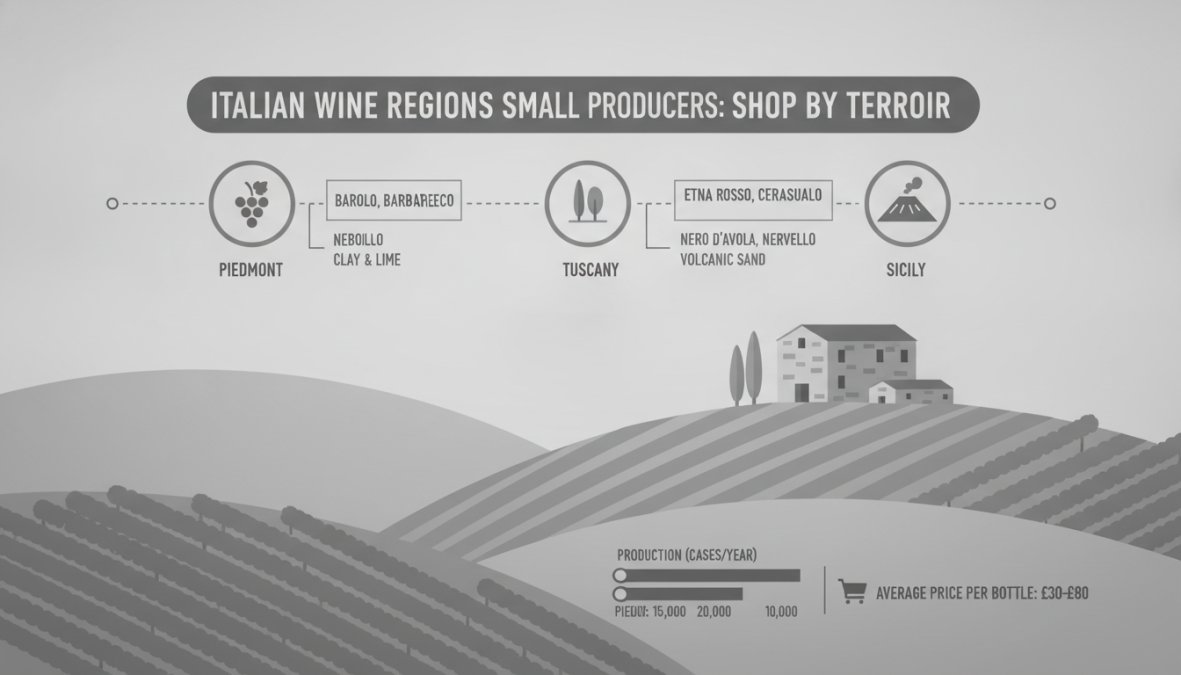
Piedmont, in the north, is where you find Barolo and Barbaresco. Small producers here experiment with lighter extraction and shorter aging periods, making wines more approachable young while maintaining regional structure. Campania, in the south, offers underrated small-batch wines at prices significantly lower than equivalent Tuscan or Piedmontese wines. Sicily and Sardinia increasingly matter for small producers with native varieties and genuinely different terroirs.
Estate-Bottled Wines and Vintage Selection
Estate-bottled means the producer owns the vineyard and bottled the wine themselves. One person is responsible for quality from vine to bottle.
Vintage matters more for small-batch wines than mass-market ones. Small producers don't have resources to blend across multiple vintages for consistency. Each vintage tastes different based on weather that year. Specialist importers publish vintage notes explaining how each year's weather affected grapes and resulting wine. Ask the importer which vintages are drinking well now if ordering for immediate consumption.
Shipping Logistics for Small Batch Orders: Temperature Control and Delivery
How Temperature-Controlled Shipping Protects Your Wine
Wine should be stored between 45-65°F (7-18°C) at consistent temperature. Temperature-controlled shipping is essential. Legitimate wine importers use insulated boxes with gel packs or phase-change materials maintaining stable temperature during transit.
Temperature swings cause cork expansion and contraction, potentially allowing air into the bottle. Specialist importers invest in proper shipping infrastructure because their reputation depends on wine arriving in good condition.
Understanding Minimum Order Requirements
Many small-batch importers have minimum order requirements, typically one case (12 bottles) to mixed cases, reflecting the economics of direct import. Some importers now allow mixed orders where you select individual bottles from different producers, as long as you meet minimum case quantity.
For restaurants and retailers, minimum orders are negotiable. Specialist importers understand that small restaurants can't commit to full cases of every wine.
How to Order Small Batch Italian Wine Online Safely
Evaluating Importer Reputation and Track Record
First, confirm the importer holds an alcohol wholesaler's license. Second, verify they have relationships with producers they sell. Legitimate importers tell stories about winemakers and explain why they chose these specific wines. Third, check their track record with similar customers and ask for references. Fourth, understand how they handle problems. Finally, check online reviews and industry reputation.
Reading Tasting Notes and Selecting by Preference
Good tasting notes are specific and honest. "Bright red fruit with fine tannins and good acidity" tells you something useful. Good tasting notes include food pairing suggestions and drinking window recommendations.
Pay attention to alcohol content, which changes how wine tastes and pairs with food. When selecting by preference, think about what you actually drink. If you prefer fresh, bright wines with good acidity, focus on cooler regions or cooler vintages.
Common Mistakes to Avoid When Ordering Online
The biggest mistake is ordering without understanding the wine's age. Buying a 2019 Barolo thinking you can drink it immediately, then finding it closed and tannic, is frustrating and expensive. Always check tasting notes and ask about drinking windows.
The second mistake is ignoring storage conditions after arrival. The third is ordering based purely on price. The fourth is not asking questions. The fifth is ordering too much too fast. Start small, learn what you like, and build relationships with producers and importers over time.
| Mistake | What Happens | How to Avoid |
|---|---|---|
| Ordering age-inappropriate wines | Wine is undrinkable or needs years of aging | Check tasting notes and ask importer about drinking window |
| Poor storage after arrival | Wine deteriorates from temperature swings | Store at 45-65°F in dark, quiet location |
| Chasing bargains | Cheap wine often has quality issues | Focus on value, not lowest price |
| Not communicating with importer | Ordering wrong wines repeatedly | Ask questions before purchasing |
| Ordering too much too fast | Overwhelmed by inventory and options | Start with small orders and build over time |
When you order small batch Italian wine online, you're making a deliberate choice to engage with wine differently than the mass market encourages. You're prioritizing authenticity over consistency, terroir over brand, and the story behind the bottle over label prestige. At 79North Ltd, we've built our entire business around this principle, connecting independent retailers and restaurants with family-owned producers who make wines that matter. If you're ready to move beyond generic wine sourcing, let's talk about how we can help you discover the small-batch Italian wines your customers actually want to drink.
Frequently Asked Questions
What is considered small batch Italian wine?
Small batch Italian wine refers to limited-production wines from artisan winemakers and boutique producers, typically from family-owned estates producing fewer bottles per vintage than mass-market operations. These wines emphasize terroir, native grape varieties, and sustainable viticulture practices. Small batch producers often focus on quality over volume, resulting in distinctive character that reflects their specific region and winemaking philosophy. Many carry DOCG or DOC certifications, indicating protected origin and production standards.
How do I know if an online wine seller is reputable when ordering small batch Italian wine?
Verify reputation by checking whether the importer has direct relationships with family-owned producers and can provide detailed provenance information. Look for importers specialising in artisan winemakers from specific Italian regions, as this signals expertise. Reputable sellers offer transparent tasting notes, explain their selection criteria, provide temperature-controlled shipping details, and have documented track records with independent retailers and restaurants. Request references from existing customers and verify they handle UK import legalities correctly.
What are the benefits of buying direct import Italian wine online?
Direct import Italian wine eliminates middlemen, ensuring fresher bottles and more competitive pricing while supporting small producers directly. You gain access to rare, limited-production wines unavailable through standard distributors, with curated selections reflecting artisan winemakers' unique terroirs and native grape varieties. Direct importers provide expert guidance on small lot selections, handle complex UK customs and paperwork, offer temperature-controlled shipping logistics, and often provide better availability and flexibility on minimum orders than traditional wholesale channels.
Are small batch Italian wines more expensive than mass-market alternatives?
Small batch Italian wines typically command premium pricing compared to mass-market equivalents, but pricing depends on production scale, region, vintage, and rarity. The cost reflects limited production runs, sustainable viticulture practices, and superior quality control. However, direct import sourcing can offer better value than purchasing through multiple middlemen. Pricing varies significantly, boutique producers from emerging regions may be more affordable than established DOCG estates. Request quotes from importers to understand pricing structures for your specific needs and volume requirements.
This article was written using GrandRanker