
Small Batch Italian White Wine Producers: 2026 Guide
Table of Contents
- Why Small Batch Italian White Wine Is Worth Seeking Out
- Native Italian White Grape Varieties Behind the Best Bottles
- How to Identify Quality Italian White Wine Before You Buy
- Family-Owned Italian Wineries: What Sets Them Apart
- Small-Batch vs Mass-Market Production: The Real Differences
- How Climate Change Is Reshaping High-Altitude White Wine
- Sourcing Small Batch Italian White Wine for Your Business
- Frequently Asked Questions
Last Updated: September 24, 2026
Why Small Batch Italian White Wine Is Worth Seeking Out
Small batch Italian white wine is wine made by producers who bottle limited quantities from estate-grown or carefully sourced fruit, often from native grape varieties that rarely appear in supermarket ranges. The category rewards buyers who want something a large distributor cannot replicate: a wine with a place, a family name and a vintage story behind it.
That distinctiveness matters more than ever. Independent wine shops and restaurant lists live or die on differentiation, and the mainstream trade has noticed. According to WineGB's market reporting on independent retail, smaller merchants continue to grow their share of premium wine sales while volume-led channels stagnate. This guide from 79North Ltd explains what separates these bottles from mass-market alternatives, which native grapes to look for, and how to source them reliably.
Below, we break down the varietals, the production differences and the practical logistics of buying small-lot wine for your business.
Native Italian White Grape Varieties Behind the Best Bottles
The most rewarding small-lot white wines come from native grapes rather than international plantings. Varieties such as Verdicchio, Fiano, Greco, Falanghina, Vermentino, Garganega and Ribolla Gialla each carry a regional identity that Chardonnay simply cannot match. What follows is what each grape actually tastes like, where it grows, and how it behaves in the cellar, the detail a buyer needs before committing to a listing.
Verdicchio, Marche, principally the Castelli di Jesi and Matelica zones. Matelica sits inland and higher, which gives tighter acidity and a longer finish; Castelli di Jesi is broader and more approachable in youth. Expect green apple, lemon peel and the characteristic bitter-almond close. Verdicchio Riserva must be aged a minimum period before release, so it is one of the few Italian whites that genuinely rewards cellaring.
Fiano, Campania, with the best-known expressions from Avellino and the hills around Lapio. Aromatic rather than overtly fruity: white flowers, hazelnut, a waxy texture and a saline streak. It takes lees contact and neutral oak well, which is why small producers often bottle a richer, age-worthy version alongside a leaner unoaked one.
Greco, also Campania, most famously Greco di Tufo, where volcanic and tuffaceous soils show through as smoke, stone fruit and firm minerality. It is the most structured of the Campanian whites and can carry several years in bottle.
Falanghina, Campania again, split between the Benevento and Campi Flegrei areas. Crisp, floral and lower in alcohol, with white peach and a faint herbal note. Its freshness makes it a natural by-the-glass pour, but it is best drunk young.
Vermentino, grown along the Tyrrhenian coast, in Sardinia, Liguria and coastal Tuscany. Coastal sites give salinity and grapefruit; inland sites give more weight and herbaceousness. Vermentino di Gallura carries the highest appellation status for the grape and tends to show the most concentration.
Garganega, the backbone of Soave in Veneto, and of Gambellara. Recioto and Soave Classico styles show how much texture and almond-tinged depth the grape can build with old vines and hillside sites. It is also the grape behind many of the best-value small-lot whites in the north-east.
Ribolla Gialla, Friuli, particularly the Collio and the Oslavia area near the Slovenian border. Skin-contact and long-maceration styles have made it a calling card for low-intervention producers, giving amber colour, dried orange peel, tannin and a savoury finish. It is the clearest example of why native grapes and small-batch methods reinforce each other.
A common mistake is treating these as interchangeable "Italian whites". They are not. Each responds differently to soil, altitude and fermentation choices, which is precisely why small producers who work with indigenous grapes can charge a fair premium.
How to Identify Quality Italian White Wine Before You Buy
Quality in Italian white wine is easier to verify than most buyers assume. Start with the label, then work backwards through the producer's methods.
Check these markers in order:
- Appellation status. DOCG and DOC designations indicate regulated origin and method. A DOCG on a white wine signals stricter production rules than a generic table wine.
- Estate-bottled wording. "Imbottigliato all'origine" means the producer bottled at source, not at a cooperative or négociant.
- Vintage presence. A named vintage shows the producer stands behind a single year's fruit.
- Alcohol and acidity balance. Crisp, unoaked styles usually sit lower in alcohol with higher natural acidity.
- Producer transparency. Wineries that publish farming methods, harvest dates and yields are easier to trust.
Sulfite-free and organic claims deserve scrutiny too. A low-intervention wine can be excellent, but it can also be unstable in transit. For a restaurant list, stability matters as much as purity.
Family-Owned Italian Wineries: What Sets Them Apart
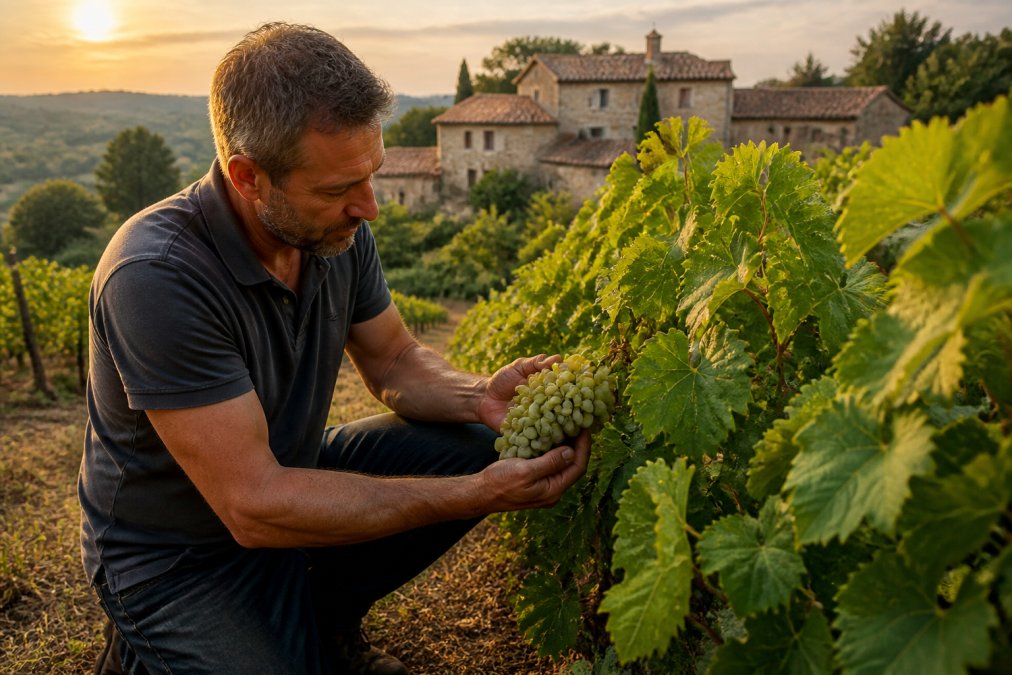
Family-owned Italian wineries tend to farm smaller plots, harvest by hand and make decisions for quality rather than volume. That structure produces wines with genuine vintage variation, which is exactly what a distinctive list needs.
Small-Batch vs Mass-Market Production: The Real Differences
Small-batch and mass-market production differ in almost every measurable way: yield per hectare, harvest method, fermentation vessel, ageing and volume. Understanding those differences helps you justify the price gap on your shelf.
| Factor | Small-Batch Producer | Mass-Market Producer |
|---|---|---|
| Harvest | Hand-picked, selective | Mechanical, whole-block |
| Yield per hectare | Deliberately low | Maximised for volume |
| Fermentation | Small tanks, native yeast | Large stainless, selected yeast |
| Ageing | Neutral oak, lees contact | Minimal, temperature-controlled |
| Production volume | Limited release, often numbered | Thousands of cases |
| Vintage variation | Expressed and celebrated | Blended away |
How Climate Change Is Reshaping High-Altitude White Wine
Rising temperatures are pushing white wine production uphill across Italy. Growers in the Alps, the Apennines and the higher slopes of Veneto and Trentino are planting at altitudes that were once considered marginal for viticulture.
Sourcing Small Batch Italian White Wine for Your Business
Sourcing small batch Italian white wine for a shop or restaurant comes down to three things: reliable logistics, honest margins and a supplier who represents the producer properly. Direct importing sounds appealing until customs paperwork, minimum orders and broken supply chains get involved.
The seasonal release calendar is the part most buyers miss
Small-batch whites do not arrive on a convenient schedule. A family estate typically bottles once a year, and the wine is released in a narrow window after a period in tank or barrel. Miss that window and you wait twelve months for the next vintage, or you do not get an allocation at all, because the producer has already placed the wine with buyers who ordered early.
What to ask before you commit
- Allocation size. How many cases are you actually being offered, and is that figure guaranteed for the next vintage?
- Release timing. When does the wine land, and does that fit your list changeover?
- Technical sheet. Harvest date, fermentation vessel, lees contact and residual sugar, small producers will share these readily.
- Shipping conditions. White wine is more fragile in transit than red; confirm temperature-controlled movement, particularly for long sea freight.
- Duty and documentation. Confirm who is the importer of record and who carries the excise duty and customs entries.
- Reorder terms in writing. Include what happens if the wine sells out, and whether a substitute from the same producer can be offered.
Building the range without creating gaps
Start with two or three producers per region rather than many, and always carry at least two producers per style. A single poor harvest can wipe out a wine for a full year, leaving a hole on your menu that regulars notice. Pairing a small-lot wine with a slightly larger-production wine from the same region gives you a fallback that still fits the list's character.
Frequently Asked Questions
What defines a small-batch Italian white wine producer?
A small-batch producer typically makes wine in limited quantities from estate-grown or hand-harvested grapes, often using traditional vinification methods rather than industrial-scale fermentation. Production volumes are low enough that the winemaker can control quality at every stage, from vineyard to bottle. These producers usually focus on native grape varieties and specific terroirs rather than blending across regions. The result is wine with more character and a clearer sense of place than mass-market alternatives.
Which Italian regions are best for artisanal white wines?
Italy's most interesting artisanal white wines come from regions with strong indigenous grape traditions. Friuli-Venezia Giulia produces aromatic whites from varieties like Friulano and Ribolla Gialla. Campania offers Falanghina and Greco di Tufo from volcanic soils. Alto Adige delivers crisp, mineral-driven wines from high-altitude vineyards. Sicily's Etna region produces whites with distinctive minerality from volcanic terroir. Each area brings different expressions based on micro-climate, altitude, and soil composition.
How do native grape varieties influence the quality of small batch Italian whites?
Native grape varieties evolved over centuries to suit specific local conditions, which means they express terroir more clearly than international plantings. A Verdicchio from the Marche or a Vermentino from Sardinia carries flavours and textures you simply cannot replicate elsewhere. Small-batch producers who work with these indigenous grapes tend to farm them with greater care because the varieties are central to their identity. This often results in wines with more complexity, better acidity, and a longer finish.
Why choose family-owned Italian wineries over mass-market brands?
Family-owned wineries typically farm their own land, harvest by hand, and make decisions based on quality rather than volume targets. They often follow sustainable or organic practices because the land passes to the next generation. For UK importers and independent retailers, these producers offer wines that stand out on a shelf dominated by large brands. You also get direct relationships, better allocation of limited releases, and a story behind every bottle that resonates with customers who value authenticity.