
The Future of Exotic Fruit Sourcing in the UK
Last Updated: November 5, 2026
Quick Summary
The future of exotic fruit sourcing in the UK depends on rising demand, changing trade rules and climate risk to supply. Buyers are moving toward origin diversification, stronger traceability and planning for border friction rather than relying on a single supplier or origin.
- Demand for exotic fruit now extends beyond specialist grocers into mainstream supermarkets and foodservice.
- Relying on a single origin for a given fruit is a common vulnerability when seasons or routes are disrupted.
- Map each fruit line against viable origins and the months each is in season to find where risk concentrates.
- Confirm current import requirements with HM Revenue and Customs before committing to a new origin or route.
- Ask suppliers for independent audit results and check that certification schemes cover the sites actually supplying you.
Table of Contents
- Why UK Demand for Exotic Fruit Is Still Growing
- Where UK Exotic Fruit Comes From Today
- UK Exotic Fruit Market Trends to Watch Through the Next Decade
- Climate Risk and Origin Diversification in Sourcing
- Post-Brexit Import Rules, Border Logistics and Costs
- Sustainable Exotic Fruit Sourcing and Supplier Verification
- Cutting Food Waste and Packaging Impact Across the Chain
- Planning Your Next Exotic Fruit Sourcing Decision in the UK
- Frequently Asked Questions
The future of exotic fruit sourcing in the UK is being shaped by rising demand, changing trade rules and a supply chain that is more exposed to climate risk than most buyers realise. The question is no longer whether UK buyers will keep importing exotic fruit, but how they will source it responsibly and consistently over the next decade.
Why UK Demand for Exotic Fruit Is Still Growing
Demand for exotic fruit in the UK has moved well beyond specialist ethnic grocers. Mainstream supermarkets, independent greengrocers and foodservice operators now stock a wider range of tropical produce than they did a decade ago. Shoppers are looking for variety, and fresh produce categories are where that search for novelty shows up most clearly.
Market size, growth and consumer trends
Market size figures for exotic fruit in the UK vary by source, and many published estimates are based on broad fresh-produce categories rather than a single definition of "exotic". Buyers should check how any growth figure was calculated before relying on it.
Avocados and tropical fruit: the main categories
Category matters for sourcing decisions. Avocados ripen after harvest and can be managed through ripening rooms, while passion fruit and lychees are far more sensitive to time and temperature. A buyer who treats all tropical fruit the same will usually pay for it in waste.
Where UK Exotic Fruit Comes From Today
Most UK exotic fruit is grown overseas and reaches the market by air or sea freight, often through a small number of large importers and consolidators. Sourcing is therefore a global network question, not a purely domestic one.
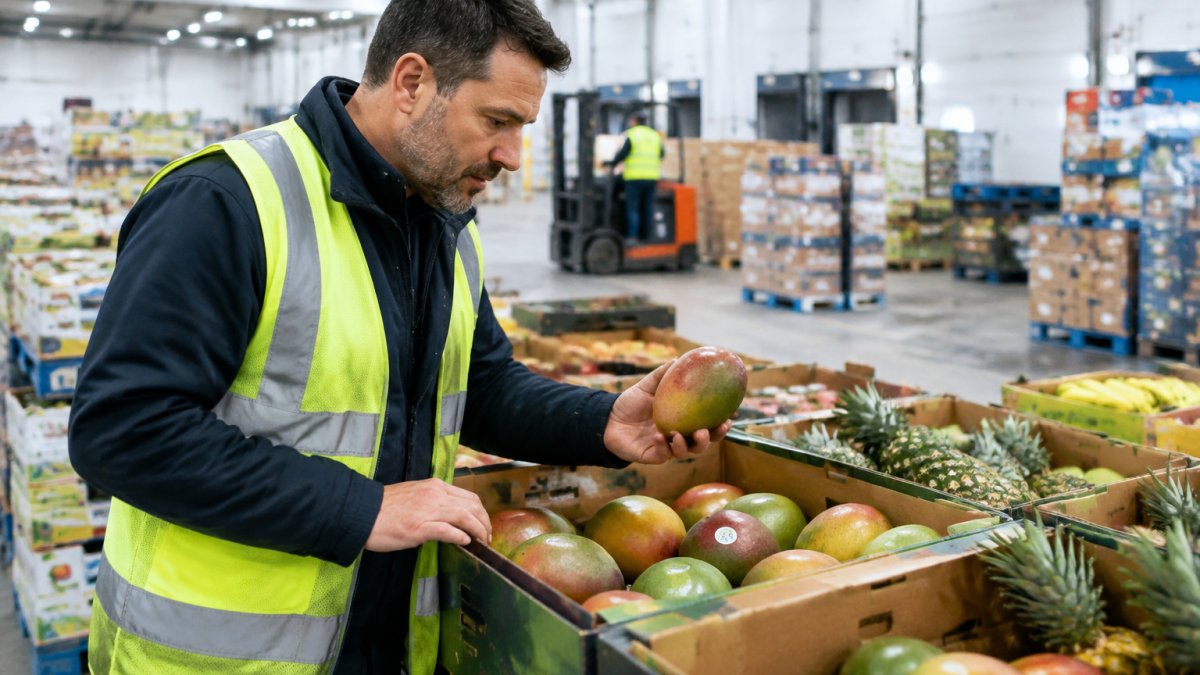
Import origins and global sourcing networks
Origins vary by fruit and by season. Latin America, Africa and parts of Asia supply much of the tropical fruit that reaches UK shelves, and the mix shifts as harvests move across regions. Relying on a single origin for a given fruit is a common vulnerability, because a poor season or a disrupted route can remove that supply almost overnight.
Global sourcing networks also determine how quickly a buyer can respond to change. Businesses with established relationships in several origins can switch volumes when one region underperforms. Those without that flexibility tend to find out about shortages only after shelves are already empty.
Growers, suppliers, wholesalers and retailers
The chain from grower to shop floor usually runs through several hands: the grower or cooperative, an export packhouse, an importer, a UK wholesaler or distributor, and finally the retailer or foodservice buyer. Each link adds time, cost and a point where quality can slip.
UK Exotic Fruit Market Trends to Watch Through the Next Decade
Technology will play a larger role too. Better data on crop volumes, shipment tracking and quality checks can help buyers plan purchases more accurately and reduce the number of last-minute scrambles for supply. Expect procurement teams to lean more on forecasting tools and to keep a closer eye on supplier performance over time.
Climate Risk and Origin Diversification in Sourcing
Climate risk is now a practical sourcing variable, not a distant environmental concern. Changes in rainfall, temperature and extreme weather can reduce yields, delay harvests and shift the timing of availability. For UK buyers, the effect is felt as supply gaps, price spikes and inconsistent quality rather than as a single dramatic event. A season that looks normal on paper can still produce a shortfall if conditions in a key growing region turn against it.
The sourcing response is origin diversification, but doing it well requires more than adding a second country to a supplier list. Each origin has its own seasonality, varietal mix, post-harvest handling and transit time. A mango from one region may arrive at a different ripeness stage than the same variety from another, which changes how it must be handled and sold. Diversification therefore adds complexity to quality control and demand planning, not just resilience. The same discipline applies when sourcing specialty ingredients such as chocolate, where origin, handling and timing must align with the needs of the business.
A useful way to think about diversification is to map each key fruit line against the origins that can supply it and the months in which each origin is in season. That map shows where a single origin is carrying too much of the annual volume and where a disruption would hurt most. For avocados, the supply base is broad enough that most buyers can spread risk across several origins. For more specialised lines such as lychees or dragon fruit, the number of viable origins is smaller, so the resilience options are narrower and the planning horizon needs to be longer.
Watch out: diversification can quietly undermine traceability if new suppliers are added without the same documentation and audit checks as existing ones. The point of spreading risk is to protect supply, not to create a chain that cannot be verified when a customer asks where the fruit came from.
A practical forecast for the next decade is that buyers will increasingly treat origin diversification as a core part of category planning rather than a contingency. That means reviewing the origin map at least annually, testing alternative suppliers before they are needed, and building contractual flexibility so volumes can shift when a region underperforms. The businesses that handle climate risk best are likely to be those that plan for disruption in advance rather than reacting to it after shelves are empty.
Post-Brexit Import Rules, Border Logistics and Costs
The practical starting point is to confirm current requirements with HM Revenue and Customs and the relevant plant health authority before committing to a new origin, supplier or route.
A practical way to build border resilience is to map each key fruit line against its current route and identify where a single delay would cause the most damage. Then test whether an alternative port, consolidator or freight mode could absorb a shock. The aim is not to eliminate border friction, which is not possible, but to make it visible and priced into the sourcing decision from the outset.
The article's main points on border logistics can be scanned at a glance in this table.
| Factor | What to check | Why it matters |
|---|---|---|
| Import rules | Current requirements with HM Revenue and Customs | Confirm before committing to an origin or route |
| Plant health | Relevant plant health authority | Requirements apply to each new origin or supplier |
| Route | Each key fruit line's current route | Shows where one delay causes most damage |
| Alternatives | Other port, consolidator or freight mode | Tests whether a shock can be absorbed |
| Border friction | Priced into the decision from the start | Cannot be eliminated, only made visible |
Sustainable Exotic Fruit Sourcing and Supplier Verification
Sustainability claims are now a standard part of supplier conversations, but the quality of evidence behind them varies widely. Buyers need to separate verifiable practices from marketing language.
Traceability, labour standards and supplier checks
Traceability means being able to follow a consignment back to the farm or packhouse that produced it. Strong traceability systems record lot numbers, harvest dates and packing details, which makes it possible to investigate problems and to answer customer questions with confidence.
Labour standards are harder to verify and deserve the same scrutiny. Buyers can ask suppliers for independent audit results, check whether certification schemes are current and look for evidence that the scheme covers the sites actually supplying them. A certificate on file is a starting point, not proof of conditions on the ground. Where verification is limited, say so plainly rather than implying a level of assurance the evidence does not support.
Cutting Food Waste and Packaging Impact Across the Chain
Packaging is a trade-off. Protective packaging can reduce bruising and extend shelf life, which cuts waste, but it adds material to dispose of. Buyers should weigh the reduction in food waste against the packaging footprint rather than assuming one always outweighs the other. Asking suppliers for data on both, rather than relying on general claims, gives a clearer picture of the real impact.
Planning Your Next Exotic Fruit Sourcing Decision in the UK
Good sourcing decisions start with an honest view of your own risks. Identify the fruit lines where a supply gap would hurt most, check how many origins and suppliers currently cover them, and review whether your documentation would stand up to a traceability question.
Then work through the practical steps: build relationships with at least two credible suppliers for your most important lines, ask for clear traceability and audit information, confirm current border requirements before you commit, and set simple waste and quality targets you can track. Sourcing exotic fruit well in the coming years will depend less on finding a cheap supplier and more on building a supply chain you can understand, check and adjust when conditions change.
Frequently Asked Questions
Where does the UK source most of its exotic fruit?
Most UK exotic fruit is imported rather than grown domestically. Supply comes through established global sourcing networks, with avocados, mangoes, pineapples and other tropical produce arriving via importers and wholesalers that consolidate volumes from growing regions abroad. Origin mixes shift with season, crop yields and freight costs, so buyers usually work with several source countries rather than relying on one. Checking current origin data with your supplier before placing a larger order helps avoid surprises in availability and quality.
How is climate change affecting exotic fruit supply?
Climate change affects exotic fruit through irregular rainfall, heat stress, drought and extreme weather in growing regions, which can reduce yields and shift harvest timing. For UK buyers this means more variation in volume and price from season to season. Diversifying across more than one origin and agreeing flexible supply terms with suppliers are practical ways to reduce the impact of a poor season in any single region.
How can businesses verify the origin of imported fruit?
Businesses can request documentation that links each consignment to a specific grower or packhouse, including lot numbers, harvest dates and phytosanitary paperwork. Asking suppliers for traceability records and checking they can be produced quickly during a food safety query is a useful test. Regular supplier audits and spot checks on delivered batches help confirm that the information matches what arrives at the warehouse.
What challenges affect the import of fresh exotic fruit?
Fresh exotic fruit faces tight timescales because it is perishable, so delays at ports, inspection holds and cold chain breaks can quickly reduce quality. Post-Brexit requirements add customs declarations and documentation that importers must complete correctly. Working with experienced importers and planning shipments around known port and inspection timings reduces the risk of costly losses.
