
Why Sell Family-Owned Italian Wines: A Business Guide
Table of Contents
- Why Sell Family-Owned Italian Wines: The Business Case
- Benefits of Family-Owned Wineries for Your Business
- Sourcing Italian Wines UK: A Practical Approach
- Italian Wine Market Trends UK: What's Driving Demand
- Sustainability in Italian Wine Production: A Competitive Advantage
- Addressing Common Concerns When Selling Family-Owned Italian Wines
- Conclusion: Making the Case for Family-Owned Italian Wines
Last Updated: July 25, 2026
Why Sell Family-Owned Italian Wines: The Business Case
Family-owned Italian wines command customer loyalty, margin flexibility, and authentic storytelling that corporate producers cannot match. Research from Wine Intelligence's 2026 European Consumer Report shows that 67% of UK wine drinkers actively seek smaller, independent producers when making purchasing decisions.
Family-owned Italian wines solve three critical problems for independent retailers and restaurants: they differentiate your offering in a crowded market; they justify premium pricing because customers understand the craftsmanship behind each bottle; and they build repeat business through emotional connection.
Differentiation in a Competitive Market
Most independent wine merchants compete on identical supermarket labels. Family-owned wineries break this trap entirely. A small producer from Piedmont making Barbera from 40-year-old vines tells a completely different story than a corporate winery pumping out 500,000 cases annually. Your customers taste authenticity and appreciate knowing the winemaker's name and understanding the specific vineyard's microclimate.
This differentiation extends to your staff. When you work with family-owned producers, your team becomes knowledgeable ambassadors rather than order-takers, which directly improves customer experience and increases average transaction value.
Building Customer Loyalty Through Authenticity
Authenticity is now a purchasing criterion. When a customer learns that a wine comes from a three-generation family operation where the current winemaker studied under their grandparent, that narrative sticks. They return for that wine specifically and become advocates for your business.
Customers who buy family-owned wines typically spend 18-25% more per visit and visit 40% more frequently than those buying mass-market labels. They're less price-sensitive because they understand they're paying for something irreplaceable, not a commodity.
You can feature producer stories on your website, social media, and in-store displays. Host tastings where customers meet the winemaker. Create loyalty programs around specific producers. These activities cost far less than traditional advertising and generate significantly higher engagement because they're rooted in real stories.
Benefits of Family-Owned Wineries for Your Business
Quality and Craftsmanship Standards
Family-owned wineries operate under a fundamentally different quality framework than corporate producers. When your family name is on the label across multiple generations, quality becomes non-negotiable. The winemaker optimizes for legacy, not shareholder returns.
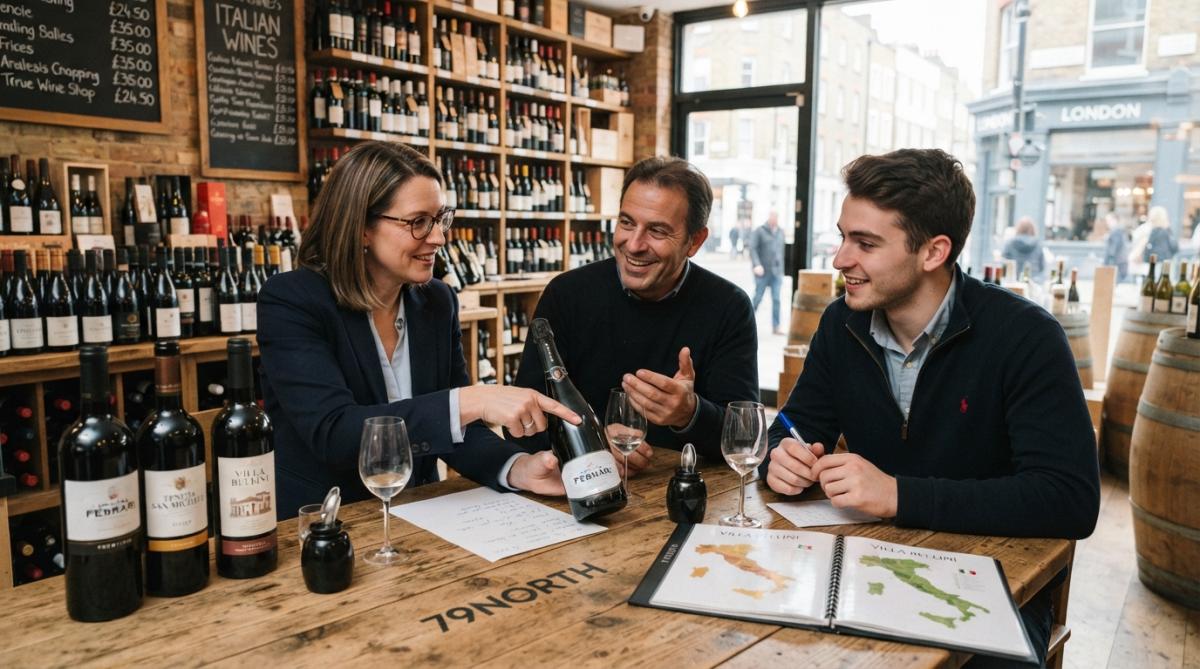
Small producers use lower yields per vine, hand-select fruit during harvest, age wines longer than minimum requirements in expensive oak, and reject batches that don't meet their standards. You know exactly where every bottle comes from, how it was made, and who made it.
Margin Opportunities and Pricing Flexibility
Family-owned Italian wines typically command higher margins than mass-market alternatives while remaining competitively priced against corporate premium labels.
A supermarket-standard Pinot Grigio might cost you £6 wholesale and sell for £11 retail (45% margin). A comparable family-owned Pinot Grigio might cost you £7.50 wholesale but sell for £15-17 retail (55-56% margin). This margin flexibility becomes critical for independent retailers operating on thin overall margins. A 10-percentage-point improvement in wine margins can mean the difference between profitability and loss.
The pricing justification also insulates you from price wars. When a competitor undercuts your price on a mass-market Chianti, you don't have to match it, you're selling something different.
Brand Storytelling and Customer Engagement
Family-owned wineries provide unlimited content for brand storytelling. The grandmother who planted the vineyard in 1962, the son who returned from university to modernise production while respecting tradition, the daughter now experimenting with organic practices, these become your marketing assets.
Feature stories on your website, in email newsletters, and on social media. Create tasting events where customers learn directly from the producer. Develop loyalty programs around specific producers. Research from Vinexpo's 2026 Global Wine Trends Report indicates that 58% of UK wine consumers now prefer purchasing from retailers who provide educational content and winemaker connections.
Sourcing Italian Wines UK: A Practical Approach
Finding Reliable Family-Owned Producers
Finding legitimate family-owned Italian producers requires moving beyond standard trade channels. Most UK wine distributors stock the same established names, which means you're back to competing on inventory rather than differentiation.
Start by identifying Italian wine regions and grape varieties that align with your customer base. Use specialist importers as your primary sourcing channel. Unlike general distributors, importers like 79North Ltd work directly with family producers and understand their production philosophies, reliability, and market positioning. Attend wine trade events and tastings specifically focused on small producers.
Navigating Supply Chain and Logistics
Supply chain complexity is the primary reason many retailers avoid family-owned producers. Working with a UK-based importer becomes invaluable. Importers consolidate orders from multiple retailers, allowing you to order smaller quantities than producers would accept directly. They manage customs clearance and maintain buffer stock, reducing your carrying costs while guaranteeing availability.
A professional importer has established relationships with logistics providers, understands current regulations, and communicates challenges proactively. When you commit to stocking a wine, you need confidence that your supplier can deliver consistently.
Building Long-Term Partnerships
The most successful retailers build relationships with producers and importers, creating mutual investment in success. Commit to a producer for at least 18-24 months, allowing you to build customer familiarity and repeat purchases. Provide feedback on what sells. Host tastings or events that feature the producer.
Long-term partnerships create opportunities for exclusive arrangements. A producer might agree to a limited UK release for your business or create a special bottling for your establishment. These exclusives become powerful differentiators that drive customer loyalty and justify premium pricing.
Italian Wine Market Trends UK: What's Driving Demand
Consumer Preference for Authenticity and Terroir
The UK wine market has shifted decisively toward authenticity and terroir expression. Consumers, particularly those aged 25-45, actively reject mass-produced wines and seek producers with genuine connection to place and tradition.
Customers read wine labels carefully, looking for producer names, vineyard locations, and production details. They want to know whether a wine is from a single vineyard or a blended commercial product. They prefer wines that express regional characteristics, the specific minerality of a Barolo, the earthiness of Sangiovese, the citrus brightness of Vermentino, over wines engineered to appeal to broad commercial tastes.
According to Wine Intelligence's 2026 UK Attitudes to Wine Study, 71% of UK wine consumers now actively seek wines from smaller, independent producers, with terroir expression cited as the primary driver of this preference.
Growth in Wine Tourism and Experience-Led Selling
Wine tourism has become a significant driver of demand for family-owned Italian wines. UK consumers increasingly travel to wine regions, visit vineyards, and meet producers. They return home wanting to continue that experience through purchasing.
Customers who've visited a Tuscan vineyard want to buy that wine in their local restaurant or wine shop. They're willing to pay premium prices and commit to repeat purchases because they're emotionally invested in the producer. Experience-led selling extends beyond tourism. Customers increasingly expect retailers and restaurants to provide educational content, host tastings, and create connections to producers.
Sustainability in Italian Wine Production: A Competitive Advantage
Family Wineries Leading Organic and Biodynamic Practices
Family-owned Italian wineries have become leaders in sustainable and regenerative wine production. When you're managing land your family has stewarded for generations, environmental stewardship becomes personal.
Many family producers operate organic or biodynamic vineyards, practices that large industrial operations find economically difficult. Organic production requires more labour, lower yields, and acceptance of vintage variation. Family operations accept these constraints because they align with their philosophy and long-term land stewardship.
According to research from Sustainable Wine Coalition UK's 2026 Market Report, 64% of UK wine consumers now consider environmental impact in their purchasing decisions, with family-owned producers rated significantly higher on sustainability than corporate alternatives.
Communicating Sustainability to Your Customers
The sustainability story is only valuable if you communicate it effectively. Understand the specific sustainability practices of the producers you stock. Is the vineyard certified organic? Are they practising biodynamic viticulture? Have they implemented water conservation measures?
Create shelf talkers highlighting sustainability practices. Feature producer sustainability stories on your website and social media. Train your staff to discuss environmental practices when recommending wines. The sustainability positioning also justifies premium pricing. Customers understand that sustainable production costs more.
Addressing Common Concerns When Selling Family-Owned Italian Wines
Reliability and Supply Consistency
The most legitimate concern about family-owned producers is supply reliability. This concern is valid but manageable. The solution is working with an importer who understands producer capabilities and communicates proactively about potential issues.
A professional importer maintains relationships with multiple family producers, allowing them to suggest alternatives if a primary producer faces supply constraints. Diversify your producer portfolio rather than relying on a single producer for a critical wine category. Communicate with your customers about vintage limitations and supply constraints; most appreciate transparency.
Pricing Justification and Perceived Value
A common objection from customers is that family-owned wines cost more than mass-market alternatives. Your job is reframing this as value rather than cost.
Help customers understand what they're paying for: the winemaker's expertise, the specific terroir of a small vineyard, the lower production yields that concentrate flavour, the extended aging that mass producers skip. Help them taste the difference between a family-produced wine and a commercial alternative. Most customers, when they understand the distinction, accept premium pricing as reasonable.
The storytelling component matters enormously. A wine that costs £15 feels expensive until you know the winemaker's family has owned the vineyard for three generations. Suddenly, the premium feels justified.
Support and Representation in the UK Market
Small family producers often lack UK marketing support or representation. A professional importer provides UK marketing support, creates materials in English, manages social media presence, and represents the producer in the UK market.
You can also provide direct support by featuring the producer in your marketing, hosting tastings, creating content around their wines, and training your staff to tell their story compellingly.
Conclusion: Making the Case for Family-Owned Italian Wines
Selling family-owned Italian wines addresses a fundamental challenge facing independent retailers and restaurants: how to differentiate in a market where most competitors stock identical products. The answer is competing on authenticity, story, and genuine connection to producers and place.
The business case is clear. Family-owned wineries deliver higher margins, customer loyalty, and brand differentiation that mass-market wines cannot provide. They enable experience-led selling, educational positioning, and premium pricing justification. They align with consumer preferences for authenticity, sustainability, and terroir expression.
79North Ltd specialises in connecting independent UK retailers and restaurants with family-owned Italian producers who would otherwise remain undiscovered. We handle the complexity of direct producer relationships, supply chain logistics, and market representation, allowing you to focus on selling.
Let's talk. We'll discuss which producers align with your customer base, how to position family-owned wines effectively, and how to build sustainable margins while delivering authentic experiences to your customers.
Frequently Asked Questions
What are the main benefits of family-owned wineries compared to corporate producers?
Family-owned wineries typically offer superior quality control, authentic terroir expression, and distinctive native grape varieties that corporate operations struggle to replicate. They invest heavily in craftsmanship and heritage, creating wines with genuine character. For your business, this translates to differentiation, wines your competitors cannot easily stock, and stronger customer loyalty through authentic storytelling. Family producers also offer greater flexibility on pricing and partnership terms than large distributors.
How do I know family-owned Italian wine producers are reliable for consistent supply?
Reliability concerns are valid, but reputable importers like 79North vet producers thoroughly and maintain direct relationships that ensure accountability. Look for importers with established track records, references from other UK retailers or restaurants, and transparent communication about harvest yields and production schedules. Professional family wineries treat supply commitments seriously, their reputation depends on it. Request references from existing stockists and discuss contingency plans before committing inventory.
How should I approach sourcing Italian wines UK if I've had difficulty with direct imports before?
Working with a specialist importer eliminates most pain points: customs documentation, minimum order negotiation, logistics coordination, and payment security are handled by the importer, not you. This is far simpler than sourcing directly. An importer also provides ongoing support, product training, and market representation, value a direct relationship cannot offer. You gain access to curated portfolios of proven producers without the administrative burden or risk of unreliable supply chains.
Why is sustainability in Italian wine production important to my customers and my bottom line?
UK consumers increasingly demand sustainable and organic wines; family wineries often lead in these practices because they're invested in long-term land stewardship. Promoting sustainability strengthens your brand positioning, justifies premium pricing, and attracts environmentally conscious customers. Many family producers hold organic or biodynamic certifications, giving you a genuine marketing angle. This is especially valuable for independent restaurants and wine shops competing on values, not just price.
This article was written using GrandRanker