Best Food Pairings for Brunello di Montalcino Wines
Table of Contents
- Why Brunello di Montalcino Works with Rich, Savory Food
- Brunello di Montalcino and Steak: The Classic Match
- Game Meats and Braised Dishes: Wild Boar, Duck, and Guinea Fowl
- Pasta with Brunello di Montalcino: Ragù and Rich Sauces
- Cheese Pairing with Brunello di Montalcino: Aged Pecorino, Parmigiano-Reggiano, and Gorgonzola
- Brunello di Montalcino Serving Temperature and Practical Serving Guidance
- Pairings by Age and Style: Young Brunello vs. Aged Riserva
- Vegetarian and Plant-Forward Pairings for Brunello di Montalcino
- Frequently Asked Questions
Last Updated: October 21, 2026
Why Brunello di Montalcino Works with Rich, Savory Food
Brunello di Montalcino is a full-bodied Tuscan red made entirely from Sangiovese, and its firm tannins, bright acidity and savoury herbal notes make it a natural partner for rich, salty and slow-cooked food. The wine needs fat and salt to soften its grip.
The core principle is simple. Brunello di Montalcino is a structured wine: high in tannin, high in acidity, and built for the table rather than the armchair.
A common mistake is serving Brunello too warm and too young. Both make the tannins feel rougher than they are. We will come back to that.
Brunello di Montalcino and Steak: The Classic Match
Steak is the safest and most rewarding match for Brunello di Montalcino, and the reason is mechanical rather than mystical. The wine is high in tannin and high in acidity.
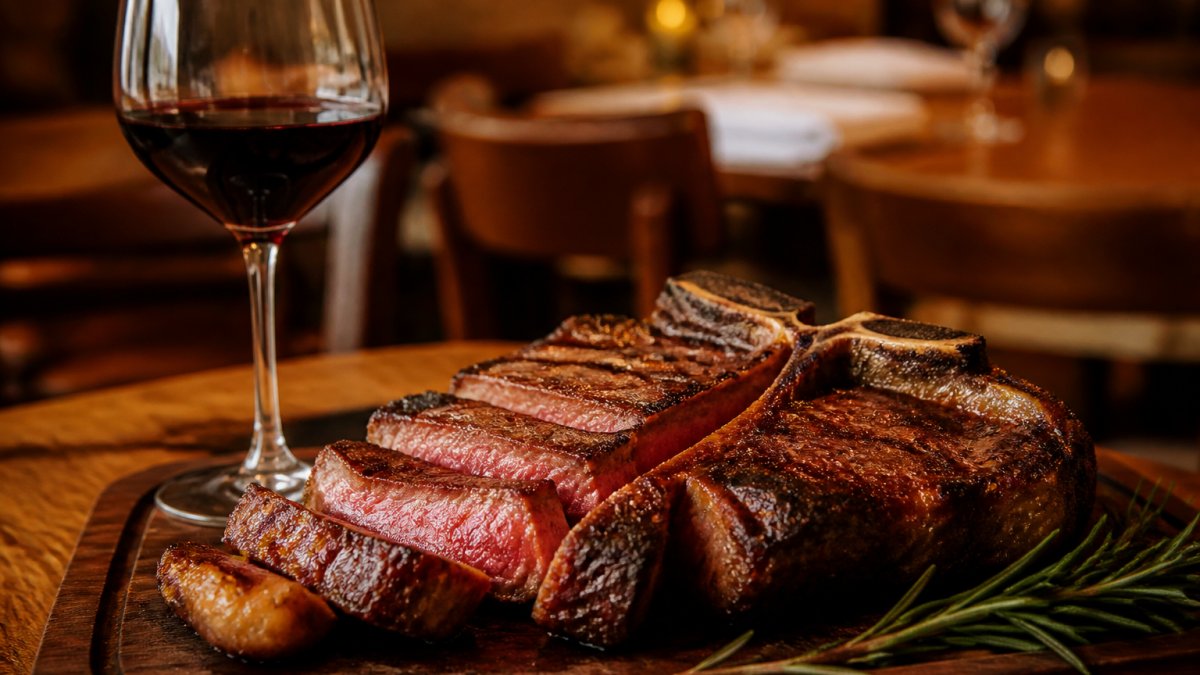
Bistecca alla Fiorentina, the thick Florentine T-bone, is the traditional pairing for a reason: it comes from the same region, it has the fat and scale to match the wine, and it is cooked over a hot, salty fire.
Cuts and Cooking Methods That Work Best
Not every steak is equal here. Match the cut to the wine's structure and to how you plan to cook it:
- Ribeye or entrecôte: generous fat content softens tannin beautifully. Best char-grilled or pan-seared to medium-rare. The fat renders and coats the palate, which is exactly what a young, firm Brunello needs.
- Sirloin: leaner, so serve it rare to medium-rare and keep the sauce simple. A sirloin cooked well-done loses the fat and moisture that tame the tannins, and the wine will taste harder for it.
- T-bone or porterhouse: the classic choice, best shared between two. The mix of fillet and strip gives you lean and fatty bites in the same meal, which keeps the pairing interesting across the glass.
- Rump: good value, but needs a salty crust and a little resting time. Rump is lean and tight-grained, so a hard sear and a generous hand with salt do more for the pairing than any sauce.
- Fillet: the most tender cut and the least fat. It works with an aged Brunello or Riserva, where the tannins have softened, but a young Brunello will overpower it. Wrap it in pancetta or serve it with a bone-marrow or mushroom sauce to add the fat and savoury depth the wine needs.
Cooking method matters as much as the cut. Char-grill or pan-sear over high heat. A hard, salty crust does more for the pairing than any sauce because it adds salt and texture without sweetness. Roasting is gentler and suits thicker cuts, but it builds less crust, so season ahead and finish under a hot grill if you can.
Doneness is a practical lever. Rare to medium-rare keeps more moisture and fat in the meat, which softens the tannins. Well-done meat is drier and leaner, so the wine feels firmer and more astringent. If a guest insists on well-done, steer them towards an aged Riserva rather than a young Brunello.
A Simple Framework for Adjusting the Pairing
If the steak you have does not quite fit the bottle, adjust rather than abandon the match. Three levers do most of the work:
- Add fat: a knob of butter, a drizzle of olive oil, pancetta or bone marrow all soften tannin.
- Add salt: a hard, salty crust or a grating of aged cheese lifts the savoury character of the wine.
- Add savoury depth: mushrooms, anchovy, thyme or a reduced meat stock give the wine something to grip.
Avoid the opposite: sweet sauces, fruit chutneys, heavy chilli heat and light acidic sides. Those either fight the wine's acidity or amplify its tannins. A plain green salad alongside a young Brunello is the classic example of a side that makes the wine feel harsh.
A common mistake is serving Brunello too warm and too young. Both make the tannins feel rougher than they are. We will come back to that.
Game Meats and Braised Dishes: Wild Boar, Duck, and Guinea Fowl
Game and braised meats are where Brunello di Montalcino feels most at home. These dishes carry the earthy, herbal, savoury flavours that echo Sangiovese's own character, and their slow cooking creates the richness the wine's tannins need. Wild boar, duck and guinea fowl all work, provided the cooking method builds depth.
Wild boar ragù or stew, cooked slowly with herbs and a little tomato, is a near-perfect match. The wine's acidity cuts the fat, and its herbal notes meet the gamey flavour head-on.
Braised beef, oxtail and short rib all follow the same logic. Slow cooking converts collagen into gelatin, which gives the sauce body and softens the tannins in turn.
Pasta with Brunello di Montalcino: Ragù and Rich Sauces
Pasta with a rich meat sauce is one of the most practical ways to serve Brunello di Montalcino by the glass in a restaurant. The wine's acidity cuts through the fat in a ragù, and the pasta's starch softens the tannins, so the pairing works even with a younger bottle.
The best options:
- Wild boar ragù: the benchmark pairing, deeply savoury and herbal
- Beef or veal ragù: slow-cooked, with a little tomato and soffritto
- Pappardelle with mushroom sauce: an earthy vegetarian option (see the vegetarian section below)
- Lasagne al forno: the baked cheese and meat layers handle the tannin well
Avoid light seafood pasta, cream-only sauces and anything with chilli heat. Those either fight the wine's acidity or amplify its tannins.
A common mistake is serving Brunello with a tomato-heavy sauce that has not been cooked down. Raw, sharp tomato makes the wine taste leaner than it is. Reduce the sauce properly and the pairing settles.
Casa Américo 2023 Sonante DOP Dão Tinto →
Cheese Pairing with Brunello di Montalcino: Aged Pecorino, Parmigiano-Reggiano, and Gorgonzola
Aged hard cheeses are the reliable cheese pairing with Brunello di Montalcino. Their salt crystals and concentrated savoury flavour soften the wine's tannins, while the wine's acidity cuts through the cheese's fat. Pecorino Toscano, Parmigiano-Reggiano and aged Gorgonzola all work, provided the cheeses are properly matured.
Here is how the main options compare:
| Cheese | Style | Why It Works | Watch Out For |
|---|---|---|---|
| Aged Pecorino | Hard, salty, sheep's milk | Salt and fat soften tannin | Young pecorino is too mild |
| Parmigiano-Reggiano | Hard, nutty, crystalline | Texture and savoury depth | Avoid grated, pre-cut pieces |
| Aged Gorgonzola | Blue, creamy, sharp | Salt and pungency match the wine's power | Too much overwhelms the fruit |
| Salumi and prosciutto | Cured, salty | Fat and salt are ideal | Keep portions small |
Cured meats follow the same rule. Prosciutto, coppa, bresaola and pancetta all bring the fat and salt that Brunello needs. Serve them as a starter with a glass, not as a main event.
Brunello di Montalcino Serving Temperature and Practical Serving Guidance
Serve Brunello di Montalcino at 16-18°C, slightly below typical room temperature. Serving it too warm makes the alcohol dominate and the tannins feel harsh. A light chill, around 30 minutes in the fridge before opening, brings the wine into balance. This is the single most useful piece of serving guidance we can give.
Practical steps for service:
- Open ahead: decant young Brunello for one to two hours before serving
- Older bottles: decant gently and serve soon after, as extended air can flatten an aged wine
- Glassware: use a large-bowled red wine glass to concentrate the aromas
- Pour size: a 125ml pour is standard; the wine is powerful enough to justify it
- Food first: serve with the meal, not before it
The wine's structure means it rewards a proper glass and a little patience. Rushing it, or serving it straight from a warm shelf, undersells what is in the bottle.
Pairings by Age and Style: Young Brunello vs. Aged Riserva
Age changes the pairing more than most guides admit. A young Brunello di Montalcino has firmer tannins and brighter fruit, so it suits fattier, richer dishes that soften its grip: steak, ragù, hard cheese. An aged Brunello or Riserva has softer tannins and developed savoury, earthy notes, so it works with more delicate braises, roast veal, guinea fowl and mature cheese.
Use this as a working rule:
- Young (under 8 years): ribeye, wild boar ragù, aged Pecorino, braised short rib
- Maturing (8-15 years): roast veal, guinea fowl, mushroom pasta, Parmigiano-Reggiano
- Aged Riserva (15+ years): roast pork, veal, truffle dishes, aged Gorgonzola
The logic is that older wine has less tannin to soften, so it needs less fat and more flavour complexity. Serving a delicate aged Riserva with a heavily sauced steak wastes both. Match the weight of the dish to the weight of the wine.
Vegetarian and Plant-Forward Pairings for Brunello di Montalcino
Vegetarian pairings for Brunello di Montalcino work when the dish brings fat, salt, umami or earthy depth to stand up to the wine's tannins. Plain vegetables and light salads do not.
Options that hold up:
- Mushroom dishes: porcini, chestnut and truffle risotto or pasta bring earthy umami
- Roasted aubergine with tomato and herbs: the fat and char mimic meat's richness
- Aged cheese and bean bakes: fat and salt soften the tannins
- Lentil or chickpea stews with herbs: hearty and savoury, though keep them well seasoned
- Roasted root vegetables with olive oil and rosemary: the char and fat do the work
What to avoid: raw salads, steamed greens, citrus-dressed dishes and anything very spicy. These make the wine's tannins feel bitter.
A useful adjustment rule: if a vegetarian dish tastes a little flat against the wine, add salt, olive oil or a hard cheese. Those three elements do more to fix a pairing than any other change.
Building a wine list that can carry a Brunello pairing across steak, game, pasta and vegetarian dishes is a real challenge for an independent restaurant or wine shop.
Frequently Asked Questions
What foods pair well with Brunello di Montalcino?
Brunello di Montalcino pairs best with rich, savory dishes that match its tannins and acidity. Classic choices include steak, roast veal, pork, wild boar, duck, guinea fowl, braised meats, and ragù. Aged cheeses like Pecorino, Parmigiano-Reggiano, and Gorgonzola also work well. For pasta, choose meat-based sauces such as wild boar ragù. Vegetarian options include mushroom sauces and roasted vegetables. The wine's structure complements fat and salt, so avoid delicate dishes that would be overwhelmed.
Does Brunello pair well with steak?
Yes, steak is one of the best matches for Brunello di Montalcino. The wine's tannins and acidity cut through the fat of a well-marbled steak, while its complex flavor profile complements the savory, charred notes of grilled meat. A Florentine T-bone is a traditional pairing. For best results, serve the steak medium-rare and the wine at 16-18°C. Younger Brunello works well with leaner cuts, while aged Riserva suits richer, fattier steaks.
What cheeses pair well with Brunello di Montalcino?
Aged cheeses are the best choice for a cheese pairing with Brunello di Montalcino. Pecorino Toscano, Parmigiano-Reggiano, and Gorgonzola offer the salt and fat that balance the wine's tannins. Avoid soft, delicate cheeses like mozzarella or ricotta, as the wine will overpower them. Serve cheese at room temperature with a drizzle of honey or fig jam to enhance the pairing. Hard cheeses like aged Pecorino are particularly harmonious.
What pasta dishes go well with Brunello di Montalcino?
Pasta with Brunello di Montalcino should feature rich, meat-based sauces. Wild boar ragù is a classic, as are beef and pork ragù, and sauces with mushrooms and herbs. Avoid light tomato or cream sauces, which lack the intensity to match the wine. The pasta's sauce should have enough fat and savory depth to complement the wine's tannins and acidity. A slow-cooked ragù with pancetta and porcini is an excellent choice.