
How to Choose Red Wine for Steak: A Simple Guide
Quick Summary
Choose red wine for steak by starting with the cut, since its richness sets how much weight and tannin you need. Lean fillet suits lighter, silkier reds, while marbled ribeye handles fuller, grippier wines with structured tannins.
- Pair lean fillet with lighter, silkier reds because heavy tannins can taste metallic on delicate meat.
- Match fatty ribeye with a fuller red, since its fat softens firm tannins.
- Serve most reds at about 16 to 18°C, slightly cooler than room temperature.
- Decant young, full-bodied reds for at least 30 minutes before serving.
- Choose fruit-forward wines for sweet barbecue glazes, because heavy tannin clashes with sugar.
Table of Contents
- Start With the Steak Cut, Not the Wine List
- Best Red Wine With Steak: Matching Weight and Body
- Red Wine for Ribeye Steak: Fat, Tannin and Richness
- Wine Pairing for Fillet Steak: Lighter, Silkier Choices
- How Cooking Method and Steak Sauces Change Your Choice
- Serving Temperature and Decanting
- Choosing Your Bottle: Next Steps With 79North
- Frequently Asked Questions
Start With the Steak Cut, Not the Wine List
Most people pick the wine first and then wonder why the steak falls flat, so think about red wine for steak in the right order. Flip that order. The cut of meat decides how much weight, fat and tannin your red needs. Get that right, and almost any decent bottle will work.
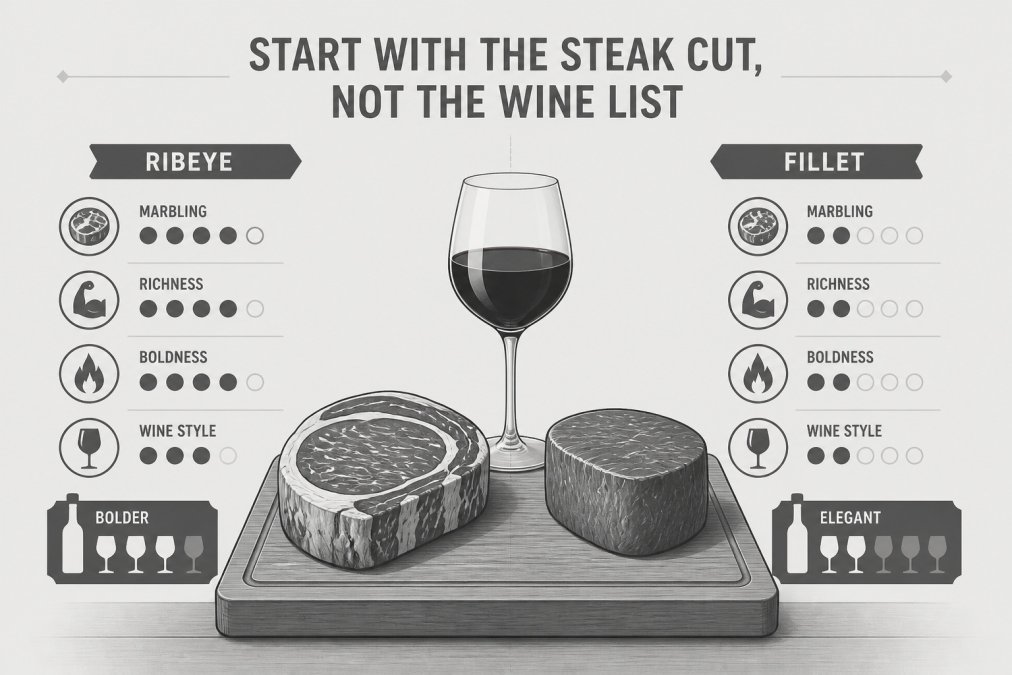
Think of the steak as the anchor. A lean cut needs a lighter, brighter wine. A rich, marbled cut can handle a bolder one.
- Fillet: lean and tender, so it suits silkier, lighter reds
- Sirloin: a middle ground with good flavour and moderate fat
- Ribeye: heavily marbled, so it needs a wine with structure and grip
- T-bone and porterhouse: a mix of tender and rich, so aim for medium body
Watch out: a big, tannic wine can make a lean fillet taste metallic and dry. Pairing a delicate cut with a heavyweight bottle is the most common mistake we see.
Best Red Wine With Steak: Matching Weight and Body
Body is the simplest guide here. Light reds have less alcohol and tannin, medium reds sit in the middle, and full-bodied reds feel thick and grippy. Red wine for steak generally pairs well with medium-to-full styles, because their tannins cut through protein and fat.
For a classic steak night, the Herdade da Calada 2020 Caladessa Reserva Tinto Vinho (£21.00) is a strong choice. It comes from the DOC Alentejo, is 15% ABV and blends Tinta Caiada, Alfrocheiro, Touriga Nacional and Touriga Franca. It shows red berries, prunes and raisins, with ripe, sweet tannins and a hint of spice. Herdade da Calada 2020 Caladessa Reserva Tinto Vinho lists the full details.
Look for these signs in the tasting notes:
- Structured tannins: they grip the palate and clean up rich fat
- Good acidity: it keeps the wine fresh alongside meat
- Moderate oak: a little adds spice without overwhelming the beef
The article's three wines differ in region, ABV and grape blend, which the table below summarises.
| Wine | Price | ABV | Key detail |
|---|---|---|---|
| Herdade da Calada 2020 Caladessa Reserva | £21.00 | 15% | DOC Alentejo, ripe sweet tannins |
| Casa Américo 2023 Sonante DOP Dão | £14.00 | 13% | Granitic soils, rounded tannins |
| Casal do Conde 2021 Terras do Vale Merlot | £16.00 | 14% | Eight months in French oak |
| Herdade da Calada 2021 Vale da Calada | £17.00 | 14.5% | Well-balanced, juicy tannins |
Red Wine for Ribeye Steak: Fat, Tannin and Richness
Ribeye carries a lot of fat, and fat softens tannin. That means a ribeye can handle a wine with more grip than a fillet can. A fuller red with firm tannins works well here, because the fat rounds them out.
The Casa Américo 2023 Sonante DOP Dão Tinto (£14.00) is 13% ABV, made from Tinta Roriz, Jaen and Touriga Nacional, and grown on granitic soils. It has lively acidity and rounded tannins.
Watch out: if the wine tastes harsh next to ribeye, it is probably too young. Let it breathe or open it earlier.
Wine Pairing for Fillet Steak: Lighter, Silkier Choices
Fillet is the most tender cut, so it needs a gentler partner. Pick a red that is smooth and fruit-led rather than tannic and oaky. Merlot is often a good fit.
The Casal do Conde 2021 Terras do Vale Merlot Tinto (£16.00) comes from the Tejo region, is 14% ABV and is aged eight months in French oak. It has aromas of ripe red fruit, a smooth texture and a balanced finish. Casal do Conde 2021 Terras do Vale Merlot Tinto gives you the full tasting profile.
Herdade da Calada 2020 Caladessa Reserva Tinto Vinho →
If you prefer a lighter option, Herdade da Calada 2021 Vale da Calada Tinto Vinho (£17.00) is another option. It blends Trincadeira, Alicante Bouschet and Aragonez, sits at 14.5% ABV, and has well-balanced, juicy tannins with black cherry and wild herb notes.
How Cooking Method and Steak Sauces Change Your Choice
How you cook the steak matters as much as the cut. Grilling adds smoky, charred flavours, which pair well with wines that have some oak and dark fruit. Pan-seared steak with a butter or pan-sauce leans richer, so a wine with a little acidity keeps the dish balanced.
Sauces shift the pairing too:
- Peppercorn or red wine jus: match with a structured, full-bodied red
- Chimichurri or herb sauces: pick a fresher, herbal red with good acidity
- Béarnaise or creamy sauces: a medium red with soft tannins works best
- Sweet barbecue glazes: choose a fruit-forward wine, as heavy tannin clashes with sugar
Watch out: avoid very tannic wines with spicy or vinegary sauces, because the heat and acid can make the wine taste bitter.
Serving Temperature and Decanting
Serving temperature changes how a red tastes. Serve most reds at about 16 to 18°C, slightly cooler than room temperature. Too warm and the alcohol dominates. Too cold and the tannins feel harsh.
Decanting helps younger, tannic reds open up. Pour the wine into a decanter 30 to 60 minutes before serving. Older, more delicate bottles usually need less air, so decant them gently or just before pouring.
A quick rule of thumb:
- Chill light reds for 15 minutes in the fridge before serving
- Decant full-bodied, young reds for at least 30 minutes
- Pour delicate older bottles straight from the bottle
Choosing Your Bottle: Next Steps With 79North
Start with your cut, match the body to the richness, and adjust for sauce and cooking method. That approach works for most steak dinners.
When you are ready to buy, we can help you find the right fit. At 79North Ltd we import family-owned wines from Portugal and Italy. Visit our range to compare the options above and choose a bottle for your next steak night.
Frequently Asked Questions
What red wine goes best with steak?
For most steaks, a medium to full-bodied red with firm tannins and good acidity works well. Cabernet Sauvignon, Malbec and Tinta Roriz-based blends from Portugal's Dão region are dependable starting points. The fat and protein in beef soften tannins, so a structured red feels balanced rather than harsh. For a leaner cut, choose something lighter and more fruit-led so the wine does not overpower the meat. Match the wine's weight to the steak's richness and the cooking method, and you will rarely go wrong.
Is Cabernet Sauvignon or Merlot better with steak?
Cabernet Sauvignon usually suits steak better because its firmer tannins and structure stand up to a rich, charred cut. Merlot is softer and rounder, so it works well with leaner steaks or with dishes built around a gentler sauce. Merlot from Tejo, for example, has ripe red fruit and a smooth texture that pairs comfortably with slow-cooked, savoury beef. If the steak is heavily seasoned or seared hard, lean towards the Cabernet style. If it is simply cooked and lightly dressed, Merlot is a pleasant, approachable choice.
Should red wine be served chilled with steak?
Red wine is generally served slightly below room temperature rather than chilled. Around 14 to 16 degrees Celsius is a good target for most full-bodied reds. Serving too warm makes alcohol more noticeable and flattens fruit, while serving too cold tightens tannins and hides flavour. Take the bottle out of a cool cellar or fridge about 20 minutes before opening, and it will be in the right range when you pour.
