
How to Curate Independent Wine Lists: A 2026 Guide
Table of Contents
- What Makes a Curated Wine List Different
- Understanding Your Audience and Venue Identity
- Structuring Your Wine List for Maximum Readability and Sales
- Wine List Pricing Strategy UK: Markup, Margins, and By-the-Glass Programs
- How to Write Wine List Descriptions That Sell
- Wine List Design Best Practices for Print and Digital Menus
- How to Train Staff on Wine Lists and Build Guest Experience
- Sourcing Distinctive Wines: Regional Diversity and Sustainability
Last Updated: August 8, 2026
What Makes a Curated Wine List Different
A curated wine list is a thoughtfully assembled collection reflecting your venue's identity, cuisine, and customer preferences rather than a generic compilation of bestsellers. Where mass-market lists chase volume, a curated selection tells a story about who you are and what you value.
This distinction matters because independent wine buyers compete against chain establishments with massive purchasing power. Your advantage isn't scale; it's authenticity. At 79North Ltd, we work with independent businesses across the UK who recognise that distinctive wines from family-owned Portuguese and Italian producers create experiences that generic supermarket selections cannot replicate. When you curate intentionally, you're offering discovery. Customers remember the sommelier who introduced them to an unfamiliar varietal and return for the wine shop that consistently stocks wines they can't find elsewhere.
The foundation of any strong curated list starts with understanding what makes your venue unique. Your audience, space, cuisine, and business model all shape what belongs on your list.
Understanding Your Audience and Venue Identity
Before selecting a single wine, clarify who you're serving and what experience you're creating. This determines price points, varietals, regions, and how you describe wines to staff and guests.
Start by defining your customer demographic. Are they wine enthusiasts seeking education, or casual diners wanting reliable pairings? Are they price-sensitive or willing to invest in premium bottles? Your venue's identity is equally critical. The wines you stock should feel like an extension of your brand. An Italian restaurant should feature Italian wines prominently as authentic representation of the cuisine and culture you're celebrating. A Portuguese wine specialist shop signals commitment through deep regional diversity and native grape varieties like Jampal or Touriga Nacional.
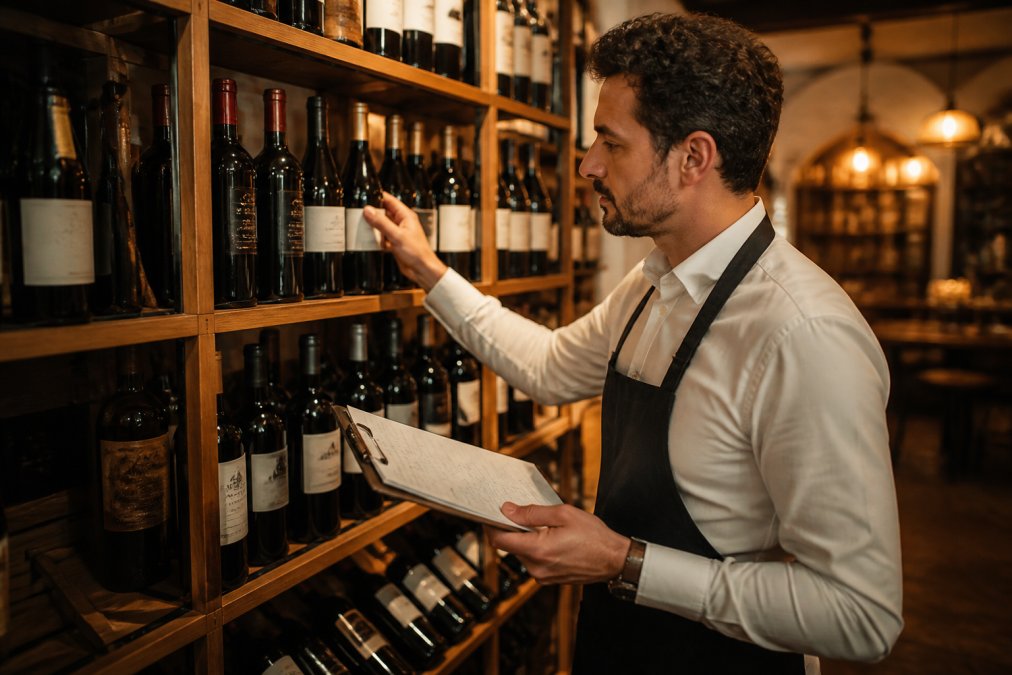
Price positioning shapes your list structure dramatically. If your average guest spends £40-60 on wine, your by-the-glass program and entry-level bottles carry more weight than premium selections. Fine-dining venues can justify deeper lists with more expensive bottles, since guests expect to spend £100+ on wine alone.
Consider your staff's wine knowledge and capacity. A small independent wine shop with a passionate owner-sommelier can maintain a 500-bottle list with detailed tasting notes. A casual restaurant with rotating staff needs a shorter, more straightforward list they can confidently recommend. Finally, assess operational constraints: storage space, inventory turnover, and cash flow. A wine list that sits for months costs money in tied-up capital and risks oxidation.
Structuring Your Wine List for Maximum Readability and Sales
The way you organize wines directly impacts both customer experience and sales performance. A well-structured list guides guests toward confident choices; a poorly organized one creates decision paralysis.
Most independent venues benefit from a hybrid approach: organizing primarily by style or varietal, with secondary groupings by region or price point. This mirrors how guests actually think about wine selection.
Organising by Style, Varietal, and Appellation
Structuring by style, light and delicate whites, rich and full-bodied reds, sparkling wines, fortified wines, creates immediate accessibility. This organization suits restaurants where guests are choosing wines to complement specific dishes. Varietal-based organization works well for wine shops and enthusiast-focused venues. Regional organization by appellation works best as a secondary layer within broader categories. For independent importers like 79North Ltd who specialise in Portuguese and Italian wines, regional representation becomes a storytelling opportunity.
The key is consistency. Choose one primary organizing principle and stick with it throughout your list.
The 30/30 Rule and Price Laddering Strategy
The 30/30 rule is a practical framework: aim for 30% of your selections in the entry-level price band, 30% in the mid-range, and 30% in premium tiers, with 10% reserved for occasional splurge bottles or rare finds.
This structure ensures accessibility and encourages wine orders from price-conscious customers. Mid-range selections (£25-50) represent your core margin opportunity and typically account for the highest volume of sales. Premium bottles (£50+) build credibility and serve guests seeking investment-quality wines.
Price laddering within each category is equally important. Rather than offering three whites at £18, £22, and £26, create distinct value steps: £16, £21, £28, £38. This prevents customer confusion and helps staff recommend strategically. For by-the-glass programs, price laddering becomes critical to profitability.
Wine List Pricing Strategy UK: Markup, Margins, and By-the-Glass Programs
Pricing wine requires balancing profitability against perceived value. UK hospitality venues typically work with markups between 2.5x and 4x bottle cost, depending on price point and venue type. Entry-level wines often carry higher markups (3.5-4x) because customers are less price-sensitive. Premium bottles sometimes carry lower markups (2.5-3x) because wine enthusiasts research prices and expect better value on expensive selections.
The critical insight: your margin in pounds matters more than your markup percentage. A £50 bottle with a 2.5x markup generates more profit than a £15 bottle with a 4x markup. This is why independent venues need balanced lists, with volume on entry-level and margin on premium.
Setting Bottle Costs and Retail Prices
Your bottle cost depends on your sourcing strategy. Direct relationships with small producers like those represented by 79North Ltd typically offer better pricing than traditional distributors, particularly for distinctive European wines that larger wholesalers don't stock.
When setting retail prices, consider your venue's positioning, local market rates, and your target customer's price sensitivity. Research what similar venues charge for comparable wines to understand market expectations. For independent wine shops, pricing becomes more complex because customers can compare against online retailers. Your value proposition shifts from convenience to curation, expertise, and discovery.
Designing Your By-the-Glass Program
By-the-glass selections are your highest-margin opportunity and your best customer acquisition tool. Your BTG program should feature:
- Variety across price points: Include options at £5-7, £8-10, and £12+.
- Representation from your core regions: If you specialise in Portuguese and Italian wines, BTG selections should reflect that identity.
- Rotation and seasonality: Change BTG selections monthly or quarterly to maintain customer interest and manage inventory.
- Freshness management: Use wine preservation systems to maintain quality across multiple service periods.
The economics of BTG pricing are straightforward. A £20 bottle yielding five 150ml pours at £6 each generates £30 revenue and £15 margin. That same bottle retailed whole generates £50 revenue and £30 margin. BTG programs work best when they drive overall wine sales volume.
How to Write Wine List Descriptions That Sell
Wine list descriptions bridge the gap between what's in the bottle and what your customer imagines. Strong descriptions sell wine by connecting flavour profiles to food pairings, highlighting what makes a wine distinctive, and building confidence in guests unfamiliar with the producer.
Effective descriptions follow a simple pattern: name and producer, flavour profile, food pairing, and distinctive detail.
Rather than "Crisp white wine with citrus notes," write: "Vinho Verde from family producer Casal do Conde: bright, lightly sparkling white with green apple and minerality. Perfect with shellfish or light appetisers. A refreshing alternative to Prosecco."
Avoid jargon that confuses rather than clarifies. "Complex mid-palate with integrated tannin structure" means nothing to most guests. "Smooth red with dark cherry and subtle spice" is actionable. For distinctive wines from small producers, use descriptions to tell the producer's story. "Small-batch Douro red from a family vineyard using traditional methods" signals authenticity and justifies premium pricing.
Wine List Design Best Practices for Print and Digital Menus
How you present your wine list shapes how guests interact with it. Print and digital formats require different approaches, and many venues now maintain both.
Visual Hierarchy and Menu Engineering
Print wine lists benefit from clear visual hierarchy. Use typography, spacing, and layout to guide attention. Group wines logically, use consistent formatting, and ensure readability. Colour can enhance readability without overwhelming. White space makes lists feel curated rather than cluttered.
Price placement matters more than most recognise. Placing prices at the far right creates a visual column that invites price comparison. Embedding prices within descriptions reduces price-focused decision-making and encourages guests to order based on recommendations instead.
Wine list design reflects your brand. A minimalist, modern aesthetic suits contemporary venues. A traditional, detailed layout fits fine-dining establishments. Consistency across your menu, wine list, and overall design language strengthens your brand identity.
Digital vs. Physical Menu Considerations
Digital wine lists offer advantages print cannot match: searchability, dynamic pricing updates, customer reviews, and detailed producer information. However, a guest scrolling through 200 wines on a tablet feels overwhelmed. Effective digital lists use filtering by style, price, and region to reduce cognitive load.
Digital also enables interactive features. Hyperlinks to producer websites, video tasting notes, or pairing suggestions create engagement. Some venues embed sommelier recommendations or customer ratings, building trust and reducing decision anxiety.
The hybrid approach works best for many independent venues: a curated print list for table browsing, supplemented by a digital list on your website or in-venue tablets for deeper exploration. Design your digital list for mobile-first viewing, ensuring legibility and navigation work on small screens.
How to Train Staff on Wine Lists and Build Guest Experience
Your wine list only succeeds if your staff can confidently recommend from it. Training transforms a curated selection into a competitive advantage.
Effective wine training covers three areas: product knowledge, recommendation frameworks, and hospitality.
Product knowledge means staff understand the wines they're selling. They've tasted them, know the producer stories, and can articulate what makes each wine distinctive. A server who's tasted the Douro red and can say "It has dark cherry and a hint of spice, pairs beautifully with our lamb dish" outsells a server who reads generic tasting notes.
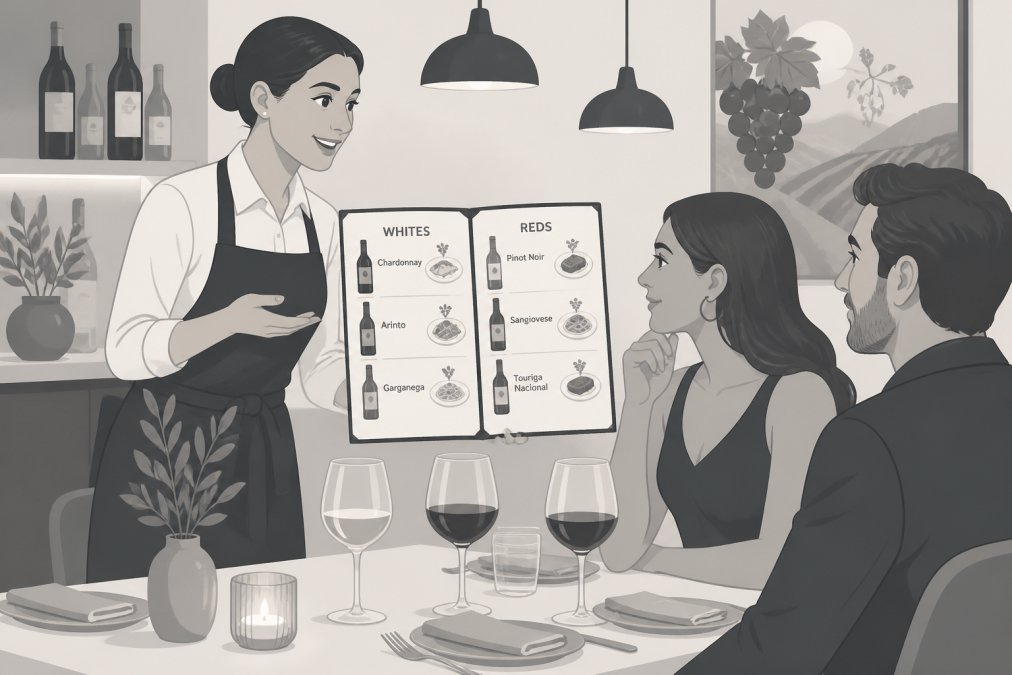
Recommendation frameworks help staff navigate customer requests. When a guest says "I like red wine," staff need a system to narrow options: "Are you looking for something light and fruity, or fuller-bodied with more tannin structure? And what's your price range?"
For distinctive wines from small producers, staff training should include the story. Where's the vineyard located? What makes the winemaker's approach unique? Does the producer prioritise sustainability? These details transform wine from a product into an experience.
Hospitality training ensures staff can handle wine-related situations confidently. What do you do if a guest orders a wine and doesn't enjoy it? How do you describe wines without condescension? These soft skills matter as much as product knowledge. Consider monthly tastings with your team, inviting your wine supplier to conduct brief training sessions.
Sourcing Distinctive Wines: Regional Diversity and Sustainability
Your sourcing strategy determines whether your list feels generic or genuinely curated. Independent venues that succeed differentiate through distinctive selections unavailable at supermarkets or chain restaurants.
Working with specialist importers becomes valuable. Rather than sourcing through large distributors who stock 5,000+ SKUs, specialist importers like 79North Ltd focus on smaller portfolios of carefully selected producers. You get wines that tell a story, producers you can learn about and recommend confidently, and inventory that doesn't compete with mass-market alternatives.
Building Regional Representation
Regional diversity strengthens your list by offering customers breadth and depth. Rather than stocking wines from six countries with two selections each, consider deeper representation of two or three regions where you develop genuine expertise.
Portuguese wines offer particular value for UK independent venues. The country produces exceptional wines across multiple styles, crisp Vinho Verdes, structured Douro reds, and fortified Port and Madeira, yet remains underrepresented in many wine lists outside specialist shops. A restaurant or wine shop that builds meaningful Portuguese representation becomes a destination for customers seeking discovery. Italian wines similarly benefit from deeper curation. Rather than generic Chianti, explore regional varietals and smaller producers.
Ethical Sourcing and Sustainability Commitment
Sustainability increasingly influences wine purchasing decisions, particularly among younger customers and wine enthusiasts. This extends beyond environmental practices to include fair labour practices, community investment, and cultural preservation.
Many small producers, particularly family-owned wineries in Portugal and Italy, practise sustainable viticulture by necessity and tradition. When sourcing, ask producers about their practices. Do they use organic or biodynamic methods? Do they employ local workers fairly? Do they invest in their communities? These questions aren't just ethical considerations; they're marketing opportunities.
For independent venues, sustainability commitment builds brand loyalty. Customers increasingly choose to spend money with businesses aligned with their values. A restaurant or wine shop that curates wines from sustainable producers attracts environmentally conscious guests and justifies premium pricing through values alignment.
Building an independent wine list that stands out requires intentionality across every stage: understanding your audience, structuring for clarity, pricing strategically, training staff thoroughly, and sourcing distinctively. The venues that succeed treat their wine list as a core element of their brand identity.
When you work with partners like 79North Ltd who specialise in importing premium, family-owned wines from Portugal and Italy, you gain access to distinctive selections that independent customers cannot find elsewhere. More importantly, you gain partners invested in your success, suppliers who understand your constraints, share your commitment to quality, and help you build wine programs that drive both revenue and guest satisfaction. Let's talk about building a wine list that reflects your venue's authentic identity.
Frequently Asked Questions
What is the 30/30 rule for wine list management?
The 30/30 rule is a practical inventory strategy: 30% of your wine list should be entry-level wines (your bread-and-butter volume sellers), 30% mid-range selections (where guests trade up), and 30% premium bottles (for special occasions and high-value margins). This structure balances accessibility with profitability. The remaining 10% can be reserved for rare finds or experimental selections that build your venue's reputation for curation.
How should I organise my curated wine list to maximise sales?
Structure your list by wine style or varietal first, then by price within each section. This visual hierarchy guides guests naturally from light whites through reds to fortified wines. Use clear tasting notes and food pairing suggestions. Place your highest-margin wines in eye-level positions on the menu, and feature 3-5 wines by-the-glass prominently. This approach reduces decision fatigue and increases average spend per guest.
What should I include in wine list descriptions to help staff and customers?
Effective descriptions include the wine's origin (appellation or region), dominant flavour profile (acidity, tannin structure, fruit notes), and suggested food pairings. Keep descriptions to 1-2 sentences. Avoid generic marketing language; instead, describe what guests will actually taste and experience. Include the vintage year and bottle cost (for staff reference). This clarity empowers your team to recommend confidently and helps guests make informed choices.
How do I know if my wine list pricing is competitive in the UK market?
Research comparable independent restaurants and wine shops in your area to understand local market expectations. A typical wine list markup ranges from 2.5x to 4x the bottle cost, depending on your venue type and location. By-the-glass pricing should yield slightly higher margins (3.5x-5x) to offset pouring waste. Your pricing strategy should reflect your venue's positioning: premium fine dining justifies higher markups than casual bistros. Review margins quarterly and adjust based on inventory turnover and guest feedback.
What makes a wine list truly curated versus just a random selection?
A curated wine list reflects a deliberate philosophy: it tells a story about your venue's identity, cuisine, and values. Rather than stocking every popular varietal, you select wines that complement your menu, represent specific regions or producers you believe in, and showcase terroir and authenticity. Curation means limiting your list (typically 40-80 wines for restaurants, more for dedicated wine shops) to ensure quality over quantity, and regularly updating selections based on guest feedback and seasonal availability.
How do I train my staff to confidently discuss the wines on my list?
Start with a structured tasting session where staff taste each wine alongside relevant menu items. Provide one-page tasting notes for every wine covering origin, flavour profile, and food pairings. Focus training on the 10-15 wines you most want to sell, rather than overwhelming staff with the entire list. Role-play common guest scenarios (budget constraints, dietary preferences, pairing requests). Monthly refresher tastings keep knowledge current and maintain staff enthusiasm, which directly impacts guest experience and sales.
Should my wine list be printed or digital, and does it matter for curation?
Both formats serve different purposes. Printed menus offer tactile discovery and work well for fine dining; digital menus enable real-time updates, wine availability checks, and detailed tasting notes without space constraints. Many successful independent venues use both: a curated printed list for the dining room and a digital version (QR code or app) offering extended selections and producer stories. Digital allows you to highlight sustainability credentials and producer backgrounds, key differentiators for independent venues sourcing distinctive wines.
How do I balance having a distinctive wine list with inventory management and cash flow?
Start with a core list of 30-40 wines you're confident will sell consistently, then add 10-15 rotating selections that showcase new discoveries or seasonal availability. This reduces dead stock while maintaining curation appeal. Use sales data to identify slow-moving bottles and replace them with alternatives. Build relationships with reliable distributors who offer flexible ordering and return policies for poor performers. Aim to turn your inventory 4-6 times per year; slower turnover ties up capital and risks wines ageing past their prime.
This article was written using GrandRanker