
How to Find Unique Portuguese Wines: A Buyer's Guide
Table of Contents
- How to Find Unique Portuguese Wines: Starting Your Search
- Understanding Indigenous Portuguese Grape Varieties
- Exploring Key Portuguese Wine Regions
- Buying Portuguese Wine Online: Direct-to-Consumer & Importer Platforms
- Portuguese Wine Recommendations: Sourcing Rare and Niche Bottles
- Logistics and Importing: What You Need to Know
- Common Mistakes When Sourcing Unique Portuguese Wines
- Conclusion: Building Your Unique Portuguese Wine Discovery Process
Last Updated: July 22, 2026
How to Find Unique Portuguese Wines: Starting Your Search
Learning how to find unique Portuguese wines requires understanding where to look and what to look for. At 79North Ltd, we've spent years connecting independent retailers and restaurants with Portugal's most distinctive family-owned producers, wineries that rarely appear on mainstream shelves. This guide walks you through the exact strategies we use to source exceptional bottles that stand out in a competitive market.
While Port and Vinho Verde remain recognizable names, the real discovery happens when you venture into lesser-known regions and indigenous grape varieties. Many businesses find that unique Portuguese wines offer better value and storytelling than mainstream European options. Below, we'll show you exactly how to navigate online platforms, work with specialist importers, decode wine labels, and handle the logistics of sourcing from Portugal to the UK.
Why Unique Portuguese Wines Matter
Distinctive Portuguese wines solve a real problem: standing out in a crowded market. When your competitors stock the same Bordeaux and Burgundy labels, a carefully curated Portuguese portfolio becomes your competitive advantage. Independent retailers and restaurants that stock unique Portuguese wines report stronger customer engagement and better margins than those relying on mainstream imports.
Portugal produces wine across 31 distinct regions, yet most UK consumers encounter only a handful. This gap represents opportunity. A sommelier or wine buyer who develops expertise in Portuguese wines positions themselves as a trusted authority rather than a commodity seller. The terroir varies dramatically, from the steep, terraced Douro Valley to the Atlantic-influenced Vinho Verde regions, creating authentic stories that resonate with discerning customers.
Unique Portuguese wines aren't niche or difficult to sell. They're simply underrepresented. Once customers taste a well-made Touriga Nacional or a mineral-driven Arinto, they often seek them out specifically.
Understanding Indigenous Portuguese Grape Varieties
Portuguese winemaking centers on indigenous grape varieties that thrive nowhere else with the same character. These aren't international grapes like Cabernet Sauvignon or Chardonnay planted in Portuguese soil. They're varieties shaped by centuries of cultivation in specific microclimates, producing wines with unmistakable identity.
Touriga Nacional stands as Portugal's flagship red grape. It produces deep, structured wines with dark fruit, spice, and firm tannins. You'll find it throughout the Douro Valley and increasingly in the Dão region. Touriga Nacional ages beautifully and commands respect from serious wine buyers.
Baga represents the Bairrada region's backbone. It's a high-tannin, high-acidity grape that requires time to soften but develops extraordinary complexity. Baga wines appeal to customers who view wine as an experience rather than a commodity.
Arinto dominates white wine production, particularly in Vinho Verde. It's crisp, mineral-driven, and often lightly sparkling. Arinto offers excellent value and pairs with nearly everything, making it an easy entry point for customers exploring Portuguese whites.
Jampal, Alicante Bouschet, and Tinta Barroca round out the portfolio of lesser-known reds. Each carries regional significance and offers distinct flavor profiles. Jampal, in particular, has gained attention for producing elegant, food-friendly wines that don't require expert knowledge to appreciate.
Exploring Key Portuguese Wine Regions
Portugal's wine regions each carry distinct character shaped by climate, altitude, and soil composition. Understanding these regions is essential for finding unique Portuguese wines that match your customer base.
Douro Valley, Dão, and Beyond
The Douro Valley anchors Portugal's reputation for quality wine. Terraced vineyards climb steep hillsides along the Douro River, creating one of Europe's most visually dramatic wine landscapes. The region produces both still wines and Port. For unique Portuguese wines, focus on the still wines, they're often overlooked internationally but offer incredible depth and age beautifully.
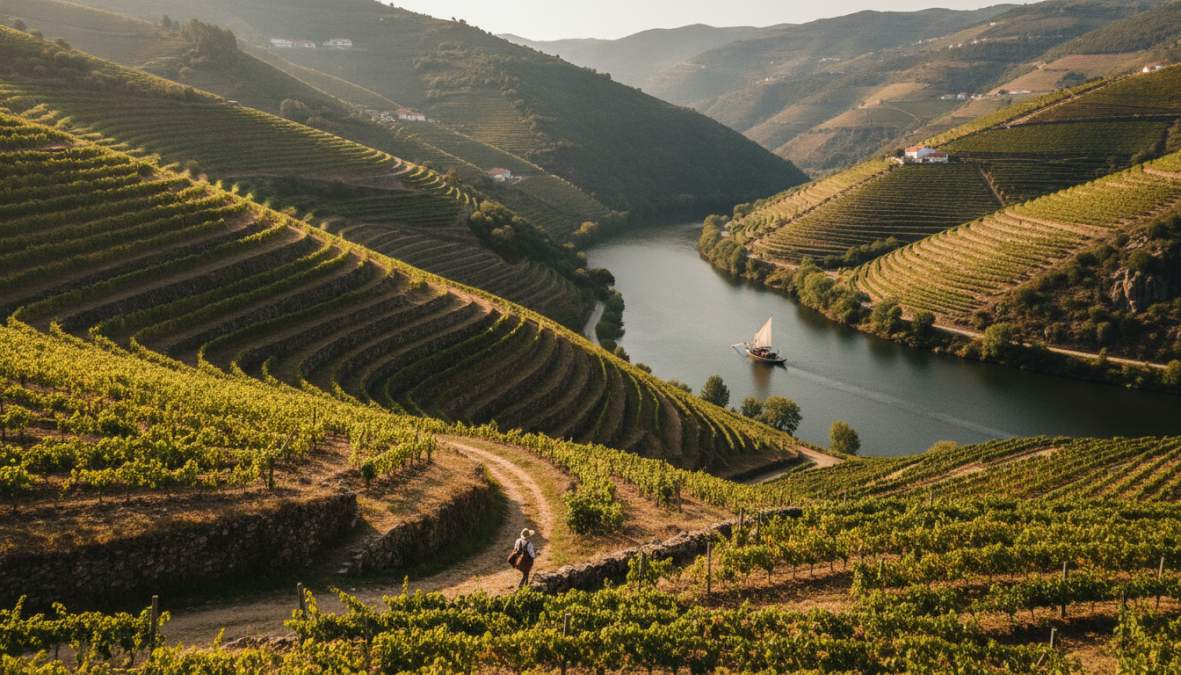
The Dão region sits inland at higher altitude, producing elegant reds and increasingly respected whites. Dão wines tend toward freshness and mineral character, representing genuine discovery territory for UK buyers unfamiliar with the region.
Vinho Verde dominates by volume but often gets dismissed as simple. Quality Vinho Verde producers create wines with genuine complexity, lightly sparkling, low alcohol, and food-friendly. For unique Portuguese wines, seek producers making still versions or higher-alcohol expressions that challenge the category's light reputation.
Alentejo sits in the south, producing fuller-bodied reds from warmer conditions. Alentejo wines often show ripe fruit and softer tannins than northern regions. This variation creates sourcing opportunity.
Smaller regions like Bairrada, Colares, and Bucelas offer specialized discoveries. Bairrada's Baga-based wines develop cult followings among serious collectors. Colares produces distinctive reds from ungrafted vines on sandy soils. Bucelas creates crisp whites with aging potential. These regions rarely appear on mainstream wine lists, making them ideal for buyers seeking genuine uniqueness.
| Region | Primary Grapes | Style | Best For |
|---|---|---|---|
| Douro Valley | Touriga Nacional, Tinta Roriz | Full-bodied, age-worthy reds | Serious collectors, restaurant wine programs |
| Dão | Touriga Nacional, Encruzado | Elegant, mineral reds and whites | Wine enthusiasts seeking discovery |
| Vinho Verde | Arinto, Loureiro | Fresh, lightly sparkling | Casual dining, aperitif service |
| Alentejo | Aragonez, Trincadeira | Ripe, medium-full reds | Everyday drinking with food |
| Bairrada | Baga | High-tannin, age-worthy reds | Collectors and adventurous buyers |
Buying Portuguese Wine Online: Direct-to-Consumer & Importer Platforms
Finding unique Portuguese wines online requires understanding your sourcing options. Each channel offers different advantages and challenges.
DTC Winery Platforms and Regional Apps
Direct-to-consumer (DTC) platforms connect you directly with Portuguese producers, eliminating middlemen and often reducing costs. However, DTC sourcing requires careful navigation. Not every winery ships internationally, and many require minimum orders that may not suit smaller retailers.
Portuguese wine apps and regional platforms increasingly facilitate direct connections. These platforms allow you to browse producer portfolios and arrange shipments. The advantage is authenticity; you're hearing directly from the people making the wine. The disadvantage is that many platforms are in Portuguese and require persistence.
Working with Specialist Importers
Specialist importers remain the most practical route for most UK retailers and restaurants. A good importer handles customs, documentation, and minimum orders while curating selections that match specific markets.
79North Ltd operates as a dedicated importer focused specifically on premium, family-owned Portuguese and Italian producers. Unlike generalist distributors, specialist importers develop relationships with small wineries that would otherwise remain undiscovered. This means access to limited-production bottles and producer portfolios that rarely reach mainstream channels.
When evaluating importers, ask specific questions: How many producers do they represent? How frequently do they visit Portugal? Can they provide references from existing UK clients? Do they offer flexibility on minimum orders? A quality importer should discuss terroir, production methods, and producer philosophy, not just pricing.
Portuguese Wine Recommendations: Sourcing Rare and Niche Bottles
Finding unique Portuguese wines means knowing where to look for bottles that stand out.
Small Producer Portfolios and Hidden Gems
Small producers represent the heart of unique Portuguese wine sourcing. These are family operations producing 10,000-50,000 bottles annually, often from specific vineyard sites. Small producers typically offer wines with distinct personality shaped by the winemaker's choices rather than a corporate style guide.
The challenge with small producers is finding them. They don't have marketing budgets for UK promotion. They rely on word-of-mouth and relationships with importers. A specialist importer with deep Portuguese connections can introduce you to producers making extraordinary wines that no search engine will surface.
When sourcing from small producers, expect variation. Vintage differences matter more. Production volumes fluctuate. This isn't a flaw, it's authenticity. Your customers will recognize and appreciate the difference between a small producer's wine and a corporate blend.
Look specifically for producers in emerging regions like Bairrada, Bucelas, and parts of Alentejo. Wines from these regions often offer better value than established names while delivering genuine quality.
Decoding Wine Labels and Classification Systems
Portuguese wine labels contain essential information, but the system differs from French or Italian conventions.
DOC (Denominação de Origem Controlada) represents the highest classification. DOC wines come from specific regions and follow strict production rules. DOC designation indicates quality commitment and terroir focus.
IGP (Indicação Geográfica Protegida) provides broader geographic designation with fewer restrictions. IGP wines often come from innovative producers experimenting with techniques or grape blends that DOC rules wouldn't permit. Some of Portugal's most interesting wines carry IGP status because they push boundaries.
Look for producer names and specific vineyard designations. Portuguese labels often highlight the quinta (vineyard) name, which indicates single-vineyard wines and terroir focus.
Vintage matters significantly. Portuguese wines, particularly reds from Douro and Dão, vary considerably between years. Warm, dry years produce riper, fuller wines. Cooler years yield more elegant, mineral-driven expressions.
Alcohol content appears on every label. Portuguese wines range from 10-15% alcohol. Lower alcohol wines offer freshness and food compatibility. Higher alcohol reds show riper fruit. Use alcohol content as a quick indicator of wine style.
Logistics and Importing: What You Need to Know
The logistics of sourcing unique Portuguese wines to the UK involves customs, minimum orders, and shipping considerations that affect your sourcing strategy.
Customs, Minimum Orders, and Shipping to the UK
Post-Brexit customs procedures apply to all Portuguese wine imports. Each shipment requires proper documentation, commercial invoices, certificates of origin, and duty calculations. This complexity is precisely why working with specialist importers simplifies the process.
Minimum order quantities vary by producer and importer. Some small producers require minimum orders of 6-12 bottles per SKU. Others work in case quantities. Understanding minimums before committing prevents ordering mistakes.
Shipping costs impact your landed costs significantly. A case of wine from Portugal to the UK typically costs £20-40 for standard shipping. These costs must factor into your pricing strategy.
Storage and temperature control matter during transit. Wines shipped during summer months risk heat damage if not properly insulated. Reputable importers use temperature-controlled containers for premium shipments.
Lead times vary significantly. Direct shipments from Portugal typically take 2-4 weeks. Consolidation shipments may take 6-8 weeks. Plan your inventory accordingly.
Common Mistakes When Sourcing Unique Portuguese Wines
Understanding what doesn't work accelerates your learning curve.
Chasing lowest price. The cheapest Portuguese wine rarely offers genuine uniqueness. Budget producers prioritize volume over character. Unique Portuguese wines command fair prices because they reflect genuine production costs and limited supply.
Ignoring terroir. Some buyers treat Portuguese wines as interchangeable commodities. A Douro Valley Touriga Nacional tastes completely different from an Alentejo Aragonez. Understanding terroir helps you match wines to specific customers.
Ordering without tasting. Committing to cases of wine you haven't tasted is risky. Many importers offer samples before large orders. Request samples and taste them before making informed decisions.
Neglecting producer relationships. Unique Portuguese wines come from producers with distinct philosophies. Understanding what a producer cares about, sustainability, traditional methods, specific vineyard sites, helps you communicate authenticity to customers.
Underestimating documentation complexity. First-time importers often underestimate the paperwork required for customs clearance. Working with experienced importers prevents these problems.
Stocking too many SKUs without commitment. New buyers sometimes order one case each of fifteen different wines. Deeper stocks of fewer SKUs build loyalty better than shallow stocks of many options.
Conclusion: Building Your Unique Portuguese Wine Discovery Process
Finding unique Portuguese wines consistently requires a systematic approach rather than random discovery. The most successful buyers combine multiple sourcing channels: specialist importers for reliability, direct relationships with producers for exclusivity, and continuous education about regions and varieties.
The opportunity in Portuguese wine sourcing comes from the gap between Portugal's actual quality and the UK market's limited awareness. While most competitors stock predictable selections, buyers who develop expertise in Portuguese wines position themselves as trusted authorities.
79North Ltd specializes in exactly this challenge, connecting independent retailers and restaurants with premium, family-owned Portuguese producers that would otherwise remain undiscovered. Our portfolio celebrates unique terroirs and indigenous grape varieties, ensuring our partners receive distinctive, high-quality products that stand out in competitive markets. Let's talk about how we can help you build a Portuguese wine program that sets you apart.
According to Wine Institute research on emerging markets, Portuguese wine exports to the UK have grown consistently over the past five years, yet awareness among independent retailers remains surprisingly low.
Research from Decanter's 2026 Portuguese Wine Report highlights the quality revolution happening in lesser-known regions like Dão and Bairrada, where producers are creating wines that rival established European regions at significantly better value.
The Portuguese Wine Institute's regional classification guide provides comprehensive documentation of DOC and IGP designations, terroir characteristics, and producer information.
Frequently Asked Questions
Where can I buy unique Portuguese wines online that aren't available in regular shops?
Direct-to-consumer (DTC) winery platforms, specialist wine importers, and regional Portuguese wine apps offer access to bottles from small, family-owned producers. Importers who work directly with innovative wineries often curate portfolios unavailable through mainstream channels. Look for importers focused on indigenous grape varieties and specific terroir, they typically offer wines from producers who prioritize sustainability and cultural enrichment rather than mass production.
What indigenous Portuguese grape varieties should I look for when finding unique wines?
Seek out Touriga Nacional, Baga, and Arinto as signature indigenous varieties. Lesser-known options like Jampal and other native grapes offer distinctive expressions of Portuguese terroir. These varieties reflect the region's viticulture heritage and produce wines with unique tannin structures and acidity profiles. Specialist importers focus on these indigenous grapes because they're rarely found outside Portugal and represent authentic wine culture.
How do I know if a small Portuguese wine producer is reliable before ordering?
Work with established importers who vet producers for quality, consistency, and supply reliability. Check whether the importer has track records with UK restaurants and independent retailers, ask for references. Review the producer's DOC or IGP classification and vintage consistency. Reputable importers handle customs documentation, minimum order logistics, and supply chain management, reducing your risk compared to direct sourcing from unknown producers.
What's the difference between buying directly from a winery versus using an importer?
Direct purchasing involves navigating customs, paperwork, and minimum order requirements yourself. Importers handle logistics, UK compliance, and supply consistency, valuable for restaurants and retailers. Importers also provide trusted representation for small, innovative wineries, curating portfolios based on quality and terroir rather than volume. For unique Portuguese wines, importers specializing in family-owned producers offer access to distinctive bottles while managing the complexity of international shipping and regulatory requirements.
This article was written using GrandRanker