
Premium Wine Wholesale vs Direct Import
Table of Contents
- Premium Wine Wholesale vs Direct Import: Key Differences
- How the Wine Distribution Network Works
- HMRC Wine Import Regulations UK and Compliance
- Calculating Wine Margins for Hospitality
- Wine Procurement Strategy for Restaurants
- Cost Comparison: Total Cost of Ownership
- Quality, Sourcing Transparency, and Producer Relationships
- Which Approach Suits Your Business?
Last Updated: August 9, 2026
Premium Wine Wholesale vs Direct Import: Key Differences
The choice between premium wine wholesale and direct import fundamentally shapes how independent restaurants and wine retailers access stock, manage costs, and build their brand identity. A wholesale relationship with an established distributor offers predictability, breadth, and logistical support. Direct importing from producers, especially small family-owned wineries from Portugal and Italy, demands more legwork but delivers genuine exclusivity and direct producer relationships that strengthen your market position.
Both models have legitimate advantages. The real question isn't which is "better" in absolute terms; it's which aligns with your business model, risk tolerance, and growth ambitions.
How the Wine Distribution Network Works
The wine supply chain in the UK involves multiple layers, each adding cost, time, and distance between the vineyard and your glass. Understanding this network explains why the wholesale versus direct import decision carries such weight.
The Wholesale Model
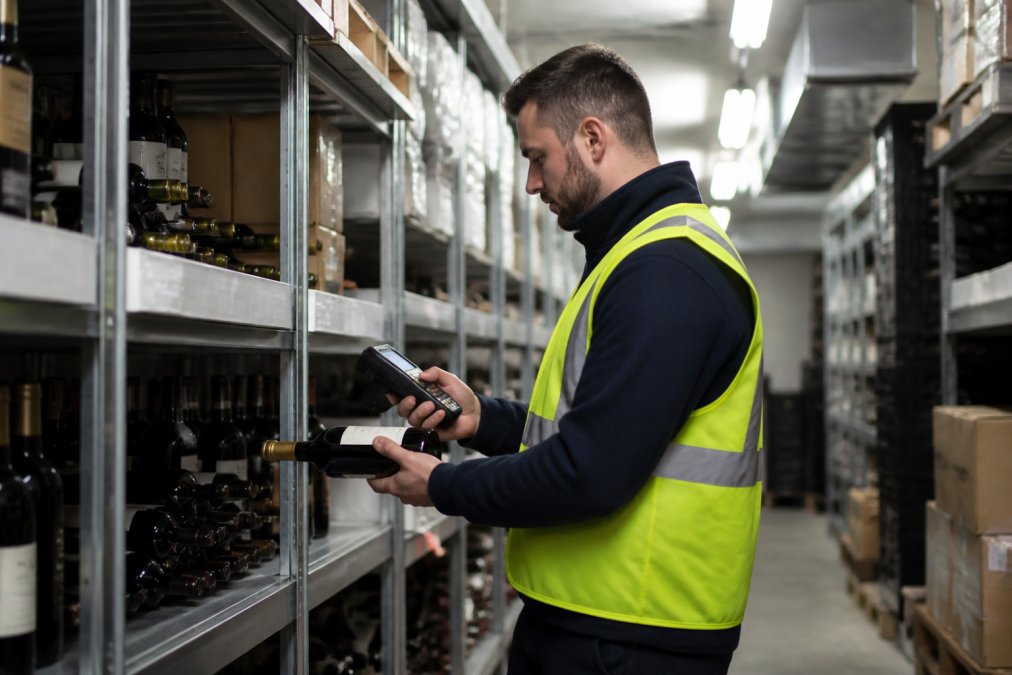
Wholesale distribution is the dominant model for wine in the UK market. A wholesaler sources wines from multiple producers, aggregates them into a portfolio, and sells to on-trade businesses (restaurants, hotels, bars) and off-trade retailers (shops, delis, wine bars). The wholesaler handles logistics, manages stock, provides training support, and assists with wine list development. They absorb the complexity of customs clearance, bonded warehouse management, and regulatory compliance for multiple producers at scale.
Bibendum Wine and Majestic Commercial exemplify this model. Bibendum maintains relationships with over 280 winemakers and provides dedicated support services including WSET training and wine list consultation. Majestic Commercial leverages its parent company's buying power to offer over 1,300 wholesale wines, including exclusive on-trade labels. Both take on the supply chain burden, allowing you to focus on service and sales rather than import logistics.
The cost structure is straightforward: you pay a wholesale markup above the producer's base price. That markup covers the distributor's operational costs, margin, and the value they add through service. For most independent venues, this trade-off makes sense.
The Direct Import Model
Direct importing means buying straight from the producer, cutting out the wholesaler entirely. You handle the ordering, customs clearance, shipping logistics, and inventory management yourself, or work with a specialist direct importer like 79North Ltd or Rouge & Co. London, who manage the producer relationships and import logistics on your behalf.
The direct import supply chain is shorter: producer → importer (if using one) → your business. That compression creates two immediate effects. First, the cost per bottle is lower because there's no wholesale middleman taking margin. Second, you gain access to producers who don't work through major distributors, often small, family-owned operations with limited production runs.
79North Ltd specializes in exactly this model. The company imports premium, family-owned wines from Portugal and Italy, focusing on small, innovative wineries that are often new to the UK market. Rather than offering a broad catalog of 1,000+ wines like a traditional wholesaler, 79North curates a focused portfolio of distinctive producers. This approach solves a real problem for independent restaurants and wine retailers: finding authentic, undiscovered wines that set you apart from competitors.
Direct importing demands more operationally. You manage minimum order quantities, navigate HMRC customs requirements, arrange freight and bonded warehouse handling, and carry inventory risk. Lead times are longer because wines ship directly from Europe. But if your goal is distinctive wines and direct producer relationships, these operational costs are the price of differentiation.
HMRC Wine Import Regulations UK and Compliance
Importing wine into the UK involves navigating a specific regulatory framework. All wine imported into the UK must clear customs and meet specific labelling, duty, and tax requirements. The current duty rate on still wine is £2.23 per litre, applied at the point of import.
Beyond duty, wines must meet UK labelling standards. The label must display the producer's name, country of origin, alcohol content, net volume, and allergen information (particularly sulfites). Non-compliance can result in wines being held at customs or rejected entirely.
Bonded warehouse management is another compliance layer. Many importers use bonded warehouses in the UK, special facilities licensed by HMRC where imported goods can be held duty-suspended until they're cleared for sale. This arrangement allows you to defer duty payments until stock actually sells, improving cash flow. Working with a distributor or specialist importer means they typically manage bonded warehouse logistics for you. Direct importing requires you to either establish your own bonded warehouse arrangement or work with a logistics provider who handles this.
For restaurants and retailers, the practical implication is straightforward: if you're importing directly, budget for duty costs upfront and ensure your supplier handles customs clearance documentation. If you're buying through a wholesaler, these costs are embedded in the wholesale price.
Calculating Wine Margins for Hospitality
Understanding margin structures reveals why the wholesale versus direct import choice affects your profitability differently.
In hospitality, wine margins vary significantly by venue type. A casual pub might target a 300-400% markup (buying at £5, selling at £20). A fine-dining restaurant might work at 200-250% (buying at £20, selling at £50-60).
The wholesale model gives you a starting cost that already includes the distributor's margin. You buy at trade price and apply your desired retail markup. If a wholesaler sells you a wine at £10 per bottle, you might retail it at £35-40 depending on your venue type.
Direct importing changes the cost baseline. You're buying at producer price, which is lower than wholesale trade price, but you're absorbing costs the wholesaler normally carries: shipping, customs duty, bonded warehouse handling, and inventory risk. A wine you source directly at £6 from the producer might cost you £8-9 once you factor in duty and logistics. You then apply your retail markup on top of that actual cost.
Direct importing wins on margin because the per-bottle cost is genuinely lower, which means either higher absolute margin per bottle sold or the ability to price competitively while maintaining similar percentage margins. However, you're also carrying more operational risk if that wine doesn't sell.
Wine Procurement Strategy for Restaurants
Building a procurement strategy requires clarity on what you're optimizing for: cost, distinctiveness, consistency, or some combination.
The wholesale approach suits restaurants prioritizing operational simplicity and broad selection. You work with one or two key distributors, place orders through their portal or sales rep, and rely on them for stock availability, training, and wine list support. A neighborhood Italian restaurant might stock 40-50 wines from Bibendum or Majestic, trusting their curation and using their staff training resources.
The direct import strategy suits restaurants building wine as a core part of their identity. Independent Italian or Portuguese restaurants might source directly from small regional producers to offer authentic wines that reinforce their culinary positioning. This requires more active procurement and direct management of producer relationships, but the result is a wine list competitors can't easily replicate.
79North Ltd's approach sits between these extremes. Rather than managing direct producer relationships yourself, you partner with a specialist importer who does that work. You get access to distinctive Portuguese and Italian wines from small, family-owned producers, but 79North handles the customs, logistics, and producer relationship management.
The practical procurement process differs between models. With wholesale, you review the distributor's catalog, select wines, place orders, and receive stock from their UK warehouse within days. With direct importing, you identify producers, negotiate terms, place larger minimum orders, and wait for shipment from Europe, typically 2-4 weeks. With a specialist importer, you review their curated selection, place orders, and they manage the import logistics on your behalf.
Cost Comparison: Total Cost of Ownership
The per-bottle cost is only one dimension of the real procurement cost. Total cost of ownership includes all expenses from order to glass: product cost, duty, shipping, bonded warehouse fees, staff time, and inventory carrying costs.
| Cost Component | Wholesale Model | Direct Import (Self-Managed) | Direct Import (Via Specialist Importer) |
|---|---|---|---|
| Per-bottle trade cost | Higher (includes distributor margin) | Lower (producer price) | Lower (producer price) |
| Duty & tax | Embedded in wholesale price | Separate, upfront cost | Managed by importer, passed through |
| Shipping & logistics | Included (UK distribution) | Your cost (from Europe) | Importer cost, typically passed through |
| Bonded warehouse | Included (distributor's facility) | Your cost or logistics partner fee | Importer's cost, passed through |
| Customs clearance | Managed by distributor | Your responsibility or logistics partner | Importer's responsibility |
| Staff time (procurement) | Minimal (order through portal) | Significant (producer relationships) | Moderate (review curated selection) |
| Inventory carrying cost | Lower (faster turnover from broad catalog) | Higher (larger minimum orders, slower sell-through) | Moderate (curated selection, partner support) |
| Lead time | 3-7 days | 14-28 days | 7-14 days |
The real cost advantage of direct importing only materializes if you're buying enough volume to absorb the per-order fixed costs across sufficient bottles. A restaurant ordering 12 bottles of a single wine directly from a Portuguese producer faces the same duty and shipping costs as one ordering 120 bottles. That's why direct importing typically makes sense at scale or when you're committed to specific producers for repeat orders.
Working with a specialist importer like 79North spreads those fixed costs across their entire client base, making direct-import economics accessible to smaller venues.
Quality, Sourcing Transparency, and Producer Relationships
Wholesale distribution prioritizes breadth and consistency. A distributor like Bibendum or Majestic Commercial manages relationships with hundreds of producers, ensuring reliable supply across a broad portfolio. The quality is vetted, but you're buying from a curated list pre-selected by the distributor's team.
Direct importing, especially from small producers, offers direct transparency and producer relationships. You know exactly where the wine comes from, often because you've spoken directly with the winemaker. You understand their production philosophy, soil conditions, and vintage decisions. This transparency is particularly valuable for wines from less-known regions.
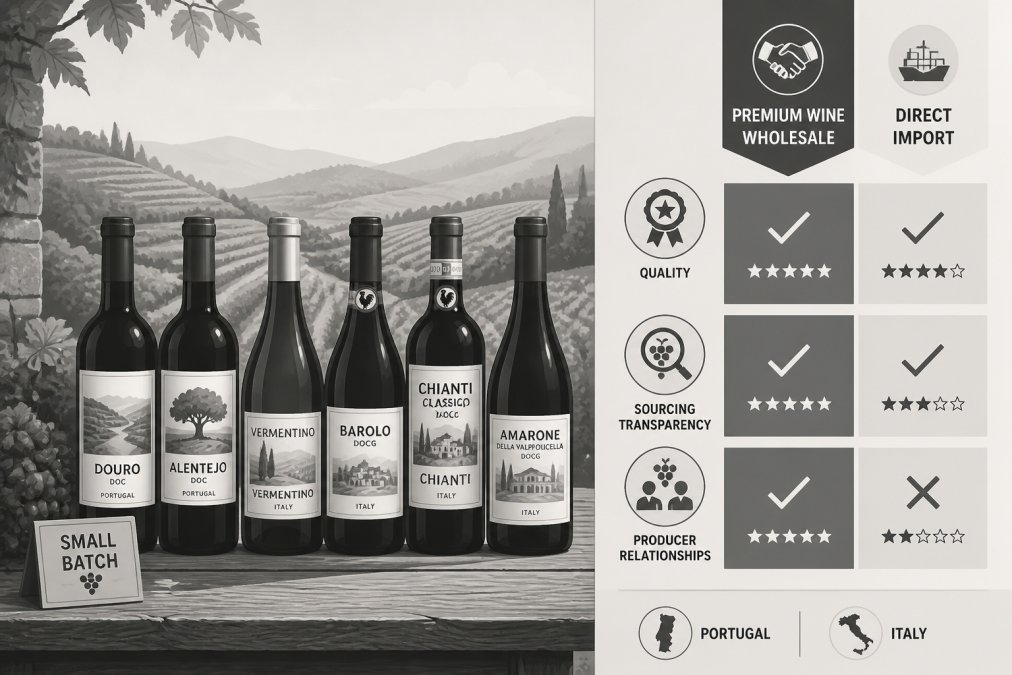
79North Ltd's entire value proposition rests on this transparency. The company works exclusively with family-owned Portuguese and Italian producers, many of whom are new to the UK market. Rather than offering a broad catalog, 79North provides expert representation for these producers, handling the import logistics and regulatory compliance so restaurants and retailers can access wines with clear provenance and producer backing.
This matters operationally because it changes how you market the wine. A bottle from a small Portuguese producer you've learned about through 79North comes with a story, terroir, producer philosophy, and vintage narrative that justifies premium positioning and differentiates your wine list.
Quality assurance works differently too. With wholesale, the distributor's reputation is on the line. With direct importing, you're relying more heavily on the producer's consistency and your own due diligence. Working with a specialist importer like 79North mitigates this risk because they've already vetted the producers and maintain ongoing relationships that protect quality standards.
Which Approach Suits Your Business?
The decision ultimately depends on three factors: your business model, your appetite for operational complexity, and what competitive advantage you're pursuing.
Choose wholesale if:
- You want operational simplicity and predictable supply
- You're focused on offering a broad selection rather than distinctive wines
- Your wine program is supporting food service, not driving customer choice
- You prefer working with a single or small number of suppliers
- You want staff training and wine list support built into your supplier relationship
Bibendum Wine and Majestic Commercial are both strong wholesale options for UK hospitality businesses.
Choose direct importing (via specialist importer) if:
- You want distinctive wines that set you apart from competitors
- You're building wine as a core part of your brand identity
- You're willing to manage slightly longer lead times and larger minimum orders
- You want direct producer relationships and transparent sourcing
- You're positioned as independent and curated rather than broad-selection
79North Ltd is specifically designed for this use case. The company specializes in importing premium, family-owned wines from Portugal and Italy, focusing on small, innovative wineries that are new to the UK market. If your restaurant or retail business is built around authentic, distinctive European wines, 79North's curated approach and producer relationships deliver genuine competitive advantage.
Choose self-managed direct importing only if:
- You have the operational capacity to manage customs, logistics, and producer relationships
- You're importing sufficient volume to justify the fixed costs of duty and shipping
- You have existing relationships with specific producers or regions
- You're willing to accept longer lead times and higher inventory risk
Many successful independent venues use a hybrid approach: a core selection from a trusted wholesaler for consistency and breadth, supplemented by direct imports or specialist importer relationships for distinctive, differentiated wines.
The wholesale versus direct import decision isn't about choosing the "right" model universally; it's about aligning your procurement strategy with your business positioning and operational capacity. If you're building a distinctive wine program around authentic Portuguese and Italian producers, direct importing through a specialist like 79North Ltd gives you access to family-owned wineries and native grape varieties that wholesalers simply don't stock. Let's talk about how we can help you source wines that strengthen your market position.
Frequently Asked Questions
What are the HMRC requirements for importing wine into the UK?
To import wine into the UK, you must register with HMRC under the Alcohol Wholesaler Registration Scheme (AWRS) if you're trading commercially. You'll need to complete customs declarations, pay excise duty (currently £2.87 per litre for still wine), and comply with labelling regulations under the Alcohol Labelling Standards. All imported wine must clear customs and be held in a bonded warehouse until duty is paid. Professional importers typically handle these processes, but understanding the regulatory framework helps you evaluate supplier reliability and cost structures.
Is direct importing wine more cost-effective for small UK restaurants?
Direct importing can offer lower per-bottle costs by eliminating wholesaler markup, but it introduces complexity. You'll face minimum order requirements (typically 12-24 bottles per SKU), longer lead times, and upfront customs and freight costs. Wholesalers spread these costs across many clients and provide flexibility on smaller orders. For restaurants stocking 30-50 wines, wholesale often proves more practical. Direct import works best when you're committed to specific producers and can forecast demand accurately over 2-3 months.
How does UK excise duty impact the cost of imported wine?
Excise duty adds £2.87 per litre to all imported still wine, regardless of whether you buy wholesale or direct. For a standard 75cl bottle, that's roughly £2.15 per bottle. This fixed cost applies to all imported wines and is collected by HMRC at the point of customs clearance. While duty is unavoidable, working with experienced importers who consolidate shipments and manage bonded warehouses efficiently can reduce freight and handling costs that sit on top of duty, improving your overall cost position.
What are the primary risks of direct importing wine for a hospitality business?
Direct importing carries supply chain risk: if a small winery can't fulfil an order, you're left without backup. Minimum order quantities tie up capital in inventory that may not sell quickly. Customs delays can disrupt your service. You also assume quality responsibility, there's no distributor buffer if bottles arrive damaged or off-condition. For independent restaurants and wine shops, wholesale partnerships offer supply security and returns flexibility that direct import doesn't, making it lower-risk for businesses without dedicated wine procurement teams.
Do I need an AWRS number to import wine into the UK?
Yes, if you're importing wine for commercial sale or supply (including to your own restaurant or shop), you must be registered with HMRC under AWRS. Self-employed sommeliers and restaurant owners need this registration. However, if you work with an established UK importer or wholesaler, they hold the AWRS registration and handle customs compliance on your behalf. This is one reason many independent businesses prefer wholesale partnerships, the importer manages regulatory burden, letting you focus on wine selection and service.
This article was written using GrandRanker