UK Wine Labelling Compliance: What Must Be on Your Label
Last Updated: November 20, 2026
Quick Summary
UK wine labelling compliance means every bottle must show mandatory details such as product name, wine category, alcohol by volume, net quantity, a UK importer address and country of origin, in legible English. A label cleared in Portugal or Italy is not automatically compliant for the UK.
- Mandatory items include product name, wine category, ABV, net quantity, importer details and country of origin.
- Declare sulphites on the label when the level exceeds the UK declaration threshold.
- Mandatory text must be in English and meet the minimum legible size.
- Check each label against UK rules before stock is released, even if it passed in the producing country.
- Keep the producer's technical sheet and sulphite analysis on file for regulator or retailer checks.
Table of Contents
- How UK Wine Labelling Rules Apply to Imports
- Mandatory Information on Wine Labels
- Wine Allergen Labelling Requirements, Including Sulphites
- Language, Legibility and Great Britain Versus Northern Ireland
- Wine Label Examples: Annotated Compliant Labels
- A Step-by-Step Wine Labelling Compliance Checklist
- Checking Your Next Label Before It Goes on Sale
- Frequently Asked Questions
How UK Wine Labelling Rules Apply to Imports
Wine labelling compliance is the set of rules that decides what must appear on a bottle before it can be sold in the UK. For an importer like 79North Ltd, these rules apply to every Portuguese and Italian wine from the moment it arrives. For a full step-by-step compliance walkthrough, see the existing UK label compliance guide. The label has to meet UK requirements even when it already meets rules in Portugal or Italy.
Many importers assume that a label cleared in the producing country is ready for sale. That is a common mistake. The UK sets its own requirements for mandatory information, language and legibility, so an importer must check each label against UK rules before stock is released to buyers.
Watch out: a label that passes in Portugal can still fail in the UK if the importer's details are missing or the text is too small.
Once a wine arrives, the importer or the business placing it on the UK market is responsible for the label. For background on the UK's food information framework, see UK government guidance on food labelling. Working through the label early saves time at the port, where customs paperwork and label checks can stall a shipment.
Mandatory Information on Wine Labels
Wine labels must carry a set of mandatory details. These cover what the wine is, how strong it is, how much it holds, and who is responsible for it. Missing any one of them can hold up sales.
The core items are:
- Product name and wine category
- Alcohol by volume (ABV)
- Net quantity
- Importer or responsible business name and address
- Country of origin
Each item has to be clear, accurate and easy to read.
Product name, wine category and alcohol by volume
The product name tells buyers what they are getting. It can be a brand, a grape variety or a protected designation, but it must not mislead. A wine described as a region's name must actually come from that region.
The wine category, such as still or sparkling, must also be stated accurately. ABV is the alcohol strength shown as a percentage. A label should show the figure the producer measured, not a rounded guess.
Net quantity, importer details and country of origin
Net quantity shows the volume in the bottle, usually in millilitres or centilitres. Check the figure against the bottle itself.
The importer details must show a business name and a UK address. This tells the buyer who to contact if there is a problem. Country of origin shows where the wine was made. For Portuguese and Italian wines, this must match the actual production area, not just the bottling site.
The article sets out the core mandatory items every wine label must carry.
| Item | What it covers | Note |
|---|---|---|
| Product name | Brand, grape variety or designation | Must not mislead about origin |
| Wine category | Still, sparkling or other | Stated accurately |
| Alcohol by volume (ABV) | Alcohol strength as a percentage | Show the measured figure |
| Net quantity | Volume in the bottle | Check against the bottle |
| Importer or responsible business | Business name and UK address | Must be a UK address |
| Country of origin | Where the wine was made | Match the production area, not the bottling site |
Wine Allergen Labelling Requirements, Including Sulphites
Allergen labelling is one of the most overlooked parts of wine compliance. Sulphites are the main issue. Sulphur dioxide is used as a preservative in many wines, and where it is present above the legal threshold it must be declared.
Many buyers are surprised to learn that wine carries allergen rules at all. A restaurant serving a customer with a sulphite sensitivity needs to know which bottles contain them.
Here is how to handle allergen statements for a typical wine:
- Check the producer's technical sheet for sulphite levels.
- Compare the level against the UK threshold for declaration.
- If the threshold is exceeded, include a "contains sulphites" statement on the label.
- Keep the producer's analysis on file in case a retailer or regulator asks.
For the official allergen framework, see Food Standards Agency allergen guidance. Declaring sulphites clearly protects both the buyer and the business selling the wine.
Language, Legibility and Great Britain Versus Northern Ireland
Mandatory information must be in English and easy to read. Text that is too small, too faint or hidden behind a seal can break the rules, even when all the right details are present.
Font size is a common failure point. Check mandatory text against a ruler before printing so that it meets the required minimum height.
Where Great Britain and Northern Ireland diverge
Watch out: over-stickering a GB-compliant label with a Northern Ireland address at the warehouse is permitted only if the sticker itself meets the legibility and permanence rules, a flimsy sticker that peels in a chiller is not a compliant fix.
Language and legibility in practice
English is the required language for mandatory particulars. Where a producer supplies a multilingual back label, check that the English block is complete and not truncated by the design.
Legibility covers more than font size. Contrast matters: dark text on a dark glass, or metallic foil text on a busy background, can fail a practical readability check even at the correct point size. Mandatory particulars should sit on a clear background, not over artwork. Keep the legal information grouped and unobstructed, and verify the finished printed label on the actual bottle, not just on a PDF proof.
Wine Label Examples: Annotated Compliant Labels
A compliant label reads clearly from a normal distance and carries every required item in a logical order. Picture a bottle with the front label facing the camera and the importer details on the back label.
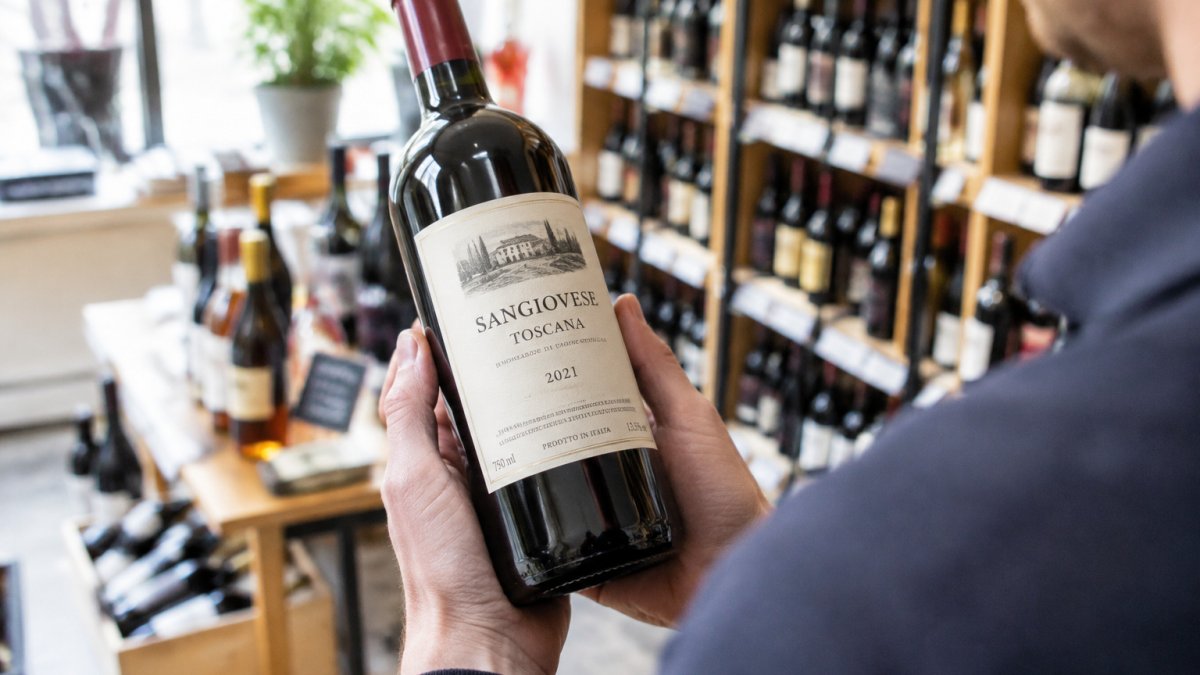
On the front, the product name, grape or region, and ABV sit together. The back label holds the net quantity, the allergen statement and the UK importer address. This layout keeps each item easy to find.
Where a label is cluttered with marketing text, the mandatory details can get pushed into a small corner. Keep the legal information prominent, even if the design suffers a little.
A Step-by-Step Wine Labelling Compliance Checklist
Most guidance lists the mandatory items; few turn them into a sequence a business can actually run before packaging is printed. The checklist below is ordered by workflow, not by regulation, so each step produces evidence the next step depends on. Run it for every new label and every reprint.
Stage 1, Before design begins
- Confirm the market for this SKU: Great Britain only, Northern Ireland only, or both. This decision drives every later step.
- Obtain the producer's technical sheet showing wine category, actual ABV, sulphite level and production area.
- Confirm the responsible business: the importer or the business placing the wine on the market, with a valid UK address.
- Agree who signs off the label internally and who checks it against the regulations, usually the importer's compliance lead, with an external adviser brought in for new markets or unfamiliar categories.
Stage 2, Draft the mandatory particulars
- Product name matches the wine and the producer's documents, and does not mislead on origin or variety.
- Wine category (still, sparkling, or other) is stated accurately.
- ABV is shown as measured, within the permitted tolerance, not rounded for design convenience.
- Net quantity is shown and matches the bottle size actually filled.
- Importer name and UK address are printed and legible.
- Country of origin matches the actual production area, not the bottling site.
- Sulphite declaration is included where the level exceeds the declaration threshold.
Stage 3, Check language, legibility and market fit
- All mandatory text is in English and meets the minimum legible size.
- Mandatory text sits on a clear background with adequate contrast.
- The label has been checked against the rules for the specific market in Stage 1, including any Northern Ireland-specific wording.
- Any over-sticker used for market adaptation meets the same legibility and permanence standards as the base label.
Stage 4, Evidence and sign-off before print
- The producer's technical sheet, sulphite analysis and label artwork are filed together.
- A printed proof has been checked on the actual bottle, not only on screen.
- The sign-off record names the person who approved the label and the date.
Work through the list for each new label, not just the first one. For the import paperwork and customs documents that follow, see wine import paperwork for restaurants. A small change from a producer, a new vintage, a revised blend, a different bottling site, can alter the wording, so repeat the check when a label is reprinted. Keeping the Stage 4 evidence on file is what turns a checklist into a defensible compliance record if a Trading Standards officer or a retailer's technical team asks questions later.
Checking Your Next Label Before It Goes on Sale
Before putting a wine on sale, run a final check. Ask whether every mandatory item is visible, accurate and legible on the bottle itself. Then check that the paperwork matches the label.
Pricing and sales planning come next. Learn how to price imported European wines for retail with UK excise duty and landed cost. Once a label is compliant, you can work out landed cost and margin. Costs depend on volume, shipping dates and delivery terms, so ask 79North Ltd for a current quote on the wines you are considering.
Frequently Asked Questions
What information must appear on a wine label?
A UK wine label must show the product name, the wine category, the alcohol by volume, the nominal volume, and an allergen statement that declares sulphites where they are present. It must also name the responsible business, such as the importer or bottler, with a name and address, and identify the country of origin. Where a protected designation or geographical indication applies, that term should appear accurately. Check the full list against current UK food information rules before you finalise any label, because requirements are updated from time to time.
Do wine labels need to show the importer's name and address?
Yes. A wine sold in the UK needs a business name and address for the food business operator responsible for the information on the label. For imported wine this is normally the UK importer, so the importer's details should appear clearly and be legible. Trading Standards officers can check this during inspections, and a missing or incorrect business address is one of the most common reasons a label is flagged. Confirm the exact wording with your importer before the label is printed.
What are the rules for listing allergens on wine labels?
Wine labelling must include an allergen declaration where ingredients or processing aids that are on the allergen list are present, and sulphites must be declared where they are present at levels above the legal threshold. Sulphites are the allergen most often overlooked on wine. Labels should state them clearly, usually as 'contains sulphites'. Because declarations depend on the individual wine and its production, check the specific product with your supplier and keep written confirmation on file for your records.
Can wine labels use a foreign language?
Mandatory information must be in a language and form that a UK consumer can easily understand. Many imported wines carry foreign-language front labels, and the mandatory information is often provided in English on a back label or sticker. The key requirement is that the consumer can read and understand the mandatory particulars, including the product name, alcohol content and allergens. Check legibility, minimum font size and placement before approving any label.
