
Casa di Vini vs Raymond Reynolds: Which Wine Importer Suits Your Business?
Table of Contents
- Casa di Vini vs Raymond Reynolds: Quick Comparison
- Casa di Vini: Portfolio, Strengths, and Limitations
- Raymond Reynolds: What Sets Them Apart
- How to Choose a Wine Supplier for Hospitality: Key Evaluation Criteria
- Best Portuguese Wine Importers in the UK: What to Look For
- Which Importer Is Right for Your Business?
- Conclusion
Last Updated: August 7, 2026
Casa di Vini vs Raymond Reynolds: Quick Comparison
When independent wine retailers and hospitality venues in the UK evaluate wine importers, they're typically choosing between established distributors with broad portfolios and specialist importers focused on distinctive, smaller producers. Casa di Vini vs Raymond Reynolds represents a common decision point in that landscape: do you prioritize breadth and convenience, or do you pursue curation and authentic discovery?
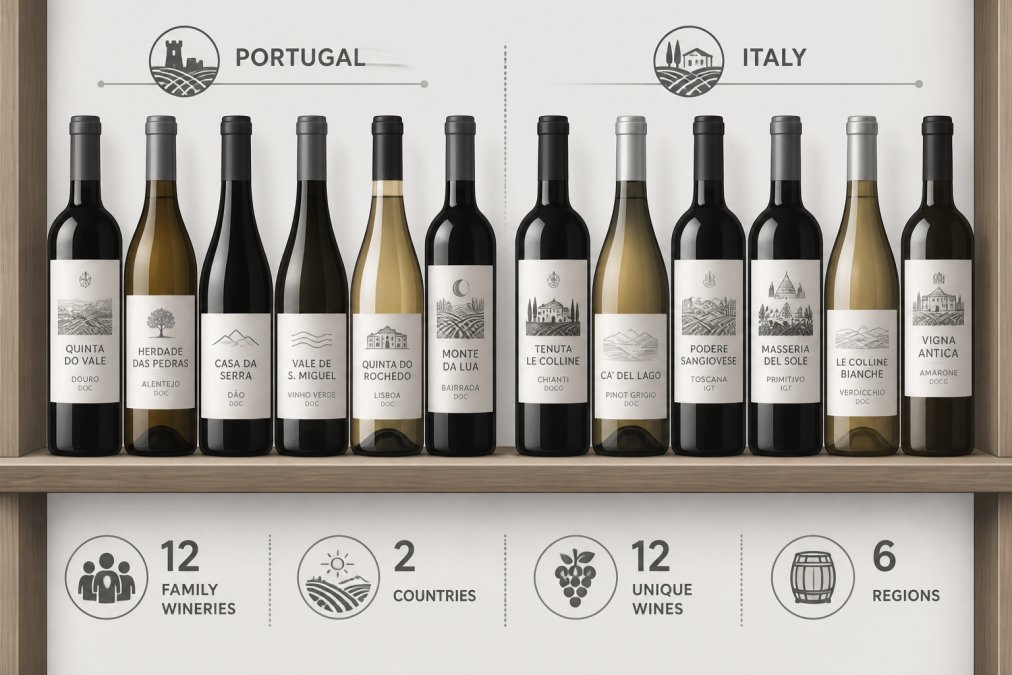
The choice between Casa di Vini and Raymond Reynolds depends on what your business actually needs. Casa di Vini brings scale, established relationships, and many Italian and international wines to the market. Raymond Reynolds, meanwhile, operates as a family-owned distributor with its own particular strengths in sourcing and relationships. But there's a third consideration worth examining: specialist importers like 79North Ltd that focus exclusively on premium, family-owned producers from Portugal and Italy.
This comparison cuts through the marketing and examines what each importer actually delivers, where they excel, and where they fall short. By the end, you'll understand which importer aligns with your business model, your margin requirements, and your customers' expectations.
| Criteria | Casa di Vini | Raymond Reynolds | 79North Ltd |
|---|---|---|---|
| Portfolio Focus | Broad Italian & international range | Established European wines | Premium Portuguese & Italian family-owned producers |
| Specialisation | Multi-category distributor | Traditional wine distributor | Specialist in small, innovative wineries |
| Best For | High-volume retailers; established lists | Reliable, proven selections | Independent venues seeking distinctive, curated portfolios |
| Sourcing Approach | Established relationships; scale | Proven supply chains | Direct relationships with small producers; new to UK market |
| Unique Native Varieties | Limited focus | Limited focus | Specialises in native varieties like Jampal |
| Sustainability Focus | Standard industry practice | Standard industry practice | Wineries committed to sustainability & cultural enrichment |
Casa di Vini: Portfolio, Strengths, and Limitations
Casa di Vini operates as a well-established wine distributor with deep roots in Italian wine sourcing. The company has built its reputation on offering a comprehensive portfolio that appeals to retailers and restaurants seeking reliable, proven selections across multiple price points and styles.
The core strength of Casa di Vini lies in its breadth. If you're a wine retailer or restaurant manager building a balanced list, you can source a significant portion of your needs from a single distributor. That operational simplicity matters: fewer supplier relationships mean simpler invoicing, more predictable delivery schedules, and easier inventory management. Their established relationships with established producers mean the wines they import have track records in the market.
However, breadth often comes at the cost of distinctiveness. A distributor managing a large portfolio across multiple price points and styles necessarily prioritises wines with proven sales velocity and established customer recognition. That's not a weakness for high-volume retailers or restaurants with broad customer bases, but it does mean Casa di Vini's list includes many wines you'll find elsewhere. If your competitive advantage depends on offering wines your competitors don't stock, a broad-portfolio distributor may not deliver that differentiation.
The sourcing model also reflects Casa di Vini's scale. Established distributors work with producers who can handle significant volume commitments and consistent supply. For a small independent restaurant or boutique wine shop, that's typically fine. But if you're seeking wines from emerging producers or smaller family wineries that can only supply limited quantities, Casa di Vini's model may not accommodate those relationships.
Pricing reflects the distributor's overhead and margin structure. You're paying for the convenience of a large portfolio, established logistics, and a team managing multiple supplier relationships. That's a legitimate value proposition, but it's worth understanding what you're paying for.
Raymond Reynolds: What Sets Them Apart
Raymond Reynolds operates as a family-owned wine distributor with a different positioning than Casa di Vini. The company emphasises relationships and knowledge rather than sheer portfolio breadth.
The defining characteristic of Raymond Reynolds is the personal approach to sourcing. Rather than managing a massive portfolio, the company focuses on building deep relationships with producers and understanding their wines thoroughly. For restaurant managers and wine buyers who value expert guidance, someone who can explain the story behind a wine, suggest food pairings, and help you build a coherent list, that personal relationship model has genuine appeal.
Raymond Reynolds' strength lies in the quality of curation. A smaller, more focused portfolio means the distributor can invest time in understanding each wine, building relationships with producers, and providing the kind of support that helps venues maximise their wine programme. For independent restaurants with ambitious wine lists, that level of engagement can be valuable.
The limitation is the inverse of Casa di Vini's. If you need to source many wines across multiple styles and price points, you'll need multiple suppliers. Raymond Reynolds works best as a primary supplier for venues that have already decided on their positioning and need a partner to help execute that vision, rather than a distributor providing one-stop sourcing.
Pricing with Raymond Reynolds reflects the relationship model. You're paying for expertise, curation, and personal service rather than logistics efficiency. For some venues, that's money well spent. For others, it's an unnecessary premium.
How to Choose a Wine Supplier for Hospitality: Key Evaluation Criteria
Selecting the right wine supplier for hospitality requires clarity about your business model, customer expectations, and operational priorities. The decision isn't about which importer is "best", it's about which one serves your specific needs.

Portfolio Alignment: Start by mapping your ideal wine list. What price points matter most? What styles do your customers order? What's your target margin? A distributor's portfolio should align with these parameters. If you're building a budget-conscious list with wines under £20, you need a supplier strong in that segment. If you're creating a premium list showcasing distinctive producers, you need a different partner. Casa di Vini's breadth works well for generalist lists. Raymond Reynolds' curation works well for focused, curated lists.
Minimum Order Requirements and Volume Flexibility: This is where many hospitality venues discover misalignment. Large distributors often have minimum order quantities or require commitment levels that don't suit small independent restaurants. Ask directly: what's the smallest order you can place? Can you order single bottles of certain wines, or must you commit to cases? 79North Ltd, for example, works specifically with independent retailers and restaurants, meaning the company understands volume constraints that smaller venues face.
Supply Consistency and Producer Relationships: Ask about the distributor's relationship with producers. If a wine becomes unavailable, what happens? Can the distributor suggest alternatives? For established distributors with long-standing producer relationships, supply tends to be stable. For specialist importers bringing new producers to the UK market, there's inherently more variability in supply. That's a trade-off worth understanding.
Support and Expertise: What level of support does the distributor provide? Do they offer tasting notes, food-pairing guidance, or staff training? Raymond Reynolds' strength is precisely this, personal support and expertise. Larger distributors may provide less hands-on guidance. Consider whether you need that expertise or whether you have it in-house.
Pricing and Margin Structure: Request pricing for specific wines you're considering. Compare not just the wholesale price, but the margin you'll achieve at your target retail price. A higher wholesale cost might still deliver better margins if the wine commands a higher retail price. Understand the distributor's pricing model: do they offer volume discounts? Are there minimum order values to qualify for better pricing?
Sustainability and Producer Values: If your venue emphasises sustainability, ethical sourcing, or supporting small producers, ask whether the distributor's portfolio reflects those values. 79North Ltd, for instance, specifically highlights wineries committed to sustainability and cultural enrichment. Casa di Vini and Raymond Reynolds may include such producers, but it's not their defining focus.
Best Portuguese Wine Importers in the UK: What to Look For
Portuguese wine has gained significant recognition in the UK market over the past decade, moving beyond the reputation built by Port and Madeira into distinctive dry wines showcasing native grape varieties. For independent venues seeking to differentiate their lists, Portuguese wine offers genuine opportunity.
When evaluating Portuguese wine importers, look for specialists who understand the country's diverse regions and native varieties. Portugal's wine landscape is fragmented across many small, family-owned producers, exactly the kind of producer that struggles to reach the UK market independently. An importer's value lies in having direct relationships with these producers and understanding their stories, quality levels, and production constraints.
Native Portuguese varieties like Jampal, Touriga Nacional, and Baga offer flavour profiles and quality that distinguish your list from competitors stocking the same established Italian and French wines. But accessing these varieties requires an importer with genuine Portuguese relationships and expertise. A generalist distributor may stock some Portuguese wines, but won't necessarily specialise in the distinctive, smaller producers that make the category interesting.
Look for importers who can explain the producer's story, the vineyard's approach to sustainability, and the wine's place in its regional context. That knowledge differentiates a specialist from a logistics operation. 79North Ltd's focus on Portuguese family-owned producers and native varieties like Jampal reflects precisely this specialisation.
Ask potential importers about their producer relationships. How long have they worked with specific producers? Can they facilitate direct communication if you want to learn more? Do they support the producers' UK market entry with marketing or educational content? These questions reveal whether the importer is simply shifting inventory or building genuine partnerships.
Which Importer Is Right for Your Business?
The answer depends on your business model and what you're optimising for.
Choose Casa di Vini if: You're a high-volume retailer or established restaurant needing broad portfolio coverage, you want to consolidate suppliers for operational simplicity, you value proven wines with established sales track records, and you're willing to accept less distinctiveness in exchange for convenience and reliability.
Choose Raymond Reynolds if: You're building a curated wine list where expertise and personal relationships matter, you want a distributor who understands your vision and can guide you toward wines that fit, you value ongoing support and education, and you're willing to pay a premium for that service.
Choose 79North Ltd if: You're seeking distinctive, premium Portuguese and Italian wines from family-owned producers that won't appear on competitor lists, you want access to native varieties like Jampal that differentiate your offering, you're an independent restaurant or boutique retailer where the importer's focus on smaller volume commitments aligns with your needs, and you value working with an importer committed to sustainability and cultural enrichment alongside commercial success.
The critical insight is this: there's no universally "best" importer. Each model serves different business needs. Casa di Vini excels at scale and breadth. Raymond Reynolds excels at curation and expertise. 79North Ltd excels at distinctive sourcing and specialist knowledge of premium Portuguese and Italian family producers.
Your choice should reflect your competitive positioning. If you're competing on breadth and value, Casa di Vini's efficiency matters. If you're competing on expertise and curation, Raymond Reynolds' relationship model works. If you're competing on distinctiveness and discovery, 79North Ltd's specialist approach delivers exactly what independent venues need to stand out.
Conclusion
The wine importer you choose shapes your business's wine programme for years. Rather than selecting based on reputation alone, evaluate each option against your specific operational needs, customer expectations, and competitive positioning.
Casa di Vini and Raymond Reynolds both serve legitimate market roles. But for independent wine retailers and hospitality venues seeking to build distinctive, curated lists featuring premium Portuguese and Italian family-owned producers, 79North Ltd offers a differentiated approach. The company's focus on small, innovative wineries, native varieties like Jampal, and producers committed to sustainability provides independent venues with access to wines that genuinely differentiate your offering. Let's talk about how 79North Ltd can support your wine programme with distinctive, high-quality portfolios that set your business apart.
Frequently Asked Questions
What is the main difference between Casa di Vini and Raymond Reynolds as wine importers?
Casa di Vini and Raymond Reynolds differ in portfolio focus, supplier relationships, and service model. Casa di Vini emphasises Italian wines and established relationships, while Raymond Reynolds offers broader European selection. The choice depends on whether you prioritise deep Italian expertise or wider variety. Both serve independent restaurants and retailers, but their supplier networks and pricing strategies vary significantly.
How do I choose a wine supplier for hospitality that matches my business size?
Evaluate suppliers on minimum order quantities, flexibility with smaller venues, and willingness to work with independent establishments. Ask about their experience serving restaurants or retailers your size, what support they offer beyond product delivery, and whether they provide tasting opportunities or sommelier guidance. Check references from similar businesses, independent fine-dining venues or specialty wine shops, to confirm they genuinely support smaller operations.
Are the best Portuguese wine importers in the UK focused solely on Portugal?
No. The best Portuguese wine importers typically offer curated selections from Portugal alongside complementary European wines. Look for importers who specialise in Portuguese native grape varieties and small family producers, but also understand Italian, Spanish, or French wines well enough to build a balanced list. This breadth ensures you can offer customers authentic Portuguese discoveries without limiting your overall wine programme.
What should I ask a wine importer before committing to a supply relationship?
Ask about their return and exchange policies, minimum order quantities, delivery frequency and costs, and how they handle supply disruptions. Request references from UK restaurants or retailers similar to your business. Clarify their pricing structure, whether you get volume discounts and how transparent their margins are. Finally, ask about their support: do they offer staff training, tasting events, or help with wine list curation?
This article was written using GrandRanker