Why Direct-to-Consumer Wine Sales Pay Off for Small Shops
Quick Summary
Direct to consumer wine sales let small shops keep more of each bottle's price by removing a wholesale mark-up and setting their own prices. They also give shops direct ownership of the customer relationship and data, which helps decide future stock and promotions.
- Selling direct removes at least one layer of wholesale mark-up, which is where most of the margin gain comes from.
- Set a floor price for each bottle before launching any promotion, because heavy discounting can erase the margin gain quickly.
- Tag each order by producer, region and style to spot seasonal patterns and order earlier the following year.
- Keep one master stock count shared by the website and shop floor to avoid selling bottles you no longer have.
- Confirm in writing that your licence covers delivery to a home address, since a shop licence does not automatically cover it.
Table of Contents
- Why Small Wine Shops Are Turning to Direct Sales
- Higher Margins Without Giving Up Pricing Control
- Owning the Customer Relationship and Consumer Data
- Building a Wine Subscription Model That Retains Buyers
- Wine E-Commerce Best Practices for Small Budgets
- Alcohol Licensing and Compliance for Online Sales
- Your First Steps Toward a Direct Wine Channel
- Frequently Asked Questions
Why Small Wine Shops Are Turning to Direct Sales
Last Updated: November 10, 2026
Direct to consumer wine sales let independent shops keep more of every bottle they sell. At 79North Ltd, we import family-owned wines from Portugal and Italy for independent retailers, and we see the same question from almost every shop owner we speak to: what does selling direct actually change? The short answer is margin, control and the customer relationship. The longer answer depends on how much work you are prepared to put in.
Direct-to-consumer, or DTC, means selling straight to the person who drinks the wine, through your own website, an online shop or a subscription. Most independent shops already sell some wine this way without calling it that. The shift is about making the online channel a deliberate part of the business rather than an afterthought.
Wine & Spirit Trade Association market insight reports
Small shops have a particular advantage here. They already know their regulars by name, they choose their stock carefully, and they can tell a story about each bottle. Those strengths carry over well online, provided the operational basics are in place.
Higher Margins Without Giving Up Pricing Control
Selling direct to consumer wine removes at least one layer of wholesale mark-up, and that is where most of the margin gain comes from. You set the shelf price, the online price and any member discount yourself.
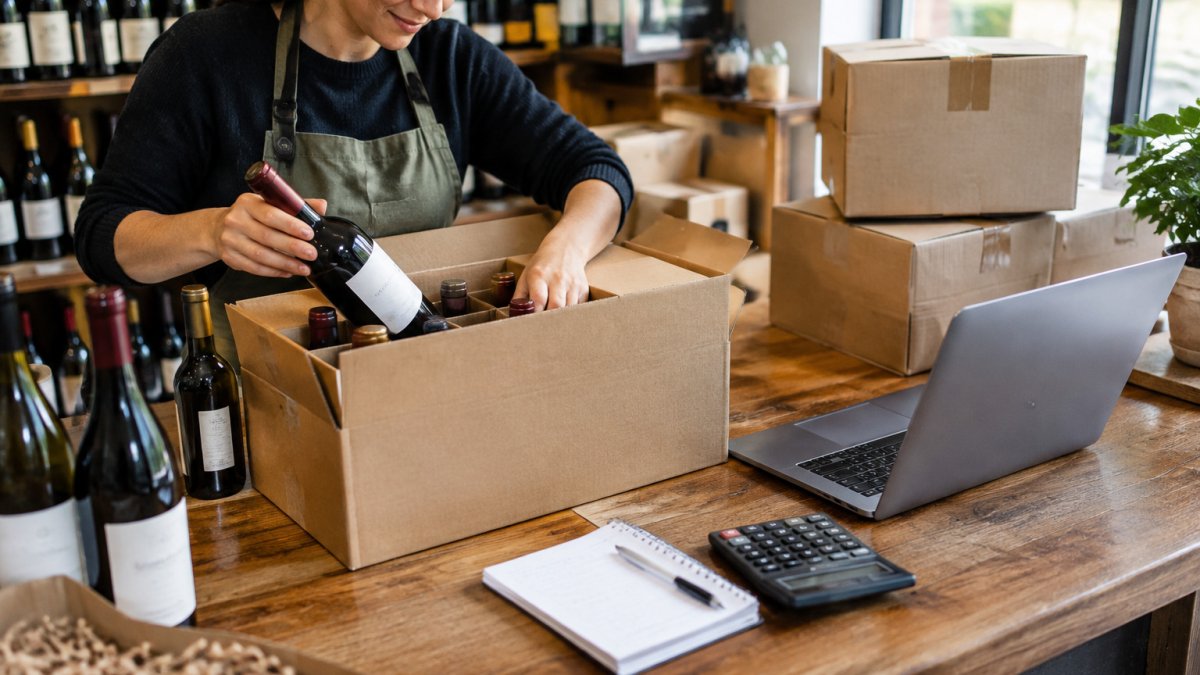
Pricing control matters as much as the margin itself. When a shop sells through a third-party marketplace, the platform often sets the rules on visibility and fees. Selling on your own site means you decide when to run a promotion and when to hold your price.
Here is an example of how a mixed case might be priced on your own site:
| Product | Trade cost | Your online price | Use case |
|---|---|---|---|
| Casal do Conde 2023 Alvarinho | £15.00 | Set by you | Fish and light dishes |
| Manz 2022 Dona Fátima Jampal | £35.00 | Set by you | Aperitif and shellfish |
| Quinta Pousada de Fora 2020 Arinto Reserva | £26.00 | Set by you | Lighter seafood |
Trade cost
Watch out: Discounting heavily to win online orders can erase the margin gain quickly. Set a floor price for each bottle before you launch any promotion.
Owning the Customer Relationship and Consumer Data
When a customer buys through your own channel, you see who they are, what they buy and how often they return. That data is useful for deciding what to stock next, which events to run and which customers to contact when a new arrival lands.
A common mistake is collecting data without using it. Tag each order by the producer, region and style, so you can spot patterns over a season. A shop that notices its Portuguese whites sell out in summer can order earlier the following year.
A short note about where the wine came from, who made it and what it pairs with does more than a generic promotional email.
Building a Wine Subscription Model That Retains Buyers
Subscriptions give a shop predictable revenue and give customers a reason to keep returning. Compare how a small-batch wine club is structured and reviewed before setting your own tiers. A good model usually offers a fixed number of bottles each quarter, with the option to swap a bottle if a customer already knows the style.
Keep the structure simple. Three tiers, clear delivery dates and a short tasting note with every box tend to work better than complicated choices. Monthly subscribers should also be able to pause without cancelling, because a pause is often the step before a permanent exit.
Reorder rates are the figure to watch. If subscribers are reordering single bottles between boxes, the offer is working. If they are cancelling after the first delivery, the mix of wines probably needs rethinking.
Wine E-Commerce Best Practices for Small Budgets
A small shop does not need an expensive platform to sell wine online well, but it does need a deliberate setup that keeps the website, the shop floor and any subscription box working from the same information. Most of the cost sits in your time rather than in software, so the choices below focus on what to set up first.
A hosted e-commerce service with built-in payments, product pages and shipping rules is one option for the storefront. Check the costs of the monthly platform fee, the card processing charge on each sale and any app you add for subscriptions or age verification before committing. Check each figure against your expected order volume before committing, because a plan that suits 20 orders a month can become expensive at 200.
Product pages decide whether a buyer adds a bottle to the basket. Show the producer, vintage, grape variety, region, ABV, allergens and a short tasting note on every listing. For less familiar grapes such as Arinto or Jampal, add a one-line explanation and a food pairing, because an unfamiliar name is the most common reason a customer abandons the page.
Stock synchronisation is where small shops most often go wrong. Keep one master stock count, updated by every sale and every delivery received, and let the website and the shop floor read from it. If the shop and website hold separate counts, you will sell a bottle you no longer have. Reconcile the count weekly, and hold back a small buffer on single bottles so a shelf sale cannot leave an online order unfillable.
Shipping costs should be visible before checkout. Set a flat rate or a simple weight band, state whether free delivery applies above a threshold, and make sure the figure covers the courier's alcohol surcharge if one applies. Hidden shipping charges at the final step are a common cause of cart abandonment.
Watch out: Selling a bottle from the shop and the website at the same time without a shared count is the fastest way to disappoint a customer, so set the synchronisation process up before you open the online channel.
Alcohol Licensing and Compliance for Online Sales
Legal compliance is the barrier most small shops underestimate when they first consider selling wine online. For a shop in the UK, it is a sequence of checks that has to be completed before the first order is taken.
Start with the licences you already hold. Check your existing licences with your local licensing authority to confirm whether they include remote sales, and whether any licence conditions restrict deliveries, opening hours or the age of the people handling parcels. Our UK wine label compliance guide walks through the labelling checks step by step.
Next, check your duty position. Check your duty position with HM Revenue and Customs, and keep records showing duty has been accounted for on every bottle sold.
Age verification is the next step. You may not sell alcohol to anyone under 18, and the courier's rules matter as much as your own. Build a clear age check into the checkout, for example a declaration plus a verification step where you use one, and keep a record of each order so you can show compliance if a licensing officer asks.
Delivery rules are the last layer. Use couriers that accept alcohol consignments, label parcels accurately and follow the carrier's rules on signature and age checks at the door. Subscription boxes need the same care at every delivery, because the same customer receives parcels repeatedly and each one carries the same obligation.
Watch out: A licence that covers sales from your shop does not automatically cover delivery to a home address, so confirm this in writing before launching.
HM Revenue and Customs guidance on alcohol duty
Your First Steps Toward a Direct Wine Channel
Start small. Choose five to ten bottles you already know well, list them on a simple website, and test the checkout yourself before you invite customers to use it.
Next, set the margin rules. Work out your landed cost per bottle, add shipping and packaging, and decide the floor price before you publish anything. Then decide whether a subscription makes sense for your customer base, or whether single-bottle sales are enough to begin with.
If you are still choosing your range, a partner who already imports and supplies small producers can shorten the process considerably. Our buyer's guide to premium wines for UK delis covers wholesale suppliers, licensing and profit strategies. Read a step-by-step guide to sourcing wine directly from producers to understand the process from the start. Speak to our team at 79North Ltd about the Portuguese and Italian wines in our portfolio and what they could look like on your shelves and online. Get in touch and let's talk.
Frequently Asked Questions
What are the main benefits of D2C wine sales for small retailers?
Direct-to-consumer wine sales let a small shop sell straight to customers rather than only through intermediaries. The shop keeps more of each sale, sets its own prices and promotions, and collects the customer details needed to follow up. Because the buyer comes to the shop's own channel, the business builds a base of repeat customers instead of depending on a distributor's listings. For a shop that imports or curates unusual producers, this direct line also lets it explain each bottle in its own words.
How does direct-to-consumer selling improve profit margins for wine shops?
Selling direct removes some of the layers between the producer and the drinker, so the shop captures a larger share of the retail price. Margins improve further when the shop avoids discounting through third-party marketplaces and instead uses its own pricing and bundle offers. Shipping and packaging costs must be built into the price, so the shop should model a sample order, including delivery, before setting its prices.
What are the legal considerations for selling wine online in the UK?
A business selling alcohol online in the UK needs the correct licence from its local authority, and the licence must cover sales by distance selling as well as on premises. The shop should age-verify buyers and must not deliver to anyone under 18. Labelling, duty payments and the rules for delivery should be checked against current HMRC and licensing guidance before launch. Shops should take professional advice on terms of sale and consumer rights, as the rules can change.
How do I start a direct-to-consumer wine sales channel?
Start with a simple online shop that lists a focused range, clear delivery terms and an age-check at checkout. Confirm your alcohol licence covers online sales, then set up payment, a shipping partner and an inventory record that matches what is on your shelves. Launch with a small selection, such as a few bottles from one or two producers, and add a subscription or mixed-case option once you see which customers return.
