How do you build a Tuscan wine list for your restaurant?
Last Updated: October 24, 2026
Quick Summary
A Tuscan wine list should align with your restaurant's food menu, guest profile, and business model by selecting wines from key regions like Montalcino, Montepulciano, and Chianti that pair naturally with your dishes. Structure your list by region and style, price thoughtfully with 2.5 to 4 times markup depending on positioning, and train staff to make confident recommendations.
- Brunello di Montalcino pairs with aged cheeses and rich meat dishes, while Chianti Classico works across roasted meats, pasta with meat sauce, and aged cheeses.
- A balanced Tuscan wine list includes two Brunello options, three Chianti Classico selections, one Vino Nobile, one Super Tuscan, and one to two white options.
- By-the-glass pricing should charge £15-£18 per 150ml glass to protect margins when bottles are poured but not fully sold.
- Standard restaurant wine markup ranges from 2.5 to 4 times wholesale cost, with fine-dining venues sustaining higher markups than casual restaurants.
- Train staff on basic Tuscan regions, food pairings, and wine descriptions using simple one-page guides so they can make confident recommendations during service.
Table of Contents
- Understanding your restaurant's wine identity and target customer
- Selecting Tuscan wines that complement your food menu
- Restaurant wine list examples from Tuscan regions and appellations
- Wine and food pairing for restaurants serving Italian cuisine
- Structuring your Tuscan wine list by region and style
- Restaurant wine list pricing and margin strategy
- Building a wine by the glass programme that drives revenue
- Training your team and managing inventory for long-term success
- Frequently Asked Questions
Understanding your restaurant's wine identity and target customer
Building a Tuscan wine list starts with clarity about who you are and who walks through your door. Your wine programme should reflect your restaurant's personality, not chase every trend.
Ask yourself: Are you a casual trattoria or fine-dining establishment? Do your guests expect familiar names or are they adventurous? What's your food focus, traditional Italian, contemporary European, or something hybrid?
Your target customer shapes everything. A neighbourhood Italian restaurant with a £15 average main course needs a different approach than a Michelin-focused venue. One serves wine as an everyday companion to food. The other uses it as a statement.
The best Tuscan wine list aligns with your brand identity. If you position yourself as authentic and regional, your list should reflect that commitment. If you're modern and experimental, Tuscan wines can anchor you while you explore.
Start by documenting:
- Your restaurant's price point and dining style
- Your typical guest profile (local, tourist, business, special occasion)
- Your food menu's dominant flavours and ingredients
- Your staff's wine knowledge level
- Your storage and service capacity
This foundation makes every decision that follows clearer and faster.
Selecting Tuscan wines that complement your food menu
Your food menu is the anchor for wine selection. Each bottle should have a reason to exist on your list, it should pair with something you serve.
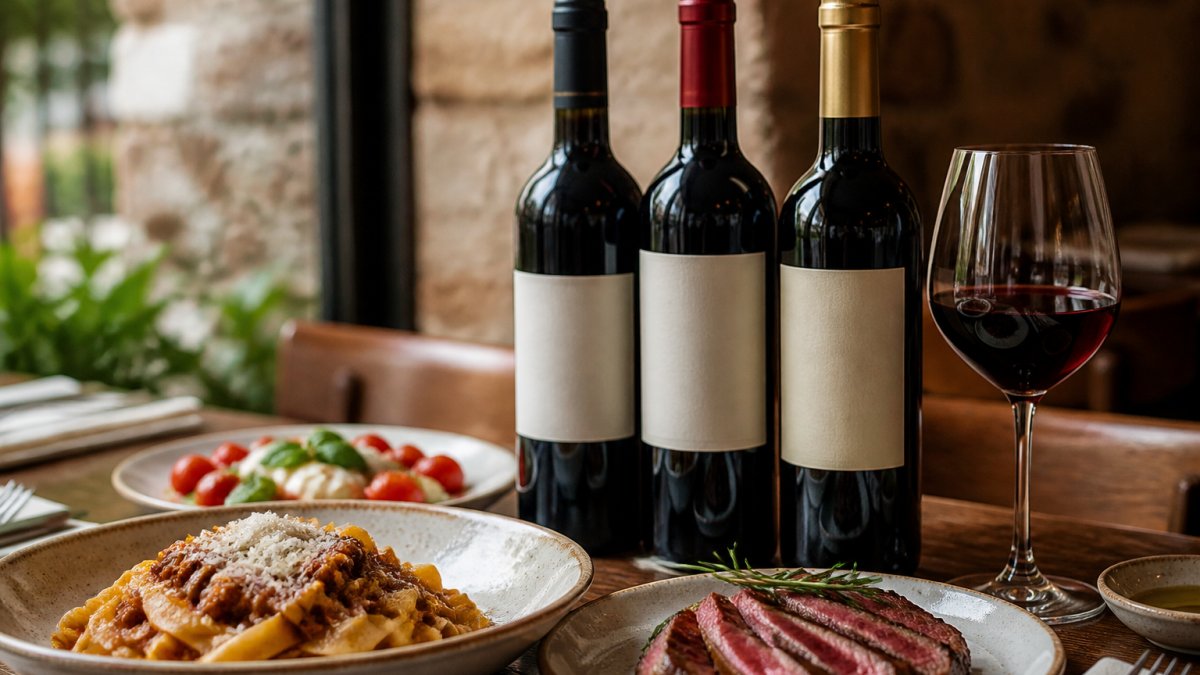
Tuscan wines excel with specific dishes. Brunello di Montalcino pairs beautifully with aged cheeses, rich meat dishes, and slow-cooked ragù. Chianti Classico works across a broader range, roasted meats, pasta with meat sauce, aged hard cheeses.
Map your menu against Tuscan options:
- Heavy meat dishes → Brunello, Vino Nobile di Montepulciano
- Tomato-based pasta → Chianti, Chianti Classico Riserva
- Seafood → Vermentino, Vernaccia di San Gimignano
- Cheese and charcuterie → Brunello, Rosso di Montalcino
- Lighter vegetable plates → white Tuscan varieties
Don't stock wines that don't work with your food. A bottle that sits untouched for six months costs you money and shelf space. Every selection should have a clear food anchor.
Consider also the seasons. Summer guests may favour lighter whites and rosés. Winter diners expect fuller reds. A flexible approach lets you rotate seasonal selections while keeping core wines consistent.
Restaurant wine list examples from Tuscan regions and appellations
Tuscany produces distinctive wines across several key regions. Understanding these appellations helps you build a coherent list that tells a story to your guests.
Montalcino produces Brunello, one of Italy's most prestigious reds. These are powerful, age-worthy wines that command respect and higher price points.
Montepulciano offers Vino Nobile, a slightly lighter alternative to Brunello with similar ageing potential but often better value.
Chianti and Chianti Classico are the workhorse regions. Chianti Classico carries stricter rules and generally higher quality than basic Chianti.
San Gimignano specialises in Vernaccia, a crisp white wine that pairs well with seafood and lighter dishes. Including a local white adds variety without requiring expensive inventory.
Bolgheri produces Super Tuscan wines, blends that often include Cabernet Sauvignon or Merlot alongside Sangiovese. These are modern, approachable wines that appeal to guests hesitant about traditional Italian varieties.
A balanced Tuscan wine list might include:
- Two Brunello options (entry and premium)
- Three Chianti Classico selections (different producers, styles)
- One Vino Nobile di Montepulciano
- One Super Tuscan for variety
- One or two white options (Vernaccia, Vermentino)
- One rosé for seasonal service
This structure gives guests choice without overwhelming them. Each region represents a different price point and flavour profile.
Wine and food pairing for restaurants serving Italian cuisine
Pairing wine and food is simpler than many people think. The goal isn't perfection, it's harmony. A wine should complement the dominant flavours on the plate without overwhelming them or disappearing.
Start with basic principles. Acidity cuts through richness. Tannins pair with protein and fat. Body should match intensity. A delicate white wine vanishes next to grilled steak.
For Italian cuisine specifically, remember that Italian wines evolved alongside Italian food. Chianti wasn't created in isolation, it developed over centuries paired with Tuscan cooking.
Consider the sauce, not just the protein. A chicken breast in tomato sauce needs a different wine than the same chicken in cream sauce. Tomato pairs with medium-bodied reds like Chianti.
Pasta shapes and sauces matter too. Light, oil-based sauces pair with crisp whites or light reds. Meat-based ragù needs fuller reds.
Train your team to ask one question: "What's the main flavour?" If a guest orders beef with mushroom sauce, the mushroom matters as much as the beef. A wine that handles earthy notes and umami will perform better than one focused purely on tannin structure. Best Food Pairings for Brunello di Montalcino Wines provides specific guidance for one of your anchor wines, helping staff make confident recommendations.
Best Food Pairings for Brunello di Montalcino Wines provides specific guidance for one of your anchor wines, helping staff make confident recommendations.
Structuring your Tuscan wine list by region and style
Organisation matters. A confusing list frustrates guests and makes staff recommendations harder. Structure your Tuscan wine list so guests can navigate it intuitively.
The clearest approach organises by region and then by style within each region. This mirrors how Tuscan wines actually work, each region has a signature character.
Example structure:
| Region | Wine Type | Price Range | Serving Note |
|---|---|---|---|
| Montalcino | Brunello | Premium | Age-worthy, bold |
| Montepulciano | Vino Nobile | Mid-range | Elegant, structured |
| Chianti | Chianti Classico | Mid-range | Versatile, everyday |
| San Gimignano | Vernaccia | Entry | Crisp, seafood-friendly |
| Bolgheri | Super Tuscan | Premium | Modern, approachable |
Within each region, list wines from lightest to fullest body, or from most affordable to most expensive. Consistency helps guests understand your logic.
Consider adding brief descriptions. Guests don't need flowery language, they need context. "Montalcino: structured red, beef and aged cheese" tells them immediately whether this wine fits their meal.
For by-the-glass service, choose one option per region. This gives variety without requiring excessive inventory. Rotate seasonal selections to keep the list fresh without confusing regulars.
A well-structured list makes upselling easier. Staff can guide guests confidently. Guests feel educated, not pressured. Everyone wins.
Restaurant wine list pricing and margin strategy
Pricing is where many restaurants leave money on the table. Tuscan wines, particularly smaller producer bottles, allow for healthy margins because guests often don't know the wholesale cost.
The standard restaurant markup is 2.5 to 3 times wholesale cost. For wine, this is often more aggressive, 3 to 4 times is common, particularly for premium bottles. This isn't greed; wine requires storage, service training, and inventory risk.
However, pricing depends on several factors. Your restaurant's positioning matters. Fine-dining venues can sustain higher markups. Casual restaurants need lower prices to move volume.
Consider also the bottle's wholesale cost. Entry-level Tuscan wines might wholesale for £8-£12. A 3x markup puts them at £24-£36 on your list, reasonable for restaurant service.
Wholesale Italian Wine Pricing Guide 2026 helps you understand current wholesale costs and calculate appropriate margins for your market.
By-the-glass pricing requires different logic. A bottle costs you £20 wholesale. At 3x markup, the bottle retails for £60.
Test your pricing with a few bottles before committing fully. Watch what sells and what sits. Adjust accordingly. A wine that doesn't move at £45 might fly at £38.
Building a wine by the glass programme that drives revenue
By-the-glass service transforms wine from an occasional luxury into an everyday sale. Most guests won't order a full bottle at dinner, but many will order a glass.
Start small. Offer three to five options: one white, two to three reds, and optionally a sparkling or rosé.
Choose wines that:
- Pair broadly with your menu
- Hold up well once opened (lighter reds and whites oxidise faster)
- Appeal to different taste preferences (one lighter, one fuller red)
- Offer good value at the glass price
Vermentino or Vernaccia work well as whites, crisp, food-friendly, reasonably priced. For reds, a Chianti Classico and a Rosso di Montalcino give guests a choice between lighter and fuller styles.
Pricing matters here. A guest paying £6-£8 per glass feels they're getting value. At £12+, they question whether to order a bottle instead.
Train your team to suggest wine by the glass. This isn't pushy, it's helpful. A guest ordering pasta might not think about wine.
Track what sells. If one glass option sits untouched while another empties daily, rotate it out. Your by-the-glass programme should evolve based on real guest behaviour, not assumptions.
Training your team and managing inventory for long-term success
Your staff makes or breaks your wine programme. The best list fails if your team can't describe wines confidently or make recommendations.
Training doesn't require sommelier certification. It requires foundational knowledge: What's the difference between Chianti and Brunello? Which wines pair with which dishes?
Start with basics. Teach your team the Tuscan regions on your list.
Create simple staff guides. One page per wine: region, producer, flavour profile, food pairings, price. Nothing fancy.
Role-play recommendations. A guest asks for a red wine pairing with their pasta carbonara. How does your staff respond?
Inventory management keeps your programme sustainable. Tuscan wines, particularly from smaller producers, can have limited availability.
Track what sells and what doesn't. Your list should evolve based on guest demand and seasonal patterns. How to Train Staff on Selling Lesser Known European Wines covers strategies for managing European wine inventory and staff confidence.
Manage your vintage carefully. Tuscan wines age beautifully, but older vintages cost more.
Building a Tuscan wine list for your restaurant is about alignment.
At 79North Ltd, we work with independent restaurants to source distinctive Portuguese and Italian wines that stand out from mainstream options.
Frequently Asked Questions
How many wines should a Tuscan wine list include for a small independent restaurant?
Start with 15-25 bottles across red, white, and sparkling options, plus a focused by-the-glass selection of 4-6 wines. This size allows you to maintain inventory freshness, train staff thoroughly on each wine, and avoid over-commitment. As your team gains confidence and guest preferences become clear, expand gradually. Quality and staff knowledge matter far more than breadth of selection.
What makes a good house wine for an Italian restaurant with a Tuscan focus?
A house wine should be approachable, food-friendly, and represent authentic Tuscan character without premium pricing. Look for wines from established producers in Chianti or Vino Nobile di Montepulciano that offer consistent quality and flavour. It should pair comfortably with your most common dishes and encourage guests to order by the glass. Aim for a wine that reflects your restaurant's brand rather than the cheapest option available.
How should restaurants price wine by the glass and bottle to maintain healthy margins?
A standard approach is to price by-the-glass pours at 25-30% of the bottle price, allowing guests to sample without full commitment. Bottle markups typically range from 2.5 to 3.5 times the wholesale cost, depending on your market and positioning. Premium or rare bottles may justify higher markups. Test your pricing by monitoring which wines sell fastest and adjust based on guest feedback and inventory turnover. Transparent pricing builds trust with repeat customers.
How often should a restaurant update its Tuscan wine list?
Review and refresh your list seasonally or when key wines sell out or become unavailable. Vintage changes in Tuscany occur annually, so expect some selections to shift. Minor adjustments (swapping one wine for another in the same category) can happen quarterly. Major restructuring, such as adding a new region or producer, works best annually. Communicate changes to your team and guests so they understand the evolution of your programme and feel invested in new discoveries.
