
How to Identify Sediment in Aged Wine Bottles
Table of Contents
- What Wine Sediment Is and Why It Forms
- Wine Crystals in Bottles: Tartrates and Tartaric Acid
- Visual Inspection: How to Spot Sediment Under Light
- Wine Sediment Versus Spoilage: How to Tell the Difference
- How Long to Stand Wine Before Serving Aged Bottles
- How to Decant Wine With Sediment
- Sediment in Aged Wine: What It Tells You About Quality
- Frequently Asked Questions
Last Updated: October 18, 2026
What Wine Sediment Is and Why It Forms
Wine sediment is the collection of particles and deposits that settle at the bottom of aged wine bottles over time. It's a natural part of how wine matures. Learning how to identify sediment in aged wine bottles helps you decide whether to decant, filter, or simply pour carefully.
Sediment forms for several reasons. As wine ages, tannins and colouring compounds bond together and become heavier. They gradually sink to the base of the bottle. Tartaric acid, a natural compound in wine, crystallises and creates visible deposits. Spent yeast cells and grape skins also contribute to what you see at the bottom.
The good news: most sediment is harmless. It's not a sign of spoilage or poor quality. In fact, sediment often indicates that a wine has been aged properly and hasn't been over-filtered, which can strip flavour and complexity.
Common types of sediment in aged bottles
Red wines typically develop more sediment than white wines. This is because red wines contain higher levels of tannins and colouring compounds. Over years or decades, these particles accumulate noticeably at the bottle's base.
The most common types of sediment you'll encounter are:
- Tartrate crystals, small, grainy particles that catch the light
- Lees, the settled remains of yeast and dead cells from fermentation
- Grape skins and pulp, natural particles from the winemaking process
- Tannin polymers, darker, more substantial deposits that form as tannins bond together
Each type looks slightly different under light, but all are normal and expected in aged bottles.
Why sediment settles differently in red and white wines
Red wines develop sediment much more readily than white wines. Red wine production involves extended contact between the juice and grape skins, which adds tannins and colour. These compounds are what eventually form the visible deposits you see in aged bottles.
White wines have less skin contact during production, so they contain fewer tannins. The sediment that does form in white wines tends to be finer and lighter in colour. You might notice a slight haze or a thin layer at the bottom rather than the chunky, visible deposits common in aged reds.
Age matters too. A ten-year-old red wine will almost certainly have noticeable sediment. A ten-year-old white wine might have very little, or none at all. This is why decanting red wines is a common practice, whilst white wines rarely need it.
Wine Crystals in Bottles: Tartrates and Tartaric Acid
Tartrate crystals are among the most distinctive sediments you'll see in aged bottles. They look like small shards of glass or coarse sugar crystals. Sometimes they're called "wine diamonds" because of their appearance when they catch the light.
These crystals form when tartaric acid, which occurs naturally in grapes, binds with potassium or calcium ions in the wine. The resulting compound becomes insoluble and crystallises out of solution.
Here's what matters: tartrate crystals are completely harmless. They don't affect the wine's safety or quality. Many winemakers actually leave them in the bottle deliberately, as a sign that the wine hasn't been overly processed.
If you find tartrate crystals clinging to the inside of the bottle or floating in your glass, simply leave them behind when you pour. They won't dissolve in your mouth, and they add nothing to the flavour experience.
Visual Inspection: How to Spot Sediment Under Light
The easiest way to know how to identify sediment in aged wine bottles is to hold the bottle up to light and look at the bottom and sides. Natural daylight works best, but a bright lamp will do. Tilt the bottle slightly and watch how the particles move and settle.
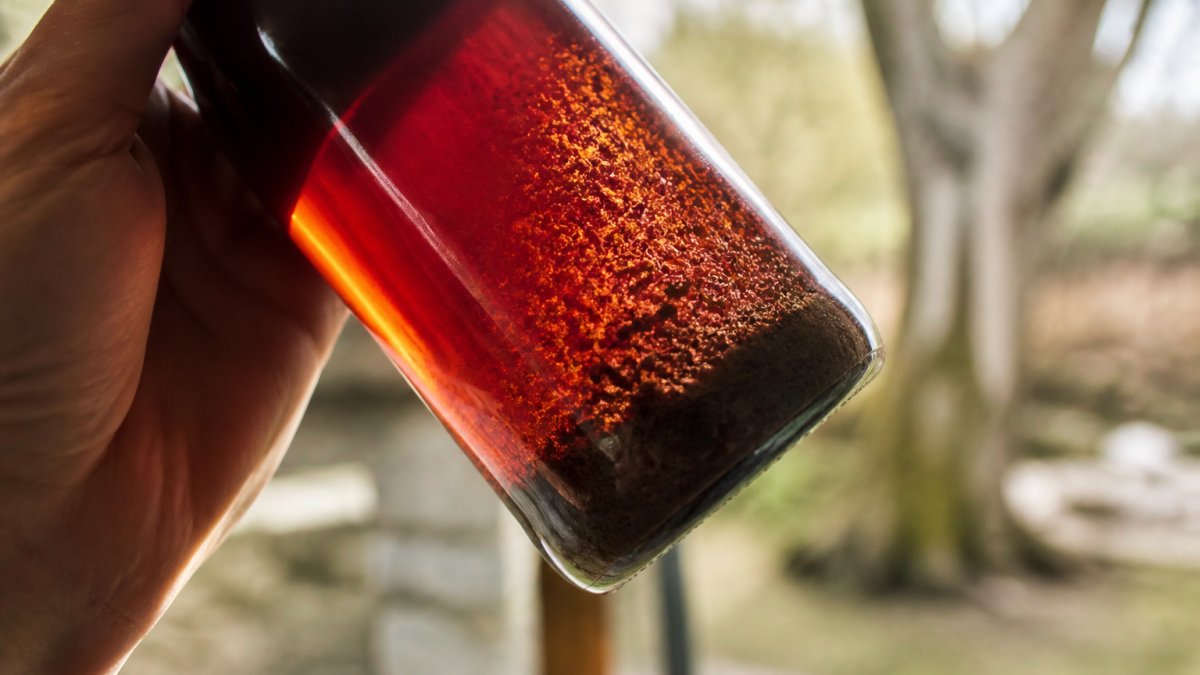
Sediment appears as:
- Small grainy particles that catch the light
- A fine layer or haze at the bottle's base
- Crystals that look translucent or cloudy
- Darker, more substantial deposits in older red wines
The colour varies. Tartrate crystals are often clear or pale. Lees and tannin deposits tend to be brown or dark brown. Grape skins and pulp might appear reddish or purplish in red wines.
What sediment looks like in different lighting conditions
Sediment is easiest to spot in bright, natural daylight. Hold the bottle up to a window or take it outside. The contrast between the clear wine and the settled particles becomes obvious.
Under artificial light, you might need to look more carefully. A desk lamp or phone torch works, but the particles may be harder to distinguish. The key is to tilt the bottle and watch the sediment move and resettle. Movement confirms you're looking at particles, not a permanent cloudiness.
In dim light, sediment can be almost invisible. This is why many people stand bottles upright for a day or two before serving aged wines. The sediment settles completely, and the wine above it becomes crystal clear.
Identifying lees, spent yeast, and grape skins
Lees are the most common type of sediment in aged bottles. They consist of dead yeast cells and other organic matter that sank during fermentation. Lees look like a fine, powdery layer at the bottom of the bottle.
Spent yeast feels gritty if it gets in your mouth, but it's entirely safe. Many people don't even notice it.
Grape skins and pulp particles are larger and more visible than lees. In red wines, they appear as darker, more substantial flecks. They're more common in unfiltered or natural wines. Like lees, they're harmless and add no off-flavours.
The key is that all three types are natural. They're not signs of contamination or poor storage. They're evidence that the wine has aged naturally, without excessive filtering or processing.
Wine Sediment Versus Spoilage: How to Tell the Difference
Sediment is normal. Spoilage is not. Knowing the difference keeps you from discarding good wine or serving compromised bottles.
Harmless sediment has these characteristics:
- Particles settle at the bottom or sides of the bottle
- The wine above the sediment is clear and bright
- The sediment is grainy, crystalline, or powdery
- No unpleasant smells when you open the bottle
- The wine tastes normal when you sample it
Spoilage or contamination looks and smells different:
- The entire bottle is cloudy or hazy, not just the bottom
- The wine has a vinegary, musty, or off smell
- Mould or visible growth appears on the cork or inside the bottle neck
- The wine tastes sour, flat, or unpleasantly bitter
- The cork is leaking or has pushed out of the bottle
If you're uncertain, open the bottle and smell it first. Your nose will tell you immediately if something is wrong. Spoiled wine has a distinctive, unpleasant aroma that sediment never does.
Herdade da Calada 2020 Caladessa Reserva Tinto Vinho →
The most reliable test is to taste a small amount. Sediment doesn't change the wine's flavour. Spoilage always does. If the wine tastes as it should, the sediment is harmless.
How Long to Stand Wine Before Serving Aged Bottles
Standing a bottle upright for 24 to 48 hours before serving allows sediment to settle completely to the bottom. This simple step makes decanting easier and gives you a clearer pour.
The longer you stand the bottle, the more sediment settles. For very old wines with heavy sediment, standing for a full week isn't excessive. The sediment will compact and stay at the base, making it easier to leave behind when you pour.
Temperature matters too. A cool, stable environment is ideal. Warmth can keep sediment suspended longer. If you're standing a bottle in a warm room, allow extra time.
For wines you plan to decant, standing upright is essential. It concentrates all the sediment in one spot, making the decanting process cleaner and more efficient.
How to Decant Wine With Sediment
Decanting separates the clear wine from the sediment. It's a straightforward process that improves both the appearance and the drinking experience.
Step-by-step decanting process
Step 1: Gather your equipment. You'll need a decanter (any clean, clear vessel works), a light source, and ideally a fine strainer or cheesecloth.
Step 2: Stand the bottle upright. Allow sediment to settle for at least 24 hours. The longer, the better.
Step 3: Position your light source. Hold a torch or lamp behind the bottle's neck so you can see the sediment approaching as you pour.
Step 4: Pour slowly and steadily. Tilt the bottle and pour into the decanter in one smooth motion. Don't stop and start.
Step 5: Leave the sediment behind. The last inch or so of wine in the bottle will contain most of the sediment.
Step 6: Transfer to glasses. Pour the decanted wine into glasses from the decanter. The sediment remains behind in the bottle.
The entire process takes just a few minutes.
When to decant and when to leave sediment in the glass
Decant aged red wines with visible sediment. It improves clarity and presentation. For formal dinners or restaurant service, decanting is standard practice.
Decant is optional for younger wines or wines with minimal sediment. If the bottle has been standing upright and the sediment has settled, you can pour carefully without decanting and leave most of the sediment behind.
Some people prefer to leave sediment in the glass. If the sediment is very fine and the wine is being served informally, this is perfectly acceptable. Just warn your guests to leave the last sip untouched.
For white wines, decanting is rarely necessary. White wines develop less sediment, and most people prefer to serve them clear. If sediment is present, pour carefully or use a fine strainer.
Sediment in Aged Wine: What It Tells You About Quality
Sediment in an aged bottle is often a sign of quality, not a defect. It indicates that the wine has been aged naturally and hasn't been over-processed.
Commercial wineries often filter their wines heavily to ensure crystal clarity. This removes not just sediment but also some flavour compounds and texture.
At 79North Ltd, we work with small, family-owned producers from Portugal and Italy. Sediment in these bottles is a mark of their authenticity and care.
Older wines almost always develop sediment. A 20-year-old bottle that's completely clear might actually be a concern.
The presence of sediment also tells you that the wine has been left undisturbed in the bottle for years.
Aged wine sediment is normal, harmless, and often a sign of quality winemaking. Learning to identify it, distinguish it from spoilage, and decant it properly transforms how you approach older bottles.
Frequently Asked Questions
What does sediment in an aged wine bottle actually look like?
Sediment in aged wine appears as particles or a layer at the bottom of the bottle, ranging from fine, grainy dust to visible crystals or shards. Tartrate crystals look translucent and catch the light, often resembling small glass fragments. Lees and spent yeast appear darker and more granular. The colour depends on the wine type: red wine sediment is typically dark brown or black, whilst white wine sediment is lighter and may appear almost translucent. Holding the bottle to light makes sediment easier to spot.
How can you tell if wine sediment is harmless?
Harmless sediment is natural and expected in unfiltered or aged wines. Look for a clean appearance without cloudiness in the wine itself. Tartrate crystals are always harmless and often indicate quality. Lees and grape-derived particles are also harmless. If the wine smells vinegary, musty, or off, or if sediment appears slimy or produces an unpleasant odour, it may indicate spoilage. Harmless sediment settles cleanly at the bottom; spoilage often creates a haze throughout the wine.
How long should an old bottle of wine stand before serving?
Stand an aged bottle upright for at least 24 hours before serving to allow sediment to settle completely at the bottom. For very old or fragile wines, standing for 48 hours is safer. This resting period allows particles, tartrate crystals, and lees to compact at the base of the bottle, making decanting easier and cleaner. Avoid moving or tilting the bottle during this time. If you're serving without decanting, standing time ensures sediment remains undisturbed in the glass.
Should you decant wine that has sediment?
Decanting is optional but recommended for aged wines with visible sediment. Decanting separates the clear wine from the sediment layer, improving clarity and mouthfeel. It also allows the wine to aerate, which can enhance flavour in older bottles. However, some drinkers prefer the texture and complexity that sediment adds. If you choose not to decant, pour carefully to avoid disturbing the settled particles, or simply accept sediment in your glass, it's harmless and common in premium wines.