
Sustainable Practices in Portuguese Wine Production
Table of Contents
- The Framework Shaping Sustainable Portuguese Wine Today
- Organic Viticulture in Portugal: Native Varieties and Soil Health
- Climate Change Adaptation in Vineyards: Water Efficiency and Resilience
- Sustainable Wine Certification Standards: What to Look For
- Biodiversity, Regenerative Agriculture, and Natural Ecosystems
- Economic Viability and Social Sustainability for Small-Scale Growers
- Conclusion: Sourcing Sustainable Portuguese Wines for UK Independent Buyers
- Frequently Asked Questions
Last Updated: September 28, 2026
The Framework Shaping Sustainable Portuguese Wine Today
Sustainable practices in Portuguese wine production have moved from niche experiment to commercial necessity, and the framework behind them is more structured than most buyers realise. At 79North Ltd, we import from family-owned estates across Portugal and Italy, and the sustainability questions our UK trade partners ask have sharpened considerably in recent years. This guide breaks down what those practices actually involve, how certification works, and what to look for when sourcing.
Three forces drive the shift. Regulation, particularly the EU's farm-to-fork direction on pesticide reduction, sets the baseline. Consumer expectation from independent retail and restaurant customers raises it. And climate pressure, especially drought in the Douro and Alentejo, makes water efficiency a survival question rather than an ethical one.
Organic Viticulture in Portugal: Native Varieties and Soil Health
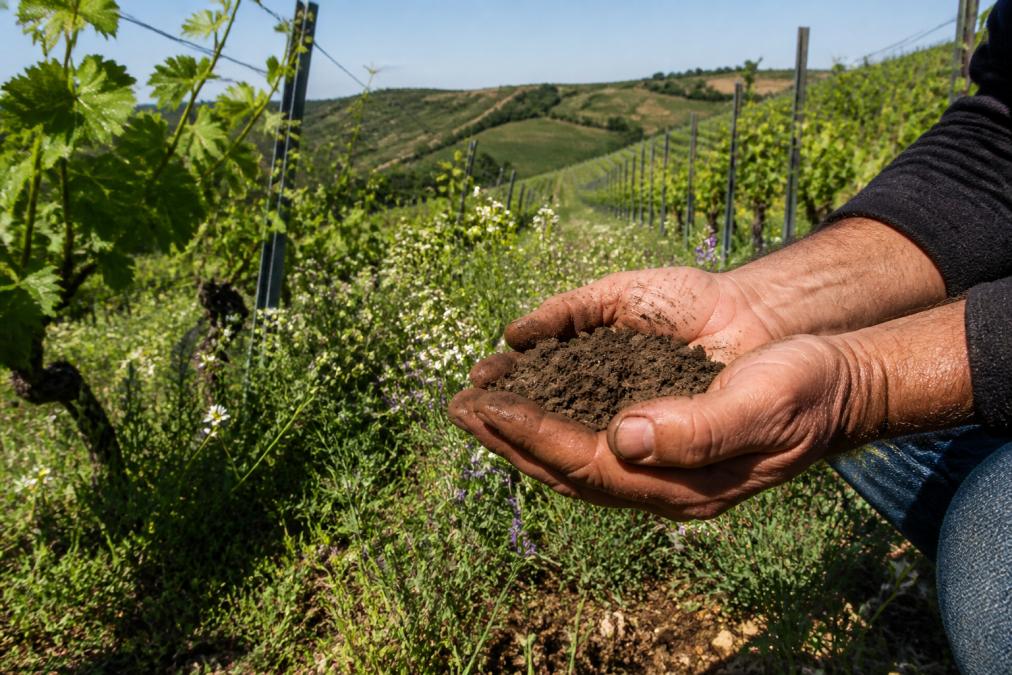
Organic viticulture in Portugal is grape growing without synthetic chemical fertilizers or pesticides, certified against EU organic rules and often verified by Portuguese bodies such as SATIVA. It is the foundation most other sustainable practices build on.
Native Grape Varieties and Their Role in Sustainability
Native varieties are the quiet advantage of Portuguese wine. Grapes such as Touriga Nacional, Baga, Encruzado and the rare Jampal have adapted over centuries to local soils, rainfall patterns and heat. That adaptation matters: indigenous vines typically need less intervention, resist local pests and disease more effectively, and express terroir in ways international varieties planted in the same spot simply do not.
Climate Change Adaptation in Vineyards: Water Efficiency and Resilience
Climate change adaptation in vineyards means adjusting how vines are grown and managed so they survive hotter, drier conditions without losing quality. In Portugal this is not a future scenario. It is the current operating reality.
Growers are responding with several practical measures:
- Switching to drought-tolerant rootstocks and indigenous varieties
- Shifting to regulated deficit irrigation, applying less water at strategic moments
- Managing canopy shade to protect fruit from extreme heat
- Replanting at higher altitudes or north-facing slopes
- Mulching and cover cropping to reduce evaporation from the soil
Irrigation Management and Water Stress Strategies
Irrigation management in Portuguese vineyards is tightly controlled. New planting rights in many regions come with irrigation restrictions, and water stress is used deliberately: mild stress concentrates flavours and reduces yields, while severe stress damages the vine. The skill lies in managing that line.
Sustainable Wine Certification Standards: What to Look For
Sustainable wine certification standards are third-party schemes that audit a producer against defined environmental, and sometimes social, criteria. They exist because "sustainable" on its own is unregulated, and the gap between a certified estate and a well-worded back label is where most buyer confusion lives.
The main frameworks a UK buyer will encounter:
| Certification | Scope | What It Verifies | Best For |
|---|---|---|---|
| EU Organic | Vineyard and winery | No synthetic pesticides or fertilizers | Clear, legally defined claim |
| Biodynamic (Demeter) | Whole estate | Organic plus holistic practices | Premium, story-led listings |
| National sustainability schemes | Vineyard to bottle | Environmental and social criteria | Broad sustainability positioning |
| Vegan certification | Winery | No animal-derived fining agents | Vegan and vegetarian customers |
How Certification Actually Works Behind the Label
A common pattern among small Portuguese estates is a split certification: the vineyard is certified organic, but the winery is not, because cellar certification adds a second audit, separate record-keeping and a separate fee. That distinction changes what you can legally print. Under UK food labelling rules, an organic claim on a bottle sold here must be backed by a recognised certification and the appropriate organic control body code on the label.
The Cost Reality for Small Growers
Certification is not free, and the fees fall hardest on estates without a compliance department. A small family estate typically absorbs several thousand euros a year across inspection fees, record-keeping time and the yield loss from organic conversion, which usually takes three years before the vineyard can be sold as organic. For a boutique producer, that is a meaningful slice of margin.
How to Verify a Sustainability Claim Before You List It
For an independent retailer or restaurant, the practical verification sequence is short:
- Ask which certification body audits the producer, and whether the certificate covers the vineyard, the winery, or both.
- Request the current certificate and check the expiry date and the scope.
- Cross-check any organic claim against the UK organic labelling rules before repeating it on marketing material.
- If there is no certification, ask what the grower has actually changed on the ground, cover crops, spray reduction, water management, and treat specific answers as more credible than general ones.
Biodiversity, Regenerative Agriculture, and Natural Ecosystems
Biodiversity and regenerative agriculture are where Portuguese winegrowing gets genuinely interesting. Rather than treating the vineyard as a monoculture, growers increasingly manage it as part of a wider natural ecosystem.
Economic Viability and Social Sustainability for Small-Scale Growers
Small-scale growers carry the sustainability agenda, and they carry its costs. Organic conversion, lower yields and hand harvesting all raise production expenses, while certification fees and audit paperwork fall hardest on estates without a compliance department. Most guides stop there. The more useful question is what economic viability actually looks like on a small Portuguese estate, and what social sustainability means in practice rather than as a slogan.
The Cost-Benefit Arithmetic of Going Green
A common pattern among boutique producers is a deliberate trade: accept lower yields in exchange for higher quality and a story that commands a better price per bottle. Organic conversion typically reduces yield in the first few years before the vineyard stabilises, and hand harvesting on steep terraces costs several times what mechanical harvesting would on flat ground. Those costs have to be recovered somewhere.
What Social Sustainability Actually Covers
Social sustainability is the half of the conversation most guides skip. It covers fair wages, safe working conditions, seasonal labour practices and whether growers are paid enough to keep farming. A vineyard that is environmentally pristine but relies on exploited labour is not sustainable in any honest sense.
- Seasonal labour terms, whether harvest workers are paid per hour or per kilo, and whether accommodation and transport are provided or deducted.
- Year-round employment, estates that keep a permanent team through the winter are supporting a community; estates that hire only at harvest are not, and the difference is visible in the village.
- Succession, whether the next generation sees a future in the estate. A vineyard with no successor is a vineyard that will eventually be sold, subdivided or abandoned.
- Community impact, whether the estate buys locally, supports local services and keeps money circulating in a region that often has few other employers.
Why Independent Importers Matter to Small Growers
This is where independent importers earn their place. By representing small family-owned wineries directly, an importer can give them stable access to the UK market without the volume commitments the major distributors demand. That stability is what lets a grower invest in the next vintage rather than chase the cheapest possible sale.
Conclusion: Sourcing Sustainable Portuguese Wines for UK Independent Buyers
The practical challenge for independent wine shops and restaurants is cutting through unregulated claims to find producers whose sustainability is real and verifiable. Ask for the certification, ask what it covers, and ask what the grower has actually changed on the ground.
Frequently Asked Questions
What certifications should UK consumers look for on Portuguese wine labels?
Look for the EU organic leaf logo, which indicates at least 95% organic ingredients and no synthetic pesticides. For Portuguese-specific standards, the Vinhos Verdes region has a certification for sustainable production. Demeter certification signals biodynamic farming. These labels help UK buyers identify wines made with organic viticulture in Portugal and verified sustainable practices.
How does the Portuguese wine industry address climate change?
Producers are adopting climate change adaptation in vineyards by selecting drought-resistant grape varieties, improving irrigation management, and shifting to regenerative agriculture. Many family-owned wineries use cover crops to retain soil moisture and reduce erosion. These measures help maintain grape quality despite rising temperatures and water stress, ensuring long-term vineyard sustainability.
What is the difference between organic and biodynamic wine production in Portugal?
Organic production avoids synthetic chemicals and follows EU organic regulations. Biodynamic farming, guided by Demeter standards, treats the vineyard as a self-sustaining ecosystem using preparations like compost and herbal sprays. Both approaches support soil health and biodiversity, but biodynamic certification requires stricter practices and often yields distinctive terroir-driven wines.
How do family-owned wineries in Portugal implement sustainable practices?
Family-owned wineries often lead in sustainability because they plan for future generations. They use organic viticulture, preserve native grape varieties, and adopt water-efficient irrigation. Many also invest in renewable energy for winery operations and maintain biodiversity corridors. These efforts reduce environmental impact while supporting economic viability for small-scale growers.
Sourcing wines that are both genuinely sustainable and commercially distinctive takes time most independents do not have. 79North Ltd exists to close that gap, offering trusted representation for family-owned producers, access to native varieties you will not find through the major distributors, and a curated portfolio built for independent retailers and restaurants. Let's talk about what would work on your list.