
Sustainable Wine Sourcing for Fine Dining: A Practical Guide
Table of Contents
- What Sustainable Wine Sourcing Actually Means for Fine Dining
- Organic Wine UK Fine Dining: Certifications and Standards
- Evaluating Ethical Wine Suppliers UK: A Vetting Checklist
- Eco-Friendly Wine Packaging UK: Reducing Environmental Impact
- Building a Wine List Sustainability Strategy for Restaurants
- The Financial Case: ROI and Profitability of Sustainable Wine Lists
- Implementing Sustainable Wine Sourcing: Step-by-Step Action Plan
- Conclusion
Last Updated: July 30, 2026
Sustainable wine sourcing for fine dining represents far more than a marketing trend. At 79North Ltd, we've spent years helping independent restaurants and wine retailers build wine lists that reflect both environmental responsibility and exceptional quality. According to research from the Institute of Masters of Wine, fine dining establishments that prioritise sustainable sourcing report higher customer retention and stronger brand loyalty. The key insight: sustainable wine sourcing isn't about virtue signalling. It's about creating operational efficiency, reducing supply chain risk, and building direct relationships with producers who deliver consistency.
What Sustainable Wine Sourcing Actually Means for Fine Dining
Sustainable wine sourcing starts with understanding what you're committing to. This isn't about labelling every bottle as "organic" or "natural", it's about making deliberate choices across your entire supply chain that reduce environmental impact, support fair relationships with producers, and ensure long-term availability of wines you genuinely want to serve.
Defining sustainable viticulture and low-intervention practices
Sustainable viticulture is the practice of growing grapes in ways that maintain soil health, reduce chemical inputs, and preserve water resources whilst remaining economically viable for the winemaker. Low-intervention winemaking means minimal use of additives during fermentation and ageing, allowing the wine's natural characteristics and terroir to shine through.
Wines from sustainable vineyards often show more pronounced regional character. The flavour profile reflects the specific place where the grapes grew, climate, soil composition, and microclimate all leave their mark. This is terroir, and it creates the most interesting, memorable wines. A common mistake is assuming low-intervention means inconsistent or unpredictable. In practice, winemakers using these methods monitor fermentation temperatures closely and accept that the wine will express the vintage more directly.
Why terroir and regionality matter in ethical sourcing
Terroir is the operational foundation of sustainable sourcing. When you source wines based on specific regions and microclimates, you're building relationships with producers invested in the same place year after year. Regionality also reduces food miles significantly and improves supply chain stability.
For restaurants, focusing on specific regions allows you to build expertise. Your sommelier can speak knowledgeably about vintage differences and invite producers to conduct tastings. You can explain to guests why this specific wine from this specific place is worth the premium you're charging.
Organic Wine UK Fine Dining: Certifications and Standards
Certifications matter, but they're not the whole story. A wine can be produced sustainably without carrying an organic label. For fine dining, the certification is a starting point, not the destination.
Biodynamic and organic viticulture certifications
Organic viticulture means the vineyard is managed without synthetic pesticides, herbicides, or fertilisers. In the UK, certification is overseen by bodies like the Soil Association and ECOCERT. Biodynamic viticulture goes further, treating the vineyard as a self-contained ecosystem and using specific preparations following lunar cycles. Biodynamic vineyards are certified by Demeter International and typically show improved soil structure and higher biodiversity than conventional vineyards.
For a fine dining wine list, both certifications signal that the producer takes environmental stewardship seriously and has documented their practices.
Regenerative agriculture and climate change adaptation
Regenerative agriculture goes beyond sustainability, it actively improves the land by building soil carbon, increasing water retention, and enhancing biodiversity. These vineyards become more resilient to climate stress and weather extremes, signalling long-term supply security for fine dining establishments.
Evaluating Ethical Wine Suppliers UK: A Vetting Checklist
Sustainable sourcing requires deliberate evaluation of each supplier's practices, reliability, and values.
Supply chain transparency and traceability
Ask your supplier for complete transparency about where every wine comes from. You should trace the wine from the specific vineyard through the producer, importer, and finally to your restaurant. Any break in that chain is a red flag. Ethical suppliers maintain detailed records and can provide contact information for producers.
For fine dining, this transparency serves a practical purpose. When a guest asks about a wine, your sommelier should explain not just the flavour profile but the story: who grew it, how they farmed it, what makes this producer special.
Independent growers and fair trade relationships
Independent growers, small producers making wine on their own land, are the heart of sustainable sourcing. Fair trade in wine means the producer receives a price that covers actual costs and provides a reasonable livelihood, with long-term contracts rather than spot purchases.
At 79North Ltd, we work exclusively with independent producers from Portugal and Italy who meet these standards. When evaluating suppliers, ask how many producers they work with and how long they've been in relationship with each. A supplier working with 15 producers for an average of 8 years is more reliable than one working with 50 producers for an average of 3 years.
Red flags and reliability concerns
Watch for suppliers who can't explain their sourcing. If a distributor offers an unusually low price but can't tell you much about the producer, that's a warning. Be cautious of suppliers who push high-volume commitments without flexibility. A reliable supplier will allow returns or exchanges.
| Red Flag | What It Means | Action |
|---|---|---|
| Supplier can't name the producer | Wine source is unclear or secondary market | Pass or request full traceability |
| Unusually low pricing | Likely overstock or declining quality | Ask why the price is so low |
| No flexibility on returns | Supplier prioritises volume over partnership | Negotiate or find alternative |
| No references available | No track record with restaurants | Request customer contacts or pass |
| Vague farming practices | Producer may not be genuinely sustainable | Request detailed documentation |
Eco-Friendly Wine Packaging UK: Reducing Environmental Impact
Wine packaging decisions affect your carbon footprint more than most operators realise. Glass weight, bottle design, shipping methods, and recycling logistics all contribute to environmental impact.
Glass weight, bulk shipping, and food miles
A standard wine bottle weighs about 500 grams. Lighter-weight glass (around 450 grams) reduces transport emissions by roughly 10-15% without compromising quality. Bulk shipping matters significantly, wines shipped in full containers (typically 1,200 bottles) have a much lower per-bottle carbon footprint than partial shipments. When evaluating suppliers, ask about their shipping methods and whether they consolidate shipments.
Waste reduction and bottle recycling logistics
Glass recycling infrastructure in the UK is well established, but it requires proper sorting by colour. For restaurants, this means training staff on bottle sorting and finding reliable recycling partners. The most practical waste reduction strategy is accurate inventory management, every bottle you order but don't sell is waste.
Building a Wine List Sustainability Strategy for Restaurants
A sustainable wine list requires strategy, staff training, and willingness to evolve based on guest response.
Curating small-batch and natural wines
Small-batch wines, typically produced in quantities under 5,000 bottles per vintage, are distinctive and tell a story. Natural wines are produced with minimal intervention and no added sulphites. Aim for balance on your list: include some established, reliable wines that guests can order confidently, and some small-batch wines that showcase your sommelier's knowledge. The ratio depends on your clientele, a Michelin-starred restaurant might skew 60% small-batch, while a neighbourhood fine dining spot might work better at 40%.
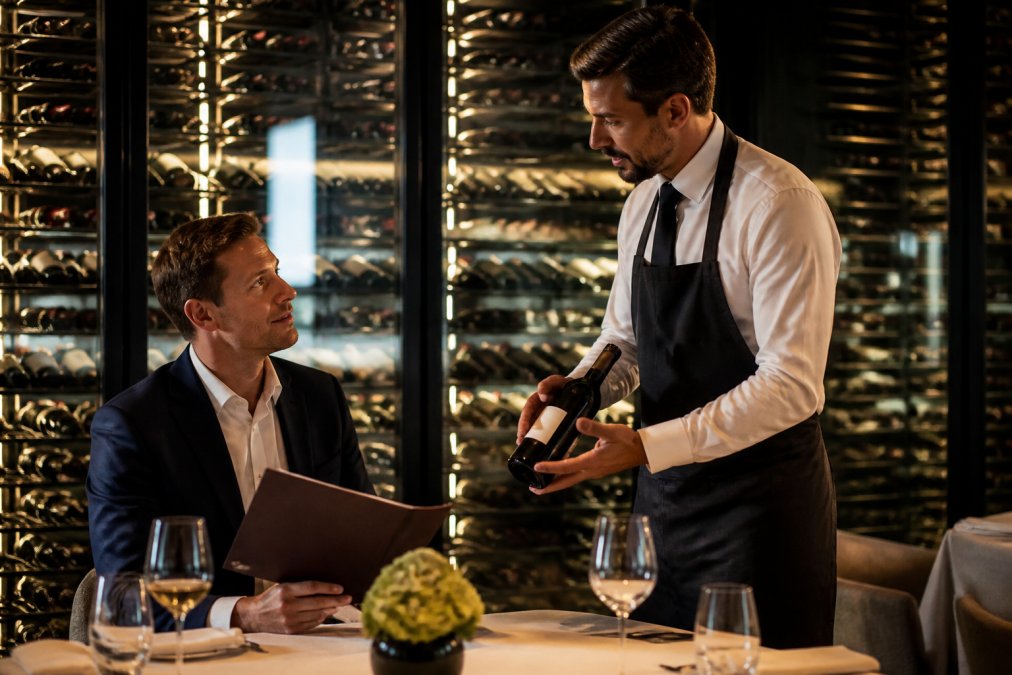
Staff training and sommelier scripts for communicating sustainability
Your sommelier is your most important marketing tool. Train your team to explain sustainability in concrete, guest-friendly language. Avoid jargon. Instead of "biodynamic viticulture," say "the producer manages the vineyard to build soil health, that creates more complex, interesting wines."
Here's a sommelier script that works: "This wine is from a small producer in the Douro Valley who farms without synthetic chemicals. They've been working the same vineyard for 15 years, so they understand the land deeply. You'll notice the wine has more texture and complexity than mass-produced alternatives, that comes from the soil being alive and diverse."
The Financial Case: ROI and Profitability of Sustainable Wine Lists
Sustainable sourcing only works if it's profitable. The financial case is actually strong. Small-batch wines command premium prices, and guests who choose sustainable options are often willing to pay more.
Pricing strategy and customer willingness to pay
Sustainable wines typically cost 15-25% more at wholesale than equivalent conventional wines. Your retail markup should reflect the story, not just the cost. A wine costing you £8 at wholesale might retail for £32 (a 4x markup), while a conventional wine costing £5 might retail for £18 (a 3.6x markup). The sustainable wine generates higher absolute profit per bottle.
Guests understand they're paying for quality and values alignment. Market research suggests diners at fine dining establishments are willing to pay 10-20% more for wines they perceive as sustainably sourced. Your wine list should include brief descriptions explaining why each wine is on the list.
Inventory management and risk mitigation
The biggest financial risk with sustainable sourcing is inventory obsolescence. Mitigate this through disciplined testing. When introducing a new wine, order just 6 bottles. List it for 2-3 weeks and measure sales velocity. If it sells well, reorder. If it doesn't, move it to a by-the-glass option or return it.
Maintain relationships with 2-3 reliable suppliers who can provide consistent alternatives. Track your wine sales data religiously, you should know which wines sell fastest, which price points work best, and which styles your guests prefer.
Implementing Sustainable Wine Sourcing: Step-by-Step Action Plan
Moving from intention to action requires a structured approach. The following steps will take 8-12 weeks to complete.
Step 1: Audit your current supplier relationships
Catalogue every wine on your current list and every supplier you work with. For each wine, document producer name and location, supplier/importer, cost per bottle, retail price, sales velocity, and farming practices (if known). Schedule calls with your current suppliers and ask directly: "Which of your wines are produced sustainably? Can you provide documentation?"
Step 2: Identify and vet independent producers
Use your audit to identify which producers you want to work with directly or through specialised importers. Look for producers making wines you actually want to serve, with documented sustainable practices, production volumes that match your needs, and willingness to provide information about their practices.
Research importers who specialise in small producers. At 79North Ltd, we work with independent growers from Portugal and Italy specifically because we've built relationships with producers who share our values around quality and sustainability. Request samples from 3-5 new producers and taste them with your sommelier and senior staff.
Step 3: Test, measure, and refine your list
Select 3-4 wines from your vetting process to add to your list. Create brief descriptions explaining why each wine is on your list. Train your sommelier on the producer's story and farming practices.
List these wines for 4-6 weeks and track sales velocity carefully. Evaluate whether the wine sold at a reasonable pace, if guests responded positively, if it fit your food pairings, and if your sommelier felt confident recommending it. Keep wines that performed well and return or repurpose wines that didn't.
Over 12-24 months, gradually shift your list toward producers and importers you've deliberately chosen. You won't replace everything at once, that's disruptive and risky. You'll evolve your list wine by wine, building toward a programme that reflects your values and serves your business.
| Step | Timeline | Key Actions | Success Metric |
|---|---|---|---|
| Audit current suppliers | Week 1-2 | Document all wines, suppliers, and sales data | Complete inventory of current list |
| Identify producers | Week 3-4 | Research sustainable producers, request samples | 5-8 potential new producers identified |
| Vet suppliers | Week 5-6 | Taste samples, evaluate fit, check references | 3-4 wines selected for testing |
| List and train | Week 7 | Add wines to list, brief staff, create descriptions | Sommelier confident in recommendations |
| Test and measure | Week 8-12 | Track sales, gather feedback, evaluate performance | Sales velocity and guest feedback documented |
| Refine | Week 13+ | Keep performers, return underperformers, plan next additions | List evolving toward sustainability goals |
Building a sustainable wine sourcing programme for fine dining is fundamentally about creating relationships. You're choosing to work with producers who share your values, importers who understand your business, and staff who can communicate that story to your guests. The financial case is straightforward, sustainable wines support higher margins and attract guests willing to pay for quality and values alignment. At 79North Ltd, we specialise in connecting independent restaurants and retailers with small, innovative producers from Portugal and Italy who are producing some of the most interesting, sustainably farmed wines available. We've visited their vineyards, we understand their production capacity, and we can help you build a list that works financially whilst standing for something real. Let's talk about what sustainable wine sourcing could look like for your business.
Frequently Asked Questions
What makes a wine sustainable for fine dining restaurants in the UK?
Sustainable wine sourcing combines multiple practices: organic or biodynamic viticulture, low-intervention winemaking, ethical supply chain management, and eco-friendly packaging. For fine dining, this means wines from independent growers using regenerative agriculture, minimal chemical inputs, and transparent traceability. Certifications like organic viticulture standards and fair trade credentials provide verification. The wine itself, whether natural, organic, or conventionally made but sustainably farmed, matters less than the producer's commitment to environmental stewardship and social responsibility throughout the entire supply chain.
How can I verify sustainable wine practices from ethical wine suppliers UK?
Request documentation of certifications (organic, biodynamic, or equivalent EU standards), vineyard management practices, and supply chain transparency. Ask suppliers directly about their winemakers' environmental commitments, carbon footprint reduction efforts, and packaging choices. Reputable ethical wine suppliers will provide traceability information, producer relationships, and clear answers about food miles and logistics. Visit producer websites or request third-party audit reports. For independent growers, direct relationships with importers who know the vineyards personally offer the strongest verification of sustainable practices.
What are the financial benefits of sustainable wine sourcing for fine dining?
Sustainable wine lists can command premium pricing, customers increasingly value eco-conscious and ethically sourced options. Small-batch, independent producer wines often have higher margins than mass-market alternatives. Reduced waste through better inventory management and lower food miles in bulk shipping improve operational costs. Building a distinctive wine list around sustainability creates competitive differentiation and can justify higher wine markups. However, initial supplier vetting and staff training require investment; the ROI typically appears within 6-12 months through increased wine sales and customer loyalty.
What certifications should I look for when sourcing organic wine UK fine dining?
In the UK, look for certifications from recognised bodies such as the Soil Association (UK's primary organic certifier), ECOCERT, or equivalent EU organic standards. Biodynamic wines carry Demeter certification. For natural wines, certifications vary, but transparency about pesticide-free practices is essential. Fair trade certifications (Fair Trade Certified or equivalent) indicate ethical labour practices. However, certification alone isn't sufficient, many excellent sustainable producers operate without formal labels. Combine certification verification with direct supplier relationships and supply chain transparency to build confidence in your sourcing decisions.
This article was written using GrandRanker