
Traditional vs Tank Method: Sparkling Wine Guide
Table of Contents
- How Sparkling Wine Is Made: The Two Core Methods
- Traditional Method vs Tank Method: Side-by-Side Comparison
- Bottle Fermentation vs Tank Fermentation: Process Step by Step
- Traditional Method vs Tank Method Taste: What to Expect in the Glass
- Traditional Method vs Charmat Method: Terminology and Regional Labeling
- Hybrid Processes and Environmental Considerations
- Choosing Sparkling Wines for Your List
- Frequently Asked Questions
Last Updated: October 14, 2026
How Sparkling Wine Is Made: The Two Core Methods
Every bottle of sparkling wine starts the same way: a still base wine, yeast, and sugar. What separates one bottle from another is where the second fermentation happens. The difference between the traditional and tank method comes down to that single decision, and it shapes everything that follows: the bubbles, the flavour, the cost, and how long the wine takes to reach your shelf.
At 79North Ltd, we import family-owned sparkling wines from Portugal and Italy, and this is the first thing we explain to buyers. The tank method ferments the wine a second time in a sealed stainless steel vessel. The traditional method ferments it inside the bottle you eventually pour. Same chemistry, two very different results.
Below, we break down how each process works, what it does to taste, and how to choose between them for your list. For official production rules, the International Organisation of Vine and Wine standards sets the definitions winemakers work to.
Traditional Method vs Tank Method: Side-by-Side Comparison
The traditional method produces more complex, age-worthy sparkling wine at a higher cost. The tank method produces fresher, fruit-driven sparkling wine faster and more cheaply. That is the trade-off in one line.
Here is how the two compare across the criteria that matter to a wine buyer:
| Criteria | Traditional Method | Tank Method |
|---|---|---|
| Second fermentation | In the bottle | In a sealed tank |
| Lees contact | Months to years | Weeks |
| Typical flavours | Brioche, bread, nuts | Fresh fruit, blossom |
| Production time | 15 months to several years | A few weeks to months |
| Labour and cost | High | Low |
| Best for | Champagne, Cava, Crémant | Prosecco, everyday fizz |
Where the Second Fermentation Happens
In the traditional method, the second fermentation takes place inside the individual bottle. The winemaker adds yeast and sugar, seals the bottle, and lets carbon dioxide dissolve into the wine under pressure.
In the tank method, that same fermentation happens in one large pressurised vessel. The carbon dioxide stays trapped in the sealed tank, then the wine is filtered and bottled under pressure. One vessel does the work of thousands of bottles, which is why large-scale production leans this way.
Time, Labour and Cost at a Glance
Time is the real cost driver. Traditional-method wines rest on their lees for a minimum of around 15 months for many appellations, and far longer for premium cuvées. Every one of those bottles must be turned, riddled, and disgorged by hand or machine.
Tank-method wines can go from base wine to finished bottle in a matter of weeks. Fewer handling steps, no riddling, no disgorgement line. That efficiency is exactly why this style dominates the affordable end of the market.
Bottle Fermentation vs Tank Fermentation: Process Step by Step
Bottle fermentation is slower and more labour-intensive because each bottle is handled individually. Tank fermentation moves the same process into a single sealed vessel for speed and consistency. Here is how each unfolds.
Traditional method, step by step:
- Ferment the base wine to dryness
- Blend the still wines into the final cuvée
- Add yeast and sugar, then bottle and seal
- Let the second fermentation create the bubbles
- Age on the lees for flavour development
- Riddle the bottles to collect the yeast
- Disgorge the frozen yeast plug
- Add dosage and cork
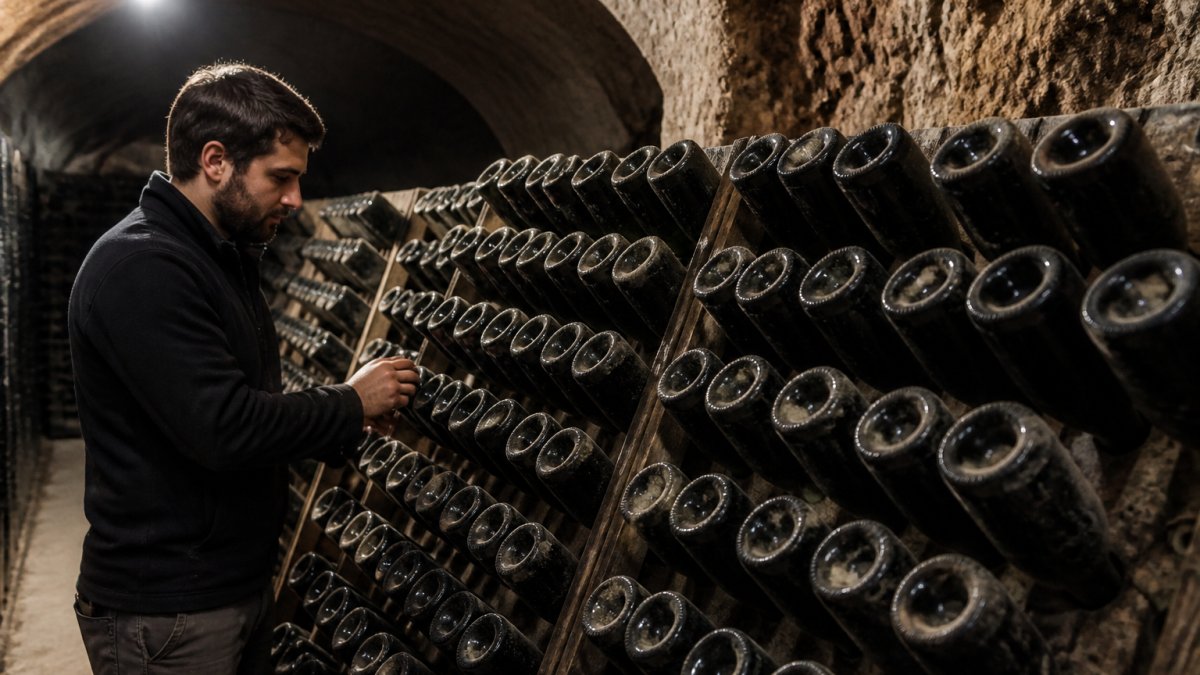
Tank fermentation compresses this. The base wine, yeast, and sugar go into a pressurised stainless steel tank. Fermentation and a short lees rest happen together. The wine is then filtered under pressure and bottled in one continuous, sealed run.
Lees Aging and Yeast Contact
Lees aging is the time spent resting on dead yeast cells, and it is where traditional-method character comes from. As the yeast breaks down through autolysis, it releases compounds that create bread, brioche, and nutty notes.
Tank-method wines see only brief yeast contact. The result stays bright and primary, all fresh fruit and blossom. Neither is better. They are simply two different targets, and the ageing choice is what hits them.
Traditional Method vs Tank Method Taste: What to Expect in the Glass
Traditional-method sparkling wine tastes of brioche, toast, and nuts layered over fruit, with a finer, more persistent bubble. Tank-method sparkling wine tastes brighter and more fruit-forward, with a lighter, simpler texture. Both can be excellent; they just answer different questions.
The bubbles tell you a lot. Bottle fermentation under pressure tends to produce a finer, creamier mousse because the carbon dioxide integrates slowly over months. Tank fermentation gives a livelier, more assertive bead.
For texture, think weight. Traditional-method wines often carry more body and a longer finish. Tank-method wines feel lighter and more refreshing, which is precisely why they work so well as an aperitif. If you want a practical guide to how these styles are classified by sweetness, the Wine & Spirit Education Trust explains the dosage scale clearly.
Traditional Method vs Charmat Method: Terminology and Regional Labeling
The tank method is also called the Charmat method, named after the French engineer Eugène Charmat who refined the pressurised-tank process in the early twentieth century. So "tank method" and "Charmat method" describe the same technique. The traditional method carries several names too: méthode traditionnelle, méthode classique, and historically méthode champenoise. The last of these is now largely prohibited on labels outside its home region, which is why you will see méthode traditionnelle on a Crémant but not méthode champenoise.
Quinta Pousada de Fora 2021 Espumante Bruto Natural Branco →
Regional labelling matters here, and this is where a lot of buyers get caught out. A production method alone does not determine a wine's origin, quality, or legal name. Only sparkling wine from the Champagne region may use the term Champagne, and that protection is enforced in the UK under the protected food and drink names regime.
The exception worth knowing: some premium Prosecco and a small number of other wines are now made by the traditional method, so do not assume the grape or region locks in the process. A Prosecco DOCG such as Cartizze is still tank-fermented in most cases, but a small number of producers bottle-ferment. For the protected terms themselves, UK government guidance on protected food and drink names sets out how these designations are enforced.
A practical labelling checklist for buyers:
- Champagne, traditional method, Champagne region only.
- Cava, traditional method, defined Spanish regions.
- Crémant, traditional method, specified French appellations.
- Prosecco, tank method in the overwhelming majority of cases, Prosecco DOC or DOCG.
- Espumante, either method, depending on the producer and region.
- Método Tradicional / Método Classico, traditional method, used in Portugal and Italy respectively.
Hybrid Processes and Environmental Considerations
The transfer method sits between the two. The wine undergoes its second fermentation in the bottle, like the traditional method, but is then emptied into a pressurised tank for filtering and rebottling.
Other hybrids exist. A small number of producers use a combination of tank fermentation for the base wine and bottle fermentation for the second, or vice versa, to balance cost and character. Some use encapsulated yeast in the bottle, which avoids riddling and disgorgement entirely.
Environmentally, the picture is more nuanced than "tank is greener". The tank method uses less energy per bottle during production: one sealed vessel, no riddling, no disgorgement line, and far less handling. Traditional-method production is more resource-intensive by design, though the long ageing can be done in passive cellars that need little active temperature control.
Water use is another factor. Riddling and disgorgement lines require cleaning and sanitation between runs, which adds to water consumption. Tank fermentation concentrates the process into fewer vessels, which can reduce cleaning water per litre, though the tanks themselves are large and need thorough cleaning between batches.
For a buyer building a sustainable list, the practical move is to ask producers three questions: what is the bottle weight, how is the wine shipped, and what is the lees time. Those three answers usually tell you more about the environmental profile than the method name alone.
Choosing Sparkling Wines for Your List
Choose the traditional method when you want complexity, age-worthiness, and a wine that rewards a slower pour. Choose the tank method when you want freshness, value, and a versatile by-the-glass option. Most strong lists carry both.
From our own portfolio, the split is easy to see. The Manz 2018 Espumante Extra Brut Reserva, made from the near-extinct Jampal grape and aged on its lees for 24 months, is traditional method through and through, with fruit and brioche notes and a fine bead. The Quinta Pousada de Fora 2021 Espumante Bruto Natural Branco and its Rosé counterpart both finish their second fermentation in the bottle, giving you that same bottle-fermented character at £28.00 a bottle.
For independent shops and restaurants, the practical move is to anchor the list with one traditional-method bottle for depth and one tank-method bottle for volume and freshness. Your customers get range; your margins get a fighting chance.
The hard part is not understanding the methods. It is finding small, family-owned producers who do either one properly, without the customs paperwork and minimum-order headaches of sourcing direct. That is the gap 79North Ltd was built to close. We import premium sparkling wines from family-owned estates in Portugal and Italy, represent them for the market, and highlight native varieties like Jampal that most buyers never see.
Frequently Asked Questions
What is the difference between the traditional method and the tank method?
In the traditional method, the second fermentation happens inside the individual bottle, followed by extended lees aging and disgorgement. In the tank method, also called Charmat, the second fermentation takes place in a sealed stainless steel pressure tank, and the wine is filtered and bottled under pressure. The traditional method takes months or years and adds brioche complexity; the tank method takes weeks and preserves fresh fruit aromas.
Is Prosecco made using the tank method?
Most Prosecco is made using the tank method, also known as the Charmat method. Fermenting in a sealed stainless steel tank preserves the grape's primary fruit character, which is why Prosecco tends to show green apple, pear and white floral notes rather than brioche or toast. The shorter production time also keeps costs lower, which is reflected in the retail price compared with traditional-method sparkling wines.
Is the traditional method the same as bottle fermentation?
Yes, bottle fermentation is the defining step of the traditional method. The base wine is bottled with a small amount of yeast and sugar, and the second fermentation creates carbon dioxide inside that sealed bottle. The wine then rests on its lees, is riddled to collect the sediment, and is disgorged before dosage is added. Other names include méthode traditionnelle and méthode champenoise.
Which sparkling wines are made using the traditional method?
Champagne, Cava, Crémant and most premium English sparkling wines use the traditional method. In Portugal, the Manz 2018 Espumante Extra Brut Reserva is made this way, with 24 months of lees aging on the Jampal grape. The Quinta Pousada de Fora Espumante Bruto Natural Branco and Rosé also undergo a second fermentation in the bottle with a minimum of 12 months aging before disgorgement.
Does the traditional method make sparkling wine taste different?
Yes. Lees aging in the bottle triggers autolysis, which releases compounds that create brioche, bread and toasted nut notes. The bubbles also tend to be finer and more persistent because carbon dioxide integrates slowly under pressure. Tank-method wines show brighter, simpler fruit flavours and a lighter texture. Neither is objectively better; the choice depends on whether your list needs freshness or complexity.