
Why Use Specialist Wine Importers in the UK
Table of Contents
- The Role of Specialist Wine Importers in the UK Market
- Access to Distinctive, Curated Wine Portfolios
- How to Find Wine Suppliers for Restaurants UK
- Wine Import Regulations UK HMRC: What You Need to Know
- Sourcing Exclusive Wines for UK Hospitality
- Reliability, Support, and Long-Term Partnership
- Why Specialist Wine Importers Outperform General Wholesalers
- Conclusion
Last Updated: August 4, 2026
The Role of Specialist Wine Importers in the UK Market
A specialist wine importer bridges small, family-owned European producers and independent UK retailers and restaurants, offering distinctive portfolios that mass-market distributors cannot provide. Since Brexit, direct sourcing from European vineyards requires complex customs documentation, excise duty calculations, and HMRC compliance that most small producers cannot navigate alone. Specialist importers handle this regulatory burden, manage logistics, and maintain relationships with wineries across Portugal and Italy, giving independent businesses access to authentic small-batch production rarely found through conventional wholesale channels.
Independent wine merchants and restaurant managers face a consistent challenge: differentiating offerings in markets dominated by large distributors pushing standardised lists. Working with a specialist importer means accessing curated selections from boutique wineries and native grape varieties that command genuine customer interest. What sets specialist importers apart is their deep market knowledge and hands-on curation, they visit vineyards, understand terroir, and select wines based on quality rather than volume commitments. For independent businesses, this means recommendations backed by genuine expertise rather than sales targets.
Access to Distinctive, Curated Wine Portfolios
The fundamental advantage of working with a specialist wine importer is access to wines unavailable through conventional distribution channels. Large wholesalers stock wines for the broadest market; specialist importers curate portfolios around specific themes: rare Old World varieties, innovative producers, sustainable vineyards, or regional specialities reflecting authentic terroir.
For independent wine merchants, this differentiation is essential. Customers immediately notice wines that aren't stocked at every supermarket or chain restaurant. The portfolio tells a story of thoughtful selection rather than availability, driving customer loyalty and justifying premium positioning.
Exclusive distribution rights represent another critical benefit. When a specialist importer partners with a small Portuguese or Italian winery, they often secure exclusive or semi-exclusive UK representation. This means wines you stock may be genuinely unavailable elsewhere in your region, creating menu differentiation that customers cannot replicate at competitors.
Specialist importers also provide consistency through ongoing producer relationships and production cycle knowledge. This reliability prevents the frustration of promoting a wine only to find it out of stock, a common problem when sourcing directly or through unreliable wholesalers.
How to Find Wine Suppliers for Restaurants UK
Finding the right wine supplier for restaurants UK requires identifying suppliers specialising in your restaurant's wine style. If your menu emphasises Italian cuisine, seek importers with established Italian relationships; for Portuguese-focused lists, work with importers having deep producer connections.
The most reliable approach is through industry networks and direct outreach. Contact local wine merchants for recommendations and speak with other independent restaurant owners about their suppliers. Wine trade publications and hospitality forums frequently feature importer profiles and reviews.
When evaluating suppliers, assess their willingness to work with smaller volume commitments. Many large wholesalers impose minimum orders unsuitable for independent restaurants. Specialist importers typically offer flexibility, understanding that independent businesses need to test wines before larger purchases.
Request references from similar businesses currently using the supplier. Ask specific questions: How responsive is customer service? Do they provide staff training? How do they handle supply issues? Industry certifications and memberships with bodies like the Wine and Spirit Trade Association indicate credibility and commitment to professional standards.
Wine Import Regulations UK HMRC: What You Need to Know
Understanding wine import regulations UK HMRC is essential for anyone sourcing from European producers. Since Brexit, all wine imports require proper customs documentation, duty payment, and excise compliance. This complexity is why specialist importers handle these logistics, managing the regulatory burden so you can focus on selling wine.
When wine enters the UK from the EU, HMRC requires detailed documentation including certificates of origin and quality certifications. The importer must declare goods, pay customs duties and VAT, and ensure UK labelling compliance. These requirements apply even to small shipments. For restaurants or merchants attempting direct sourcing, the administrative burden quickly becomes prohibitive.
Excise duty represents a significant cost component depending on alcohol content and wine type. Understanding these rates helps evaluate supplier pricing competitiveness. Specialist importers who handle duty calculations transparently help you understand true cost structures.
UK labelling standards differ slightly from EU standards, particularly regarding allergen declarations and nutritional information. Wines imported through specialist importers come UK-compliant, eliminating relabelling concerns and protecting your business from enforcement action. Working with a compliant specialist importer protects you from regulatory risk while ensuring all wines meet current standards.
Sourcing Exclusive Wines for UK Hospitality
For independent restaurants, sourcing exclusive wines has become a critical competitive strategy. Diners increasingly seek authentic experiences reflecting genuine curation rather than standardised lists. A wine list featuring exclusive Italian wines from small family producers creates experiences customers cannot replicate elsewhere.
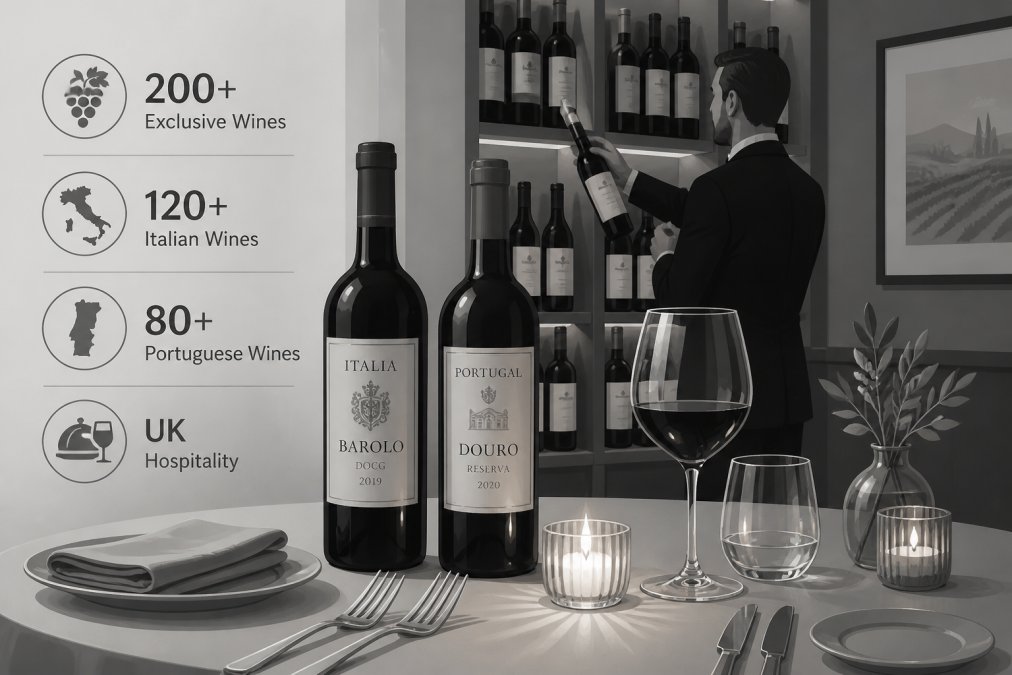
Specialist importers understand hospitality wine selection nuances, recognising that restaurants need wines at multiple price points that pair with specific menu items. Rather than receiving standard wholesale lists, you work with importers who understand your menu philosophy and recommend complementary wines.
Staff training provided by specialist importers ensures your team can speak knowledgeably about wines served. When sommeliers explain terroir, production methods, and food pairing logic, customers perceive greater value. This knowledge-based selling increases wine sales and customer satisfaction.
Exclusive wines command premium margins. Customers pay more for wines unavailable elsewhere, particularly when staff articulate their distinctiveness. A bottle from a boutique Portuguese producer featured exclusively at your restaurant becomes a signature offering, driving wine revenue and reputation.
Building a wine list around exclusive sourcing requires ongoing partnership with your importer. Rather than transactional ordering, you collaborate on curation. The importer suggests seasonal wines, alerts you to limited-availability bottlings, and helps rotate your list to maintain customer interest.
Reliability, Support, and Long-Term Partnership
The distinction between a transactional wholesaler and a true partnership partner becomes evident during supply challenges. A specialist wine importer invested in your success proactively communicates about availability, suggests alternatives when wines become scarce, and maintains consistency you've promised customers.
Long-term partnership means access to market insights informing purchasing decisions. Importers understand customer preference trends, emerging producers, and wines gaining momentum in hospitality. This intelligence helps you stay ahead of competitors and position your business as forward-thinking.
Support extends beyond product delivery. Specialist importers typically offer staff training, tasting events, and educational resources elevating team expertise. When staff understand producer stories, family history, and sustainability practices, they become genuine advocates rather than order-takers.
Reliability in supply chain management is non-negotiable for hospitality businesses. When you commit to featuring a wine, you need confidence your importer maintains consistent supply throughout the season. Specialist importers understand production cycles, allowing them to forecast availability and alert you to potential issues before they become problems.
The relationship aspect also provides protection against market volatility. If a producer experiences difficult vintages or supply disruption, your importer works with you to find suitable alternatives maintaining your list's integrity. This collaborative problem-solving differs fundamentally from impersonal large wholesale distributor experiences.
Why Specialist Wine Importers Outperform General Wholesalers
General wholesalers operate on volume and standardisation, moving large quantities of widely-available wines with minimal per-bottle margins. This approach suits supermarkets and chain restaurants but conflicts with independent businesses seeking differentiation.
Specialist wine importers build business on deep producer and customer relationships, willing to work with smaller volume commitments because margins come from curation expertise and service value rather than pure volume. This flexibility alone makes them superior partners for independent retailers and restaurants.
The knowledge differential is substantial. A general wholesaler's representative may handle hundreds of products across multiple categories. A specialist importer's team focuses exclusively on wine, maintains producer relationships, and understands stories making wines distinctive. You're drawing on concentrated expertise rather than generic product knowledge.
Regulatory compliance represents another area where specialist importers outperform general wholesalers. They maintain dedicated compliance functions ensuring wines meet current UK standards, documentation is properly maintained, and duties are correctly calculated.
Customer support quality differs markedly. When you encounter issues, a specialist importer treats them as partnership matters requiring immediate attention. A general wholesaler processes them as customer service tickets. This orientation difference shapes the entire working relationship.
Finally, specialist wine importers invest in understanding their customers' businesses, your menu, customer base, pricing strategy, and growth ambitions. This understanding allows recommendations genuinely serving your interests rather than simply moving inventory.
Conclusion
Working with specialist wine importers UK transforms how independent retailers and restaurants approach wine sourcing. Rather than settling for mass-market wines available through any wholesaler, you gain access to distinctive, family-owned producers reflecting genuine curation and authentic representation. The regulatory complexity of post-Brexit wine importing makes specialist importers not just a convenience but a strategic necessity.
79North Ltd exemplifies this partnership approach, bridging UK hospitality businesses and innovative, small-batch producers from Portugal and Italy. By handling regulatory burden, managing logistics, and providing staff training support, 79North ensures you can focus on creating exceptional wine experiences for customers. If you're ready to differentiate your wine programme with exclusive, curated selections backed by genuine expertise, let's talk about how specialist importing can transform your business.
Frequently Asked Questions
What is the role of a specialist wine importer in the UK market?
A specialist wine importer acts as a trusted bridge between small, family-owned European wineries and UK independent retailers and restaurants. They handle sourcing, customs compliance, logistics, and regulatory requirements, particularly HMRC excise duty and post-Brexit import documentation. Rather than simply moving bottles, specialist importers curate authentic portfolios, provide staff training, and offer market insights that help independent businesses differentiate themselves with distinctive wines that major wholesalers don't stock.
How do specialist wine importers differ from general wine wholesalers?
General wholesalers typically distribute high-volume, established brands with broad appeal. Specialist wine importers focus on small, innovative wineries and native grape varieties from specific regions, often Portugal and Italy. They provide bespoke service, deeper knowledge of their producers, staff education support, and help independent businesses build unique wine lists. This curated approach means you're not competing on the same wines as every other retailer or restaurant in your area.
Can specialist wine importers work with small independent restaurants and wine shops?
Yes. Unlike major distributors requiring large volume commitments, specialist importers actively serve independent hospitality businesses and small retailers. They understand the constraints of smaller operations and design flexible supply arrangements accordingly. This partnership approach means you're not forced into minimum orders that don't match your turnover, making it feasible for independent establishments to access premium, exclusive wines without the financial risk of oversupply.
What happens if a winery I've stocked through an importer suddenly becomes unavailable?
A reliable specialist importer maintains direct relationships with multiple producers and can recommend alternative wines that match the profile and quality level of what you've listed. They also communicate proactively about supply changes and help you transition customers to new selections. This ongoing support is part of the partnership value, you're not left managing supply disruptions alone, as you would be if you tried to source directly from small European wineries.
This article was written using GrandRanker