
Best Portuguese Wine Regions for Restaurants: A 2026 Guide
Table of Contents
- Overview: Why Portuguese Wine Regions Matter for Restaurant Wine Lists
- The Douro Valley: Portugal's Premier Wine Region for Fine Dining
- Alentejo Wine Region Highlights: Value and Gastronomy
- Dão, Madeira, and Coastal Vineyards: Underrated Portuguese Wine Regions
- Best Portuguese Wines for Food Pairing in Restaurants
- Portuguese Wine Varietals for Restaurants: Native Grapes and Demarcated Regions
- Portuguese Wine Importers UK: Sourcing Authentic Wines for Your Restaurant
- Wine Tourism and Oenotourism: Building Your Restaurant's Narrative
Last Updated: July 27, 2026
Overview: Why Portuguese Wine Regions Matter for Restaurant Wine Lists
Portuguese wines offer authentic regional character at price points that protect margins better than French or Italian equivalents. Portugal's wine regions are shaped by Atlantic winds, granite soils, and indigenous grape varieties found nowhere else. For restaurants, this translates to competitive advantage: a sommelier's genuine story about a wine's origin resonates with guests, and wines costing 30% less than equivalent Bordeaux quality improve pour costs significantly.
| Portuguese Wine Region | Best For | Signature Styles | Price Range | Food Pairings |
|---|---|---|---|---|
| Douro Valley | Fine dining, prestige positioning | Complex reds, aged Port | £18-45+ | Game, aged cheeses, rich sauces |
| Alentejo | Value-conscious, high-volume service | Fruit-forward reds, rosés | £10-20 | Grilled meats, charcuterie, casual dining |
| Dão | Minerality-focused lists, food-first approach | Elegant reds, crisp whites | £12-22 | Fish, poultry, Mediterranean vegetables |
| Madeira | Aperitif/digestif positioning | Fortified wines | £15-30 | Soups, desserts, after-dinner service |
| Vinho Verde | Casual, seafood-focused | Sparkling whites, light reds | £8-14 | Seafood, light appetizers, summer service |
The Douro Valley: Portugal's Premier Wine Region for Fine Dining
The Douro Valley produces wines of remarkable complexity, particularly reds rivaling Burgundy in structure while retaining Portuguese character. Carved into steep hillsides along the Douro River in northern Portugal, this UNESCO World Heritage region becomes a conversation piece on fine dining wine lists.
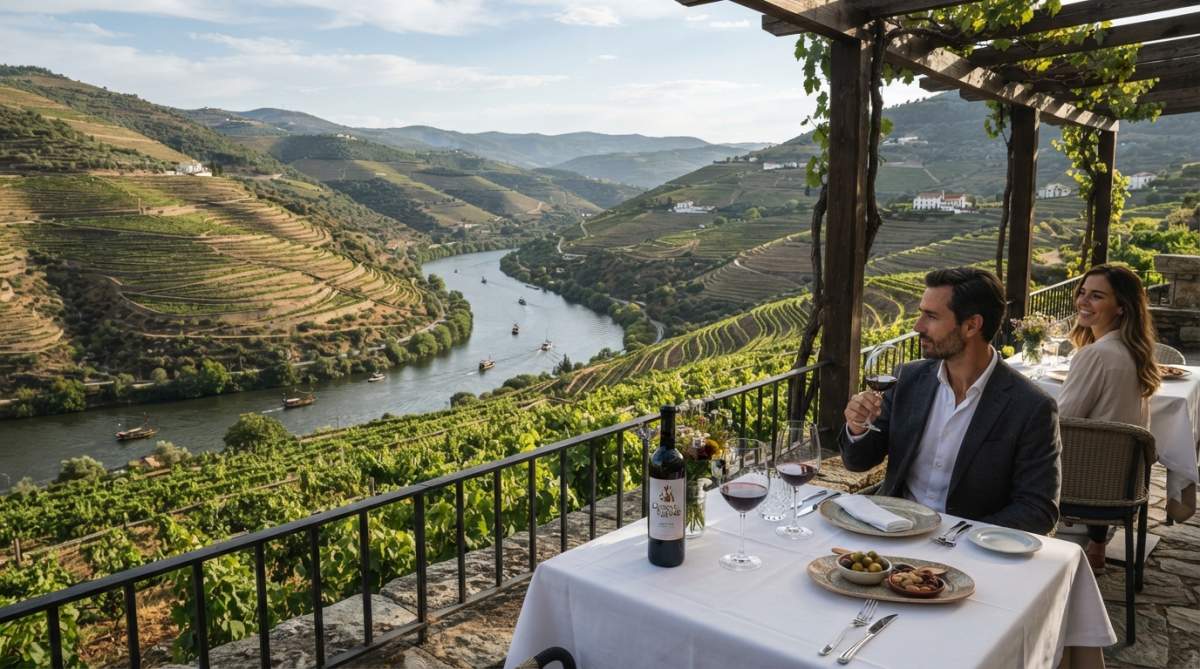
Terroir and Port Wine Heritage
The Douro Valley's identity centers on Port wine, but the finest Douro reds are unfortified table wines expressing terroir with precision comparable to Port, without sweetness. Schist soils, extreme temperature swings, and vines planted on mechanically impossible slopes produce wines with pronounced acidity and mineral character that cuts through rich restaurant cuisine. A Douro red aged 18 months carries notes of dark cherry, slate, and tobacco leaf, ideal for pairing with game, aged beef, or complex meat sauces.
Port wine itself remains a strategic wine list asset. Vintage Port (10-20 years old) serves as a high-margin digestif justifying premium pricing. Tawny Port, aged in barrel for decades, offers approachability without vintage Port's intimidation factor.
Quinta Estates and Winemaker Innovation
A quinta is a family-owned wine estate, typically spanning 10-50 hectares, where the winemaker controls every decision from harvest to barrel selection. Modern Douro winemakers experiment with low-intervention techniques while respecting tradition, some reduce oak aging, allowing native grape varieties like Touriga Nacional and Tinta Roriz to express themselves directly.
Quinta wines benefit independent restaurants economically. A quinta producing 8,000 bottles annually cannot sustain supermarket distribution, requiring direct relationships with independent importers and restaurants. This creates opportunity: you can list wines unavailable through competitors at wholesale prices rewarding the relationship.
Alentejo Wine Region Highlights: Value and Gastronomy
Alentejo achieves the highest value-to-quality ratio in Portuguese wine. Located south of Lisbon with Mediterranean climate influence, Alentejo produces wines delivering complexity and food compatibility at price points protecting margins while remaining accessible. For restaurants serving 150-200 covers per service, Alentejo selections reduce wine list complexity while maintaining quality across price tiers.
Indigenous Grapes and Low-Intervention Winemaking
Alentejo's signature grapes, Aragonez, Castelão, and Trincadeira, deliver fruit-forward character with natural acidity complementing contemporary cuisine. These indigenous varieties rarely appear outside Portugal, giving your wine list regional authenticity competitors cannot replicate.
Low-intervention winemaking increasingly dominates Alentejo. Winemakers use native yeasts, minimal sulfite additions, and shorter oak aging preserving varietal expression. The result is wines with transparency: you taste the grape, soil, and vintage without heavy oak obscuring character. This transparency makes Alentejo wines exceptional for wine education.
Alentejo pricing typically ranges £10-18 per bottle wholesale, allowing retail positioning at £28-45, margins sustaining serious wine programs while remaining accessible. This compares favorably to equivalent quality from Côtes du Rhône or Spanish Rioja.
Dão, Madeira, and Coastal Vineyards: Underrated Portuguese Wine Regions
Dão, Madeira, and emerging coastal regions offer differentiation for restaurants seeking wines unavailable through mainstream distributors.
Dão's Minerality and Coastal Terroir
Dão occupies a mountainous central Portuguese region where elevation and granite soils create wines of pronounced minerality. Dão reds express terroir through slate, flint, and stone fruit rather than fruit-forward ripeness. For restaurants emphasizing food pairing over wine as primary focus, Dão selections excel.
Dão whites, made from Encruzado, Bical, and Cerceal grapes, deliver crisp acidity and mineral precision rivaling Chablis at a fraction of the cost. Dão winemakers increasingly emphasize sustainability, with granite soils and cooler climate naturally reducing disease pressure, allowing organic and biodynamic farming without yield penalties.
Coastal regions, particularly around Setúbal and the Vicentina Coast, produce distinctive whites and rosés. Atlantic influence creates wines with freshness and minerality complementing seafood-focused menus.
Madeira and Vicentina Coast Distinctiveness
Madeira, produced on the Portuguese island 600 kilometers off the African coast, represents a unique category: fortified wine with built-in aging potential and remarkable stability. A bottle opened 20 years ago remains in perfect condition, a characteristic no other wine possesses. This stability makes Madeira ideal for restaurants with inconsistent wine consumption or limited storage capacity.
Madeira's production involves heating wine to 45°C, which oxidizes the wine and develops complex, nutty character. A 10-year-old Madeira (approximately £18-25 wholesale) delivers complexity comparable to vintage Port at lower cost, making it investment-grade suitable for restaurants positioning themselves as serious collectors.
Vicentina Coast wines represent Portugal's emerging frontier. Protected designation status allows winemakers experimentation with international varieties alongside native grapes, producing wines balancing Portuguese character with accessibility.
Best Portuguese Wines for Food Pairing in Restaurants
Portuguese wines excel at food pairing because their acidity, tannin structure, and fruit character complement Mediterranean and contemporary cuisine naturally.
Traditional Dishes and Wine Pairing Strategies
Portuguese cuisine centers on seafood, grilled meats, and olive oil-based preparations demanding wines with acidity and minerality rather than fruit-forward ripeness. A Dão white pairs beautifully with grilled sea bass because its acidity cuts through olive oil while its minerality echoes briny character. An Alentejo red complements grilled lamb because its natural tannins match the meat's richness without overwhelming it.
Regional wines evolved alongside regional cuisine. A sommelier confidently recommends Portuguese selections for Portuguese-influenced menus, creating narrative coherence enhancing perceived value. Tawny Port (10-20 years old) pairs exceptionally with aged cheeses and nuts, ideal for cheese courses. Dry Madeira complements soup courses, particularly seafood-based preparations.
Budget-Friendly vs. Luxury Dining Pairings
Budget-conscious restaurants (average check £25-40) should prioritize Alentejo selections and Vinho Verde at wholesale prices allowing retail positioning of £18-28. Luxury restaurants (average check £80+) should feature Douro Valley selections, particularly aged reds from established quintas, justifying premium positioning with standard fine dining markup of 300-400%. Mid-range restaurants (average check £40-70) benefit from balanced Portuguese selections: Douro whites and lighter reds alongside Alentejo reds and Dão selections.
Portuguese Wine Varietals for Restaurants: Native Grapes and Demarcated Regions
Understanding Portuguese grape varieties transforms wine service from generic recommendations to informed curation. Touriga Nacional is Portugal's most prestigious red grape, producing wines with dark fruit, structure, and aging potential. Found primarily in Douro and Dão, Touriga Nacional-based wines command premium pricing.
Aragonez and Castelão deliver approachability without compromising complexity. These Alentejo staples produce fruit-forward wines pairing naturally with contemporary cuisine, typically retailing at £25-35.
Encruzado produces Portugal's finest whites, delivering mineral precision and aging potential. Found in Dão, Encruzado develops complexity over 5-10 years in bottle. A 2015 Encruzado (approximately £16-20 wholesale) delivers complexity comparable to white Burgundy at significantly lower cost.
DOC and Regional Classification Guide
Portugal's Denominação de Origem Controlada (DOC) designates regions with strict production rules. DOC status indicates quality assurance: wines must meet specific standards regarding grape varieties, alcohol content, and production methods. Demarcated regions include Douro, Alentejo, Dão, Vinho Verde, and others, each with distinct terroir and approved grape varieties.
Regional Vinho (wine without DOC designation) offers value and experimentation. These wines come from approved regions but don't meet DOC standards, typically because they use non-traditional grape varieties or production methods. For restaurants emphasizing innovation, Regional Vinho selections provide distinctiveness at accessible pricing.
Portuguese Wine Importers UK: Sourcing Authentic Wines for Your Restaurant
Sourcing Portuguese wines requires selecting importers understanding terroir, maintaining consistent supply, and providing support for independent restaurants.
79North Ltd specializes in importing premium, family-owned wines from Portugal and Italy to the UK market. Unlike major distributors focused on volume, 79North Ltd bridges the gap for independent retailers and restaurants by providing trusted representation for small, innovative wineries. Their portfolio celebrates unique terroirs and native grape varieties, ensuring restaurants receive distinctive, high-quality products standing out in competitive landscapes.
79North Ltd differentiates through relationship-based distribution. They represent quintas and small producers with limited production volumes, wines unavailable through mainstream channels. For restaurants seeking differentiation, this focus on exclusive producers creates competitive advantage.
Direct Sourcing vs. Wholesale Distribution
Direct sourcing from Portuguese producers offers advantages and challenges. Direct relationships eliminate middlemen, potentially reducing costs. However, direct sourcing requires managing minimum orders (typically 12-24 bottles per SKU), handling customs documentation, and managing supply consistency.
Wholesale distribution through established importers provides consistency, support, and flexibility. Importers manage customs, quality assurance, and supply chain logistics while providing staff training, tasting notes, and marketing support. For independent restaurants lacking wine procurement expertise, wholesale distribution reduces operational burden while ensuring quality.
The economic comparison favors wholesale for most independent restaurants. A bottle sourced directly at £12 wholesale might cost £14-16 after accounting for customs and shipping. Through an established importer, the same wine costs £12.50-13.50 wholesale, while the importer provides additional support.
Reliability, Supply Chain, and Support for Independent Restaurants
Small Portuguese producers sometimes struggle with supply consistency. Established importers manage this risk by representing multiple producers, ensuring alternative selections when supply constraints occur.
79North Ltd addresses this concern through careful producer selection and relationship management. They work with producers committed to UK distribution, ensuring supply stability. Their team monitors production schedules and communicates proactively when supply changes occur, allowing restaurants to adjust wine lists with advance notice.
Staff training distinguishes premium importers from transactional suppliers. 79North Ltd provides education about producer stories, terroir characteristics, and food pairing strategies, transforming wine service from generic recommendations to informed curation.
Wine Tourism and Oenotourism: Building Your Restaurant's Narrative
Wine tourism creates narrative opportunities for restaurants. Guests who've visited the Douro Valley develop emotional connection to Douro wines. A sommelier who's visited specific quintas shares authentic stories about winemakers, vineyard practices, and terroir characteristics, differentiating wine service from generic recommendations.
Seasonal Menu Variations and Harvest Insights
Portuguese wine regions experience distinct seasonal rhythms. Harvest occurs in September-October, when new vintage production begins. Wines released in spring offer freshness and primary fruit character. Aged releases offer complexity and development.
Restaurants can align wine list seasonality with harvest cycles. Spring updates should feature newly released Portuguese vintages. Autumn lists should emphasize aged selections from established producers. Summer menus emphasizing seafood pair naturally with Vinho Verde and coastal whites. Winter menus featuring game pair with aged Douro reds and Dão selections.
Harvest insights add authenticity to wine service. A sommelier explaining that 2023 was challenging due to excessive rainfall, making those wines more structured and age-worthy, demonstrates expertise while contextualizing wine characteristics.
Understanding Portuguese wine regions transforms restaurant wine service from transactional to strategic. The best Portuguese wine regions for restaurants, Douro for prestige, Alentejo for value, Dão for minerality, and emerging coastal regions for differentiation, create opportunities for competitive positioning and margin protection.
Selecting Portuguese wines for your restaurant requires understanding terroir, producer philosophy, and supply chain reliability. Let's talk about how 79North Ltd can simplify this process. We represent family-owned Portuguese quintas committed to UK distribution, providing consistent supply, staff training, and support that transforms wine service into competitive advantage. Get in touch with 79North Ltd to explore how distinctive Portuguese wines can elevate your wine program and differentiate your restaurant.
Frequently Asked Questions
Which Portuguese wine regions offer the best value for independent UK restaurants?
Alentejo and Dão deliver exceptional value without compromising quality, offering indigenous grapes and distinctive terroir at competitive price points. Underrated Portuguese wine regions like these allow restaurants to stock distinctive bottles that differentiate their wine lists. Direct sourcing through Portuguese wine importers UK can further reduce costs while supporting small, family-owned producers committed to sustainable practices.
What are the most food-friendly Portuguese wine varietals for restaurant menus?
Portuguese wine varietals for restaurants include Touriga Nacional (red, versatile with rich dishes), Alvarinho (white, pairs with seafood), and Baga (structured reds for traditional cuisine). Native grapes adapted to specific terroirs offer minerality and complexity that complement both traditional Portuguese dishes and international gastronomy. Sommelier guidance on demarcated regions ensures you select wines that genuinely enhance your culinary offerings rather than generic selections.
How can UK restaurants source Portuguese wines directly without supply chain complications?
Working with established Portuguese wine importers UK simplifies customs, paperwork, and minimum orders compared to direct vineyard contact. Reputable importers handle all regulatory compliance, meaning you avoid the complexity of international sourcing. They offer flexible order sizes suitable for independent restaurants, provide reliable supply consistency, and often include staff training and sommelier support, adding genuine value beyond just delivering bottles.
What's the difference between budget-friendly and luxury Portuguese wine options for restaurants?
Budget-friendly selections from Alentejo or Vinho Verde regions offer excellent drinkability and margin potential, ideal for by-the-glass programs. Luxury options from Douro Valley quinta estates or low-intervention producers command premium pricing and appeal to wine-focused diners. Seasonal menu variations and harvest insights help you balance both tiers, ensuring your list serves diverse customer preferences while maintaining profitability across price points.
Are there sustainable or organic Portuguese wine regions suitable for restaurants with ethical sourcing commitments?
Yes. Many Portuguese wine importers UK now specialise in family-owned wineries committed to sustainability and low-intervention winemaking practices. Regions like Alentejo and Dão increasingly feature producers using organic and biodynamic methods. When sourcing, ask importers about their winemakers' environmental practices and certifications, this transparency builds credibility with conscious diners and aligns your wine program with your restaurant's values.
This article was written using GrandRanker