
Is Buying Through Wine Importers Worth It?
Table of Contents
- What Wine Importers Actually Do
- Benefits of Direct Wine Importing for Retailers and Restaurants
- Wine Merchant vs Importer: Understanding the Difference
- The Real Cost of Buying Through Importers
- Is Buying Through Wine Importers Worth It for Your Business?
- How to Identify a Trustworthy Wine Importer
- Conclusion
Last Updated: August 13, 2026
What Wine Importers Actually Do
A wine importer is a business that sources wines directly from producers abroad, navigates customs clearance and regulatory compliance, and sells to independent retailers and restaurants in the UK market. Unlike wine merchants who may work with multiple suppliers and distribute established brands, importers typically develop direct relationships with specific wineries, often small family-owned operations that lack the resources or infrastructure to reach UK buyers independently.
The role involves far more than simply buying bottles and shipping them. Importers manage the entire supply chain: they identify producers worth representing, negotiate terms, arrange logistics, handle import duties and VAT, ensure label compliance with UK regulations, and provide ongoing support to their retail and restaurant partners. They act as the bridge between European winemakers and UK hospitality businesses, translating language barriers, managing payment terms, and guaranteeing supply consistency.
At 79North Ltd, this means working directly with premium family-owned wineries from Portugal and Italy, producers like Herdade da Calada, Manz, Casal do Conde, and Casa Américo, to bring their distinctive wines to independent UK retailers and restaurants. Rather than distributing mass-market labels, we focus on small, innovative wineries that would otherwise remain undiscovered in the UK market.
The value of buying through wine importers extends beyond convenience. Importers curate selections based on terroir, native grape varieties, and producer philosophy rather than simply maximising volume. They provide quality assurance, handle the logistical complexity that deters small-scale direct sourcing, and offer expertise about provenance and production methods that enhance a business's wine portfolio.
Benefits of Direct Wine Importing for Retailers and Restaurants
Direct wine importing, whether working with a dedicated importer or sourcing independently, offers several concrete advantages for independent wine shops and fine-dining establishments seeking to differentiate themselves in a competitive market.
Access to distinctive, high-quality portfolios is the primary draw. Small Portuguese and Italian wineries rarely appear in mainstream UK distribution. Working through an importer gives you access to wines that your competitors won't stock. Customers notice. A restaurant menu featuring Jampal, a rare Portuguese white grape variety, or a small-batch Dão red from an innovative producer creates a talking point that mass-market selections cannot match.
Supply chain transparency and provenance matter increasingly to both consumers and professional buyers. When you work through an importer, you know exactly where your wine comes from. You can speak confidently about the winery's practices, the terroir, the producer's philosophy. This authenticity translates into higher perceived value and stronger margins. A sommelier can tell a customer the actual story of a wine rather than reciting a generic tasting note.
Consistency and reliability reduce operational risk. Rather than juggling multiple supplier relationships and minimum order requirements, you work with a single importer who understands your business needs. If a winery can't supply a particular vintage, the importer manages the substitution. If customs delays occur, the importer handles the logistics. This stability matters more for independent businesses with limited staff and no procurement department.
Curated selection over volume means you're not forced to buy cases of wines that don't fit your brand. Importers work with you to build a portfolio aligned with your customers' tastes and your business positioning. This reduces dead inventory and improves cash flow, a critical advantage for small retailers and restaurants operating on thin margins.
Educational support is often included. Experienced importers provide tasting notes, producer background, pairing suggestions, and staff training. This knowledge helps your team sell with confidence and helps customers understand what makes these wines worth the premium price point.
Wine Merchant vs Importer: Understanding the Difference
The terms are often used interchangeably, but the distinction matters when deciding where to source your wine.
A wine merchant is typically a distributor or wholesaler who buys from multiple suppliers (including importers) and resells to retailers and restaurants. Merchants maintain broad portfolios, handle logistics for many producers, and often operate on volume-based pricing. They're generalists, they stock established brands alongside emerging producers, managing relationships across dozens of wineries and regions.
An importer develops exclusive or semi-exclusive relationships with specific producers, usually smaller operations. Importers invest in understanding a producer's practices, philosophy, and market positioning. They represent those producers to the UK market, negotiate terms, manage customs and compliance, and provide ongoing support. Importers are specialists with deep knowledge of their portfolio.
The practical difference: buying from a merchant gives you breadth and convenience. You can place a single order and receive wines from ten different producers. Buying from an importer gives you depth and differentiation. You're sourcing directly from the producer's representative, which typically means better pricing on those specific wines, more reliable supply, and access to smaller-production bottles that merchants don't carry.
For independent retailers and restaurants, the choice depends on your priorities. If you want variety and convenience, merchants work. If you want distinctive wines, stronger margins, and direct producer relationships, importers are worth the effort.
The Real Cost of Buying Through Importers
Understanding the true economics of buying through importers requires looking beyond the headline price to the full cost structure.
Import duties and VAT are the first layer. When wine enters the UK from outside the EU, it incurs duty (currently £2.87 per litre for still wine) plus VAT at 20% on the landed cost. A case of wine costing €100 at source might land at £150-170 once duty, VAT, and freight are added. This isn't the importer "marking up", it's the actual cost of moving wine across borders. An inexperienced buyer attempting direct sourcing often underestimates this layer entirely.
Logistics and bonded warehouse costs add another tier. Wine requires temperature-controlled storage and careful handling. Most importers hold stock in bonded warehouses (storage facilities where duty is deferred until the wine is released for sale), which costs money. These costs are either built into the per-bottle price or charged separately. Direct sourcing would require you to arrange this yourself, which is possible but not cheap.
Minimum order quantities from producers are typically 1-2 pallets (300-600 bottles). A small wine shop might want only 12 bottles of a particular vintage. An importer can aggregate demand from multiple retailers, breaking bulk orders into smaller allocations. This flexibility has real value.
Price comparison in practice: A wine from Herdade da Calada retailing at £21 per bottle might have a landed cost of £11-12 for an importer. After accounting for duty, VAT, logistics, and their margin, the wholesale price to you might be £14-15. If you attempted to source directly, you'd pay the producer's export price (roughly £8-9), but then face minimum orders of 300+ bottles, plus duty, plus VAT, plus freight, plus bonded warehouse fees, plus the administrative burden of customs clearance. The per-bottle cost often ends up similar or higher, and you're carrying significantly more inventory risk.
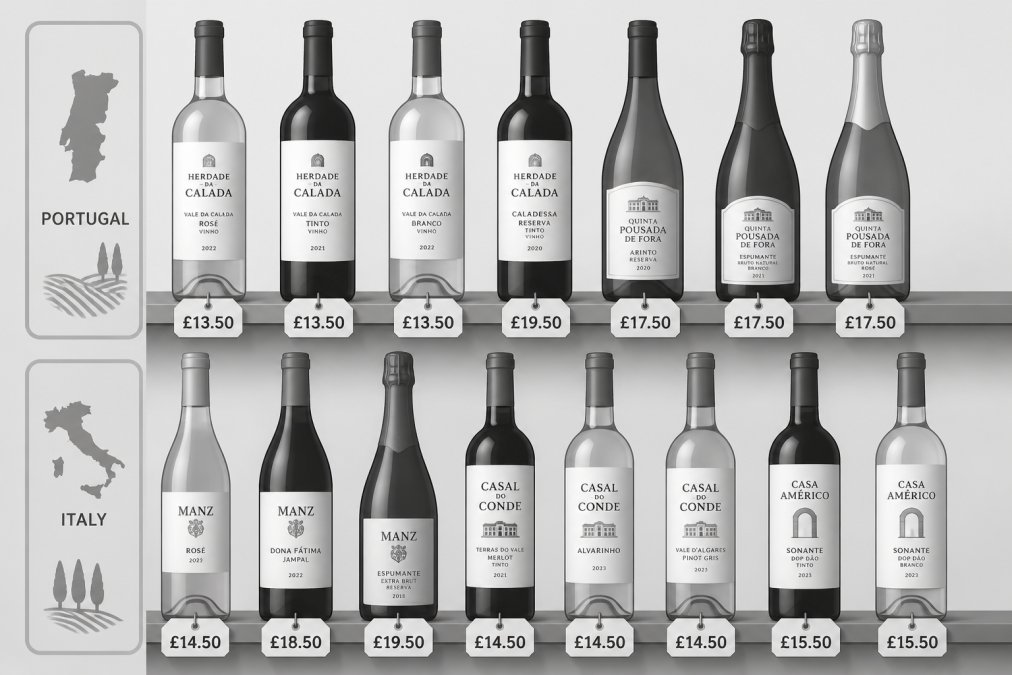
For small independent retailers and restaurants, the cost calculation usually favours working with importers. You avoid the complexity of customs clearance, you don't carry excess inventory, and you get access to wines you couldn't source independently at any price.
Is Buying Through Wine Importers Worth It for Your Business?
Whether buying through wine importers is worth it depends on your business model, inventory capacity, and sourcing priorities.
For independent wine shops, the answer is usually yes. Your competitive advantage lies in offering wines your larger competitors don't carry. Importers specialise in providing exactly that. The margin structure works: you buy at £14-15 wholesale and retail at £21-28, which is healthy for independent retail. You avoid the operational burden of managing customs and logistics yourself. And you get access to producers like Manz, whose rare Jampal grape variety is a genuine differentiator that customers actively seek out.
For independent restaurants, the calculus is similar. A fine-dining establishment builds its reputation partly on wine selection. Stocking wines from small Portuguese and Italian producers, wines with genuine provenance and story, supports that positioning. The wholesale pricing allows for reasonable mark-ups (typically 2.5-3x cost for restaurant wine), and the exclusivity justifies premium pricing to customers. A sommelier can speak authentically about these wines because the importer provides that knowledge.
For larger retailers or restaurant groups, direct sourcing might be worth exploring. If you're buying 500+ bottles annually of a single wine, the minimum order constraints disappear. You can negotiate directly with producers. But you still face the compliance burden, the logistics complexity, and the inventory risk. Even large buyers often work with importers for the majority of their portfolio, using direct relationships only for high-volume staples.
The key question: Does the value of differentiation and supply chain reliability justify the cost relative to buying through traditional merchants or mass-market distributors?
For most independent businesses, the answer is yes. Importers solve the exact problem independent retailers and restaurants face: how to access distinctive, high-quality wines without the operational complexity of international sourcing.
How to Identify a Trustworthy Wine Importer
Not all importers operate with the same standards. Here's how to evaluate whether an importer is worth your business.
Check their producer relationships. A trustworthy importer can introduce you to the producers they represent. They should be able to arrange a tasting call with the winemaker or owner, provide detailed information about production methods and philosophy, and speak with genuine knowledge about the wines. If an importer treats producer relationships as proprietary and won't facilitate direct communication, that's a warning sign.
Assess their supply reliability. Ask for references from existing retail and restaurant partners. How often do they face stockouts? How do they handle supply disruptions? A winery might have a poor harvest or decide to reduce exports, how does the importer manage that communication with their customers? Reliable importers plan ahead and communicate early when issues arise.
Evaluate their compliance and documentation. Wine importation involves substantial regulatory requirements. The importer should handle all customs clearance, ensure proper labelling for UK regulations, and manage VAT/duty documentation. Ask about their process. A professional importer should have this systematised and should be able to explain it clearly.
Look at their portfolio philosophy. Do they represent producers that align with your brand? A good importer doesn't work with every winery, they're selective. They should be able to articulate why they represent the producers they do. At 79North Ltd, for example, we focus exclusively on family-owned, innovative producers from Portugal and Italy. That specificity matters because it means every wine in the portfolio reflects a consistent philosophy.
Review their pricing transparency. They should be able to explain their cost structure: producer price, duty, VAT, logistics, margin. If pricing seems arbitrary or they're evasive about how they calculate it, move on. Transparent importers build trust through clarity.
Assess their customer support. Do they provide tastings for your staff? Do they help with menu placement or merchandising suggestions? Do they respond to questions about provenance and production? Good importers view themselves as partners in your success, not just suppliers.
Check references specifically. Don't just ask for names, actually contact retailers and restaurants they work with. Ask about consistency, reliability, and the value they've received from the relationship. A trustworthy importer will have genuine advocates among their customers.
Conclusion
Buying through wine importers is worth it for independent retailers and restaurants seeking distinctive wines, supply chain reliability, and the operational simplicity of working with a knowledgeable partner. The cost is real, but it's offset by access to producers you cannot source independently, margins that support sustainable independent business operations, and the elimination of customs, logistics, and compliance burdens that make direct sourcing impractical for small-scale buyers.
The right importer, one with genuine producer relationships, transparent pricing, reliable supply, and a portfolio philosophy aligned with your brand, becomes a strategic partner rather than simply a supplier. 79North Ltd specialises in exactly this model, representing premium family-owned producers from Portugal and Italy to independent UK retailers and restaurants. Our portfolio includes distinctive wines like Herdade da Calada's Caladessa Reserva Tinto (£21.00), Manz's rare Jampal white (£35.00), Casal do Conde's Pinot Gris (£15.00), and Casa Américo's Sonante Dão red (£14.00), wines that give your business genuine competitive differentiation. UK wine importation regulations and compliance requirements outline the regulatory framework that experienced importers navigate on your behalf.
Get started with 79North Ltd and access a curated portfolio of authentic, small-batch European wines that your customers won't find elsewhere.
Frequently Asked Questions
What is the role of a wine importer in the supply chain?
Wine importers bridge small European producers and UK retailers by handling customs clearance, compliance, logistics, and quality assurance. They manage import duties, label compliance, and bonded warehouse storage, eliminating the complexity small buyers face when sourcing directly. This supply chain transparency ensures authentic wines reach your business with proper provenance documentation and regulatory approval.
How do wine importers ensure quality and provenance?
Reputable importers work exclusively with established producers, verify terroir credentials, and maintain detailed records of each vintage. They conduct quality assurance checks before shipping and provide documentation of origin. This curated approach means you receive authentic wines from known family-owned wineries rather than unknown sources, reducing risk and ensuring consistency in your wine portfolio.
Are there minimum order quantities when buying from wine importers?
Most importers work flexibly with independent retailers and restaurants, offering case pricing rather than requiring bulk commitments. Smaller establishments can purchase individual cases without warehouse commitments. This accessibility makes importing practical for independent wine shops and restaurants seeking distinctive selections without the volume demands of major distributors.
What are the cost benefits of sourcing wine through an importer?
Importers reduce your total landed cost by consolidating shipments, negotiating wholesale pricing directly with producers, and eliminating middleman markups. You avoid customs hassles, compliance delays, and the risk of minimum orders or failed shipments. The strategic buying advantage comes from accessing curated, undiscovered wines at wholesale rates before they reach retail shelves, giving you market diversity and competitive advantage.
This article was written using GrandRanker