
European Wine Collection: Strategies for 2026
Table of Contents
- Why a Curated European Wine Collection Beats a Random One
- The Best Native Grape Varieties to Collect
- Sourcing Premium Family-Owned Wines
- How to Store Wine at Home Without Ruining It
- Diversifying by Region, Appellation and Producer
- Provenance, Authentication and Digital Inventory Tracking
- Cross-Border Acquisition and Climate Change: What Collectors Miss
- Frequently Asked Questions
Last Updated: September 15, 2026
Why a Curated European Wine Collection Beats a Random One
A curated European wine collection is a deliberately assembled group of bottles chosen around a clear theme, native grape varieties, family-owned producers or a specific appellation, rather than whatever scored well that month. At 79North Ltd, we see the difference every week: a coherent list of Portuguese and Italian wines sells itself because there is a story behind it, while a random shelf competes on price alone.
Depth beats breadth. Knowing six producers properly, their grape varieties, drinking windows and vintages, gives you something to talk about, and that conversation converts a curious customer into a repeat one.
The market rewards this approach: buyers are moving away from famous labels toward authentic, small-batch wines with a traceable origin, exactly where family-owned European estates have an advantage.
The Best Native Grape Varieties to Collect
Native grape varieties are the most reliable route to a distinctive collection because they cannot be replicated elsewhere. A wine made from Jampal, Arinto or Alfrocheiro carries a sense of place no international grape can copy.
Portuguese Grapes Worth Cellaring
Portugal offers some of the best value in age-worthy European wine right now. Touriga Nacional and Touriga Franca form the backbone of serious Douro and Alentejo reds, with tannins and acidity to improve for a decade or more.
The real discovery for collectors is Jampal, a white variety rescued from near extinction and now bottled as a single-varietal wine by Manz in the Lisboa region. The Manz 2022 Dona Fátima Jampal shows what a revived native grape can do: a crisp, mineral white with genuine ageing potential and a story no customer has heard before.
Italian Varieties with Real Ageing Potential
Italy rewards patience. Nebbiolo from Barolo and Barbaresco, Sangiovese from Brunello di Montalcino and Aglianico from Campania all have the tannins and acidity to develop for a decade or more.
For something less obvious, look at Friulano and Fiano, which gain texture and honeyed notes with bottle age.
Sourcing Premium Family-Owned Wines
Buying from family-owned estates is the single most effective way to build a collection that stands apart. They farm smaller parcels, work with indigenous varieties and control quality at every stage.
The challenge is access. Small wineries often lack the volume, export experience or contacts to reach buyers directly, and a single pallet from a tiny Dão estate can involve more paperwork than a container from a large négociant.
This is where an importer earns its place: a specialist handles the relationship, logistics and compliance, and gives you access to producers who would otherwise never appear on your radar. The trade-off is real, you pay for that curation and reliability. For anyone building a collection with a point of view, it is the difference between a list and a commodity.
How to Store Wine at Home Without Ruining It
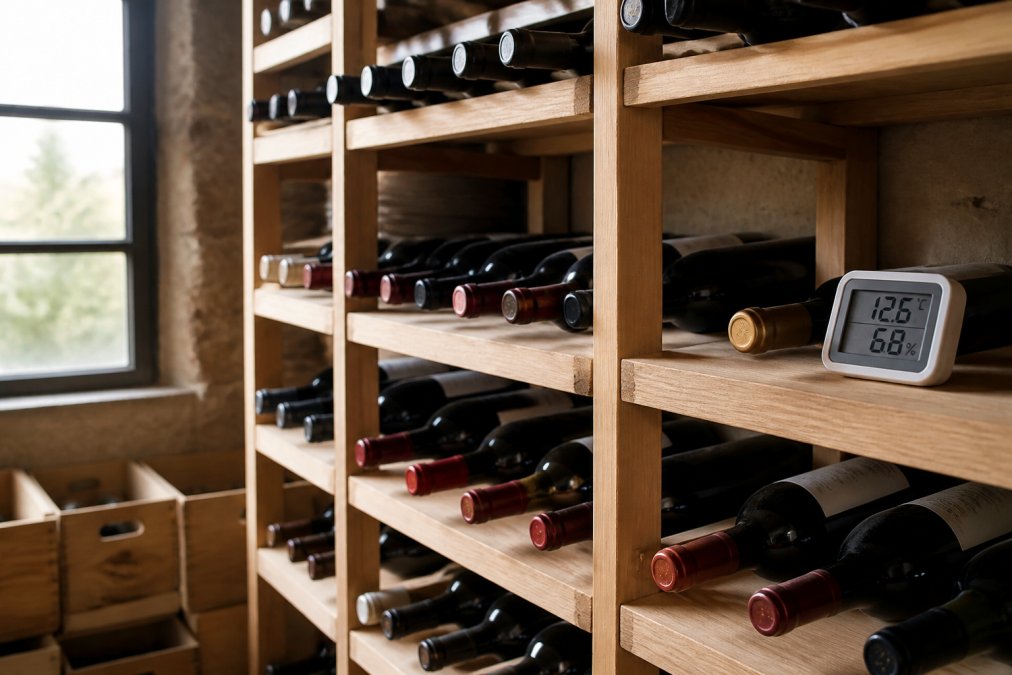
Proper storage separates a wine collection from a wine pile. Four conditions matter most:
- Temperature stability: Aim for a consistent 12-14°C (Temperatures of wine service and storage). Fluctuation damages wine faster than a slightly warm but steady room.
- Humidity control: Keep relative humidity around 60-70% so corks stay supple and do not dry out (Temperatures of wine service and storage).
- Light and vibration: Store in darkness, away from washing machines, speakers or anything that shakes the bottles.
- Position: Keep bottles horizontal so the wine stays in contact with the cork.
Diversifying by Region, Appellation and Producer
Diversification protects both your palate and your investment. Spreading bottles across regions, appellations and producers means a poor vintage in one area does not leave a hole in your list.
A practical framework for a balanced European collection:
| Category | Target Share | Example Regions |
|---|---|---|
| Age-worthy reds | 40% | Douro, Barolo, Dão |
| White wines for cellaring | 25% | Vinho Verde, Friuli, Lisboa |
| Drink-now bottles | 25% | Alentejo, Tuscany |
| Wildcards and rare finds | 10% | Revived native varieties |
The principle of rotation keeps this balanced: one bottle out, two in. Every time a customer buys a bottle, replace it with two, one like-for-like, one that stretches the collection in a new direction. Over a year, that compounds into a genuinely varied cellar. This disciplined growth eventually necessitates a dedicated custom wine cellar to maintain the structural integrity and archival potential of your expanding inventory.
Provenance, Authentication and Digital Inventory Tracking
Provenance is the documented history of a bottle, from producer through every owner to your shelf, and it is becoming as important to collectors as the wine itself. Without it, a rare find is just an unverifiable claim.
What a defensible provenance file contains
For European wines, provenance starts with paperwork and ends with a record you could hand to an insurer or buyer without embarrassment. Each bottle or case should hold:
Keep digital copies of everything, stored off your day-to-day device. A gap in the chain is not fatal on a bottle; on a mature Barolo or top Douro red it is the difference between a sale and a shrug.
Spotting a counterfeit European bottle
Counterfeiting follows value, and the European regions most affected have the strongest secondary market, Burgundy, Bordeaux, Barolo and, increasingly, high-scoring Douro and Alentejo releases. A few checks catch most problems.
- Label and capsule print quality. Genuine labels are printed to a standard; look for blurred type, misaligned colour registration and capsules that do not sit flush.
- Glass and embossing. Producer crests embossed in the glass should be crisp and consistent with the vintage.
- Cork branding. The cork should carry the producer's mark and, where the estate uses them, the vintage and cuvée.
- Fill level. A bottle that is too full for its age is as suspicious as one that is too low.
- The paperwork. A seller who cannot produce the chain of custody is telling you something.
Running inventory like a portfolio
- Drinking window, a start and end year, not a vague note.
- Provenance status, complete, partial or missing.
- Location, which rack, which fridge, which bonded account.
- Valuation date, when you last checked what the bottle is worth.
Cross-Border Acquisition and Climate Change: What Collectors Miss
Two forces are reshaping European wine collecting, and most guides ignore both: the mechanics of getting wine from a small European estate onto your shelf without it being held, taxed twice or spoiled, and the way a warming climate is moving the goalposts on which vintages are worth cellaring.
The real mechanics of importing European wine
Buying directly from a small Portuguese or Italian estate sounds appealing until you hit the paperwork. For a UK buyer, the moving parts are:
- EORI number. You need one to import commercially. Without it, your shipment cannot clear.
- Excise duty. Wine is duty-suspended until it is released for consumption in the UK. Duty is charged per hectolitre of pure alcohol, so a higher-strength wine costs more to land than a lower-strength one of the same volume (Alcohol Duty rates).
- VAT. Import VAT is charged on the value of the goods plus shipping, insurance and duty. If you are VAT-registered, this is usually recoverable; if you are a private collector, it is a real cost.
- Customs declarations. A commercial invoice, packing list and the correct commodity codes are the minimum. Errors here are what leave pallets sitting at a port for weeks.
- Labelling and food safety rules. Bottles sold in the UK must meet UK labelling requirements, including allergen and sulphite declarations and the correct importer details. A bottle that complies in Italy may not comply here.
- VI-1 certification. For many European wine imports, a VI-1 certificate issued by the competent authority in the country of origin has historically been required.
Bonded storage and the duty decision
A simple decision framework
Climate change and moving drinking windows
Frequently Asked Questions
What are the best European regions for starting a wine collection?
Portugal and Italy offer some of the strongest starting points for a European wine collection. Portugal's Douro, Alentejo and Dão regions produce age-worthy reds from Touriga Nacional and Tinta Roriz, while Vinho Verde delivers crisp whites like Arinto. Italy's Piedmont, Tuscany and Veneto cover both collectible Barolos and approachable everyday bottles. Starting with two or three regions lets you learn each area's appellation rules and grape varieties before expanding. A focused European wine collection built region by region develops faster than scattered buying.
What is the importance of native grape varieties in a wine collection?
Native grape varieties give a collection character that international grapes like Cabernet Sauvignon cannot match. Portuguese varieties such as Jampal, Alfrocheiro and Tinta Caiada are grown almost nowhere else, so bottles made from them stay distinctive and often appreciate as demand grows. The best native grape varieties to collect are those with documented ageing potential and small production runs. They also tell a story about terroir and regional identity, which matters to sommeliers and customers browsing an independent wine list.
How should I store my European wine collection at home?
Keep bottles at a steady temperature with humidity around 60-70% to protect corks from drying out. Avoid kitchens and rooms with temperature swings, since stability matters more than hitting an exact number. Lay bottles horizontally so wine stays in contact with the cork, and keep racks away from direct light. If you lack a cellar, a dedicated wine fridge handles temperature and humidity control. Track each bottle's drinking window so you open age-worthy wines at their peak rather than too late.
How do I track the provenance of my European wine acquisitions?
Record the producer, appellation, vintage, case size and purchase date for every bottle, ideally in a spreadsheet or a digital inventory tool. Keep documentation, since these prove the chain of custody if you later sell or insure the collection. For investment-grade bottles, note the importer name and storage history from day one. Provenance and authentication matter most for older vintages, so start tracking from your first purchase rather than reconstructing records years later.