How to Identify Dão Wines: A Practical Guide
Table of Contents
- Why Dão Wines Confuse Even Experienced Buyers
- Step 1: Check the Label for DOP Dão and Sub-Regions
- Step 2: Learn the Dão Wine Grape Varieties
- Step 3: Read the Terroir: Granitic Soil and High Altitude
- Step 4: Taste for Acidity, Tannins, and Mineral Drive
- Is Dão Wine Dry? Understanding the Style Spectrum
- How to Read Portuguese Wine Labels Without Guesswork
- Spotting Value: Price-to-Quality Signals in Dão
- Frequently Asked Questions
Last Updated: September 8, 2026
Why Dão Wines Confuse Even Experienced Buyers
Most wine professionals can recite Portugal's great regions blindfolded: Douro for Port, Vinho Verde for spritzy white, Alentejo for bold reds. Ask them to identify Dão wines blind, however, and you will often get a pause.
Dão is a landlocked region in north-central Portugal, encircled by granite mountains that create a unique high-altitude climate. To identify Dão wines reliably, you need to read four distinct signals: legal label designations, indigenous grape varieties, terroir markers, and the sensory profile in the glass. This guide from 79North Ltd walks through each step in order.
Step 1: Check the Label for DOP Dão and Sub-Regions
The first and most reliable signal is the legal designation. Authentic Dão wines carry the status DOP Dão (Denominação de Origem Protegida), which replaced the older DOC label. If you see "DOP Dão" or "Denominação de Origem Protegida Dão" printed on the bottle, you are looking at a wine from the legally demarcated region.
Within that designation, you may also spot one of nine recognised sub-regions, such as Serra da Estrela, where vineyards sit at higher altitude. These signal differences in microclimate and ripening; a wine from Serra da Estrela comes from some of the highest vineyards, producing a naturally fresher style.
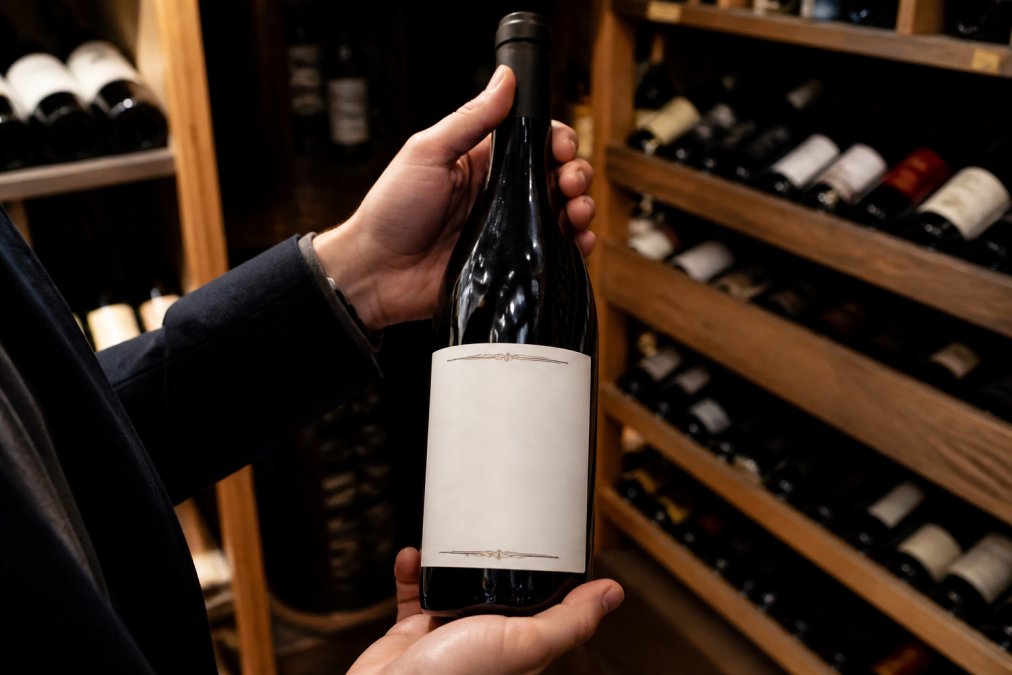
The official rules for Portuguese wine labelling are governed by the European Union's wine labelling regulations, which mandate the use of the PDO (Protected Designation of Origin) framework across member states. If the label only says "Vinho Regional" or "Portugal" without the Dão designation, it is not an authentic Dão wine.
Step 2: Learn the Dão Wine Grape Varieties
Once the label confirms the region, the grape varieties tell you what style to expect. To identify Dão wines with confidence, know which grapes are legal in the blend and which are signature varieties.
For red wines, the most important name is Touriga Nacional, Portugal's flagship grape, contributing structure, floral aromatics, and dark fruit. It is almost always blended with Jaen (the local name for Mencía) and Tinta Roriz (known as Tempranillo in Spain). A classic Dão red built on this trio offers black-fruit character, firm tannin structure, and notable freshness.
For whites, the region excels with Encruzado, widely considered the finest white grape of the Dão, producing rich, textured wines with good acidity and aging potential. It is typically joined by Bical and Cercial, both indigenous grapes that add citrus lift and minerality. You may also encounter Malvasia Fina, Rabo de Ovelha, and Verdelho in white blends.
| Variety | Colour | Typical Character | Role in Dão |
|---|---|---|---|
| Touriga Nacional | Red | Floral, dark fruit, structure | Signature grape |
| Jaen / Mencía | Red | Fresh, red berry, soft tannins | Blending partner |
| Tinta Roriz | Red | Spice, body, warmth | Blending partner |
| Encruzado | White | Rich texture, citrus, age-worthy | Signature grape |
| Bical | White | High acidity, citrus, mineral | Blending partner |
| Cercial | White | Lean, zesty, saline | Blending partner |
Step 3: Read the Terroir: Granitic Soil and High Altitude
The label and grapes tell you what is in the bottle, but the terroir explains why Dão wines taste the way they do. This is the key to identifying Dão wines in a blind tasting.
Dão vineyards are planted on granitic soil, which is poor, free-draining, and forces vines to dig deep for nutrients, the primary driver of the wines' signature mineral-driven character. Combined with high-altitude vineyards often sitting between 400 and 600 metres, the region enjoys a continental climate with cold nights that preserve natural acidity.
The practical result is a wine style noticeably more elegant and restrained than the ripe, strong reds of Alentejo to the south. The region is so distinct that it has earned the nickname "the Burgundy of Portugal," a comparison that speaks to its focus on finesse over extraction.
Step 4: Taste for Acidity, Tannins, and Mineral Drive
Reading the label and knowing the grapes gets you 80% of the way, but the final confirmation happens in the glass. To genuinely identify a Dão wine blind, use a structured tasting protocol that isolates the region's signature structure from its Portuguese neighbours.
Step 4.1: Swirl and Smell for the Floral-Granite Signature
Pour a standard 50ml tasting measure. Swirl vigorously for ten seconds and take one deep sniff, then a second after a pause. Dão reds, particularly those with a high proportion of Touriga Nacional, typically show a lifted, violet-like floral note above the fruit, more restrained, almost like dried lavender, not the overpowering perfume of a young Douro blend. Beneath that, look for a stony, wet-slate minerality from the granitic soils. Ripe, jammy blackberry with alcoholic warmth on the first sniff suggests an Alentejo wine.
Step 4.2: Assess the Mid-Palate Weight and Texture
Take a small sip and hold it on your tongue for three seconds before swallowing. A classic Dão red is medium-bodied, never heavy, with a fine-grained, almost chalky texture rather than velvety or syrupy. Compared to a Douro red of similar age, which feels broader and more muscular, the Dão feels more linear and focused, a direct result of the diurnal temperature swing.
Step 4.3: The 15-Second Finish Test for Acidity
Acidity is the single most reliable structural marker for Dão. After swallowing, count the seconds until the finish fades. A Dão red will typically show a persistent, mouth-watering finish lasting 15 seconds or more, driven by a refreshing, citrus-like acidity, riper and more integrated than the sharp tartness of a Vinho Verde. If the finish is short and leaves a coating sensation, you are likely not looking at a Dão. For whites, an Encruzado-led wine will leave a saline, almost briny sensation on the finish.
Step 4.4: The Tannin Quality Check
Finally, assess the tannins by rubbing your tongue against the roof of your mouth. Dão red tannins are present but fine-grained and ripe, never green or aggressively drying, a function of altitude, as vineyards at 400-600 metres ripen slowly. A young Dão red might show a slight grip, but it should be pleasant and textural. Harsh, drying tannins with low fruit concentration suggest a poor vintage or not a Dão at all.
It takes practice, but the structural markers are consistent enough that most experienced tasters can identify a Dão red with high accuracy after a few comparative flights.
Is Dão Wine Dry? Understanding the Style Spectrum
A question we hear constantly from buyers is whether Dão wine is dry, and the answer is a clear yes. The overwhelming majority of Dão wines, both red and white, are made in a dry style.
Take the Casa Américo 2023 Sonante DOP Dão Branco as a benchmark. Its residual sugar sits at just 0.80 grams per litre, well below the threshold where sweetness becomes perceptible, and its total acidity of 5.44 g/L gives it a crisp, dry profile (peer-reviewed research). The red counterpart shows an even lower 0.60 g/L of residual sugar. These figures are typical of the region, which has no tradition of producing sweet or off-dry wines.
The style spectrum in Dão is therefore not about sweetness but about weight and oak. You will find modern winemaking styles that use controlled fermentation and neutral oak to emphasise fruit purity, alongside more oxidative style wines that embrace longer ageing and nutty, developed flavours. Both are dry, but they sit at opposite ends of the texture spectrum.
How to Read Portuguese Wine Labels Without Guesswork
Beyond the DOP Dão designation, Portuguese labels carry visual and textual cues that reveal more about quality and style than the front label alone. For Dão specifically, four additional signals separate a commodity bottle from a serious estate wine.
Signal 1: The Sub-Region or 'Denominação de Origem' Line
On the back label, look for the official designation line: 'Denominação de Origem Protegida Dão' or, on older bottles, 'Denominação de Origem Controlada Dão'. A secondary line such as 'Sub-região Serra da Estrela' or 'Sub-região Silgueiros' signals altitude and microclimate. Sub-region-labelled wines are often from smaller, more focused producers and generally deliver a more distinctive character.
Signal 2: The Producer Type, 'Quinta' vs. 'Sociedade'
Look for the producer's legal name on the back label. 'Quinta do [Name]' followed by 'Vinhos S.A.' or 'Lda.' indicates an estate that owns its vineyards; a generic name like 'Sociedade Agrícola e Comercial' without a Quinta reference may be a negociant. This matters because Dão's best wines are almost always estate-bottled from a single Quinta. The term 'Garrafeira' is another quality marker, legally requiring extended ageing, typically at least two years for reds, with one in bottle, before release.
Signal 3: The Vintage and 'Colheita' Declaration
Dão vintage variation is significant due to the continental climate. A specific 'Colheita' (vintage) year tells a story: cooler years like 2021 yield higher acidity and more elegant wines; warmer years like 2022 yield riper fruit and softer tannins. For whites, look for 'Colheita' plus a recent year (2022-2023) for fresh, citrus-driven styles, or wines labelled 'Estágio' for richer texture. No vintage date almost certainly means a multi-vintage blend of lower quality.
Signal 4: The Alcohol Percentage as a Style Compass
On any Portuguese wine label, the ABV is a quick style indicator. For Dão reds, 12.5%-13.5% ABV signals a cooler-climate, more elegant style with preserved acidity; above 14% suggests a warmer vintage or extraction techniques that push ripeness. For whites, look for 12%-13% ABV; higher alcohol often indicates over-ripeness that masks the variety's natural citrus character. This single number can help you avoid buying a Dão that tastes more like an Alentejo.
By applying these four signals, sub-region line, producer type, vintage, and ABV, you can make informed purchasing decisions without opening the bottle first.
Spotting Value: Price-to-Quality Signals in Dão
Identifying Dão wines matters commercially because the region remains one of the best value propositions in the Portuguese wine market. Prices do not yet reflect quality, creating a genuine opportunity for independent retailers and restaurants.
The flagship example in our portfolio, the Casa Américo 2023 Sonante DOP Dão Tinto, retails at £14.00 and delivers a blend of Tinta Roriz, Jaen, and Touriga Nacional grown on granitic soils at altitude. For that price, you receive genuine varietal complexity, a Vivino rating of 3.7, and a structure that will reward short-term cellaring, a price-to-quality ratio few other European regions can match.
When assessing value in Dão, look for three signals. First, estate-bottled wines from a named Quinta tend to outperform negociant blends at the same price. Second, blends that lead with Touriga Nacional or Encruzado justify a slightly higher price point. Third, check the alcohol level; a Dão red at 13% ABV signals a cooler-climate, more elegant style than one pushing 14.5%.
Identifying Dão wines is a skill that rewards patience, but the fundamentals are simple: look for the DOP Dão designation, learn the signature grapes, respect the granite and altitude, and trust your palate for that signature freshness. The region offers exceptional value for UK buyers willing to look beyond the well-trodden paths of Douro and Alentejo. At 79North Ltd, we specialise in connecting independent retailers and restaurants with family-owned Portuguese producers who exemplify these authentic regional styles. If you are ready to add distinctive Dão wines to your list, explore our portfolio of Portuguese and Italian imports and let's talk about bringing these exceptional bottles to your customers.
Frequently Asked Questions
What are the primary characteristics of Dão wine?
Dão wines are defined by their structure and elegance rather than sheer power. Red Dão wines typically show firm tannin structure, fresh acidity, and black-fruit character with a mineral-driven finish. White Dão wines from varieties like Encruzado and Bical offer textural richness balanced by bright acidity. This profile comes from high-altitude vineyards and granitic soils, which slow ripening and preserve freshness.
Is Dão wine typically dry?
Yes, the vast majority of Dão wines are dry. The DOC regulations for the region require low residual sugar levels, and producers ferment most wines to complete dryness. Both the Casa Américo 2023 Sonante Dão Tinto and Branco, for example, have residual sugar below 1 g/L, making them firmly dry wines. Off-dry or sweet styles are rare exceptions, not the regional norm.
Which grape varieties are native to the Dão region?
Dão is home to several indigenous varieties that define its character. For reds, Touriga Nacional provides structure and dark fruit, while Jaen (known as Mencía elsewhere) adds freshness, and Tinta Roriz contributes spice. For whites, Encruzado is the star, offering texture and aging potential, alongside Bical, Cercial, and Malvasia Fina for acidity and aromatic lift.
How do I read a Portuguese wine label to identify Dão?
Look for 'DOP Dão' or 'DOC Dão' on the label, which confirms the wine meets the region's regulated standards. Many labels also name a sub-region like Serra da Estrela, which indicates higher-altitude vineyards. The producer name and grape varieties will appear, though not always on the front label. Checking the back label for the importer's details helps confirm authenticity for UK buyers.