Is Touriga Nacional Good for Aging? A Buyer's Guide
Table of Contents
- What Makes Touriga Nacional a Candidate for Aging?
- Touriga Nacional Ageing Potential: From Youth to Maturity
- How to Store Fine Wine at Home for Decades
- Douro vs. Dão: How Region Shapes Aging Potential
- A Vertical Tasting Guide for Touriga Nacional
- Decanting Protocols for Aged Bottles
- The Verdict: Is Touriga Nacional Worth Cellaring?
- Frequently Asked Questions
Last Updated: September 5, 2026
What Makes Touriga Nacional a Candidate for Aging?
Touriga Nacional is one of the most compelling red grape varieties for cellaring, thanks to a structural profile built on high extract concentration, firm tannin structure, and naturally elevated acidity. The question of whether Touriga Nacional is good for aging is answered by its genetic makeup: this thick-skinned grape produces wines with a tannic backbone that supports decades of bottle aging. At 79North Ltd, we import small-batch Portuguese wines precisely because varieties like this reward patience.
The variety's reputation rests on its role in vintage Port, where it provides the structural integrity that allows fortified wines to mature for half a century. In dry red wine, the same phenolic compounds that drive Port's longevity express themselves with more finesse but equal resilience. Most serious examples are built for a minimum of five to ten years, with top cuvées drinking beautifully at twenty years and beyond.
Touriga Nacional Ageing Potential: From Youth to Maturity
A young Touriga Nacional is an assertive wine: dense black fruit, violets, and a firm grip of tannin that can feel almost austere. This is not a flaw. The evolution of flavour and aroma over time is what separates this variety from softer, earlier-drinking grapes.
The Evolution of Flavour and Aroma Over Time
In its first three to five years, expect primary aromas of blackberry, plum, and violet to dominate. Between years five and ten, the wine begins to soften as oak integration occurs, introducing spice and subtle tobacco notes. Beyond a decade, tertiary aromas emerge: leather, dried flowers, and forest floor, while the fruit recedes into something fresher and more savoury. The acidity balance keeps the wine alive throughout this maturation, preventing the dried fruit character from becoming cloying.
How to Store Fine Wine at Home for Decades
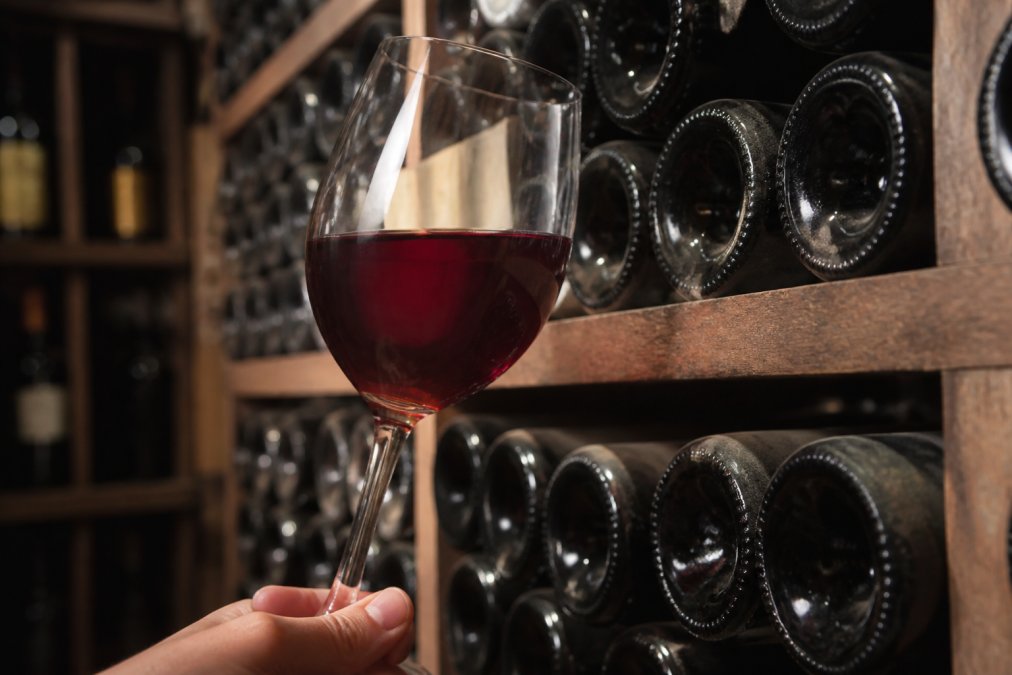
Storing Touriga Nacional for long-term aging requires controlling four variables: temperature, humidity, light, and vibration. The ideal conditions for fine wine storage in a home setting are a consistent temperature between 10°C and 15°C, with 60-70% relative humidity to keep corks from drying out (winespectator.com). Fluctuating temperatures accelerate oxidative aging and can push the wine into premature decline.
A common mistake is storing bottles upright in a kitchen or above a fridge. Heat and vibration disrupt the slow maturation process. Invest in a dedicated wine fridge or a cool, dark cupboard away from heating sources. Bottles should rest on their side to keep the cork moist and maintain the seal. If you plan to hold wines for more than a decade, consider professional storage, where temperature is controlled year-round.
| Storage Factor | Ideal Condition | Common Mistake |
|---|---|---|
| Temperature | 10°C to 15°C, consistent | Storing near heat sources |
| Humidity | 60-70% relative humidity | Dry air shrinking corks |
| Light | Complete darkness | UV light degrading phenolics |
| Position | On side, cork moist | Upright storage drying cork |
Douro vs. Dão: How Region Shapes Aging Potential
Regional differences in aging potential are significant, and understanding them helps buyers decide which bottles to lay down. In the Douro Valley, Touriga Nacional grows in schist soils on steep terraces, producing wines with more extract concentration and a firmer tannic backbone (winefolly.com). These wines often need a decade before they begin to show their best, and they reward extended cellaring handsomely.
In Dão, granite soils and a cooler, wetter climate yield wines with more aromatic complexity and freshness. The tannins are finer, the structure more elegant, and the wines tend to open earlier, though top Dão examples still age gracefully for fifteen years or more. For the buyer, the choice is between Douro's power and Dão's finesse. Both answer the question of whether Touriga Nacional is good for aging, but they do so on different timelines.
Sub-Regional Nuances Within the Douro
The Douro is not monolithic. The Douro Superior, the easternmost sub-region, is hotter and drier, producing Touriga Nacional with intense concentration and robust tannins, ideal for long-term cellaring. In contrast, the Cima Corgo, centred around Pinhão, benefits from slightly cooler temperatures and schist soils that yield more aromatic wines with fine-grained tannins; these can be approachable at eight years but still evolve over two decades. The Baixo Corgo, the coolest and wettest, tends to produce lighter wines that are less suited to extended aging, though they offer early-drinking charm.
Dão's Granite Influence and Producer Styles
In Dão, the granite-derived soils are free-draining and force vines to dig deep, resulting in lower yields and more concentrated flavours. The region's altitude, often above 400 metres, brings diurnal temperature swings that preserve acidity (wine-searcher.com). Producers like Quinta dos Roques and Quinta de Saes craft Touriga Nacional that balances power with elegance; these wines typically hit their peak between 10 and 15 years. Meanwhile, newer producers such as Quinta do Perdigão are experimenting with longer macerations to extract more structure, aiming for wines that can rival the Douro's longevity.
Practical Implications for Buyers
When selecting a bottle to cellar, consider the producer's track record. A Douro wine from a top-rated quinta in a declared vintage may need 15 years to show its best, while a Dão wine from a reputable estate might be enjoyable at eight. For those seeking immediate gratification with some aging potential, a Dão from a cooler year could be ideal. For collectors aiming for long-term investment, a Douro Superior wine from a renowned producer is often the safer bet. Always check the wine's alcohol level and pH if available, higher alcohol (above 14.5%) and lower pH (below 3.6) generally indicate better aging potential.
A Vertical Tasting Guide for Touriga Nacional
A vertical tasting, sampling multiple vintages of the same wine side by side, is the most direct way to understand Touriga Nacional ageing potential. The practice reveals how vintage variation and bottle aging shape a single producer's wine over time.
To organise one, select three to five vintages spaced five years apart from the same estate. Serve them in ascending age order, youngest first, so the palate moves from primary fruit toward tertiary complexity. Decant the youngest wines for an hour; handle the oldest gently to preserve fragile aromatics. A vertical tasting demonstrates that Touriga Nacional is not merely ageworthy but genuinely transformative, with each vintage telling a different story of the season and the cellar.
Decanting Protocols for Aged Bottles
Decanting an aged Touriga Nacional requires a different protocol than young wines. The primary purpose shifts from aeration to separation of sediment, which accumulates naturally over years of bottle aging. Stand the bottle upright for 24 hours before serving to let the sediment settle. Open it carefully and pour slowly into a decanter, stopping when you see sediment reaching the neck.
For bottles over fifteen years old, the wine is often fragile. Aggressive aeration can strip the delicate tertiary aromas that took decades to develop. A slow pour through a fine mesh strainer or cheesecloth captures sediment without over-exposing the wine. If the wine appears reductive on opening, a brief swirl in the glass is preferable to extended decanting.
The Verdict: Is Touriga Nacional Worth Cellaring?
Touriga Nacional is emphatically worth cellaring for anyone who appreciates wines that evolve. The grape's natural acidity and tannin structure provide the framework for graceful aging, while its aromatic intensity ensures the wine remains compelling throughout its life. For collectors, the investment case rests on scarcity: production of the finest examples is limited, and aged bottles from top producers command meaningful prices at auction.
The Investment Angle: What Makes a Bottle Collectible?
While not every Touriga Nacional appreciates in value, certain factors signal collectibility. First, provenance: bottles from a single estate (Quinta) with a history of quality tend to hold value. Second, vintage: declared vintage years in the Douro, such as 2011, 2016, and 2017, are known for their concentration and aging potential, making them more sought-after. Third, production volume: limited releases, often under 5,000 cases, create scarcity.
Auction and Resale Insights
At UK auction houses like Christie's or Sotheby's, aged Touriga Nacional from prestigious Douro houses occasionally appears. However, the market is less liquid than for Bordeaux or Burgundy, so expect longer holding periods. A practical rule: only invest in wines you would enjoy drinking, as the resale market can be unpredictable. For those new to collecting, focus on well-known producers and seek advice from merchants specialising in Portuguese wines.
The Practical Cellar Decision
For most enthusiasts, the real reward is not financial but experiential. A well-stored bottle from 2010, opened today, will show evolved tertiary notes that no young wine can replicate. The key is to buy multiple bottles of the same wine, at least three, so you can open one at five years, one at ten, and one at fifteen to witness its evolution. This vertical approach turns cellaring into a learning journey.
At 79North Ltd, we curate a portfolio of family-owned Portuguese producers precisely because these are wines with a story to tell, and the story improves with time. Our team can help you identify bottles that offer both drinking pleasure and potential collectibility, ensuring your cellar is both enjoyable and wise.
Frequently Asked Questions
How long can Touriga Nacional be aged?
A well-structured Touriga Nacional from a top Douro or Dão producer can age gracefully for 15 to 25 years or more from a good vintage. The grape's thick skin provides a high concentration of phenolic compounds and a firm tannic backbone, which act as natural preservatives. For commercial examples, aim for a drinking window between 10 and 20 years after the harvest. Always check the specific producer's recommendations, as winemaking style significantly influences longevity.
Does Touriga Nacional improve with age?
Yes, Touriga Nacional can improve with age, but it depends on the style. In its youth, it often shows powerful, primary black fruit and violet notes. As it matures, the wine develops tertiary aromas of leather, tobacco, and dried flowers. The harsh, grippy tannins of a young bottle soften and integrate, resulting in a more complex and refined mouthfeel. This evolution is why collectors prize bottles with proven Touriga Nacional ageing potential.
What characteristics does Touriga Nacional develop as it ages?
As Touriga Nacional ages, its vibrant primary fruit recedes, giving way to complex tertiary aromas. Expect to find notes of leather, tobacco, dried flowers, and earthy spice. The wine's colour shifts from a deep, opaque purple to a brick-red or tawny rim. In the mouth, the firm, often aggressive tannins of its youth become silky and integrated, while the acidity provides freshness and balance. This transformation creates a wine of greater aromatic complexity and structural integrity.
Is Touriga Nacional better than other Portuguese grape varieties for cellaring?
Touriga Nacional is among the best Portuguese varieties for cellaring due to its exceptional concentration and tannin structure. However, it is often blended with Touriga Franca and others to add complexity. While Touriga Franca offers elegance, and varieties like Baga can age for decades, Touriga Nacional provides the powerful core and extract concentration that many top aged wines require. For pure ageing potential, it stands alongside the finest grapes in the country.
How should I store Touriga Nacional for long-term ageing?
For long-term storage, maintain a constant temperature between 10°C and 15°C. A stable environment is more critical than the exact degree. Keep bottles lying on their side to keep the cork moist and prevent oxidation. Store them away from light and vibration, ideally in a dark cupboard or a dedicated wine fridge. Humidity around 70% prevents corks from drying out. Under these conditions, your wine will develop its full potential over many years.
This article was written using GrandRanker