
5 Affordable Premium Italian Red Wines for Independent Delis
Table of Contents
- Why Italian Red Wines Matter for Independent Delis
- Understanding Italian Wine Classifications and Terroir
- The Five Wines: Selection, Profiles and Wholesale Viability
- Premium Wine Margin Strategies for Delis
- How to Choose Wine Suppliers for Small Businesses
- Working with Independent Wine Distributors in the UK
- Sustainability, Organic Certification and Deli Differentiation
- Frequently Asked Questions
Last Updated: September 2, 2026
Why Italian Red Wines Matter for Independent Delis
Italian red wines offer complexity, food-friendliness, and terroir-driven character that resonate with customers seeking authentic European experiences. For deli owners, stocking the right Italian reds means balancing margin requirements with genuine shelf appeal, a tension that separates thriving independents from those struggling against supermarket pricing.
The opportunity lies in understanding which Italian reds deliver both profitability and customer satisfaction without requiring premium positioning. Many independent deli buyers discover that the most sustainable selections come from less-hyped regions where quality remains high but wholesale pricing stays accessible. This is where strategic curation becomes competitive advantage.
At 79North Ltd, we work directly with independent retailers to identify Italian reds that move inventory consistently whilst maintaining healthy margins. The five wines outlined below represent this philosophy: premium offerings without premium price tags, natural pairings with deli fare, and wines that generate customer loyalty and repeat visits.
Understanding Italian Wine Classifications and Terroir
Italian wine classifications form the backbone of understanding value and positioning. The DOC (Denominazione di Origine Controllata) and DOCG (Denominazione di Origine Controllata e Garantita) systems establish geographic boundaries and production standards (ec.europa.eu). DOCG represents the highest tier with stricter regulations, mandatory tasting panels, and geographic specificity that commands consumer respect (ec.europa.eu).
Terroir, the combination of soil, climate, altitude, and viticulture practices, determines a wine's fundamental character. A Barbera from the Alba hills carries different acidity and tannin structure than one from a warmer zone. For independent delis, the classification system matters operationally: DOCG wines justify premium shelf positioning and higher margins because consumers recognise the designation, whilst DOC wines remain excellent value propositions for food-pairing recommendations.
The Five Wines: Selection, Profiles and Wholesale Viability
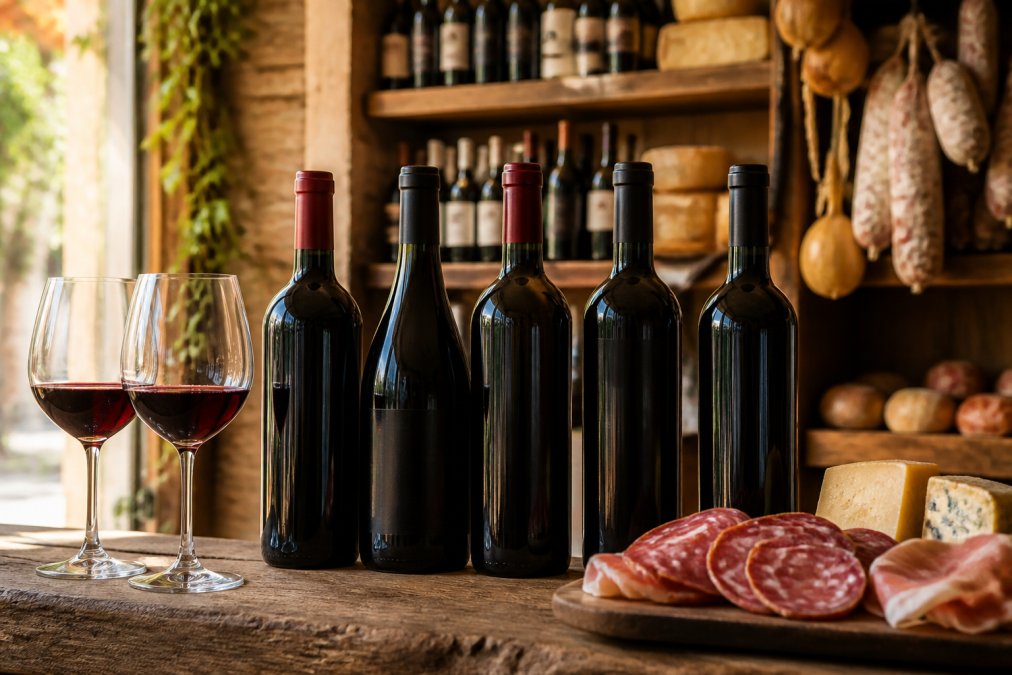
These five selections represent the intersection of wholesale accessibility, consistent turnover, and genuine quality. Each brings distinct characteristics suited to different customer profiles and deli positioning strategies.
1. Barbera d'Alba: Full-Bodied Value with Strong Turnover
Barbera d'Alba from Piedmont delivers complexity and food-friendliness at price points supporting healthy deli margins. The varietal's natural acidity and moderate tannins make it remarkably versatile with cured meats, aged cheeses, and lighter pasta dishes. Many deli owners report that once customers discover Barbera, it becomes a consistent reorder item.
Barbera thrives in Alba's cooler microclimates, developing the acidity that prevents it from feeling heavy despite its full body (peer-reviewed research). Expect tasting notes of dark cherry, plum, and subtle spice, with a lingering finish.
2. Valpolicella Classico: Food-Friendly with Consistent Margins
Valpolicella Classico from Veneto represents a lighter-bodied alternative with higher elegance and versatility that justifies multiple bottle positions in a deli's wine section. The Classico designation indicates wines from the original, more restrictive production zone, typically delivering superior complexity.
Wholesale pricing supports margins comparable to Barbera, but the wine's lighter profile creates opportunities for different positioning. Many delis successfully position this as an everyday Italian red. The Corvina-based blend creates a silky mouthfeel with notes of red cherry, dried herbs, and subtle earthiness.
3. Chianti: Regionality and Shelf Appeal for Deli Buyers
Chianti represents the most recognisable Italian red designation in the UK market. Modern Chianti, particularly broader appellation selections rather than premium Classico, delivers genuine quality at wholesale pricing supporting deli economics. Quality matters enormously; a well-selected Chianti outperforms a poorly chosen one significantly in customer satisfaction and repeat purchasing.
For delis positioned around Italian food and authentic European products, Chianti becomes a natural anchor wine validating your commitment to genuine Italian sourcing. Expect medium body, bright acidity, and tannins ranging from elegant to structured. Typical profiles include red cherry, violet, and subtle oak influence.
4. Montepulciano d'Abruzzo: Budget-Friendly Complexity
Montepulciano d'Abruzzo offers perhaps the strongest value proposition for delis operating on tighter margins. This Abruzzo wine delivers surprising complexity at wholesale price points, allowing independent delis to compete with supermarket pricing whilst maintaining healthy profitability.
The varietal produces full-bodied wines with moderate-to-high acidity and structured tannins, making it remarkably food-friendly with cured meats, aged cheeses, and heartier prepared foods. Many deli owners report strong inventory turnover because it occupies an unusual position: genuine quality at budget-friendly pricing. Expect dark cherry, plum, and subtle pepper notes.
5. Nero d'Avola: Premium-Positioned with Emerging Demand
Nero d'Avola from Sicily represents a strategic opportunity for delis seeking premium positioning. This varietal has experienced growing consumer awareness in the UK market, creating an opportunity for early-positioning delis to establish themselves as knowledgeable sources.
The wine's full body, ripe fruit expression, and moderate tannins appeal to customers transitioning toward more sophisticated selections. Nero d'Avola occupies the psychological space between everyday wines and premium investments. Wholesale pricing supports healthy margins whilst emerging demand means inventory typically moves without aggressive promotion. Expect dark cherry, plum, and subtle spice, with a luxurious mouthfeel.
Premium Wine Margin Strategies for Delis
Margin strategy determines whether wine becomes a profit driver or inventory burden. The five wines outlined support different margin profiles, allowing deli owners to construct portfolios balancing profitability with customer satisfaction.
Budget-friendly wines like Montepulciano d'Abruzzo support higher margins because customers don't expect premium pricing. Mid-tier wines like Barbera and Valpolicella typically support good margins. Premium-positioned selections like Nero d'Avola support healthy margins because customers perceive value in the positioning.
Inventory turnover directly impacts margin realisation. Wines generating consistent turnover ensure healthy cash flow and guaranteed stock freshness. Many successful delis employ tiered pricing strategies creating psychological anchors: position budget-friendly selections, mid-tier, and premium-positioned wines. This structure encourages customers to trade up whilst creating clear value perception at each tier.
How to Choose Wine Suppliers for Small Businesses
Supplier selection fundamentally shapes your ability to maintain consistent inventory, manage cash flow, and access differentiating wines. Evaluate reliability, product range, payment terms, and alignment with your strategic positioning.
Reliability forms the foundation of any supplier relationship. Investigate distributors' inventory management practices and ask directly about stock reliability for specific wines. Product range matters more than breadth; you need access to carefully curated selections aligning with your deli's positioning rather than 500 generic wines.
Payment terms directly impact cash flow. Evaluate whether suppliers offer net-30 or net-60 terms, prepayment requirements, and volume discounts rewarding loyalty. Minimum order quantities and case pricing structures shape your ability to experiment with new selections. Look for distributors willing to work with smaller volumes or offering mixed-case options.
Working with Independent Wine Distributors in the UK
Independent wine distributors occupy a crucial position in the UK wine market, particularly for delis seeking authentic, curated selections differentiating from supermarket offerings. The relationship begins with clarity about your needs and positioning. Distributors appreciate partners who understand their market position and can articulate their strategic direction.
Communication frequency and openness matter significantly. Successful relationships involve regular contact beyond order placement, genuine conversation about what's selling, customer requests, and opportunities. Commitment and volume create value in distributor relationships. A deli committing to consistent stock and reasonable turnover becomes a valued account, receiving prioritised support over transactional buyers.
Sustainability, Organic Certification and Deli Differentiation
Sustainability and organic certification increasingly shape customer purchasing decisions, particularly among demographics most likely to shop at independent delis. Positioning your wine selection around these values creates differentiation whilst aligning with broader deli positioning around authentic, quality-focused products.
Many Italian producers employ sustainable viticulture practices without pursuing formal organic certification. Understanding the distinction between certified organic and sustainably farmed wines allows you to communicate authenticity without overstating credentials. Organic certification carries cost implications affecting wholesale pricing; certified organic wines typically command premiums.
The opportunity for deli differentiation lies in curating selections from producers prioritising sustainability without necessarily pursuing formal certification. Many smaller Italian producers use organic practices, minimise chemical inputs, and focus on soil health and biodiversity without certification investment. These producers often work with importers like 79North Ltd who communicate their practices directly to retailers, creating authentic differentiation stories resonating with conscious consumers.
Independent delis thrive by curating wine selections reflecting genuine knowledge and authentic commitment to quality. The five Italian red wines outlined, Barbera d'Alba, Valpolicella Classico, Chianti, Montepulciano d'Abruzzo, and Nero d'Avola, represent this philosophy. They deliver customer satisfaction, support healthy margins, and create differentiation building deli loyalty.
Sourcing these wines through importers maintaining direct relationships with family-owned producers ensures authenticity and reliability. 79North Ltd specialises in connecting independent UK retailers with premium Italian producers who might otherwise remain undiscovered. Our team understands deli operations' specific requirements: consistent supply, reasonable wholesale pricing, and wines that genuinely perform in food-pairing environments. Let's talk about how we can support your wine selection strategy and help your deli stand out in a competitive market.
Frequently Asked Questions
Q: What makes Italian red wines suitable for independent delis compared to supermarket selections?
A: Independent delis can stock Italian red wines with authentic terroir and family-owned provenance that supermarkets don't offer. Premium selections like Barbera d'Alba and Nero d'Avola can carry higher margins whilst remaining affordable for customers. Small-batch imports appeal to deli shoppers seeking genuine regionality and complexity in their wine choices, differentiating your stock from mass-market alternatives and building customer loyalty.
Q: How do I evaluate which independent wine distributors in the UK offer the best reliability for small businesses?
A: Look for distributors who understand wholesale logistics specific to delis: flexible case sizes, reliable shelf-life guarantees, and responsive support for inventory turnover. Verify their track record with similar independent retailers and ask about their supply chain resilience. Reliable distributors should offer transparent communication about vintage availability, provide tasting notes aligned with your customer base, and support you with marketing materials that highlight the wines' terroir and appellation credentials.
Q: What price point should I target for premium Italian red wines to maintain healthy deli margins?
A: Premium wine margin strategies for delis typically involve sourcing wines at wholesale costs that allow for a healthy retail markup. Affordable premium selections like Montepulciano d'Abruzzo and Valpolicella Classico offer this flexibility. Focus on wines with consistent demand and proven food-pairing appeal to reduce inventory risk and accelerate turnover, which improves overall profitability more than higher individual margins.
Q: Are family-owned Italian wineries reliable suppliers, or should I stick with larger producers?
A: Family-owned Italian wineries often provide superior terroir expression and unique varietals that differentiate your deli. Reliability depends on working through established importers who manage logistics, customs, and supply consistency. Smaller producers can offer better wholesale terms for independent retailers and more personalised support than large commercial houses. Verify their track record through references from other UK delis and ensure your distributor has direct relationships with the winery to guarantee supply continuity.
This article was written using GrandRanker