
Sangiovese Grosso vs Sangiovese Piccolo: Key Differences
Table of Contents
- Sangiovese Grosso vs Sangiovese Piccolo: Beyond the Big Berry Myth
- Ampelographic Differences: Berry Size, Skin Thickness and Cluster Shape
- Sangiovese Grosso vs Sangiovese Piccolo Flavour Profile: Tannin, Acid and Aroma
- The Brunello di Montalcino Grape Variety and Its Clonal Identity
- Sangiovese Clones Explained: From Massal Selection to Registered Biotypes
- Ripening Cycles, Terroir and the Modern Quality Debate
- Choosing Between Grosso and Piccolo for Your Wine Portfolio
- Conclusion
- Frequently Asked Questions
Last Updated: September 9, 2026
Sangiovese Grosso vs Sangiovese Piccolo: Beyond the Big Berry Myth
For decades, the story of Sangiovese Grosso vs Sangiovese Piccolo differences has been told as a simple tale of size: the "Grosso" (large) biotype was crowned the noble parent of Brunello, while "Piccolo" (small) was relegated to a lesser cousin. This narrative, rooted in 19th-century ampelography, has proven remarkably sticky. Yet modern genetic analysis tells a far more nuanced story, one that matters enormously for anyone selecting wines for a serious list.
The distinction between sangiovese grosso and Sangiovese Piccolo is not a clean split between two distinct species, but rather a historical and phenotypic shorthand for a spectrum of clones and biotypes within a single, highly variable grape variety. In this guide from 79North Ltd, we cut through the folklore to examine the real, measurable differences in berry morphology, tannin structure, and clonal identity, and what they mean for the flavour in your glass.
The most important reframe is this: the "inferiority complex" of Sangiovese Piccolo is largely outdated. The future of quality Sangiovese lies not in a simple "big vs small" binary, but in understanding the genetic and phenotypic diversity within each group.
Ampelographic Differences: Berry Size, Skin Thickness and Cluster Shape
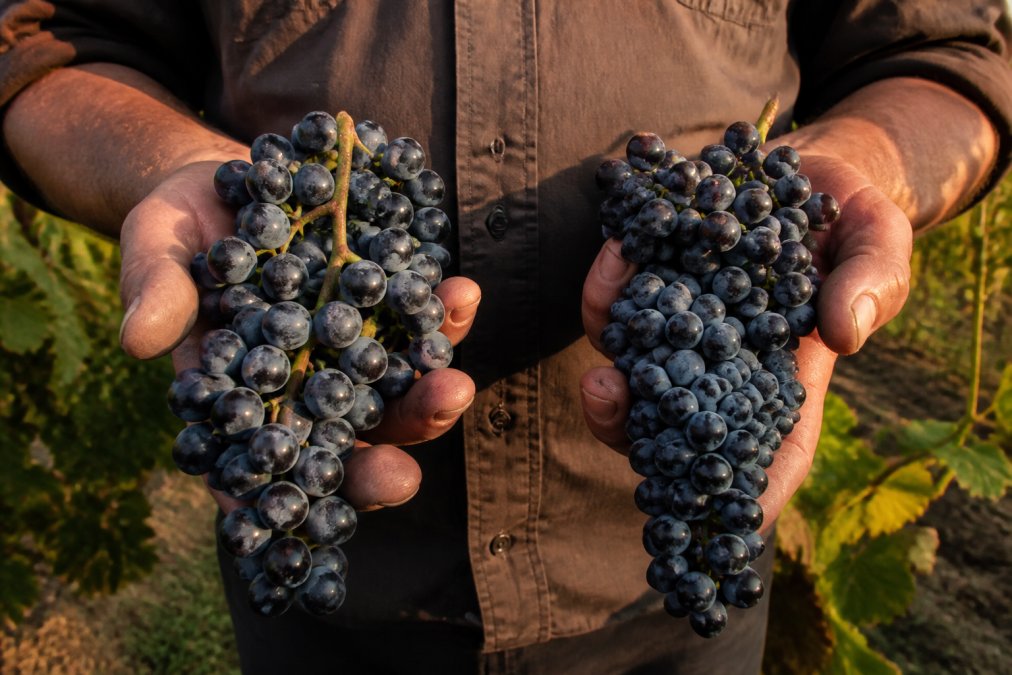
Ampelography, the botanical study of grapevines, provides the first layer of distinction between Grosso and Piccolo. The classic descriptors hold true in the vineyard: Sangiovese Grosso typically produces larger, looser clusters with bigger, thinner-skinned berries. Conversely, Sangiovese Piccolo is characterised by smaller, tighter, often winged clusters with smaller berries and notably thicker skins.
This difference in berry morphology is not cosmetic. The thicker skin of the Piccolo biotype translates directly to a higher skin-to-juice ratio. Since the compounds responsible for colour (anthocyanins) and structure (tannins) reside primarily in the skin, this physical trait has a profound impact on the resulting wine's phenolic profile. While Grosso offers elegance and aromatic lift, Piccolo provides a deeper reservoir of extract concentration and structural backbone.
Sangiovese Grosso vs Sangiovese Piccolo Flavour Profile: Tannin, Acid and Aroma
Most wine guides stop at 'Grosso is elegant, Piccolo is rustic.' That is a starting point, not a tasting framework. For a buyer or sommelier to make a confident selection, the sensory differences need to be broken down into identifiable components.
Aromatic Expression
Sangiovese Grosso tends toward the red end of the fruit spectrum. Expect a pronounced note of sour red cherry (amarena), often accompanied by violet, dried rose petal, and a characteristic 'Sangiovese' herbal lift, think crushed tomato leaf or dried oregano. The aromatics are typically more perfumed and high-toned, projecting from the glass with a certain floral elegance.
Sangiovese Piccolo, with its higher skin-to-juice ratio, often presents a more brooding aromatic profile. The fruit character shifts toward black cherry and plum, with less of the floral high note. In place of the herbal lift, you are more likely to find savoury, earthy undertones, leather, tobacco, and a ferrous, ferric quality that some tasters describe as 'blood and iron.' This is not a flaw; it is a signature of the thicker skins and higher extract.
Palate Structure and Texture
The most practical difference for a buyer is textural. Grosso wines typically exhibit a medium-bodied palate with fine-grained, chalky tannins that coat the front palate and integrate quickly. The acidity is high but often perceived as 'sweet' or ripe, contributing to a juicy, mouth-watering finish. The overall impression is one of finesse and drinkability in its youth.
Piccolo wines are almost always more full-bodied. The tannins are more abundant, firmer, and often described as 'grippy' or 'rustic' when young. They tend to attack the back palate and cheeks, creating a drying sensation that demands food. The acidity is equally high but can come across as sharper or more citric, especially in cooler vintages. This structure is precisely why Piccolo-based wines are often the better candidates for extended cellaring; the aggressive tannins need time to polymerise and soften.
A Practical Tasting Exercise
To train your palate, source two wines from the same vintage and similar price point: one labelled 'Brunello di Montalcino' (the classic Grosso expression) and one labelled 'Chianti Classico' from a producer known for using traditional, smaller-berried selections. Taste them side-by-side.
- Colour: Hold both glasses at an angle against white paper. The Grosso will typically show a more translucent ruby core with a faster transition to a brick-orange rim, even at five to seven years of age. The Piccolo will appear denser, with a deeper garnet core and a slower colour evolution.
- Nose: Swirl both. Identify the primary fruit. Is it red cherry or black cherry? Is there a floral component, or is it more savoury and earthy? This single distinction will often point you toward the biotype.
- Palate: Take a sip of each and focus on the finish. Time how long the tannins persist. Grosso tannins might last 10-15 seconds before fading. Piccolo tannins will often linger for 30 seconds or more, leaving a dry, savoury residue.
This sensory framework moves the conversation beyond 'big vs small' and gives you a practical vocabulary for describing the wines to your customers. It also highlights why many top Chianti Classico producers deliberately blend both biotypes.
The Brunello di Montalcino Grape Variety and Its Clonal Identity
The Brunello di Montalcino grape variety is the most famous expression of the Sangiovese Grosso biotype. The appellation's strict regulations mandate that Brunello must be made 100% from this specific local selection, historically known as "Brunello" or "Sangiovese Grosso (europa.eu)." This legal requirement has cemented the association between large-berried Sangiovese and the pinnacle of Tuscan wine quality.
However, the story is more complex. The "Grosso" grown in Montalcino has adapted to its specific terroir over centuries, developing a distinct genetic fingerprint from the Grosso planted elsewhere in Tuscany. This localised evolution is a prime example of how a biotype becomes a unique cultivar through its interaction with a specific environment. The result is a wine capable of extraordinary longevity, balancing the innate high acidity of Sangiovese with the structure required for decades of bottle age.
Sangiovese Clones Explained: From Massal Selection to Registered Biotypes
The terms 'Grosso' and 'Piccolo' are not botanical classifications; they are phenotypic shorthand, descriptions of what a vine looks like, not what it genetically is. This is the single most important scientific reframe for understanding the variety. Modern DNA profiling has confirmed that all Sangiovese biotypes are members of one highly variable species, Vitis vinifera (peer-reviewed research). The distinction is not akin to Pinot Noir vs Syrah; it is closer to the difference between two sub-populations of the same breed of dog, selected for different physical traits over centuries.
The historical mechanism for this variation was massal selection. For hundreds of years, Tuscan growers propagated their vineyards by taking cuttings from vines that performed well in their specific plot. A grower in a cool, high-altitude site in Chianti Classico would naturally select vines that ripened earlier and cropped reliably; a grower in the warmer slopes of Montalcino would select for vines that produced larger, more aromatic berries. Over generations, this created distinct, locally adapted populations that shared a common ancestor but diverged in berry size, cluster architecture, and ripening timing.
The terms 'Grosso' and 'Piccolo' emerged from 19th-century ampelographers who grouped the large-berried, late-ripening populations under 'Grosso' and the small-berried, earlier-ripening ones under 'Piccolo.' This was a useful observational tool, but it obscured the reality that there were (and are) dozens of intermediate forms. The classification was never a clean binary.
The Shift to Clonal Registration
The modern era began in the 1970s and 1980s when Italian research institutions, most notably the University of Florence and the CREA research council, initiated systematic clonal selection programmes to identify vines with desirable traits, disease resistance, consistent yield, optimal phenolic maturity, and propagate them vegetatively to create genetically identical, registered clones (crea.gov.it).
This process has produced a catalogue of official clones that are now available to growers. Some of the most significant include:
- R24 and R23: These are among the most widely planted clones in Chianti Classico. They are derived from historical Sangiovese populations and are valued for their balanced vigour and consistent quality.
- BBS11: This is a Montalcino-specific clone, selected from old vines in the Brunello zone. It is prized for its small berries, thick skins, and exceptional suitability for long ageing, essentially, a high-quality 'Piccolo' type.
- VCR30 and VCR101: These clones, propagated by the Vivai Cooperativi Rauscedo nursery, were selected for their earlier ripening and are increasingly popular in cooler, marginal sites.
The practical consequence of clonal registration is that the Grosso/Piccolo binary is now largely obsolete for growers. A modern viticulturist does not ask 'should I plant Grosso or Piccolo?' They ask 'which registered clone, or which massal selection, is best suited to my specific soil, aspect, and climate?'
The Genetic Reality
Recent DNA studies have further complicated the picture. Some 'Grosso' vines in Montalcino have been shown to be genetically distinct from 'Grosso' vines in Chianti, despite sharing the same phenotypic description. The variety is best understood as a continuum of genetic diversity, with 'Grosso' and 'Piccolo' serving as convenient, but imprecise, markers along that continuum.
For a buyer, the label on the bottle is less important than the producer's philosophy. A producer who farms old massal selections in a specific cru is making a site-specific wine that cannot be replicated elsewhere; a producer who plants a registered clone like BBS11 is making a deliberate choice for a specific structural outcome. Both approaches can yield exceptional wine.
Ripening Cycles, Terroir and the Modern Quality Debate
The modern quality debate around Sangiovese Grosso vs Sangiovese Piccolo has moved on from simple morphology. A key differentiator is the ripening cycle. Sangiovese is a notoriously late-ripening variety, and Grosso biotypes are often even later, requiring a long, warm climate to achieve full phenolic maturity without excessive alcohol.
Piccolo biotypes, with their earlier ripening potential, were historically vital in cooler, marginal zones where Grosso struggled to ripen. This is where the "inferiority complex" of Piccolo originated: it was not that the grape was worse, but that it was grown in less prestigious, cooler regions. In an era of climate change, this dynamic has shifted, many producers in warmer sites now find that Piccolo's earlier ripening helps them maintain freshness and acid profile, while some Grosso vines struggle with over-ripeness.
Choosing Between Grosso and Piccolo for Your Wine Portfolio
For a buyer curating a list, the decision between wines labelled Grosso or Piccolo should be guided by style and food affinity, not perceived prestige:
| Characteristic | Sangiovese Grosso | Sangiovese Piccolo |
|---|---|---|
| Berry & Cluster | Larger berries, looser clusters | Smaller berries, tighter clusters |
| Tannin Profile | Fine-grained, elegant | Firm, strong, more extract |
| Flavour Profile | Red cherry, floral, herbs | Darker fruit, more powerful |
| Best For | Elegant, aromatic, earlier-drinking wines | Structured wines for long ageing |
When selecting, consider your clientele. A restaurant seeking a versatile, food-friendly red for its by-the-glass list might favour the aromatic appeal of a Grosso-based wine. An independent retailer looking for a "cellar-worthy" investment bottle will find the structure of a Piccolo-based or blended wine compelling.
Conclusion
The narrative of Sangiovese Grosso vs Sangiovese Piccolo differences is a fascinating case study in how tradition, science, and terroir intersect. The old "big equals good, small equals bad" myth is dead, replaced by a more nuanced appreciation for genetic variation and phenolic diversity.
At 79North Ltd, our portfolio celebrates the unique terroirs and native grape varieties of Italy and Portugal. We connect independent UK retailers and restaurants with family-owned producers who practice this level of thoughtful viticulture, offering wines that tell an authentic story of their place. Let's talk about how we can bring these distinctive, high-quality expressions to your business.
Frequently Asked Questions
Is Sangiovese Grosso the same as Sangiovese?
Yes, Sangiovese Grosso is a biotype or broad grouping of the Sangiovese grape variety, not a separate species. The term distinguishes certain larger-berried clones from the Sangiovese Piccolo group. While both are genetically Sangiovese, the Grosso biotypes are historically associated with specific high-quality appellations like Brunello di Montalcino, where they are prized for their thicker skins and structure.
Are Sangiovese Grosso and Brunello the same thing?
No. Brunello is the name of the wine and the grape variety legally permitted in the Brunello di Montalcino DOCG. That grape is a specific Sangiovese Grosso biotype, historically known as 'Brunello' locally. So while Brunello wine is made from Sangiovese Grosso, not all Sangiovese Grosso is Brunello. The term 'Brunello di Montalcino grape variety' refers specifically to this local selection.
Does Sangiovese Grosso produce higher quality wine than Piccolo?
The old assumption that Grosso is inherently superior to Piccolo is outdated. Modern viticulture shows that quality depends more on clonal selection, site, and vineyard management than on the broad Grosso or Piccolo grouping. Many Piccolo clones, particularly those selected in Chianti, produce wines of remarkable elegance and aromatic complexity. The choice is about matching the biotype to the desired wine style and terroir.
What are the key differences in the Sangiovese Grosso vs Piccolo flavour profile?
In general terms, Sangiovese Grosso wines, like those from Montalcino, tend to show deeper concentration, firmer tannins, and darker cherry fruit with more structure for long ageing. Piccolo-based wines, often from Chianti, typically offer higher acidity, a lighter body, and more floral and red-fruit aromatics. However, clonal selection and winemaking techniques can significantly influence the final sensory characteristics of both.