Small Restaurant Wine Supply Solutions: A 2026 Guide
Table of Contents
- Understanding Small Restaurant Wine Supply Models
- Restaurant Wine Inventory Management Systems
- Wine by the Glass Systems and Preservation
- Calculating Wine Margins and Pricing Strategy
- Wine List Curation and Menu Engineering
- Alcohol Licensing Requirements and Compliance
- Staff Training and Customer Experience
- Building Your Sustainable Wine Supply Chain
Last Updated: August 10, 2026
Understanding Small Restaurant Wine Supply Models
The difference between a thriving restaurant wine programme and one that languishes comes down to supply chain decisions made before a single bottle arrives. Successful small restaurant wine supply solutions are intentional: knowing exactly what you need before you start looking.
Small restaurant wine supply operates across three distinct channels: wholesale distribution (breadth and reliability), direct sourcing from independent producers (exclusivity and story), and hybrid approaches combining both. According to Drinks Industry Insights report, independent restaurants that diversify sourcing across at least two channels report 23% higher wine programme profitability than those relying on a single distributor.
Wholesale Distribution Channels for Independent Venues
Wholesale distribution is the backbone of restaurant wine supply. Orders typically require 6-12 bottles per line, with net-30 or net-60 payment terms and fixed pricing. Specialist independent wholesalers focused on curated smaller-production wines have multiplied in the UK market over the past five years, offering staff training, list development support, and market intelligence alongside higher per-bottle costs justified by differentiation value.
The relationship matters as much as the product list. A wholesaler who understands your concept and proactively suggests wines aligned with your menu will generate higher sell-through rates than one that simply fulfils orders.
Direct Sourcing from Independent Producers
Direct sourcing requires minimum order commitments of 25-50 bottles per vintage, with logistics, customs paperwork, and 4-8 week lead times falling on you. The genuine advantage is exclusivity and margin: you might pay £14-16 direct for a wine that retails at £40, versus £22-24 through a wholesaler.
The best independent restaurants use direct sourcing strategically for 15-25% of their list (perhaps 8-12 wines), focusing on flagship wines that anchor their programme and tell a story. The rest comes through wholesale, ensuring breadth and reliability.
79North Ltd specialises in bridging this gap. Rather than managing direct relationships with small Portuguese and Italian producers, they've already built those relationships. You get access to distinctive, family-owned wines without the logistics headache, including producers like Herdade da Calada and Casa Américo.
Restaurant Wine Inventory Management Systems
Inventory management is where most independent restaurants leak profitability. A typical small venue carries 40-80 wines. Without systematic tracking, you lose visibility into what's selling, what's gathering dust, and what's being consumed faster than you can reorder.
Stock Rotation and Waste Reduction
Stock rotation is the foundation of wine programme profitability. Wine degrades in temperature-unstable conditions, under strong light, or when stored upright for extended periods. Proper rotation means FIFO discipline: first in, first out.
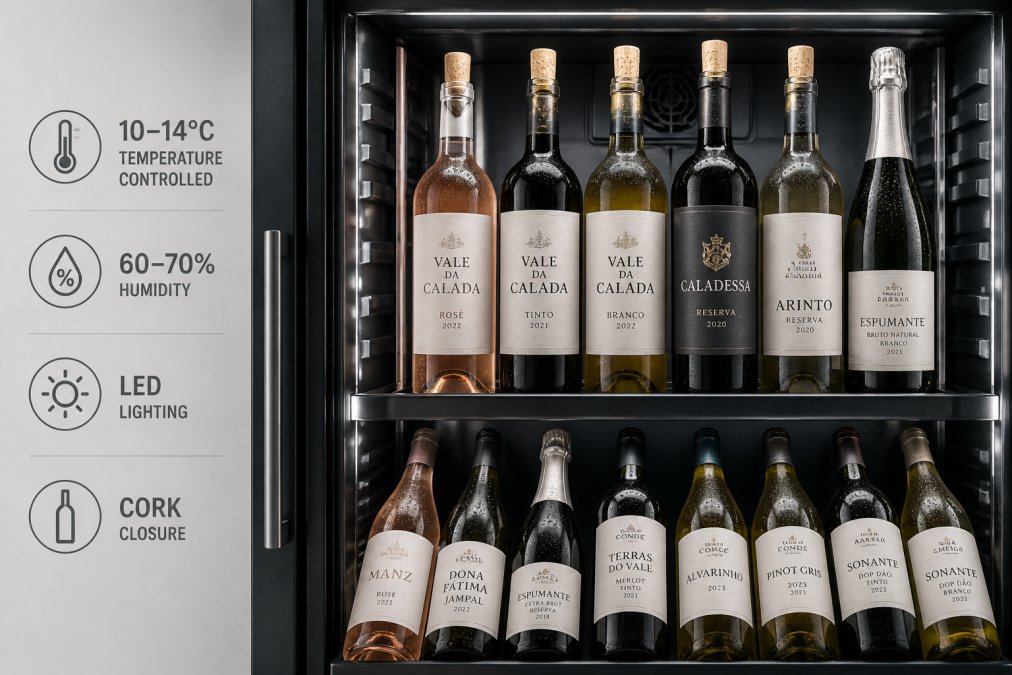
Spoilage prevention is more valuable than most owners realise. A single oxidised bottle costs you not just the pour cost (typically £8-14 at wholesale value) but also the retail margin you didn't capture (another £12-20 in lost revenue). By-the-glass systems with preservation technology (vacuum sealing, inert gas, or specialised coolers) extend shelf life from 2-3 days to 7-10 days. A preservation system (£300-800) typically pays for itself within three months in reduced spoilage alone.
Inventory Turnover Metrics
Inventory turnover is the ratio of wine sold to average inventory held. To calculate turnover: divide total wine cost of goods sold (COGS) by average inventory value. If you sold £8,000 worth of wine (at cost) in a year and hold an average inventory of £1,200, your turnover is 6.7 times per year. That's reasonable for a small independent restaurant. Below 4 indicates you're holding too much stock.
Faster turnover means fresher wine, lower spoilage, and better cash flow. It requires a reliable supplier relationship that enables smaller, more frequent orders rather than bulk purchases months in advance.
Wine by the Glass Systems and Preservation
By-the-glass (BTG) wine programmes unlock margin. A wine that costs £12 wholesale might retail at £6-7 per glass (175ml), generating £24-28 revenue per bottle. That's a 100-135% markup, far higher than the 40-60% markup on full bottles.
Single-Serve Packaging and Preservation Technology
Single-serve packaging eliminates open-bottle spoilage but is often overkill for smaller venues serving 20-40 covers per night. You're better off with a traditional BTG system: open a full bottle, preserve what's left, and sell it over 5-7 days.
Preservation systems work through vacuum sealing (removing oxygen), inert gas displacement (replacing oxygen with argon or nitrogen), or temperature control. Vacuum systems are cheapest (£150-300) but require manual operation. Inert gas systems (£400-800) are more reliable. Specialised wine coolers with preservation built in (£600-1,200) combine temperature control and inert gas for maximum protection. Most small restaurants see payback within 8-12 weeks.
Temperature-Controlled Storage Solutions
Temperature stability is non-negotiable for wine quality. Ideal storage is 12-15°C, constant. Most restaurant back-of-house areas fluctuate between 18-22°C, which accelerates ageing.
Temperature-controlled wine coolers range from compact 40-bottle units (£300-500) to larger 150-bottle systems (£1,200-2,000). For a small restaurant carrying 50-80 wines, a 60-80 bottle cooler is typically sufficient. Wine Storage Solutions offers models optimised for hospitality, including the Vin Garde range with dual-temperature zones.
Calculating Wine Margins and Pricing Strategy
Wine margins are where many small restaurants leave money on the table. Understanding cost of goods sold and markup structures is the difference between a wine programme that subsidises your business and one that funds it.
Cost of Goods Sold and Markup Structures
Cost of goods sold (COGS) for wine includes the bottle cost plus a proportional share of delivery fees and breakage allowance. If a bottle costs £12 wholesale and delivery adds £0.50 per bottle, your true COGS is £12.50.
Standard markup varies by wine category. Entry-level wines (£10-15 wholesale) typically carry 100-120% markup (retail price £20-33 per bottle). Premium wines (£20-40 wholesale) often carry 60-80% markup (retail price £32-72). By-the-glass pricing is typically 40-50% of the full-bottle price.
The mistake most small restaurants make is uniform markup across their entire list. A better approach: lower markup on premium wines (where you're competing on quality and story) and higher markup on house wines (where you're driving volume).
Profit Margins for Premium and Everyday Wines
A healthy programme balances volume and margin: 40-50% house/everyday wines (volume drivers), 30-40% premium wines (margin builders), and 10-20% prestige wines (credibility and occasional high-ticket sales).
Wine programme profitability often exceeds food profitability. A venue doing £2,000 per night in food revenue might do £400-600 in wine revenue. If both carry 65% margin, wine generates 50% of profit on 25% of revenue.
Wine List Curation and Menu Engineering
A wine list is a sales tool. How you curate and present it directly influences what customers order and how much they spend.
Bespoke Sourcing and Vintage Selection
Bespoke sourcing means selecting wines deliberately aligned with your menu and concept. The best small restaurant wine lists are tight: 30-60 wines, not 100+. Every wine has a reason to be there. For small venues, focusing on current or recent vintages (within the last 2-3 years) reduces risk.
79North Ltd's approach emphasises distinctive, family-owned producers from Portugal and Italy. Rather than generic bulk wines, their portfolio includes selections like Herdade da Calada Tinto, Branco, and Rosé wines from the Alentejo region, each with clear character and story.
Vendor Relationships with Boutique Producers
Building relationships with boutique producers creates competitive advantage. When you have access to a wine that's not widely available in the UK market, you can price it confidently and tell a genuine story about it.
Working with an importer like 79North Ltd is pragmatic: they've already navigated producer relationships, minimum orders, and logistics. You get curated access without the complexity. When evaluating a new supplier, ask: Do they visit regularly? Do they understand your concept?
Alcohol Licensing Requirements and Compliance
Alcohol licensing in the UK is governed by the Licensing Act 2003. Every restaurant serving alcohol must hold a premises licence and appoint a Designated Premises Supervisor (DPS), typically the owner or manager. The DPS is responsible for ensuring compliance with licensing conditions: preventing underage sales, maintaining records of alcohol stock, and ensuring staff are trained in responsible service.
Record-keeping requirements include maintaining a stock register: a record of alcohol purchased, received, and sold. According to UK Licensing Act 2003 guidance, premises must display the licensing summary and ensure staff are aware of conditions. Penalties for non-compliance range from warnings to licence suspension or revocation.
For small restaurants, compliance is straightforward if you're systematic: maintain a stock register, train staff on age verification and responsible service, keep records for at least three years, and ensure your DPS actively manages the programme.
Staff Training and Customer Experience
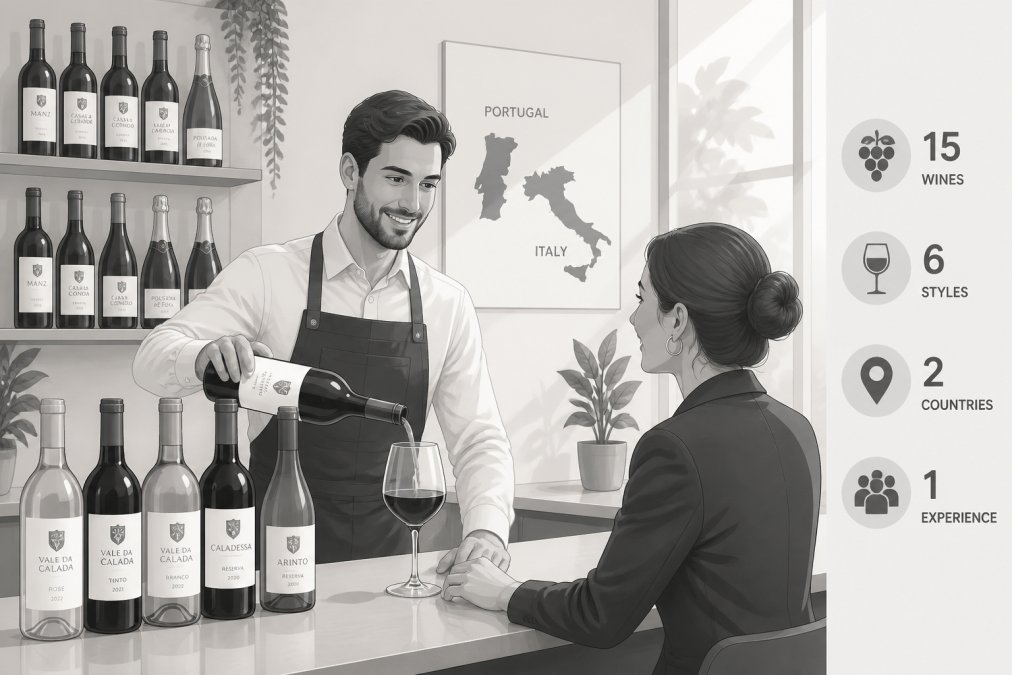
A wine programme is only as good as the people executing it. Staff who can speak confidently about wines, make recommendations, and upsell effectively transform wine from a commodity into a profit centre.
Effective staff training covers wine fundamentals (grape varieties, regions, how wines are made), your specific list (what's on it, what it tastes like, how it pairs with food), and sales technique (asking questions, listening, making recommendations without being pushy). Dedicate 30 minutes per week to staff education: taste through your list systematically, discuss pairing logic, and role-play customer scenarios.
Customer experience extends beyond staff knowledge. It includes proper glassware, serving temperature, genuine curiosity about customer preference, and handling problems (a corky bottle? Replace it without hesitation). These details compound into reputation.
Building Your Sustainable Wine Supply Chain
Sustainability in wine supply is increasingly important to customers and increasingly relevant to business resilience. For small venues, sustainability means understanding where your wine comes from, how it's produced, and whether the producer is building a business that will exist in 10 years.
Many small Portuguese and Italian producers operate on principles that align with sustainability: family-owned operations that have farmed the same land for generations, practices that preserve soil health, minimal intervention in winemaking. From a business perspective, working with sustainable producers reduces supply chain risk. A producer that's built a viable, long-term business is more reliable than one chasing volume and cutting corners.
79North Ltd's portfolio emphasises producers committed to sustainability and cultural enrichment. Producers like Herdade da Calada and Casa Américo are family operations focused on long-term land stewardship. Communicating sustainability to customers requires authenticity: tell the producer story, who owns the vineyard, how long they've been there, what they're trying to achieve.
Building a successful small restaurant wine supply operation requires balancing multiple tensions: exclusivity versus reliability, margin versus volume, complexity versus simplicity. The framework is clear: understand your cost structure, invest in reliable supplier relationships, maintain systematic inventory discipline, and train your staff to sell confidently.
79North Ltd specialises in providing small independent restaurants with access to distinctive Portuguese and Italian wines that differentiate your list without requiring you to manage complex direct producer relationships. Their portfolio includes wines like the Herdade da Calada Tinto (£17.00), Branco (£16.00), and Rosé (£16.00), distinctive, story-rich wines at wholesale prices that work on both everyday and premium positioning. Let's talk about how to build a wine programme that drives both customer experience and profit.
Frequently Asked Questions
How do I choose the right wine supplier for a small restaurant?
Evaluate suppliers on three criteria: portfolio fit (do they stock wines matching your menu and price point?), reliability (can they fulfil reorders consistently?), and service value (do they offer staff training, list design support, or flexible minimum orders?). For independent restaurants seeking distinctive wines from family-owned Portuguese and Italian producers, specialist importers often outperform large distributors on exclusivity and personal attention. Request references from similar venues and compare cost of goods sold, not just bottle prices.
What is the ideal wine markup for by-the-glass service?
The 75-85-95 rule guides most restaurants: purchase wine at cost, aim for 75% markup on house wines, 85% on mid-range selections, and 95% on premium bottles. This translates to a cost of goods sold of roughly 25-30% of wine revenue. By-the-glass service typically commands higher margins than bottle sales because single-serve packaging, preservation systems and portion control reduce spoilage waste. Track actual consumption against pour sizes to refine your pricing.
How can I reduce wine spoilage and waste in a small restaurant?
Implement three strategies: use temperature-controlled storage (18-21°C for red wines, 7-10°C for whites) to prevent oxidation and spoilage; rotate stock by vintage and purchase date using FIFO (first in, first out) discipline; and adopt by-the-glass preservation systems that extend opened bottle life from 1-2 days to 7-14 days. Track waste weekly as a percentage of total wine inventory. Most small venues reduce spoilage by 40-60% after implementing proper storage and rotation protocols.
What are my legal obligations when selling wine in a restaurant?
You must hold a Premises Licence under the Licensing Act 2003, administered by your local council. The licence authorises sale of alcohol (including wine) and sets hours of operation. You are legally responsible for preventing underage sales, refusing service to intoxicated customers, and maintaining records of alcohol purchases and stock. Display your licence visibly. Additionally, wine labels must comply with CIDER Regulations 2011 (now retained EU law) regarding allergen declarations, all wines must note sulphite content. Breach can result in fines and licence suspension.
What is the difference between wholesale distribution and direct sourcing?
Wholesale distributors (such as Jascots or Majestic Commercial) buy from multiple producers and resell to venues, offering breadth of selection, next-day delivery, and account management. Direct sourcing from independent producers cuts out the middleman, reducing cost of goods sold and guaranteeing authenticity, but requires minimum order volumes, longer lead times, and handling of import logistics yourself. For small restaurants seeking distinctive wines from boutique Portuguese and Italian family wineries, specialist importers like 79North bridge this gap: they handle procurement, customs and compliance while maintaining the personal relationships and exclusive access of direct sourcing.
How do I track restaurant wine inventory to optimise reordering?
Use inventory turnover as your primary metric: divide total wine sales by average inventory value. Most restaurants target 4-6 turns per year (roughly monthly stock rotation). Track by category (red, white, rosé, sparkling) and price tier to spot slow movers early. Digital tools like Vinify or Vinosoma automate stock counts, flag low-stock items, and recommend reorders based on consumption patterns. Manual spreadsheet tracking works for small lists (under 50 wines) but becomes error-prone above that. Reconcile physical inventory monthly to catch shrinkage and spoilage.
What wine list size is realistic for a small independent restaurant?
Most small venues operate successfully with 25-40 wines: 8-12 whites, 8-12 reds, 3-5 rosés, 2-3 sparkling, and 2-3 dessert wines. This size allows deep curation (avoiding the 'one wine per category' trap that dilutes profit), manageable inventory turnover, and staff confidence in recommendations. Specialisation, focusing on Italian and Portuguese wines, for instance, strengthens your identity and reduces the pressure to stock every region. Rotate 10-15% of your list seasonally to keep regulars engaged and test new producers without overcommitting stock.
How does sustainable sourcing affect small restaurant wine supply?
Sourcing from low-carbon, sustainable producers (biodynamic, organic, or natural wine estates) appeals to environmentally conscious diners and justifies premium pricing. Many family-owned Portuguese and Italian wineries practise sustainable viticulture as standard, smaller operations often prioritise land stewardship over yield. Sustainable wines typically cost 10-20% more at wholesale but command 15-30% higher retail margins because customers perceive added value. Track sustainability credentials in your inventory system and highlight them on your wine list and staff training to boost sales and differentiation.
This article was written using GrandRanker