
7 Portuguese White Wines for Restaurant Menus
Last Updated: November 4, 2026
Quick Summary
Portuguese white wine gives restaurant menus a range of food-friendly styles, from crisp, high-acidity pours to fuller whites and distinctive native grapes. Build the list around clear roles: choose a fresh option for seafood, a more textured wine for richer dishes, and an unusual grape such as Jampal as a discovery bottle.
- Alvarinho is fresh and aromatic, making it suited to fish and soft cheese.
- Arinto’s crisp acidity works well with shellfish and light starters.
- Encruzado can bring more depth for richer dishes.
- Vinho Verde is a regional wine category, not a grape variety.
- Check producer, vintage and supply before printing the list.
Table of Contents
- Portuguese White Wines for Restaurant Menus: Build Around the Food
- Portuguese White Wine Grape Varieties to Know
- Portuguese Wine Food Pairing by Dish and Style
- Portuguese White Wines for Restaurant Menus: Seven Bottle Picks
- Portuguese Wine Menu Descriptions Guests Can Use
- Portuguese Wine List for Restaurants: Glass Pours, Pricing and Supply
- Choose Wines for Your Menu with 79North
- Frequently Asked Questions
Portuguese White Wines for Restaurant Menus: Build Around the Food
Portuguese white wines for restaurant menus work best when each bottle has a clear role on the list. At 79North Ltd, we focus on family-owned Portuguese producers and native grapes. Portuguese white wine is wine made from white grape varieties grown in Portugal, with styles shaped by grape, region and winemaking. Build a balanced list around freshness, food match and a distinctive bottle guests can ask about.
A common mistake is choosing wines by region alone. Start with three jobs: a crisp pour for seafood, a fuller style for richer dishes, and an unusual grape that gives staff a story to tell.
- Match acidity to oil, salt and rich sauces.
- Cover both familiar grapes and less-known varieties.
- Check producer, vintage and supply before printing the list.
For regional context, the [Wines of Portugal regional guide | winesofportugal.com] explains the country’s wine areas and grape heritage.
Portuguese White Wine Grape Varieties to Know
Portuguese white wine grape varieties give buyers a useful mix of familiar styles and less common names. Alvarinho is aromatic and fresh, Arinto is known for bright acidity, and Encruzado can bring more depth. Jampal offers a rarer option for a list that needs a talking point.
Vinho Verde is a regional wine category, not a grape variety (CVRVV). Its whites can be crisp and lively, while bottles from Dão, Douro, Alentejo and Lisbon areas show different grapes and approaches.
- Alvarinho: fresh, aromatic, suited to fish and soft cheese.
- Arinto: crisp acidity for shellfish and light starters.
- Encruzado: a fuller option for richer dishes.
- Jampal: distinctive, with a clear story for staff to share.
The [Wines of Portugal grape-variety guide | winesofportugal.com] is a useful reference when checking unfamiliar names.
Portuguese Wine Food Pairing by Dish and Style
Match the wine to the whole dish, not just its main ingredient: cooking method, sauce, seasoning and richness can change which Portuguese white works best. Acidity helps refresh the palate after oil or creamy textures; aromatic fruit can sit comfortably with herbs and spice; a fuller-bodied wine is less likely to disappear beside roast poultry or a substantial sauce.
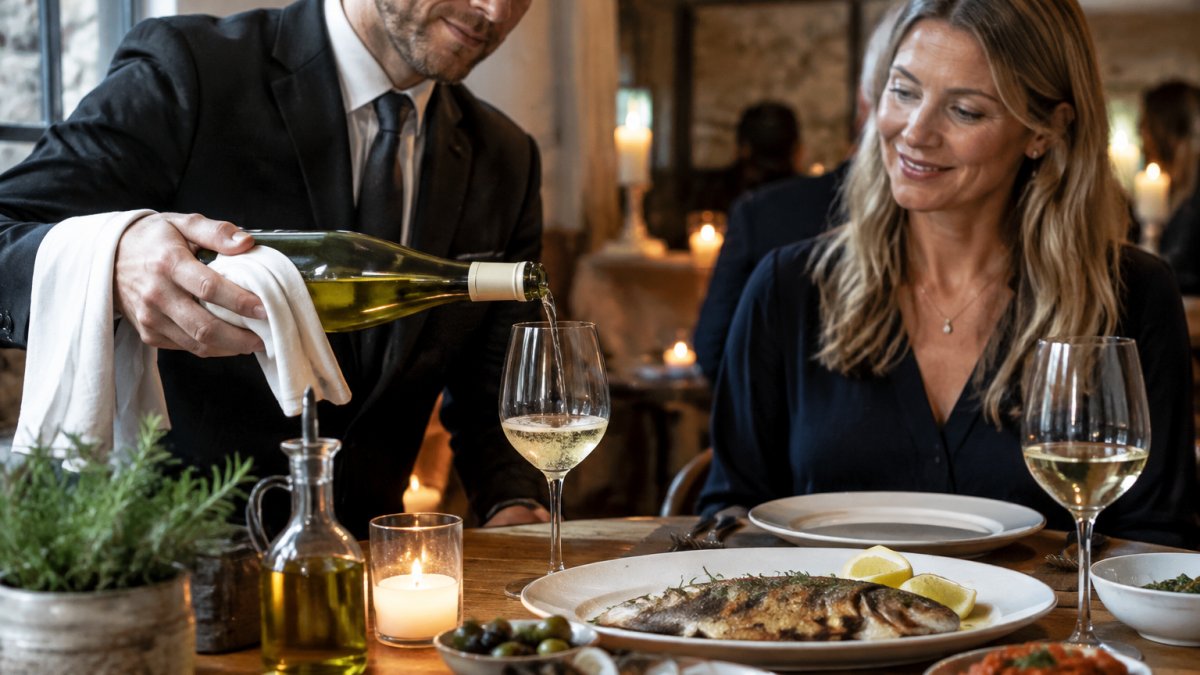
| Menu dish | Portuguese white style to consider | Why it can work |
|---|---|---|
| Oysters, prawns or simply dressed shellfish | Fresh Arinto or Alvarinho | Bright acidity and a clean, aromatic profile complement delicate seafood without overwhelming it. |
| Grilled fish with lemon or herbs | Alvarinho or a crisp Vinho Verde white | Freshness suits the char and seasoning; Alvarinho also gives staff a recognisable grape name to recommend. |
| Octopus with olive oil, garlic or paprika | Alvarinho | Its aromatic character can meet the seasoning, while freshness helps balance the oil. |
| Bacalhau or another salted-fish dish | A dry, lively white such as Arinto | Acidity can refresh the palate against salt and olive oil. Check the preparation: a creamy sauce may call for more body. |
| Roast chicken or poultry with a richer sauce | A fuller Dão white, including an Encruzado-led style | Greater texture can match the dish’s weight; freshness still matters if the sauce is buttery or creamy. |
| Vegetable dishes with herbs, beans or grilled courgette | Arinto or a fresh, aromatic Vinho Verde white | These styles can complement green herbs and vegetables without making a lighter dish feel heavy. |
| Soft cheese | Alvarinho or another aromatic, fresh white | Fruit and acidity can balance the cheese’s creamy texture. For aged or salty cheese, taste the pairing before recommending it. |
For traditional Portuguese flavours, consider garlic, olive oil, citrus, herbs and piri-piri separately rather than treating them as one profile. Oil and creamy sauces often benefit from freshness; chilli can make alcohol and oak seem more pronounced, so avoid assuming that a fuller or heavily oaked wine is automatically the better match. With a spicy dish, taste the wine alongside the actual level of heat and seasoning.
A useful restaurant test is to compare a small taste of the wine with the finished dish, including its sauce and garnish. If the wine seems thin, move up in body; if it makes the food taste heavy, look for more freshness.
For more dish-specific ideas, explore food pairings for Portuguese grapes. The [Wines of Portugal food-pairing guide | winesofportugal.com] offers further regional context.
Portuguese White Wines for Restaurant Menus: Seven Bottle Picks
These Portuguese white wines for restaurant menus cover different grape varieties and regions.
Casa Américo 2023 Sonante DOP Dão Branco →
| Bottle | Style cue | Menu role |
|---|---|---|
| Casal do Conde Alvarinho | Crisp, aromatic | Fish and soft cheese |
| Quinta Pousada de Fora Arinto Reserva | Citric, balanced | Shellfish and petiscos |
| Casa Américo Sonante Dão Branco | Fruit and flowers | Roast chicken |
| Manz Dona Fátima Jampal | Rich, fresh finish | Fish and shellfish |
Our shortlist includes the Casal do Conde 2023 Alvarinho for grilled fish, the Quinta Pousada de Fora 2020 Arinto Reserva for finer petiscos, and the Manz 2022 Dona Fátima Jampal for guests curious about a rare grape. The Casa Américo 2023 Sonante DOP Dão Branco brings tropical fruit, wild-flower aromas and crisp acidity.
Portuguese Wine Menu Descriptions Guests Can Use
Portuguese wine menu descriptions should tell guests what the wine tastes like and what to eat with it. Keep the grape, region and food match visible; avoid relying on unfamiliar place names alone.
Try this format: [Grape and region] + [taste or texture] + [dish pairing]. For example: “Alvarinho from Tejo: crisp and aromatic, a fresh match for grilled fish and soft cheese.”
The guide to writing descriptions for undiscovered wines offers more ways to make lesser-known bottles easy to order. For staff, keep the spoken version just as simple:
- “Fresh and crisp, good with shellfish.”
- “A fuller white for roast chicken.”
- “A rare Portuguese grape with a rich, fresh finish.”
Portuguese Wine List for Restaurants: Glass Pours, Pricing and Supply
A commercially useful Portuguese white-wine list needs distinct jobs, not a long run of similar bottles. Start with the menu and decide which wines must work by the glass, which can be bottle-only discoveries, and what you will offer when a vintage or producer is unavailable.
| List role | What to look for | Operational check |
|---|---|---|
| Accessible glass pour | A fresh, easy-to-describe white such as an Arinto-led style or crisp Vinho Verde | Confirm that the wine suits several popular dishes and that staff can explain it in one sentence. |
| Seafood-led option | Alvarinho with enough character to distinguish it from the house pour | Check whether it earns a separate glass-pour position or is better presented by the bottle. |
| Fuller food match | A more textured Dão white, potentially based on Encruzado | Make sure the menu has dishes with enough weight to support it. |
| Discovery bottle | A less familiar grape such as Jampal | Give it a clear menu match and a short staff explanation; otherwise guests may pass over it. |
Watch out: A printed vintage or glass-pour listing can become misleading if stock changes and the menu is not updated.
The [Wines of Portugal trade resources | winesofportugal.com] can help buyers learn more about regions and producers.
Choose Wines for Your Menu with 79North
79North Ltd connects independent restaurants with distinctive wines from family-owned Portuguese and Italian producers, including native varieties such as Jampal.
Our role is to represent these wineries and bring their wines to independent retailers and restaurants. Get started with 79North Ltd.
Frequently Asked Questions
Which Portuguese white wines are best for restaurant menus?
Choose styles that cover different dishes and weights rather than relying on one grape. The portfolio includes Casal do Conde 2023 Alvarinho, Quinta Pousada de Fora 2020 Arinto Reserva, Casa Américo 2023 Sonante DOP Dão Branco and Manz 2022 Dona Fátima Jampal. The catalog describes Dona Fátima Jampal as a single-variety wine for light dishes, fish and shellfish.
What food pairs well with Portuguese white wine?
Match the wine’s weight and acidity to the dish. The catalog lists Dona Fátima Jampal as a match for light dishes, fish and shellfish. For richer or strongly seasoned food, assess the dish’s texture and flavour against the wine before adding it to the menu.
Which Portuguese white grape varieties should restaurants know?
Start with Alvarinho and Arinto, then add grapes that give the list a distinct regional character. Casa Américo Sonante DOP Dão Branco blends Bical, Cerceal-branco and Encruzado. Manz Dona Fátima is made entirely from Jampal, a variety the producer helped save from extinction.
How should restaurants describe Portuguese white wines on a menu?
Use the grape, region and a few concrete tasting or pairing cues. For Arinto Reserva, describe its citric freshness and apple, pear and peach aromas, then suggest lighter seafood or shellfish. Keep claims tied to the producer information and avoid vague terms that do not help a guest choose.
