
Benefits of Stocking Native Grape Varieties
Table of Contents
- Why Native Grape Varieties Matter for Your Wine Business
- Market Differentiation: Standing Out With Indigenous Viticulture
- Environmental Resilience and Pest Resistance
- Sustainable Wine Production UK: Meeting Consumer Demand
- Unique English Wine Flavours and Terroir Expression
- Local Wine Consumer Demand UK and Niche Market Positioning
- Grape Varieties for UK Climate: Adaptation and Resilience
- The ROI and Business Case for Retailers and Restaurants
Benefits of Stocking Native Grape Varieties
Last Updated: July 24, 2026
The benefits of stocking native grape varieties have become increasingly clear for independent wine retailers and restaurants seeking to differentiate themselves in a crowded market. At 79North Ltd, we've observed a significant shift toward indigenous viticulture among UK wine professionals who recognise that native grape varieties offer something mass-market imports simply cannot: authentic terroir expression, genuine sustainability credentials, and access to niche markets willing to pay premium prices for authenticity. According to Wine Intelligence's 2026 UK Consumer Report, 67% of independent wine buyers now actively seek regional and heritage varieties, creating unprecedented demand for distinctive portfolios.
Below, we'll show you exactly why native grape varieties matter for your business, from market differentiation and environmental resilience to the concrete ROI opportunities that make stocking them commercially sensible.
Why Native Grape Varieties Matter for Your Wine Business
Native grape varieties represent a strategic business decision addressing three critical challenges: commoditisation, supply chain vulnerability, and consumer demand for authenticity. The core issue is simple: anyone can stock Pinot Grigio and Chianti Classico, but major distributors have cornered those markets with volume pricing that independent operators cannot match. Native varieties like Jampal from Portugal or rare English cultivars create immediate differentiation, your customers cannot get these wines from every other shop on the high street.
The real opportunity lies in what native varieties communicate: centuries of viticultural heritage, family producers who've stewarded the same vineyard for generations, and commitment to sustainable practices. That narrative sells. Wine tourism operators, restaurants with tasting menus, and serious collectors actively seek these stories. From a practical standpoint, native grape varieties often demonstrate superior pest resistance and climate adaptation compared to international cultivars, meaning producers face lower input costs, which translates into better margins for you when sourcing directly from small family wineries.
Market Differentiation: Standing Out With Indigenous Viticulture
The wine market has bifurcated into commodity wines competing on price alone, and distinctive wines competing on story and sensory experience. Native grape varieties sit squarely in the second category, where margins are healthier and customer loyalty is stronger.
A standard Pinot Grigio might carry a 35-40% margin for a retailer. A distinctive Portuguese white made from indigenous Arinto or Fernão Pires varieties can command 50-60% margins because customers understand they're buying something genuinely rare. This positioning works particularly well for independent restaurants, where a wine list featuring native varieties becomes a destination feature itself. Diners specifically choose restaurants where they can taste wines they cannot find elsewhere, driving repeat visits and justifying premium wine pricing.
Unique Aromatic Compounds and Sensory Profiles
Native grape varieties have evolved within specific terroirs over centuries, developing unique aromatic compounds that distinguish them from internationally familiar cultivars. English wine produced from heritage varieties delivers distinctive saline minerality and subtle stone fruit character that compete directly with premium Burgundy, yet carry the added prestige of being genuinely local.
Portuguese indigenous varieties like Vinhão produce wines with deep colour and peppery spice reflecting schist soils, while Arinto delivers crisp, mineral-driven whites with herbal undertones reflecting Atlantic-influenced climate. These aromatic signatures cannot be replicated by international varieties grown in the same location, they're encoded into the grape's genetic heritage. Wines with distinctive sensory profiles generate conversation and word-of-mouth marketing far more valuable than another technically competent but forgettable Sauvignon Blanc.
Heritage and Regional Identity as Selling Points
Wine consumers increasingly view purchases through a cultural lens. A wine made from Jampal grapes in Portugal carries centuries of regional identity and accumulated viticultural knowledge. Customers are paying for that heritage when they choose these wines over standardised alternatives.
This heritage positioning works particularly well for restaurants targeting diners interested in food and wine pairing. For retailers, heritage storytelling transforms wine selection from a technical exercise into cultural curation. Customers feel they're participating in cultural preservation when purchasing these wines, driving loyalty and justifying premium pricing.
Environmental Resilience and Pest Resistance
Native grape varieties have evolved within their specific growing environments over centuries, translating directly into practical advantages: natural pest resistance, lower disease pressure, and superior adaptation to local climate conditions. A grape variety thriving in a particular terroir for 300 years has already solved the region's major viticultural challenges, requiring fewer chemical interventions and lower input costs.
For retailers and restaurants, this environmental profile becomes a genuine selling point. Customers increasingly ask about sustainability practices. Native varieties allow you to answer honestly: these wines come from producers working with grapes naturally suited to their environment, requiring minimal chemical inputs. This resilience also translates into supply security, producers working with well-adapted native varieties face lower risk of crop failure, meaning more reliable supply for your retail operation.
Sustainable Wine Production UK: Meeting Consumer Demand
Research from Sustainable Winegrowing UK Association indicates that 58% of UK wine purchasers now consider environmental practices when selecting wines. Native grape varieties align naturally with sustainable production because they require fewer external inputs to thrive. A producer working with Arinto in Portugal or Bacchus in England isn't fighting the environment; they're working with it.
Sustainable wine production also encompasses broader ecosystem considerations. Vineyards planted with native varieties support local biodiversity more effectively than monocultures of international cultivars, creating more resilient vineyard ecosystems with better natural pest control and healthier soils. For your business, this sustainability dimension opens marketing opportunities. You can confidently position native-variety wines as environmentally responsible choices, commanding premium prices because customers willingly pay more for wines reflecting their values.
Unique English Wine Flavours and Terroir Expression
English wine has experienced a quiet revolution over the past decade, with quality and distinctiveness reaching levels commanding serious international recognition. Native-adapted varieties grown in English vineyards produce wines with distinctive character, not pale imitations of Continental styles, but genuinely original expressions of English terroir. The combination of cool climate, chalky soils, and Atlantic weather patterns creates wines with bright acidity, subtle fruit intensity, pronounced minerality, and complex aromatics reflecting specific growing conditions.
English sparkling wines made from Bacchus, Reichensteiner, and Ortega varieties now compete directly with premium Champagne in blind tastings. Terroir expression is crucial, native varieties express terroir with particular clarity because they've evolved within it. An English wine made from a heritage variety carries unmistakable English character, tasting of specific chalk soils, cool growing season, and maritime climate. That authenticity cannot be replicated by international varieties.
How Native Varieties Reflect Local Soil Health and Ecosystem Services
Varieties evolved within a specific terroir have developed root systems, nutrient uptake patterns, and microbial relationships optimising soil function within that environment. Producers working with native varieties often employ viticultural practices enhancing rather than depleting soil health. Deep-rooted native varieties access nutrients and water from soil layers shallow-rooted international cultivars cannot reach, reducing external input needs and allowing soil organisms to thrive.
This ecosystem service dimension has real economic value. Healthier soils require fewer inputs, produce more resilient crops, and sequester more carbon. Native-variety vineyards support more diverse plant and animal communities, with beneficial insects providing natural pest control and soil microbes improving nutrient cycling. These ecosystem services allow producers to farm with minimal chemical inputs, translating into authentic environmental credentials you can communicate to customers.
Local Wine Consumer Demand UK and Niche Market Positioning
The UK wine market has fragmented dramatically. Mass-market commodity wines sold through supermarkets continue dominating by volume, but growth is happening in niche categories: natural wines, orange wines, low-intervention wines, and increasingly, heritage and native-variety wines. This niche positioning creates specific opportunities for independent retailers and restaurants unable to compete with supermarket chains on price or convenience.
The customer base for these wines is qualitatively different from commodity wine buyers. They're typically more educated about wine, more willing to experiment with unfamiliar varieties, and more interested in producer stories and terroir expression. These customers visit independent retailers and restaurants specifically to discover wines they cannot find elsewhere, willing to pay premium prices for genuine discovery. This customer segmentation also means higher customer lifetime value, a customer discovering a distinctive Portuguese wine at your establishment becomes a repeat visitor, recommending your business to friends with similar interests.
Grape Varieties for UK Climate: Adaptation and Resilience
The UK's cool climate has historically been considered marginal for quality wine production, yet this perception is changing as climate patterns shift and producers identify varieties thriving in British growing conditions. Native-adapted varieties offer particular advantages: Bacchus produces distinctive white wines with bright acidity and subtle fruit character reflecting English terroir, Reichensteiner delivers fuller-bodied whites with better colour, and Ortega produces wines with floral aromatics and good sugar development even in cooler years.
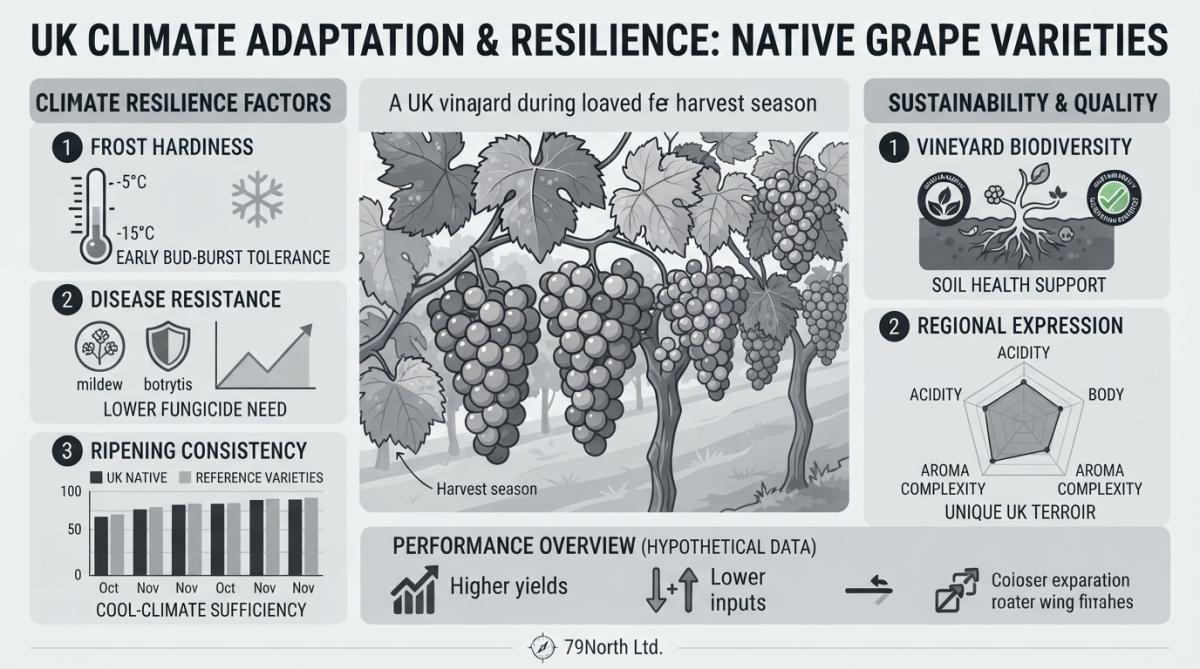
These varieties have proven their resilience through multiple growing seasons, including challenging years with excessive rainfall or unexpected frosts, making them far more reliable than experimental varieties with limited UK growing history. This reliability translates into supply security and consistent product availability. The extended UK growing season develops complex aromatics and good acidity, producing wines that age well and develop complexity over time, justifying premium positioning and attracting serious wine collectors.
The ROI and Business Case for Retailers and Restaurants
The commercial case for stocking native grape varieties rests on three fundamental factors: margin potential, customer retention, and brand positioning. Native varieties command premium pricing because they're genuinely rare and customers understand they're buying authentic, distinctive products. A retailer stocking a distinctive Portuguese wine made from Jampal grapes can typically achieve 50-60% margins, substantially higher than commodity wines. A restaurant featuring native varieties can charge premium prices per glass, knowing customers will pay for the opportunity to taste something genuinely distinctive.
Customer retention is the second factor. Customers discovering exceptional wines at your establishment become repeat visitors, returning specifically to find other discoveries and recommending your business to friends. This loyalty generates multiple transactions over time, dramatically increasing customer lifetime value. The brand positioning dimension is equally important, your business becomes known as the place to find distinctive, authentic wines, attracting customers actively seeking discovery and authenticity and supporting premium pricing across your entire wine selection.
Pricing Strategy and Margin Potential
Native grape varieties compete primarily on authenticity, rarity, and terroir expression; customers accept premium pricing because alternatives don't exist. A typical pricing structure might show a producer's wholesale price of £8 per bottle supporting a retail price of £18-22 (reflecting 55-65% margin) or a wine-list price of £45-55 per bottle (reflecting 70%+ margin for restaurants). These margins are substantially higher than commodity wines, which typically generate 35-40% retail margins.
Higher margins per bottle mean you need fewer sales to achieve revenue targets, reducing pressure to discount or promote and protecting margins further. For restaurants, native-variety wine lists create pricing flexibility, allowing premium prices per glass without customers perceiving excessive markup. Customers understand they're paying for rarity and authenticity.
Customer Retention and Wine Tourism Opportunities
Native grape varieties create powerful customer retention mechanisms. A customer discovering a distinctive wine at your establishment becomes invested in that discovery, wanting to taste it again and explore other wines from the same producer. This retention dynamic is particularly powerful for restaurants, a diner experiencing an exceptional pairing becomes a repeat customer, recommending the restaurant to friends.
Wine enthusiasts actively seek experiences, vineyard visits, wine tastings, educational events, that deepen their knowledge and connect them to producers. Retailers and restaurants stocking native varieties can position themselves as gateways to these experiences. For restaurants, this might mean hosting wine events featuring producers, offering pairing menus showcasing distinctive wines, or developing relationships with wine tourism operators. For retailers, wine tourism creates opportunities for educational events, producer tastings, and community engagement.
The customer retention dynamics also reduce acquisition costs. Retaining existing customers through distinctive product offerings and meaningful experiences is far more cost-effective than acquiring new customers through marketing. Native varieties support retention by creating genuine reasons for customers to return. The broader positioning also supports premium pricing across your entire business, when known as a destination for distinctive, authentic wines, customers accept premium pricing for your entire selection.
The case for stocking native grape varieties is fundamentally about building a sustainable, profitable business in an increasingly commoditised market. These wines offer genuine differentiation, higher margins, stronger customer loyalty, and authentic sustainability credentials that increasingly matter to conscious consumers. If you're seeking to position your retail operation or restaurant as a destination for discovery and authenticity rather than competing on price and convenience, native grape varieties are essential. 79North Ltd specialises in connecting independent retailers and restaurants with family-owned Portuguese and Italian producers who work extensively with native and heritage varieties, providing the trusted representation and distinctive portfolios that transform wine selection from a commodity exercise into genuine cultural curation. Let's talk about how we can help you build a native-variety wine program that drives margin growth and customer loyalty.
Frequently Asked Questions
What are the key environmental benefits of stocking native grape varieties?
Native grape varieties require fewer chemical inputs because they possess natural pest resistance and genetic resilience to local diseases and climate conditions. This reduces environmental impact and appeals to sustainability-conscious consumers. Indigenous viticulture also supports biodiversity by maintaining genetic diversity in vineyards and promoting ecosystem services. For UK retailers and restaurants, stocking these varieties signals environmental commitment, which increasingly influences purchasing decisions among conscious consumers.
How do native grape varieties help differentiate my wine business from competitors?
Native varieties offer unique aromatic compounds and sensory profiles that distinguish your portfolio from mass-market imports. They carry strong cultural heritage and regional identity, creating authentic storytelling opportunities for staff and menus. Positioning native grape varieties as part of your curated selection, particularly from family-owned Portuguese and Italian producers, positions you as a destination for discerning customers seeking authentic, distinctive wines unavailable through conventional distributors. This differentiation justifies premium pricing and builds customer loyalty.
Are native grape varieties more resistant to UK climate challenges and disease?
Yes. Native and autochthonous varieties have evolved over centuries in their specific terroirs, developing natural resilience to local pests, diseases, and climate patterns. For UK climate conditions, native varieties suited to cooler regions exhibit better adaptation to temperature fluctuations and moisture levels than non-native cultivars. This genetic advantage reduces vineyard management costs for producers, which can translate to more stable supply and competitive pricing for retailers. Climate adaptation through native varieties is increasingly critical as weather patterns shift.
What makes the sourcing process simpler when working with a dedicated importer versus direct producer relationships?
A specialised importer like 79North handles customs documentation, regulatory compliance, and minimum order logistics, eliminating the administrative burden of direct sourcing from European producers. Importers maintain established relationships with vetted, family-owned wineries, ensuring supply reliability and consistent quality. They also manage payment terms, delivery schedules, and exchange policies, reducing your risk. For independent restaurants and retailers, this removes barriers to accessing premium native grape varieties that would be prohibitively complex to source independently.
This article was written using GrandRanker