
Collecting Portuguese Wines for Investment: A Practical Guide
Last Updated: November 16, 2026
Quick Summary
Collecting Portuguese wines for investment means buying scarce, well-documented bottles that can age, such as structured Douro reds and Vintage Port, while accepting that scarcity does not guarantee value. Build a diversified starter portfolio across styles, producers and vintages, keep provenance records, and plan for a long hold with illiquid resale.
- Vintage Port is declared only in exceptional years and can be cellared for decades.
- Vintage variation is the main structural risk for Douro reds, so compare like-for-like vintages.
- Store wine stably near 12 to 14 degrees Celsius, away from sunlight and vibration.
- Factor in buying premiums, storage charges, insurance and time to sell before buying.
- Spread exposure across styles, producers and vintages to avoid concentration risk.
Table of Contents
- Why Portuguese Wine Is Attracting Collectors
- Which Portuguese Wines Are Worth Collecting
- Douro Red Wine Investment: Valuation, Vintages and Risk
- Storage, Provenance and Authentication
- Liquidity, Resale Channels and Transaction Costs
- Building a Starter Portfolio and Your Next Purchase
- Frequently Asked Questions
At 79North Ltd, we import premium, family-owned wines from Portugal to the UK trade. Collecting Portuguese wines for investment is a different discipline from simply buying good bottles to drink, and the rest of this guide sets out how to approach it with clear eyes.
Why Portuguese Wine Is Attracting Collectors
Portugal has long produced wine of real depth, but for years it sat in the shadow of France, Italy and Spain. That gap is closing.
For a collector, the appeal is scarcity. Many producers make small quantities from old vines, and a bottle that is hard to replace tends to hold its interest over time. We will be clear, though: scarcity does not guarantee value, and most bottles will never appreciate in the way headlines suggest.
Which Portuguese Wines Are Worth Collecting
Not every Portuguese wine merits a place in a cellar. The categories below have the strongest case for long-term keeping, but each carries different risks.
Douro Reds and Their Ageing Potential
The Douro is Portugal's most celebrated red wine region, with steep terraced vineyards along the river. Structured reds from older vines usually age best, because their tannins and acidity give them the backbone to develop over a decade or more. To see how these reds compare with other regions, read how Alentejo and Douro wines differ. Lighter, fruit-forward styles tend to peak much sooner, so check the producer's own ageing guidance before buying with a long hold in mind.
Port and Other Fortified Wines
Port is the most established collectible in the Portuguese category. Vintage Port is declared only in exceptional years and can be cellared for decades, while tawny styles are sold ready to drink. Fortified wines are less volatile than table wine, which is one reason they feature so often in serious collections.
Alentejo, Madeira and Indigenous Grape Blends
Alentejo produces generous, warm-climate reds that suit cellaring for a shorter span. Madeira, a fortified wine that has been heated and oxidised in its production, is famously durable and can last a very long time once opened. Indigenous grape blends from smaller producers offer rarity, though their market is thinner, which makes resale harder.
| Category | Typical Cellaring Window | Market Depth | Main Risk |
|---|---|---|---|
| Douro structured reds | 5 to 15 years | Moderate | Vintage variation |
| Vintage Port | 10 to 30+ years | Strong | Storage quality |
| Alentejo reds | 3 to 8 years | Limited | Shallow resale market |
| Madeira | Very long | Niche | Sourcing authenticity |
| Indigenous blends | Varies | Thin | Low liquidity |
Douro Red Wine Investment: Valuation, Vintages and Risk
Valuing a Douro red is not a matter of reading a single score. Price is set by the interaction of four things: the producer's track record, the declared vintage, the bottle's condition and provenance, and the depth of demand for that specific wine. Two bottles from the same estate can trade at very different levels depending on the year, so always compare like-for-like vintages rather than the producer's name alone.
A practical buying process looks like this. First, shortlist producers with a documented history of ageing well, estates that release vintage notes and hold back library stock are usually the ones whose older bottles still trade. Second, check the vintage against published harvest reports and critic commentary for that specific year, not the region as a whole. Third, establish a reference price by looking at what the same wine and vintage has actually changed hands for at auction or through specialist merchants, rather than the asking price on a retail shelf. Fourth, confirm provenance and condition before you commit. Fifth, record the purchase, invoice, merchant, date, bottle condition, because that record is what a future buyer will ask for. The same discipline of checking provenance, condition and documented trading history applies when comparing rare champagne bottles with collectible Portuguese wines.
Watch out: paying a premium for a famous label whose price has already risen sharply is the most common way new collectors overpay; the wine may be excellent and still have little headroom left.
Vintage variation is the structural risk in the Douro. A strong year can be followed by a weaker one, and a wine that drinks beautifully young may not reward a long hold. Fortified Port is more forgiving because it is declared only in exceptional years, which is one reason it anchors so many Portuguese collections. For still Douro reds, treat any expected return as uncertain and size your position accordingly.
A useful discipline is to buy only bottles you would be content to open. If a Douro red is not worth drinking at the price you are paying, it is unlikely to be worth holding purely for resale. Read recent vintage reports from producers and reputable critics before committing funds, and look at how the wine performs at the table, pairing aged Douro reds with roasted vegetables is a reasonable test of whether a bottle has the balance to justify keeping.
Storage, Provenance and Authentication
Storage is where many collections lose value without anyone noticing. Heat, light and vibration damage wine over time, and a bottle stored poorly may never reach the condition its vintage promised. A stable cellar kept near 12 to 14 degrees Celsius, away from sunlight, protects most wines well.
Provenance matters just as much. Buy from reputable merchants who can show a clear chain of custody, and avoid private sales where the bottle's history is unclear. Counterfeit wine is a genuine problem for expensive vintages, so check labels, capsules and fill levels carefully on arrival.
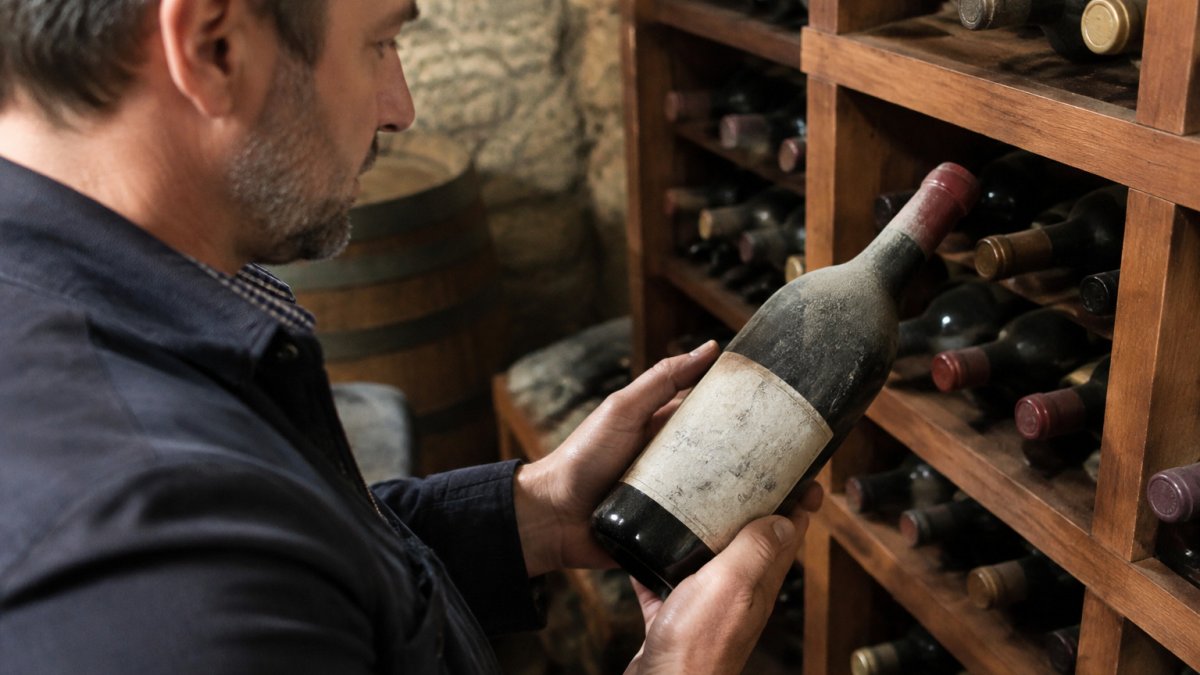
If you are building a cellar, how to build a wine cellar for long-term aging covers the practical setup in more detail. For mature bottles, knowing the right serving temperature for mature red wines also helps you judge their condition before you sell or open them.
Liquidity, Resale Channels and Transaction Costs
A bottle is only worth what someone will pay for it, and resale is often slower and costlier than buyers expect. Auction houses, specialist merchants and private sales each take different cuts, and those fees can erode a modest gain quickly.
Factor in buying premiums, storage charges, insurance and the time a bottle may sit unsold. Liquidity is strongest for well-known producers and Port, and weakest for small estates with limited production. Plan for a long hold and accept that you may not be able to sell quickly.
Building a Starter Portfolio and Your Next Purchase
A starter portfolio should be built around risk first, return second. The goal is not to own the most bottles but to avoid any single decision, one producer, one vintage, one region, being able to damage the whole collection.
A workable structure spreads exposure across four dimensions. By style: a mix of structured Douro reds, Vintage Port and a small holding of Madeira gives you different ageing curves and different buyer pools. By producer: several estates rather than one, because a single producer's reputation can shift. By vintage: avoid concentrating everything in one year, since vintage variation is the dominant risk in the Douro. By liquidity: keep the bulk of value in categories with a real resale market, well-known Port and established Douro producers, and treat thin-market indigenous blends as a small, speculative slice rather than the core.
Concentration is the risk most often underestimated. A collection that is 80% one producer's recent vintages is effectively a single bet, and if that producer's prices stall or a vintage disappoints, there is no offsetting position. Equally, capital can be lost outright: wine is an illiquid asset, storage and insurance cost money every year, and a bottle that is damaged or of uncertain provenance may be worth far less than you paid.
Before your next purchase, run three checks. Confirm the bottle fits a gap in your existing spread rather than duplicating it. Confirm you have a realistic exit route, which merchant or auction house would sell it, and roughly what commission and buyer's premium would apply. And confirm you would be happy to drink it if the value never rose. That last test keeps expectations honest.
Keep records of every purchase, including provenance documents, condition notes and invoices, because they will matter when you come to sell. Build slowly, review the spread once a year, and accept that a well-constructed collection is judged over a decade, not a season.
Frequently Asked Questions
Can Portuguese wine be a good investment?
It can, but it is a niche market with thinner liquidity than Bordeaux or Burgundy. Returns depend heavily on buying well-regarded producers at release prices, holding the right vintages and paying attention to total costs. Storage, insurance, buyer's premiums and resale commission all reduce net returns, so treat collecting as a long-term holding rather than a quick trade, and only commit money you can leave untouched for years.
Is Port wine a good investment?
Vintage Port is the Portuguese category with the strongest collector following, because declared vintages are released in limited quantities and can age for decades. Late-bottled vintage and tawny styles usually trade at lower values and are better suited to drinking. Check that the producer and vintage are well documented, since fortified wines with clear provenance are easier to resell at a fair price.
How can you check the provenance of a collectible wine?
Buy from merchants with a documented chain of custody, ideally bottles stored in bonded warehouses with continuous temperature records. Ask for original invoices, check the capsule, cork and label for signs of resealing or refilling, and compare the bottle with reference images from the producer. Keeping every invoice and storage record makes a later resale far smoother.
Where can you buy Portuguese wines for investment?
Specialist UK merchants and importers are the most reliable sources, particularly those that hold stock in bonded storage and can show purchase history. Primary purchases direct from producers are rare and often require allocation. Avoid unverified online sellers offering rare bottles at prices well below the going market rate, as these are a common source of counterfeits and poorly stored stock.
