
Exclusive Wine Imports for Boutique Shops: A 2026 Guide
Table of Contents
- Why Exclusive Wine Imports Matter for Independent Retailers
- Understanding UK Wine Import Regulations and Compliance
- How to Find Boutique Wine Suppliers You Can Trust
- Building a Profitable Wine List with Exclusive Imports
- Sourcing from Independent Producers: What Sets Them Apart
- Managing Wine Spoilage and Temperature-Controlled Storage
- Building Staff Knowledge and Customer Experience
- Conclusion
Last Updated: August 11, 2026
Why Exclusive Wine Imports Matter for Independent Retailers
Independent wine shops and restaurants face intense competition from supermarket chains and online retailers. Yet the most successful venues have discovered what big players cannot replicate: access to exclusive wine imports that create genuine differentiation.
The real advantage lies in discovering wines customers cannot find elsewhere. Small-batch producers and family-owned wineries from Portugal and Italy represent an untapped opportunity for retailers willing to navigate the import process. At 79North Ltd, we've observed that venues building portfolios around distinctive, hard-to-find wines see stronger customer loyalty, higher margins, and more compelling storytelling. Exclusive imports require investment in compliance, capital, and producer relationships, but the payoff justifies it. Independent retailers who get this right compete on discovery and authenticity, not price.
Understanding UK Wine Import Regulations and Compliance
Importing wine into the UK involves mandatory regulatory steps designed to protect consumers and maintain fair competition.
AWRS Registration and Duty Requirements
The Alcohol Wholesaler Registration Scheme (AWRS) is your legal entry point. If you're importing wine for sale in the UK, you must register with HMRC as an alcohol wholesaler. Registration is free and straightforward: apply online, provide business details, and wait for approval within two weeks.
Once registered, you're responsible for ensuring excise duty is paid on all imports. Excise duty on still wines currently sits at £2.84 per litre. A case costing £60 wholesale becomes £75+ once duty is added, significantly affecting your pricing strategy. Many new importers fail to factor duty into margin calculations and end up uncompetitive.
Customs Documentation and Landed Costs
Every shipment requires proper customs documentation: commercial invoices, packing lists, and certificates of origin. Your producer should provide these, but verify completeness before shipment to prevent border delays.
"Landed cost" is the total cost once wine reaches your warehouse: producer price, shipping, insurance, customs broker fees, and excise duty. This can add 30-40% to your actual cost. Customs clearance typically takes 24-48 hours with correct documentation. Using a customs broker with wine import experience prevents costly delays.
Temperature-controlled shipping is critical for wine preservation during transit. Budget for proper logistics from the outset, as damaged inventory costs far more than shipping premiums.
How to Find Boutique Wine Suppliers You Can Trust
Finding reliable boutique suppliers requires a different approach than ordering from established distributors.
Direct Producer Relationships vs. Importer Networks
Two pathways exist: sourcing directly from producers or working through specialist importers.
Direct relationships with producers offer authenticity and often better pricing, with genuine connection and storytelling for customers. However, direct sourcing requires managing logistics, customs, and minimum order quantities yourself. Most small producers require 6-12 case minimums, tying up capital.
Working through specialist importers like 79North Ltd provides curated portfolios of small producers without managing dozens of individual relationships. Importers handle customs, logistics, and compliance while providing product knowledge that helps you sell effectively.
Small independent shops often benefit from importer relationships initially, then develop direct producer relationships as they grow. Restaurants typically prefer importers for variety and reliability without administrative burden.
Evaluating Supplier Reliability and Track Record
Before committing to any supplier, ask for references from existing customers in your region. Check whether they've been established for at least three years. Experience matters in wine importing.
Ask specific questions about producer relationships: How long have they worked with each winery? What happens if a producer discontinues a wine? Do they have backup options? Understand their minimum order requirements and flexibility. A supplier worth working with will be transparent about these constraints upfront.
Building a Profitable Wine List with Exclusive Imports
Exclusive imports only succeed financially if positioned and priced strategically.
Menu Engineering and Inventory Turnover
Menu engineering means strategically organizing your wine list to guide choices and optimize profitability. Create a simple matrix plotting each wine by price point and sales frequency. Aim for 60% accessible wines, 30% mid-range, and 10% premium selections.
Inventory turnover is critical. For by-the-glass programs, aim to turn each wine within 2-3 weeks. For bottles, target 4-6 weeks for standard selections and 8-12 weeks for premium bottles. Implement FIFO (first in, first out) discipline to prevent serving older vintages and reduce spoilage risk.
Pricing Strategies and Markup Structures
For retail shops, typical markup ranges from 40-60% for everyday wines and 30-40% for premium selections. A wine costing £15 landed might retail for £22-24.
For restaurants, markup is typically higher: 100-200% depending on positioning. A wine costing £15 might appear at £45-50, accounting for service and experience premiums.
By-the-glass pricing requires special attention. A 750ml bottle yields approximately five 150ml pours. If the bottle costs £15 landed, each pour costs £3. Pricing individual pours at £8-12 provides sustainable margin while remaining competitive.
The most profitable wine lists aren't those with highest markups, but those with best turnover. A wine selling 20 bottles at 50% markup generates more profit than one sitting in inventory for months at 100% markup.
Sourcing from Independent Producers: What Sets Them Apart
Independent producers offer distinctiveness and story that mass-market wines cannot. Many exceptional producers price competitively because they operate without the marketing budgets of larger houses.
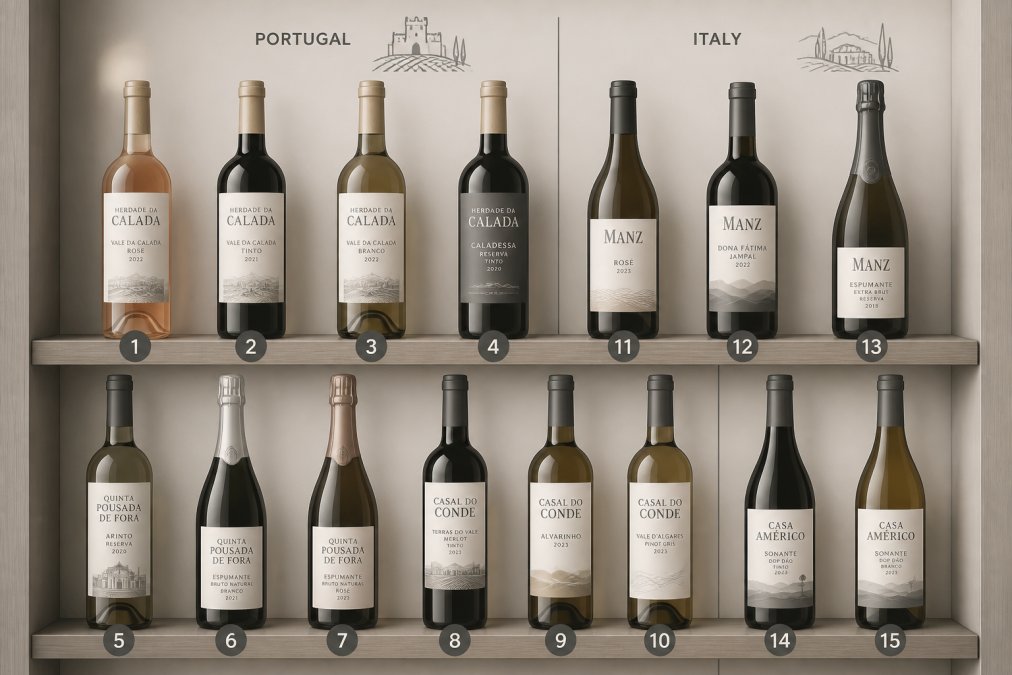
Portuguese producers work with varieties like Jampal, Touriga Nacional, and Arinto that express specific regional character. Italian producers focus on single vineyards and traditional methods that create discovery moments for customers.
The challenge with independent producers is reliability. Small operations have limited production, and a wine you list this year might be unavailable next year. Working with an importer who maintains ongoing producer relationships provides value by anticipating supply changes and suggesting alternatives before gaps appear.
Managing Wine Spoilage and Temperature-Controlled Storage
Wine spoilage is one of the largest invisible costs in wine retail. A single spoiled case represents lost margin and disappointed customers.
Temperature fluctuation is the primary culprit. Wine stored above 20°C or exposed to significant swings deteriorates rapidly. Proper storage requires a dedicated, climate-controlled space maintained between 12-18°C with minimal fluctuation.
By-the-glass programs require particular attention. Once opened, wine begins oxidizing. Proper preservation systems, vacuum stoppers, or inert gas systems extend opened bottle life from hours to days, reducing waste and improving economics substantially.
Light exposure also matters. UV light degrades wine, which is why dark glass bottles are standard. Store wine away from direct sunlight and fluorescent lighting when possible.
Building Staff Knowledge and Customer Experience
Exclusive imports only create competitive advantage if your team can explain them effectively. Staff training on your portfolio is essential: understanding where the wine comes from, what grapes are in it, how it tastes, and why you chose to stock it.
Consider tasting events with staff before launching new wines. This builds genuine knowledge and enthusiasm that customers sense. For retailers, signage describing the wine's origin, producer story, and tasting notes encourages exploration.
Customer education reduces returns and complaints. A customer who understands what they're buying is more likely to enjoy it and return for more. According to the UK Wine and Spirit Trade Association, independent wine retailers who invest in staff knowledge see significantly higher customer retention than those relying on price alone.
Building a sustainable wine business around exclusive imports requires attention to regulations, supplier relationships, inventory management, and staff knowledge. It's more complex than ordering from a major distributor, but the payoff, distinctive products, stronger margins, and genuine customer loyalty, justifies the effort.
79North Ltd specializes in connecting independent retailers and restaurants with exceptional family-owned producers from Portugal and Italy. We handle regulatory complexity, manage producer relationships, and provide product knowledge your team needs. Our portfolio includes distinctive wines like the Manz 2022 Dona Fátima Jampal at £35.00, the Herdade da Calada 2020 Caladessa Reserva Tinto at £21.00, and the Casal do Conde 2023 Vale d'Algares Pinot Gris at £15.00. If you're ready to differentiate your venue through exclusive imports, let's talk about how we can support your growth.
Frequently Asked Questions
What are the legal requirements for importing wine into the UK?
All wine importers must register with HMRC's Alcohol Wholesaler Registration Scheme (AWRS) before trading. You'll need to provide proof of premises, business details, and compliance procedures. Imported wine incurs customs duty and excise tax, calculated on the landed cost (product price plus shipping and insurance). Documentation includes commercial invoices, certificates of origin, and phytosanitary certificates. Working with an established importer like 79North simplifies this compliance burden significantly.
How do I calculate the landed cost of imported wine?
Landed cost includes the wholesale price, international shipping, insurance, customs duty (currently 0% for wine under certain trade agreements, but excise applies), and any importer handling fees. For example, a €15 bottle from Portugal might cost £12 wholesale, plus £2.50 shipping per bottle, £0.30 insurance, and £2.08 excise duty, totalling approximately £17 landed cost before your retail markup. Understanding this figure is essential for pricing strategies and profit margin calculations. Many independent retailers underestimate these costs, cutting into their margins significantly.
What is the difference between an agent and a wine importer?
A wine agent represents producers and takes commission but doesn't hold inventory; they connect you directly to producers or larger importers. A dedicated importer like 79North purchases stock, manages customs and logistics, handles compliance, and provides ongoing support. For small independent shops and restaurants, working with an importer eliminates the complexity of direct producer sourcing, minimum order requirements, and regulatory headaches. You gain access to curated portfolios and reliable supply chains without managing international logistics yourself.
Why should I stock exclusive wine imports instead of mainstream supermarket wines?
Exclusive imports from independent producers command higher profit margins, differentiate your offering, and create customer loyalty through authentic, distinctive selections. Supermarket wines compete on price alone; boutique imports compete on story, terroir, and uniqueness. Customers actively seek out independent retailers specifically for wines they can't find elsewhere. Stocking exclusive Portuguese and Italian family-owned wines positions your business as a curator of quality rather than a discount competitor, supporting sustainable pricing and stronger customer relationships.
This article was written using GrandRanker