5 Forces Reshaping Italian Wine E-Commerce for UK Buyers
Last Updated: November 3, 2026
Quick Summary
The future of Italian wine e-commerce in the UK belongs to independent buyers who treat the online shelf as seriously as the physical one, moving early on range, story and fulfilment. Specialists beat marketplaces by selling discovery and provenance rather than the lowest price per bottle.
- Stock a tight range of eight to fifteen bottles, each with a genuine story and clear price position.
- Buy depth, not width: two or three bottles from one producer beat one bottle from ten producers.
- Search has shifted from broad terms to grape and region names like Primitivo, Nerello Mascalese and Verdicchio.
- Build a landed-cost model per bottle covering duty, VAT and fulfilment before setting a retail price.
- Click-and-collect removes courier cost entirely and is often the most profitable fulfilment option for independents.
Table of Contents
- Why Italian Wine E-Commerce Rewards the Independents Who Move First
- UK Wine E-Commerce Trends: Growth, Channels and the Shift to Direct Sales
- Online Wine Consumer Behaviour: Discovery, Proof and Repeat Purchase
- Wine E-Commerce Best Practices for Stocking and Selling Italian Wine
- Digital Marketing for Wine Brands: Storytelling That Sells Native Grapes
- Italian Wine E-Commerce Challenges: Duty, Age Verification and Delivery
- Building a Range That Sells Online: A Next-Step Plan for Independent Buyers
- Frequently Asked Questions
Why Italian Wine E-Commerce Rewards the Independents Who Move First
The future of Italian wine e-commerce in the UK belongs to buyers who treat the online shelf as seriously as the physical one. The shops that win online move early on range, story and fulfilment.
A search for a native Italian grape returns mass-market listings, supermarket own-label bottles and a handful of specialists. The specialist usually wins the click, because the product page explains the producer, the region and the grape in a way a supermarket listing never does.
Below, we break down the five forces reshaping this market and what each means for your buying decisions.
UK Wine E-Commerce Trends: Growth, Channels and the Shift to Direct Sales
Online wine sales in the UK keep shifting from pure marketplace listings toward direct-to-consumer and specialist retail channels. Marketplaces compete on price; specialists compete on curation, and curation is where margin survives.
Four channel models matter for your buying plan, and each behaves differently once Italian wine is in the mix:
- Online marketplace listings. Useful for reach, corrosive to margin on commodity bottles, and weak on storytelling. Marketplaces reward price and review volume, exactly where a family-owned producer with a small allocation cannot compete. Best as a clearance or discovery channel, not your core range.
- Hospitality trade supply. Restaurants, hotels and pubs buy by the glass list, order in cases and reorder predictably. Longer sales cycle and lower margin per bottle, but steadier volume and customer acquisition cost spread across repeat orders.
- Hybrid click-and-collect and local delivery. For independents with a physical shop, ordering online and collecting in store removes the courier, the heaviest cost in the chain, while keeping the online product page as the discovery surface. It also sidesteps breakage risk from glass in a sorting depot.
The digital transformation of wine retail has not killed the wine merchant; it has sorted them. Those with a credible online presence and a clear range reach customers far beyond their postcode, while those relying on footfall alone compete with every supermarket promotion. Online extends the shop's catchment and gives regulars a way to reorder between visits.
UK government guidance on alcohol licensing and sales sets the baseline for what you can sell and how, and any online channel sits underneath those rules. First, premises and personal licences under the Licensing Act 2003 govern sales of alcohol, and online sales are not exempt, the sale must be authorised under a licence, and the responsible person arrangements need to cover remote sales. Second, the mandatory licensing conditions include a requirement not to sell alcohol to someone who is drunk and to operate an age verification policy where alcohol is sold.
Search behaviour has moved from broad terms like "Italian red wine" toward grape and region names, Primitivo, Nerello Mascalese, Verdicchio, Etna Rosso. That favours sellers who structure product pages around the grape and the place rather than a generic category, reaching a more specific, intent-driven shopper.
Watch out: treating online as a discount channel is the most common strategic error. Discounting trains customers to wait for the next promotion, erodes the margin you need to fund delivery, and puts you in direct competition with retailers whose buying power you cannot match. The channel that survives sells discovery and provenance, not the lowest price per bottle.
Online Wine Consumer Behaviour: Discovery, Proof and Repeat Purchase
Online wine consumer behaviour follows a predictable arc: discovery, proof, then repeat purchase. The shopper finds a grape or region they don't recognise, looks for proof that the bottle is worth the money, and only then decides whether to buy again.
Proof takes specific forms: a tasting note written by a human, a producer story, a food pairing suggestion, a clear region map, rarely a generic "smooth and fruity" description copied across forty listings. If you want readers to order small batch Italian wine online with confidence, your product pages must answer what makes this bottle different from the one next to it.
Repeat purchase is where independents quietly win. A customer who discovers a native grape through your shop and enjoys it has a reason to return that a supermarket shopper never gets. Build the second sale into the first: a short note on the producer, a pairing idea, an invitation to try the neighbouring region.
Wine Standards Branch guidance on wine labelling and composition is worth reading if you write your own tasting notes, because labelling claims carry obligations.
Wine E-Commerce Best Practices for Stocking and Selling Italian Wine
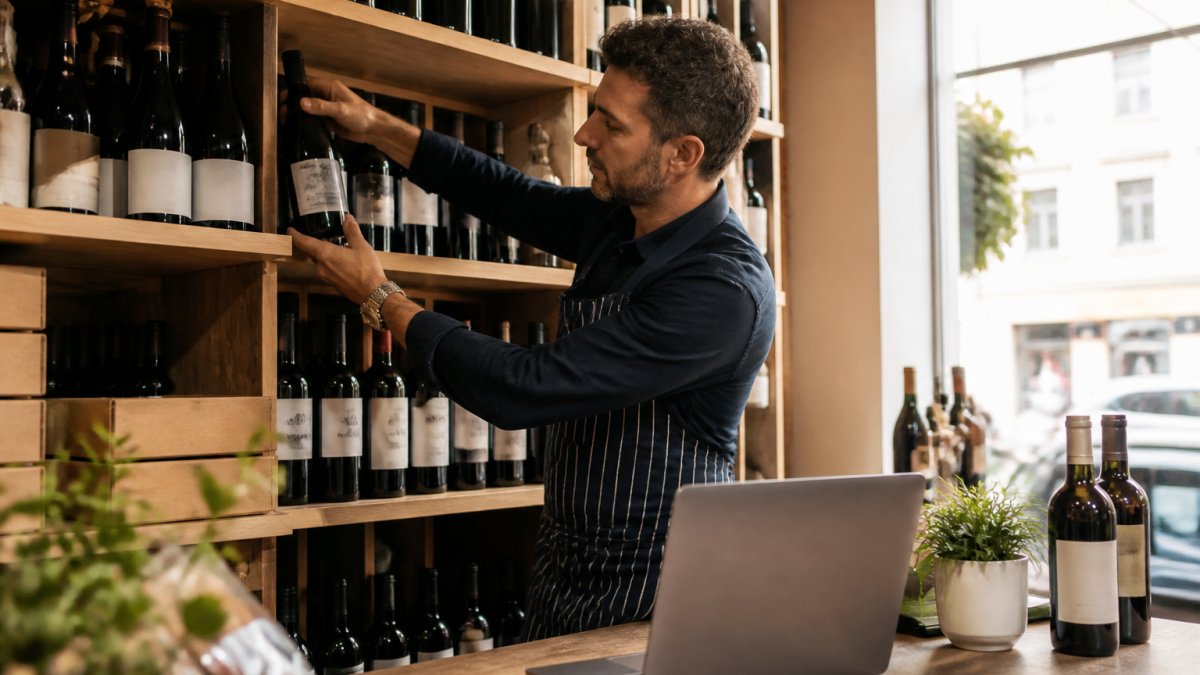
The best practice that separates strong online ranges from weak ones is simple: stock fewer wines, describe them better. A tight range of eight to fifteen bottles, each with a genuine story and a clear price position, outsells a sprawling list where nothing stands out.
Practical rules we would apply to any independent range:
- Buy depth, not width. Two or three bottles from one producer beat one bottle from each of ten producers, because you can tell a coherent story.
- Map the range to demand. Red and sparkling carry the volume; white and rosé carry the discovery. Stock underrated Italian grape varieties that give you something to say.
- Write the product page before you buy. If you cannot explain the wine in three sentences, the shopper cannot either.
- Price for the channel. Online shoppers compare, so a bottle with no clear reason to cost more than the supermarket equivalent will not sell.
- Plan fulfilment before launch. Delivery cost and speed decide repeat purchase as much as taste does.
Digital Marketing for Wine Brands: Storytelling That Sells Native Grapes
Storytelling is the only marketing asset an independent has that a supermarket cannot copy. A supermarket can match your price. It cannot match your relationship with a family-owned producer in a specific village making a wine from a grape almost nobody else stocks.
That is the commercial case for selling family-owned Italian wines: differentiation drives loyalty, loyalty drives repeat purchase, and repeat purchase makes an online range viable.
Content that works for native grape varieties tends to be specific. A short video of the producer walking the vineyard. A post explaining why a grape grown on volcanic soil tastes different from the same grape grown on clay. A pairing note for a wine your customers have never heard of. None of it requires a large budget. All of it requires that you actually know the producer.
Advertising Standards Authority guidance on alcohol marketing governs how you present alcohol promotions, including online, so keep storytelling within those rules.
Italian Wine E-Commerce Challenges: Duty, Age Verification and Delivery
The three challenges that stop most independents from scaling online are duty and import costs, age verification, and delivery economics. None is unsolvable, but each needs planning before launch rather than after, and this section decides whether an Italian range makes money online.
Duty, VAT and landed cost. Importing Italian wine into the UK involves customs declarations, import VAT and excise duty before the bottle reaches your shelf, and landed cost per bottle is typically higher than the ex-cellar price.
Build a landed-cost model per bottle before you commit to a retail price, including all import costs and your own fulfilment cost, then apply your target margin. For the actual tariff, duty and VAT figures, see our wholesale Italian wine pricing guide.
Age verification. Age verification is a legal requirement, not a UX preference. Build checks into checkout and courier instructions from day one.
Delivery economics. Delivery is where margins quietly disappear. Glass is heavy, breakage is real, and next-day expectations are set by retailers far larger than you. A case of bottles is heavy once packaged, and packaging that survives a sorting depot adds cost and weight.
Watch out: subsidising delivery to match a large retailer's free-delivery threshold is a common route to negative unit economics. A single bottle shipped at a subsidised rate can lose money on every order, and the loss grows with volume.
Building a Range That Sells Online: A Next-Step Plan for Independent Buyers
A range that sells online is built in a sequence, not assembled all at once. Here is the plan we would follow.
| Step | Action | What it delivers |
|---|---|---|
| 1 | Audit your current online range against sales data | Identifies dead stock and gaps |
| 2 | Choose two or three producers to buy in depth | A coherent, tellable story |
| 3 | Write product pages before ordering | Confirms the wine is explainable |
| 4 | Model landed cost including duty, VAT and delivery | A retail price that holds margin |
| 5 | Set age verification and delivery rules | Compliance from launch |
| 6 | Plan the first repeat-purchase touch | A second sale, not just a first |
If you are ready to act on that plan, our step-by-step guide to sourcing rare Italian wine imports walks through customs, producer vetting and range building in detail.
The independents who move first on native grape varieties, honest product pages and clean fulfilment will own the specialist end of this market. The rest will keep competing with the supermarket on price, and lose.
The challenge is not finding Italian wine. It is finding producers worth building a range around, and getting them into your shop without the paperwork swallowing your margin. At 79North Ltd, we represent small, family-owned wineries from Italy and Portugal that are often new to the UK market, we focus on native grape varieties that give your range a genuine point of difference, and we work with independent retailers and restaurants rather than requiring supermarket-scale volume. Let's talk about what would suit your list.
Frequently Asked Questions
How are consumers buying wine online?
Most online wine buying now starts with discovery on a retailer's own product pages, then moves to a mobile checkout. Shoppers read tasting notes, check grape and region, and look for delivery terms before committing. Repeat purchase is driven by familiarity with a producer rather than the lowest price. For independents, that means clear product pages, honest stock levels and a delivery promise you can keep. A short note on the grower and the native grape variety does more work than a discount banner.
What challenges do wine retailers face when selling online?
Three practical ones dominate. First, age verification at checkout and on delivery. Second, duty and VAT treatment on imports, including post-Brexit paperwork and customs clearance. Third, packaging and breakage costs on glass shipped by courier. Retailers also face price comparison pressure from larger online merchants.
How important is storytelling to selling Italian wine online?
It is often the deciding factor. A shopper cannot taste a bottle through a screen, so the story carries the sale: the family behind the winery, the region, the native grape, and how it drinks with food. Wineries committed to sustainability and cultural enrichment give retailers a genuine angle. Product pages that name the producer and explain the grape outsell generic listings. Keep the story short, specific and tied to what the bottle tastes like.
How can independent retailers compete in wine e-commerce?
Compete on curation, not price. A tightly chosen range of small, family-owned Italian producers gives customers a reason to buy from you rather than a mass-market retailer. Pair that with reliable delivery, accurate stock information and content that explains each wine. Independent restaurants and shops also win on relationships: staff who know the producer and can recommend a bottle. Add a simple email list and a monthly feature on one producer, and repeat sales build without heavy ad spend.
