
What to Expect from Alentejo Wine: A Buyer's Guide
Table of Contents
- What Defines the Alentejo Wine Region
- The Flavour Profile: Dark Fruit, Spice and Polish
- Best Alentejo Red Wine Varieties to Stock
- Alentejo Wine Food Pairing Guide for Your Menu
- How Does the Climate Shape the Wine?
- Is Dão Wine Dry? A Quick Comparison
- What to Ignore: Common Myths About Alentejo Wine
- Build Your Alentejo Range: Where to Start
- Frequently Asked Questions
Last Updated: September 6, 2026
Alentejo wine is the embodiment of southern Portugal's sun-drenched plains: full-bodied, generous, and built around dark fruit and polished tannins. If you are considering adding a new regional category to your list, this guide from 79North Ltd explains exactly what to expect from Alentejo wine, from the signature grape blends to the food pairings that make them shine.
The most important thing to know is that Alentejo reds are rarely shy. They deliver ripe blackberry and plum concentration with a savoury, earthy undertone, yet the best examples keep that fruit in check with structure and balance. Below, we'll break down the flavour profile, the varieties to stock, and how to match them with food, so you can buy with confidence.
What Defines the Alentejo Wine Region
The Alentejo is a vast, flat landscape of rolling plains and cork forests in southern Portugal, defined by a hot and dry Mediterranean climate with a strong continental influence. Those long, sun-filled days and cool nights are what allow grapes to ripen fully while retaining the bright acidity that keeps the wines fresh rather than jammy.
Viticulture here is increasingly forward-thinking. Many estates, including those we represent, are committed to sustainable practices, and the region's modern reputation rests on quality-focused producers who farm their own vineyards. The result is a category that offers both approachable, fruit-forward reds and serious, age-worthy bottlings.
The Flavour Profile: Dark Fruit, Spice and Polish
What to expect from Alentejo wine in the glass is a core of dark fruit, ripe blackberry and plum, wrapped in spice and a savoury, herby complexity that reflects the surrounding undergrowth and Mediterranean scrub. The best wines balance that concentration with polished tannins and a persistent finish, making them feel smooth rather than heavy.
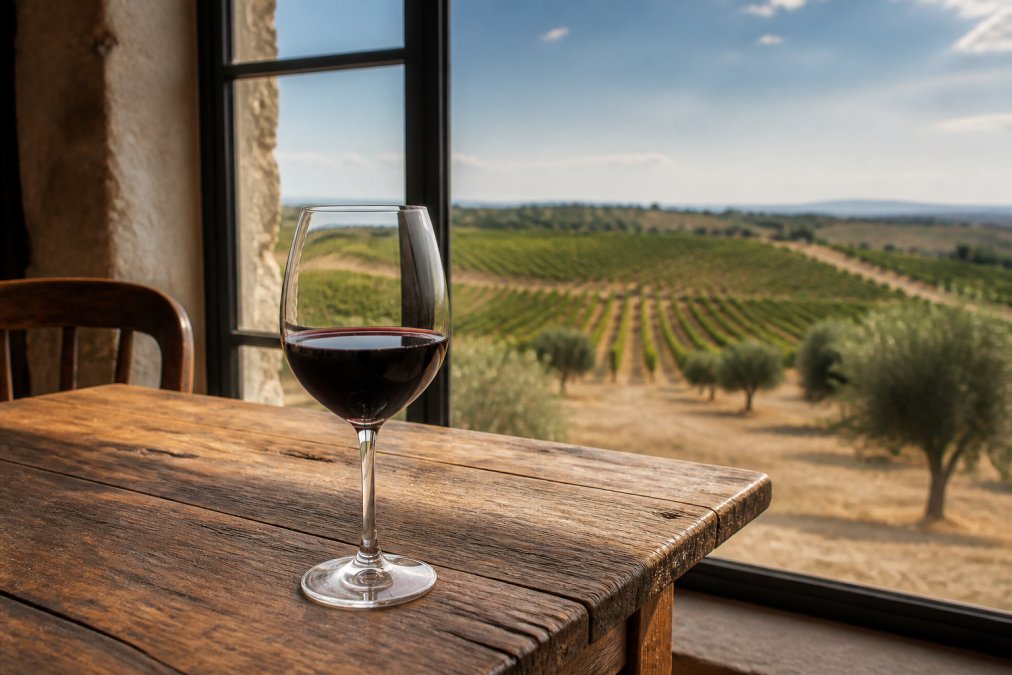
Texture matters as much as flavour. Expect medium to full-bodied reds with a plush mouthfeel, often oaked but rarely dominated by it, where the oak adds structure and a hint of vanilla rather than masking the fruit. For buyers, this profile offers the richness customers want from a "big" red without sacrificing elegance.
Best Alentejo Red Wine Varieties to Stock
The most reliable way to build an Alentejo section is around its native grapes. These varieties appear both in the region's classic blends and as increasingly common single-varietal wines, each bringing something distinct to the list.
The Signature Blends: Alicante Bouschet, Trincadeira and Aragonez
The classic Alentejo red is a blend, and the three varieties you will see most often are Alicante Bouschet, Trincadeira and Aragonez. Alicante Bouschet is a teinturier grape, meaning its flesh is red, which gives the wine deep colour and structure. Trincadeira adds spice and aroma, while Aragonez, known as Tempranillo elsewhere, contributes bright red fruit and acidity (winefolly.com).
A well-made blend from these three offers everything a sommelier wants: a rich, dark-fruit core, a savoury edge, and enough structure to pair with hearty food. The Herdade da Calada 2021 Vale da Calada Tinto, at £17.00, is a textbook example, combining Trincadeira, Alicante Bouschet and Aragonez from clay soils into a wine with real depth.
Single-Varietal Expressions Worth Listing
Single-varietal Alentejo wines are where you can offer customers something genuinely distinctive. Touriga Nacional brings floral lift and firm tannins, while Alicante Bouschet on its own shows intense dark fruit and a grippy, age-worthy structure.
For a premium slot, the Herdade da Calada 2020 Caladessa Reserva Tinto is worth serious consideration. At £21.00, this Reserva blends Tinta Caiada, Alfrocheiro, Touriga Nacional and Touriga Franca, aged 12 months in French oak. It is a polished, complex wine that demonstrates how refined Alentejo can be, and it holds a 4.3 rating on Vivino.
Alentejo Wine Food Pairing Guide for Your Menu
Most guides stop at 'pairs well with red meat.' To truly sell Alentejo, you need to know why it works with specific dishes and how to guide customers toward a memorable match. The wine's inherent savoury, herbal character, often described as monte or Mediterranean scrub, is the key. It's what allows these wines to complement, rather than overpower, complex dishes.
Three Specific Pairings to Recommend
1. Alentejo Red Blend with Pork and Clam Stew (Carne de Porco à Alentejana)
This is the region's classic pairing for a reason. The dish's briny clams and tender pork are a textural and flavour contrast. A full-bodied blend with Alicante Bouschet provides the structure to stand up to the rich sauce, while its earthy, savoury undertones mirror the dish's depth. The wine's acidity cuts through the pork's richness, and its dark fruit provides a counterpoint to the saltiness. Recommend a Reserva-level bottling to match the intensity.
2. Aragonez-based Red with Chargrilled Lamb Chops and Rosemary
Aragonez (Tempranillo) brings bright red fruit and a distinct savoury edge. This profile is a natural partner for the char and smoke of grilled lamb. The wine's moderate tannins and fresh acidity cleanse the palate between bites of rich, fatty meat. For a twist, suggest a pairing with a simple salsa verde; the wine's herbal notes will echo the parsley and mint, creating a cohesive flavour experience.
3. Antão Vaz White with Chargrilled Sardines
Portugal's love affair with sardines extends to the Alentejo. Antão Vaz, the region's signature white grape, produces wines with a textured, almost waxy mouthfeel and a pronounced citrus and stone-fruit character. This profile stands up to the intense, oily flavour of grilled sardines. The wine's natural acidity is crucial, acting as a palate cleanser against the fish's richness. Serve the wine well-chilled (10-12°C) to maximise its refreshing quality (winespectator.com).
A Practical Rule for Your Staff
When guiding customers, move beyond protein. Ask about the sauce or preparation. A tomato-based stew calls for a wine with more structure and acidity (a Trincadeira-led blend). A creamy mushroom dish pairs better with a wine that has some oak influence for added richness. A simple grilled fish needs a lighter, unoaked white or a dry rosé. This approach empowers your team to make confident, personalised recommendations that build trust and increase sales. custom wine glasses.
The Value Proposition: Alentejo as a Food-Friendly Workhorse
From a buyer's perspective, Alentejo's food-friendliness is its strongest commercial asset. It is a category that can be listed across multiple sections of a menu, by-the-glass reds for starters, premium bottles for mains, and refreshing whites for seafood. This versatility reduces SKU proliferation while providing comprehensive customer choice. It's a wine region that solves menu pairing problems, not creates them.
How Does the Climate Shape the Wine?
The climate is the single biggest factor shaping what to expect from Alentejo wine. The region's hot, dry days and significant temperature drops at night preserve acidity, which is why these full-bodied wines still taste fresh and balanced.
This continental influence, moderated by the Atlantic, also explains the wines' concentration. Grapes develop thick skins to protect against the sun, which translates directly into deeper colour and more pronounced tannins in the finished wine. For buyers, this means Alentejo reds are inherently age-worthy and rarely taste thin or dilute.
Is Dão Wine Dry? A Quick Comparison
Yes, Dão wine is dry, but the comparison with Alentejo is instructive for building a Portuguese section. Dão, located further north and inland, has a cooler, wetter climate, which produces wines that are lighter in body, higher in acidity, and often more mineral and restrained than those from the Alentejo (wineenthusiast.com).
The practical difference comes down to style and price point. Dão offers elegance and freshness, while Alentejo delivers power and richness. A well-rounded Portuguese list needs both, and understanding this contrast helps you guide customers to the right bottle based on their preference for either a more delicate or a more generous style.
What to Ignore: Common Myths About Alentejo Wine
A common myth is that Alentejo wines are all heavy, high-alcohol bruisers. While it is true that some examples can reach higher alcohol levels, the modern quality-focused producers prioritise balance, and many wines, like the Vale da Calada Branco at 13% ABV, are refreshing and moderate.
Another misconception is that the region only produces red wine. In fact, Alentejo makes excellent whites, rosés and even fortified wines. The whites, often based on the Antão Vaz grape, are aromatic and textured, offering great value. Ignore the generalisations and judge each wine on its own merits; you will find a more diverse category than the reputation suggests.
Build Your Alentejo Range: Where to Start
A successful Alentejo range isn't just a list of wines; it's a structured offering that guides customers through different price points and occasions. The region offers exceptional quality at every level, but the buying strategy differs significantly depending on whether you're sourcing for a casual bistro or a fine-dining establishment. Here's a practical, tiered approach to building a list that sells.
Tier 1: The Approachable Entry Point (£12-£18)
Goal: High-volume, by-the-glass offerings that introduce customers to the region's signature style.
What to look for: Fruit-forward red blends featuring Aragonez and Trincadeira. These wines are unoaked or lightly oaked, emphasising ripe red and black fruit with soft, approachable tannins. They are the 'crowd-pleasers' that offer immediate drinkability. A classic example is the Herdade da Calada 2021 Vale da Calada Tinto at £17.00, a textbook blend that delivers the region's dark-fruit core and savoury edge without demanding cellaring. This tier is your workhorse for lunch service and casual dining.
Strategy: Choose one reliable red and one dry rosé for your by-the-glass list. This covers a wide range of appetisers and main courses while keeping pour-cost manageable.
Tier 2: The Premium Step-Up (£18-£30)
Goal: Bottle-list offerings for customers seeking more complexity and a 'special occasion' wine.
What to look for: Single-varietal expressions or 'Reserva' blends. This is where you showcase the region's potential for structure and elegance. Look for wines with 6-12 months of oak ageing, which adds layers of spice and vanilla without masking the fruit. The Herdade da Calada 2020 Caladessa Reserva Tinto at £21.00 fits this slot perfectly. It's a polished blend of Tinta Caiada, Alfrocheiro, Touriga Nacional and Touriga Franca, aged 12 months in French oak. Its 4.3 Vivino rating also gives your staff a social proof talking point.
Strategy: This tier is your 'recommendation' list. Train staff to suggest these wines for customers celebrating an occasion or looking to explore beyond the entry-level. It's also the sweet spot for pairing with premium meat dishes.
Tier 3: The Fine-Dining Statement (£30+)
Goal: A small, curated selection of 'Grande Reserva' or single-vineyard wines that demonstrate the pinnacle of Alentejo winemaking.
What to look for: Wines with extended oak ageing (18+ months) and significant ageing potential. These are powerful, concentrated wines with firm tannins that require decanting. They are not everyday wines; they are statements of place and craft. This tier is about prestige and offering a 'bucket-list' experience for the wine enthusiast.
Strategy: List one or two wines at this level. They elevate your list's credibility and provide a high-margin option for customers seeking the ultimate Alentejo experience. The story of the family-owned estate and sustainable farming practices is a powerful selling point here.
A Note on Sustainability as a Selling Point
The Alentejo is a global leader in sustainable viticulture, with a significant portion of its vineyard area certified under the national sustainability programme. This isn't just a marketing angle; it's a quality signal. For many consumers, it's a deciding factor. When building your range, actively seek out producers who can articulate their commitment to the land, whether through water conservation, cover cropping, or integrated pest management. This story adds tangible value to the bottle and resonates with the modern, conscious consumer. At 79North Ltd, we work with family-owned estates that share this ethos, ensuring the wines we import come with a narrative of stewardship that your staff can confidently share.
Frequently Asked Questions
Is Alentejo wine good?
Yes, Alentejo wine is widely regarded as high quality, particularly for its full-bodied reds. The region's Mediterranean climate, with hot, dry summers and a continental influence, produces grapes with concentrated dark fruit flavours and ripe tannins. Producers like Herdade da Calada demonstrate the quality ceiling, with their Reserva Tinto earning a 4.3 Vivino rating. The wines offer excellent structure and balance, making them a reliable choice for independent retailers and restaurants seeking distinctive Portuguese bottles.
What is Alentejo wine similar to in terms of body and structure?
Alentejo reds are most similar to wines from the Rhône Valley or parts of Australia, offering a full-bodied profile with ripe blackberry, plum and spice. The tannin structure is typically polished and smooth, not harsh, which makes them approachable younger than some other age-worthy European reds. The climate produces a riper fruit character than northern Portuguese regions like Dão, which tend to be more mineral and structured. This combination of fruit concentration and soft tannins makes them versatile for food pairing.
What should I look for when selecting an Alentejo wine for a restaurant menu?
Look for balanced structure, authentic regional character and value. For reds, check the grape blend: Alicante Bouschet adds colour and body, Trincadeira brings spice, and Aragonez offers soft red fruit. Consider the oak treatment: 12 months in French oak, as used for the Herdade da Calada Caladessa Reserva, adds complexity without overwhelming the fruit. Seek out estate-bottled wines from family-owned producers, which often deliver more distinctive terroir expression than mass-market blends.
What is the difference between Alentejo and Dão wine?
The main difference is climate and resulting style. Alentejo is hot and dry with a Mediterranean influence, producing full-bodied, fruit-forward wines with ripe tannins and often higher alcohol, around 14.5-15% ABV. Dão is cooler and more mountainous, yielding wines that are typically drier in style with brighter acidity, more mineral character and firmer structure. If you seek approachable, smooth reds for immediate drinking, choose Alentejo. If you prefer more restrained, age-worthy wines, explore Dão.
Choosing Alentejo wine for your list comes down to understanding its generosity of fruit and its balance. The region offers reliable, food-friendly reds and increasingly impressive whites and rosés at honest prices. We bring these wines to the UK market with trusted representation from the estates themselves, backed by expert guidance on building your range. Get started with 79North Ltd and offer your customers something genuinely distinctive from Portugal.