
Jampal Grape Health Benefits: What Research Shows
Last Updated: November 5, 2026
Quick Summary
Jampal is an indigenous Portuguese grape, and most of the jampal grape health evidence comes from general grape research rather than studies on Jampal itself. Grape polyphenols such as resveratrol and quercetin concentrate in the skins and seeds, and a finished wine's polyphenol content depends heavily on winemaking. Jampal is mostly made as a white wine, so its extracted polyphenols are likely lower than a skin-contact red.
- Most grape health research covers whole grapes, skins, seeds and wine, not Jampal specifically.
- Skins and seeds hold the highest polyphenol levels; the flesh is comparatively poor in them.
- Skin contact during winemaking is the biggest factor in a wine's polyphenol content.
- Ask the producer for an analytical sheet rather than relying on generic grape figures.
- Treat wine as a drink, not a dose, and check residual sugar and ABV on the technical sheet.
Table of Contents
- What Is the Jampal Grape and Where Does It Grow?
- What Research Says About Grape Health Benefits
- Grape Antioxidants and Polyphenols Explained
- Grape Nutrition and Sugar Content: What to Know
- Grape Juice Versus Whole Grapes: Which Keeps More Benefit?
- Does Wine Deliver the Same Benefits? Preparation Matters
- Choosing a Jampal Wine for Your Table or Wine List
- Frequently Asked Questions
What Is the Jampal Grape and Where Does It Grow?
Jampal is an indigenous Portuguese grape variety, and much of what people hear about the jampal grape health value comes from general research on grapes rather than studies on Jampal itself. That gap matters, and this article keeps the two apart. At 79North Ltd, we import family-owned wines from Portugal and Italy for the UK market, and Jampal is one of the native varieties we work with most often.
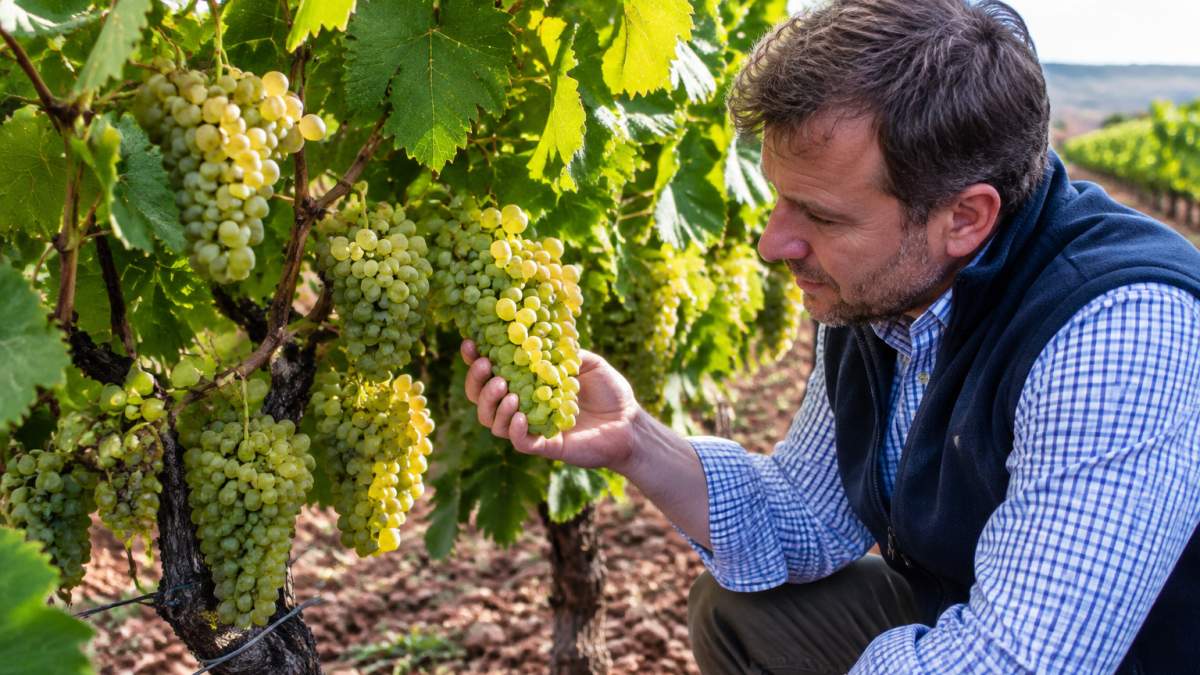
Interest in native varieties like Jampal has grown because they reflect local terroir in a way international varieties often do not. For a buyer, the practical question is simpler: what is the grape, and what can you responsibly say about it? The honest answer is that Jampal's profile is best understood through the wider science of grape polyphenols, plus a small number of variety-specific observations on jampal grape health that are still early. These compounds are increasingly recognized for their role in cardiovascular maintenance, grounding the broader discussion of polyphenols for heart health in established biological mechanisms.
What Research Says About Grape Health Benefits
Most of the health research on grapes concerns whole grapes, grape skins, seeds and wine, rather than any single cultivar. Our summary of that evidence draws on NHS guidance on fruit and vegetable intake for the general advice on eating fruit as part of a balanced diet.
The key point for readers is that research on "grapes" rarely distinguishes between varieties. Findings about red table grapes or Cabernet Sauvignon are routinely extended to other grapes, and that extension is useful but not proof. Treat any claim about a specific variety with the same scepticism you would apply to a claim about a specific wine.
Grape Antioxidants and Polyphenols Explained
Polyphenols are a large family of plant secondary metabolites that share a phenolic ring structure. In grapes they act as antioxidants in the plant, scavenging reactive oxygen species generated by sunlight and heat, and the same chemistry is what researchers study when they look at grape consumption in humans. The important caveat, which most general grape articles skip, is that antioxidant activity measured in a test tube (a FRAP or ORAC assay) tells you very little about what happens after a person eats the fruit. Absorption, metabolism and tissue distribution decide the effect.
The main polyphenol classes in grapes are:
- Stilbenes, principally resveratrol, concentrated in the skin and produced largely in response to fungal pressure and stress. Levels are far higher in skin-contact and red winemaking than in pressed white juice.
- Flavonols, quercetin and kaempferol, present in skins and stems, and among the compounds most consistently linked to vascular effects in the wider literature.
- Flavan-3-ols, catechins and epicatechins, plus proanthocyanidins (condensed tannins), which are the dominant polyphenols in grape seeds and give red wine its astringency.
- Anthocyanins, the red and purple pigments, present only in red-skinned varieties and extracted only when the juice spends time on the skins.
- Phenolic acids, caftaric and coutaric acid derivatives, abundant in the flesh and juice and therefore present even in white wines.
Concentration depends on variety, ripeness, skin-to-flesh ratio, growing conditions and processing. Skin and seeds carry the highest levels by a wide margin; the flesh is comparatively poor in polyphenols but rich in sugar and water. That single fact explains most of the difference between eating whole grapes, drinking juice and drinking wine.
Phytochemical profile of the Jampal grape
Jampal is a thick-skinned white variety, and thick skins matter for two reasons: they hold a larger share of the grape's flavonols and stilbenes, and they give a winemaker more phenolic material to work with if they choose skin contact. Detailed compound-by-compound analytical data for Jampal specifically is thin in the published literature, most Portuguese variety research has focused on agronomy and wine sensory character rather than human nutrition, so treat any precise resveratrol or quercetin figure quoted for Jampal with suspicion unless it comes from a named laboratory report.
What can be said with confidence is structural. Jampal's natural acidity and aromatic intensity are products of its composition, and the clay-rich soils and warm, Atlantic-influenced climate of the Lisboa region shape how much phenolic material the fruit accumulates. Heat and water stress tend to increase stilbene production in the vine, which is one reason native, heat-tolerant varieties are interesting to researchers studying polyphenol density. If you need actual numbers for a label claim or a menu note, ask the producer for their analytical sheet, total polyphenols, colour density and a resveratrol figure if they have one, rather than extrapolating from generic table-grape data.
Bioavailability: why the dose in the glass is not the dose in the body
This is the part of the grape story that competitors most often leave out. Resveratrol is rapidly absorbed in the small intestine but undergoes extensive phase II metabolism in the gut wall and liver, converting largely to glucuronide and sulphate conjugates. Quercetin and the catechins are better absorbed but still heavily metabolised, and the colonic microbiota convert proanthocyanidins into smaller phenolic acids that may be the real actors in vivo.
Watch out: a common pattern in supplement marketing is to quote a test-tube antioxidant value for grape extract and imply it translates to a human effect. It does not, and the same caution applies to any claim made about a single grape variety.
Cardiovascular, blood pressure and eye health evidence
A reader with a diagnosed heart, blood pressure or eye condition should discuss their diet with a clinician.
Grape Nutrition and Sugar Content: What to Know
Whole grapes provide carbohydrate as natural sugars, along with fibre (mostly in the skin).
Manz 2022 Dona Fátima Jampal →
Wine is a different proposition. Residual sugar in wine varies widely from dry to sweet styles, and alcohol carries its own health considerations.
Grape Juice Versus Whole Grapes: Which Keeps More Benefit?
For most people, eating whole grapes is the more straightforward way to get the fruit's fibre and polyphenols. Juice can still fit a balanced diet in modest amounts, but it should not be treated as equivalent to the whole fruit.
The article compares how whole grapes, juice and wine differ in what they deliver, so the table below summarises those differences.
| Form | Polyphenol note | Key consideration |
|---|---|---|
| Whole grapes | Skin and seeds hold most polyphenols | Provide fibre along with natural sugars |
| Grape juice | Flesh is poor in polyphenols | Should not be treated as equal to whole fruit |
| Wine | Depends on winemaking choices | Contains alcohol, with residual sugar varying by style |
Does Wine Deliver the Same Benefits? Preparation Matters
This is where the grape science and the bottle on the table diverge, and it is the section most grape articles handle badly. The polyphenol content of a finished wine is not a property of the grape alone, it is the product of a series of winemaking decisions, each of which can move the number substantially.
Skin contact is the biggest lever. Red wine is fermented with the skins present, so anthocyanins, flavonols and proanthocyanidins are extracted into the liquid over days or weeks. White wine is normally pressed off the skins before fermentation begins, so those compounds stay in the pomace. Jampal is most often made as a white wine, which means its extracted polyphenol content is likely to be lower than a skin-contact red, but a Jampal made with extended skin contact, or as an orange-style wine, would sit somewhere in between. Ask the producer which method they used; it changes the answer more than the variety does.
Maceration time and temperature determine how much phenolic material crosses into the juice. A short, cool maceration gives a delicate white; a long, warm one extracts far more, along with more colour and tannin.
Oak ageing contributes its own phenolic compounds, ellagitannins and vanillin among them, and can also promote the polymerisation of grape tannins, softening astringency. The Manz 2022 Dona Fátima Jampal, for example, spends six months in new French oak.
Filtration and fining remove some larger polyphenols and can strip colour and body; a lightly filtered wine retains more of the material that laboratory assays measure.
How to get the most from Jampal, culinary versus medicinal preparation
Most grape articles stop at "eat the fruit, drink the juice" and never address preparation. That is the gap worth filling, because how you serve Jampal changes what you actually absorb.
- Treat wine as a drink, not a dose. If you drink, the producer's technical sheet lists residual sugar and ABV so you can judge for yourself.
Choosing a Jampal Wine for Your Table or Wine List
If you are choosing Jampal for a shop shelf or a restaurant list, judge the wine on its character first. The Manz 2022 Dona Fátima Jampal is a single-variety white from Lisboa at 13% ABV, aged six months in new French oak, with notes of apricot, lime and citrus and a pleasant acidity that suits fish and shellfish. It is available from our Manz 2022 Dona Fátima Jampal listing, priced at £35.00.
For a sparkling option that shows a different side of the grape, the Manz 2018 Espumante Extra Brut Reserva is made from 100% Jampal in the same region. Venues sourcing Jampal or other native Portuguese varieties will find our sourcing Jampal grapes for UK menus guide covers import, supply and seasonality. For wider context on indigenous Portuguese varieties, see our indigenous Portuguese grape varieties explainer, and for building a menu around native grapes, our native grape varieties sourcing guide is a practical next step.
Frequently Asked Questions
What is the Jampal grape?
Jampal is a white grape variety native to Portugal, grown mainly in the Lisboa region around the Cheleiros village. Manz Wine's 2022 Dona Fátima Jampal is a 100% Jampal wine, priced at £35.00 for a 75cl bottle. Its high acidity and aromatic profile make it distinctive.
Are grape juice and whole grapes equally beneficial?
Whole grapes keep their skins, seeds and fibre, which hold most of the polyphenols and anthocyanins. Juice, particularly clear juice, loses much of the fibre and some of these compounds during pressing and filtering. Juice still provides vitamins and some antioxidants, but it delivers more sugar per serving than whole fruit because the fibre that slows absorption is removed. For the greatest benefit, whole grapes are the better choice.
Are grapes high in sugar?
Wine, once fermented, contains little residual sugar in dry styles, such as the Manz Jampal at 1.4 g/L.
Can drinking wine provide the same health benefits as eating grapes?
Wine retains some polyphenols from the grape, but the amounts vary widely by style, winemaking method and skin contact. Alcohol also carries health risks that outweigh any modest antioxidant gain, and current UK guidance from the NHS advises keeping regular alcohol intake low. Eating whole grapes delivers the compounds without alcohol. Wine is better enjoyed for its flavour and as part of a considered meal rather than as a source of health benefit.
