How to Create Seasonal Wine Displays for Delis
Last Updated: November 24, 2026
Quick Summary
Creating seasonal wine displays for delis means matching your bottle selection, layout and signage to the food your counter sells at that time of year, then refreshing the whole arrangement each quarter. Run the same refresh routine four times a year, choosing 6 to 12 bottles and building two or three pairing clusters.
- Build pairing clusters rather than wine-type blocks, anchoring each cluster to a food from your counter.
- Choose 6 to 12 bottles per display and build two or three pairing clusters with a mix of price points.
- Put best sellers at eye level and story wines just below, keeping one facing rule across the run.
- Rotate pairing cards weekly, not daily, so shoppers have time to notice them.
- Track sell-through, units per transaction and cluster performance, then log results to plan the next range.
Table of Contents
- How do you create seasonal wine displays for delis?
- Wine and food pairing display: matching bottles to deli counter food
- Wine shelf layout: organising bottles for navigation and capacity
- Wine display signage: pricing, tasting notes and responsible retailing
- Seasonal retail displays: a step-by-step refresh for each quarter
- Display fixtures, materials and the small-deli floor plan
- Measuring display performance and building your next seasonal range
- Frequently Asked Questions
How do you create seasonal wine displays for delis?
Creating seasonal wine displays for delis means matching your bottle selection, layout and signage to the food your counter sells at that time of year, then refreshing the whole arrangement each quarter. It is part display craft, part buying discipline. Get it right and shoppers pick up a bottle they had no plan to buy.
At 79North Ltd, we supply family-owned Portuguese and Italian wines to independent delis and shops. Below, we break the process into a repeatable routine you can run four times a year.
The core idea is simple. A seasonal wine display is a small, curated story about what people are eating right now. It is not a shelf full of bottles.
Wine and food pairing display: matching bottles to deli counter food
Start with the counter, not the shelf. Choose bottles that answer the question a shopper already has: what do I drink with this cheese, this cured meat, this loaf?
Build pairing clusters rather than wine-type blocks. A cheese-and-charcuterie cluster might hold a fresh white, a light red and a sparkling. A summer picnic cluster leans on rosé and chilled whites.
Pairing displays can help shoppers by removing a decision: they see the bottle next to the food. Our food pairings for small batch Italian wines gives concrete ideas to feature alongside deli food. For affordable premium Italian reds to build these clusters, see our guide to Italian red wines for independent delis.
For deli counters, we favour wines with real character that still suit food. A pale, crisp rosé like Manz 2023 Rosé sits easily beside seafood, salads and starters. A dry sparkling such as Quinta Pousada de Fora Espumante Bruto Natural Rosé (£28.00) lifts finger foods and cheese.
Our advice: rotate pairing cards weekly, not daily. Shoppers need time to notice them.
Wine shelf layout: organising bottles for navigation and capacity
Layout is about two things: helping shoppers find a bottle fast, and fitting enough stock without clutter. Most small delis fail on the second point.
Use a clear hierarchy. Group by style first (sparkling, white, rosé, red), then by weight or region inside each group. Put your best sellers at eye level and your story wines just below.
Keep the shelf edge tidy. A consistent bottle height and a single facing rule make a small run look intentional. If your layout keeps drifting, our guide to optimising inventory management for independent wine shops covers keeping displays stocked without overordering.
- Group by style, then region
- Best sellers at eye level
- One facing rule across the whole run
- Leave a gap between clusters so the eye rests
Wine display signage: pricing, tasting notes and responsible retailing
Signage does the selling when nobody is free to talk. A good shelf card answers three questions: what is it, what does it taste like, and what do I eat with it.
Keep each card short. One line on the grape or region, one on flavour, one on food. Add the price clearly and in the same place on every card.
Responsible retailing matters here.
If you want a deeper method for shelf cards, our article on writing effective wine shelf talkers walks through tasting-note structure and pricing presentation.
Check every card against the till before the display opens.
Seasonal retail displays: a step-by-step refresh for each quarter
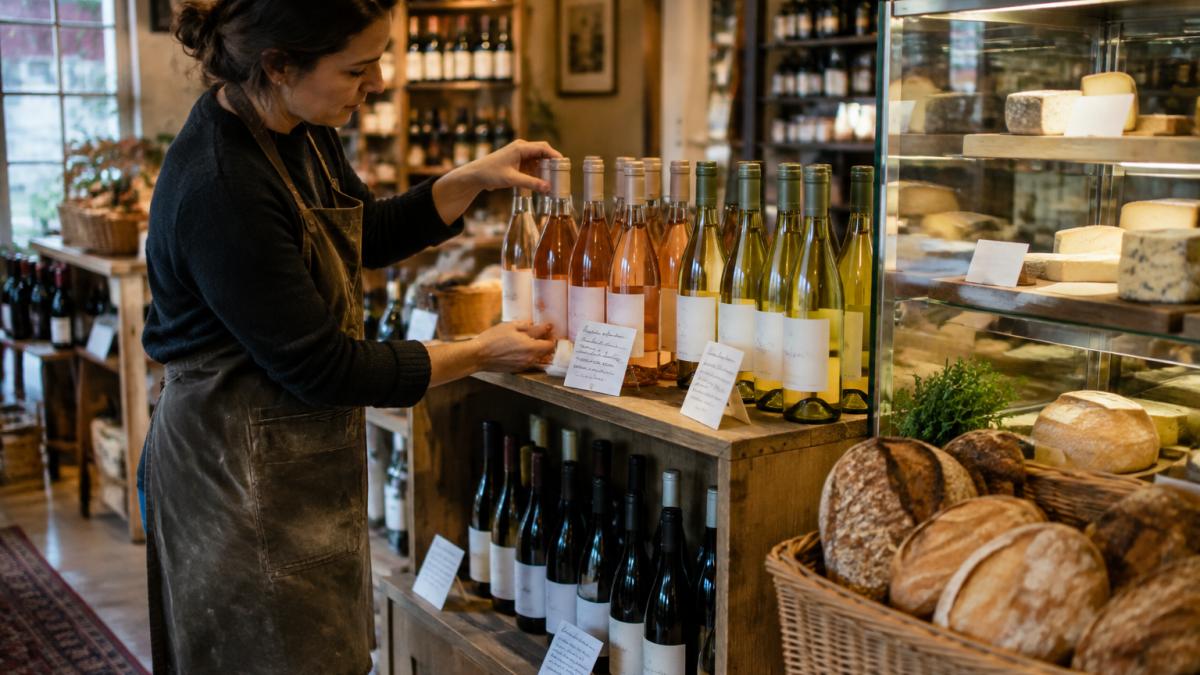
The last sentence of this marker is the required closing people sentence. It is: The woman is British.
Run the same refresh routine four times a year. It takes an afternoon and keeps the display feeling new. The difference between a display that sells and one that sits is in the specifics: which bottles you choose, how you pair them with the counter, and how you maintain the arrangement through the season.
- Clear and clean. Empty the display, wipe shelves, check dates. Remove any bottles past their best and note gaps in the log.
- Pick the season's food story. Use the counter as your starting point. Spring: young whites, light reds, and dry rosé with fresh cheeses, salads, and cured meats. Summer: chilled rosé, sparkling, and light reds with picnic foods, seafood, and soft cheeses. Autumn: richer reds and warming whites with aged cheeses, game, and mushrooms. Winter: sparkling, gift packs, and structured reds with festive charcuterie, pies, and hard cheeses.
- Choose 6 to 12 bottles. Fewer, better chosen. Build two or three pairing clusters, for example, a cheese-and-charcuterie cluster, a seafood cluster, and a vegetarian cluster. Each cluster should have a clear food anchor and a mix of price points.
- Reset the layout. Best sellers at eye level, story wines below. Keep one facing rule and leave a gap between clusters so the eye rests.
- Write fresh cards. New tasting notes and prices for every bottle. Check each card against the till before the display opens.
- Add one focal point. A small feature stack or endcap for the season's hero wine, placed where it catches the queue.
- Brief the team. Everyone should know the pairing line for each cluster and the price of the hero bottle.
Maintenance is part of the routine. Check the display daily for gaps, dust, and misplaced bottles. Rotate pairing cards weekly, not daily, so shoppers have time to notice them. At the end of the season, log what sold through and what stalled, that log becomes the starting point for the next refresh.
Watch out: a display that stays up a week too long teaches shoppers to ignore it. Set a date for the changeover and stick to it.
Run this same refresh routine four times a year to keep the display feeling new.
| Step | What to do |
|---|---|
| 1. Clear and clean | Empty display, wipe shelves, check dates, note gaps |
| 2. Pick the food story | Use the counter as your starting point |
| 3. Choose bottles | Choose 6 to 12 bottles, build two or three clusters |
| 4. Reset the layout | Best sellers at eye level, story wines below |
| 5. Write fresh cards | New tasting notes and prices for every bottle |
| 6. Add one focal point | Feature stack or endcap for the hero wine |
| 7. Brief the team | Everyone knows each pairing line and hero price |
Display fixtures, materials and the small-deli floor plan
Fixtures should fit the room you have. Most independent delis are short on floor space, so wall display and shelving beat freestanding racks.
Plan the floor before you buy. Measure the wall run, allow for a counter queue of at least 1.2 metres, and keep a clear path to the till. Position wine displays away from direct heat sources and out of the path of chilled air from open fridges, which can affect both wine quality and the fridge's efficiency.
Food safety matters when wine sits near chilled deli goods. Keep bottles on shelves that are easy to clean and not directly above open food. If you use a shared counter, place wine on a separate, wipeable surface and maintain the cold chain for the food side. Do not store wine in the same unit as unwrapped cheese or meat unless it is a dedicated, sealed display.
If you are sourcing wine to fill a new display, our buyer's guide to premium wines for delis covers what to look for in a range.
Best for: small delis with limited floor space. Skip if: you have a large food hall where a freestanding feature display can anchor the room.
Measuring display performance and building your next seasonal range
A display you cannot measure is a guess. Track three numbers for each seasonal setup: sell-through, units per transaction, and which pairing clusters move fastest.
Sell-through tells you if you chose the right quantity. Units per transaction tells you if the pairing story worked. Cluster performance tells you what to repeat next season.
Keep a simple log. Note the season, the bottles, the clusters and the results. After two or three cycles you will see clear patterns in what your shoppers reach for.
Use that log to build the next range. If a Portuguese white sold well beside cheese in autumn, plan a similar bottle for spring. If a cluster stalled, cut it.
That is where a focused importer helps. 79North Ltd brings small, family-owned Portuguese and Italian producers to independent delis, with native grape varieties you will not find on a supermarket shelf. Our portfolio includes distinctive bottles such as Herdade da Calada 2022 Vale da Calada Branco (£16.00), a fresh, food-friendly white that suits deli counters well.
Building a seasonal display that actually sells takes planning, the right bottles and a routine you can repeat. 79North Ltd can help you fill it with distinctive, small-batch wines from family-owned producers in Portugal and Italy. Our range features native grape varieties, sustainable wineries and bottles that stand out on any shelf. Get started with 79North Ltd and build a display your shoppers remember.
Frequently Asked Questions
How often should a deli refresh its seasonal wine displays?
Plan for four main refreshes a year, timed a few weeks before each season starts so stock and signage are ready. Between those, rotate the feature position every four to six weeks and replace any bottle that has sold through. A display that still shows the same six bottles after two months has stopped doing a job. Keep a simple calendar: spring and summer for lighter whites and rosé, autumn for fuller reds and cheese boards, winter for sparkling and gifting.
How can a small deli make the most of limited display space?
Work in vertical zones rather than spreading bottles flat. A freestanding rack or a slim wall display at eye level to 1.5 metres gives you a feature without losing floor space, and a gondola end can carry a seasonal story in under a square metre. Measure the gap you actually have before buying fixtures, and favour wood racks with adjustable shelves so the same unit works across seasons.
What signage should go on a seasonal wine display?
Three pieces do most of the work: a price card with the bottle size, a short tasting note in plain language, and a food pairing line pointing to something on your counter. Keep type large enough to read from a metre away and put the region and grape on the card, because customers buying Portuguese or Italian wine often look for those first.
How do I know if a seasonal wine display is working?
Compare units sold per week for the featured wines against the same wines before the display went up, and track units per transaction at the till. A feature position should lift both. Note which pairings customers actually buy together, then keep those combinations in the next refresh. If a wine sits untouched for three weeks, move it to a different height or pair it with a different food before dropping it. Record the results per season so next year's plan starts from evidence rather than guesswork.
