
Best Portuguese Wine Clubs for Rare Bottles
Table of Contents
- What Makes a Portuguese Wine Club Worth Joining for Rare Bottles
- How We Evaluated These Portuguese Wine Clubs
- Rare Portuguese Wine: What Trade Buyers Should Look For
- Small Producer Portuguese Wine: Why Provenance Matters
- Portuguese Wine Subscription UK: Pricing, Delivery and Membership Terms
- Port Wine Club Options and Fortified Wine Sourcing
- Which Portuguese Wine Club Suits Your Business
- Conclusion: Building a Rare Portuguese Wine List
- Frequently Asked Questions
Last Updated: October 4, 2026
What Makes a Portuguese Wine Club Worth Joining for Rare Bottles
Rare bottles are the hardest thing to buy well in the wine trade. This guide sets out what separates a worthwhile Portuguese wine club from a mailing list with a markup.
The first thing to understand is that rarity in Portuguese wine is not the same as scarcity by accident. Portugal has roughly 250 native grape varieties, many of them grown in small quantities by family estates rather than large groups, according to Wines of Portugal, the national wine trade body.
How Clubs Define and Verify Rarity
Rarity claims are where most clubs get vague, so ask for a definition in writing. A credible Portuguese wine clubs operator distinguishes low production, limited UK allocation, and genuine obscurity.
Verification is harder. A club should name the producer, region, vintage, grape and ideally the winemaker; "rare Portuguese red, limited release" is marketing, not provenance. Ask whether it buys direct from the estate or through a broker, direct relationships trace a bottle back to the cellar it left.
How We Evaluated These Portuguese Wine Clubs
Clubs can be judged on five criteria: sourcing model, transparency, regional spread, producer relationships and what happens when a wine runs out. Sourcing often comes first because it can determine everything else: a club importing directly can guarantee provenance, one buying on the open market cannot.
Transparency meant published pricing, clear delivery terms and no hidden minimums. Regional spread mattered because a club covering only the Douro is a Port specialist, not a Portuguese specialist.
The table below summarises what to weigh before joining anything.
| Criterion | What Good Looks Like | Red Flag |
|---|---|---|
| Sourcing | Direct from named estates | Unnamed "partner wineries" |
| Rarity claim | Bottle counts and allocation stated | "Limited release" with no figures |
| Regions covered | Multiple, including lesser-known | One region only |
| Terms | Published pricing and delivery | Quote-only, minimums hidden |
| Trade support | Realistic case sizes for small venues | Pallet-only commitments |
Rare Portuguese Wine: What Trade Buyers Should Look For
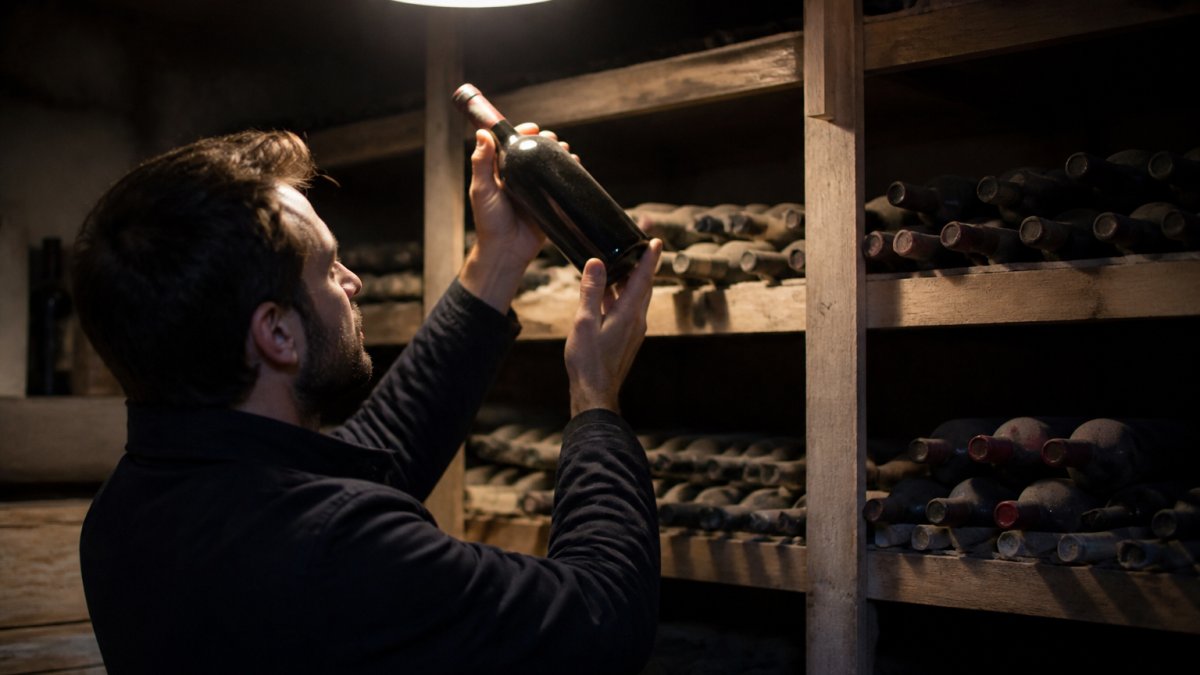
Trade buyers should look for provenance before points. A modest-rated wine from a named family estate beats a high-scoring bottle with no traceable origin, because you can tell its story and reorder it with confidence.
Four things decide whether a rare bottle earns its place on a list:
- A named producer and winemaker. Manz's Dona Fátima Jampal, for instance, is made by Ricardo Noronha from a grape variety the estate helped bring back from near extinction.
- A stated region and sub-region. Dão's Serra da Estrela sub-region tells you about altitude and granite soils; "Portugal" tells you nothing.
- Vintage specificity. A 2020 Arinto Reserva and a non-vintage white are different propositions for a by-the-glass list.
- Realistic case sizes. Six-bottle cases let an independent venue trial a wine without tying up capital.
Small Producer Portuguese Wine: Why Provenance Matters
Provenance matters because it is the only thing that cannot be copied. A large distributor can match your price on a well-known Douro blend tomorrow, but not a relationship with Casa Américo, a family estate in Dão working granite soils at 400 to 600 metres, or with Herdade da Calada in Alentejo.
Listing small producer Portuguese wine means buying a story you can put on a menu and a supply relationship you can build on. That story sells, and it protects you: a wine nobody else stocks cannot be undercut by the shop two streets away.
The trade-off is real: small estates have small volumes, and a wine that sells well may run out. Plan for rotation rather than permanence, and treat a sold-out line as proof the listing worked.
Portuguese Wine Subscription UK: Pricing, Delivery and Membership Terms
Pricing in a Portuguese wine subscription UK buyers can actually use should be published, per bottle, and inclusive of what you will really pay.
Most Portuguese-focused clubs fall into one of four membership shapes.
| Membership shape | Typical structure | What it means for rare bottles |
|---|---|---|
| Curated mixed case | 3, 6 or 12 bottles, monthly or quarterly | Rare bottles appear as one slot in a mixed case; you cannot choose them |
| Build-your-own allocation | Member selects from a live list, often quarterly | Rare bottles are listed with bottle counts and sell out fast |
| Tiered club | Entry, mid and top tiers with rising price and access | Rare and library releases are usually gated to the top tier |
| Wholesale/trade account | Named lines, case sizes, reorderable | Rarest bottles are offered as allocations, not subscriptions |
For rare-bottle intent, the build-your-own and tiered models are worth joining.
What to check before you sign
- Bottle count and frequency. A "monthly case" can mean three bottles or twelve. Confirm the number, not the cadence.
- Minimum commitment. Some clubs require three, six or twelve months before you can cancel. Others are rolling monthly. Ask in writing.
- Cancellation and pause rules. Check whether you can pause for a month, skip a shipment, or cancel mid-term, and whether any joining fee is refundable.
- Delivery charges. Confirm whether delivery is included, flat-rate, or scaled by order value, and whether surcharges apply to certain postcodes.
- Allocation rights. If the club offers rare or library bottles, ask whether members get first refusal, a lottery, or a fixed allocation, and whether that right survives a pause.
- Substitution policy. If a rare bottle sells out before your shipment, does the club substitute, credit, or hold your slot?
- Price basis. Confirm whether quoted prices are per bottle or per case, and whether they include duty and VAT.
How rarity is priced
Rare Portuguese bottles rarely carry a single clean market price, because so little production is traded.
Herdade da Calada 2020 Caladessa Reserva Tinto Vinho →
Trade buyers
For trade buyers, a wholesale account is usually better, because you need to reorder specific lines rather than accept a curated mixed case.
Port Wine Club Options and Fortified Wine Sourcing
Port wine club options are plentiful, and that is precisely the problem.
The four tiers that matter for rarity
- Ruby and basic tawny. Blended, non-vintage, widely available. Not rare, regardless of how the club describes them.
- Late Bottled Vintage (LBV). Single-vintage but filtered and ready to drink. Useful, not scarce.
- Vintage Port. Declared only in exceptional years, aged in bottle, and released in small quantities. This is where rarity begins.
- Single-quinta and library releases. One estate, one vintage, often held back by the producer for years before release. The rarest tier, and the one most clubs cannot access.
A club worth joining for rare Port should tell you which tier a bottle sits in, which quinta it came from, and whether the vintage was a general declaration or a single-quinta release.
What to verify on a rare Port listing
- Declaration status. Was the year a full vintage declaration, or a single-quinta release? Both can be rare, but they are different propositions.
- Bottling date and bottle age. Vintage Port is bottled young and aged in bottle. The bottling year and the release year both matter.
- Provenance. Was the bottle held in the producer's lodge, a bonded warehouse, or a private cellar? Storage history affects condition.
- Bottle condition. For older bottles, ask about fill level, label condition and whether the cork has been inspected.
- Allocation. How many bottles did the club receive, and how many are allocated to members?
Fortified sourcing beyond Port
A club that only handles Port is a Port merchant.
The same logic applies to sparkling. Portugal makes traditional-method sparkling wine from native grapes, still uncommon on UK lists.
Which Portuguese Wine Club Suits Your Business
The right club depends on what you sell. A fine-dining restaurant needs depth and provenance; a deli needs bottles that sell at a price point; a specialist wine shop needs range across regions and grapes.
| Buyer Type | What to Prioritise | Example Bottles |
|---|---|---|
| Fine-dining restaurant | Provenance, food pairing, by-the-glass versatility | Manz 2022 Dona Fátima Jampal (£35.00), Quinta Pousada de Fora 2020 Arinto Reserva (£26.00) |
| Independent wine shop | Regional spread, gift-ready price points | Herdade da Calada 2020 Caladessa Reserva Tinto (£21.00), Manz 2018 Espumante Extra Brut Reserva (£48.00) |
| Deli or food retailer | Everyday price, broad appeal | Casa Américo 2023 Sonante Dão Tinto and Branco (both £14.00) |
| Portuguese restaurant | Native grapes, regional authenticity | Casa Américo 2023 Sonante Dão Branco (£14.00), Herdade da Calada 2021 Vale da Calada Tinto (£17.00) |
If you are unsure where to start, ask a supplier to build a tasting case across three regions and two styles. Six bottles is enough to judge quality without overcommitting.
Conclusion: Building a Rare Portuguese Wine List
Building a rare Portuguese wine list is a sourcing problem before it is a marketing one. Getting the producer relationships right can make the list almost write itself; getting them wrong can mean competing on price for bottles anyone can buy.
That is the gap 79North Ltd exists to close. 79North Ltd imports directly from family-owned estates in Portugal and Italy, focuses on small producers often new to the UK market, and represents native grape varieties such as Jampal that rarely reach these shores. 79North Ltd works with independent retailers and restaurants at six-bottle case sizes, not pallet minimums.
If you want a portfolio that stands apart from what your competitors are pouring, let's talk.
Frequently Asked Questions
Are wine clubs good value for rare Portuguese bottles?
Value depends on what you compare. A club that sources small producer Portuguese wine directly from family estates can offer strong provenance and bottle quality. Look at the per-bottle price against what you would pay for the same wine elsewhere, then factor in delivery frequency, case size and whether the club verifies rarity. Clubs that publish their selection criteria and sourcing relationships tend to deliver more consistent value than those that do not.
Can you buy rare Portuguese wines through a wine subscription?
Yes, but availability varies. Some Portuguese wine subscription services focus on widely distributed brands, while others specialise in limited-production bottles from indigenous grapes such as Jampal, Bical or Encruzado. If rare bottles are your priority, check whether the club works directly with small producers, how it defines rarity, and whether it offers a wine case that changes with each vintage. A club with direct producer relationships is more likely to secure allocations of hard-to-find bottles.
What should I look for in a Portuguese wine club?
Focus on four things: sourcing model, rarity criteria, regional coverage and membership terms. A club that imports directly from family-owned estates can offer strong bottle provenance and authenticity. Check how it defines rare Portuguese wine, whether it covers multiple Portuguese regions and indigenous grapes, and what the delivery frequency and case sizes are. Transparent pricing and clear membership terms matter too, especially for trade buyers who need consistent supply for their wine list.
How can I find small producer Portuguese wines in the UK?
Specialist importers and curated wine clubs are the most reliable route. Look for clubs that name the producers they work with, highlight native grape varieties and explain the winemaking approach. A portfolio built around small producer Portuguese wine will typically include bottles from regions such as Dão, Vinho Verde, Alentejo and Lisboa, with tasting notes and food pairing guidance. If you run a restaurant or wine shop, ask about trade terms, case packs and whether the importer can represent the producer directly.