How to Overcome Challenges Growing Native Grape Varieties
Last Updated: October 29, 2026
Quick Summary
The main challenges in growing native grape varieties are climate shifts that disrupt their growing cycle, disease and pest pressure that is less studied than for mainstream varieties, and a thin commercial margin. Growers manage these by tracking phenology, scouting weekly, opening the canopy early and modelling the economics before planting native varieties.
- Track budburst, flowering and veraison dates each season to spot early or late drift.
- Scout undersides of young leaves weekly from budburst, and twice weekly in humid spells.
- Open the canopy early with shoot thinning and leaf removal before disease appears.
- Source cuttings from several mother vines to avoid a narrow genetic base.
- Build a break-even calculation per hectare before deciding between native and mainstream varieties.
Table of Contents
- Why Native Grape Varieties Are Worth the Effort
- Native Grape Varieties and Climate Change
- Managing Grapevine Pests and Diseases in Native Varieties
- Vineyard Management Challenges for Native Varieties
- Commercial Viability and Market Acceptance
- Conserving Indigenous Grape Varieties for the Future
- Sourcing Native Wines for Your Wine List or Shelves
- Frequently Asked Questions
Why Native Grape Varieties Are Worth the Effort
Native grape varieties are worth the effort because they give a wine list something no other supplier can copy.
The challenge is real, though. Growing these grapes is harder than growing mainstream varieties, and the rewards are not guaranteed. Growers face unfamiliar pests, unpredictable weather and a thin market for fruit and wine.
This guide covers those challenges in practical terms. We will look at what goes wrong in the vineyard, what to do about it, and how the economics work for growers and buyers alike.
Native Grape Varieties and Climate Change
Climate change is making native grape varieties harder to predict. Many of these varieties were selected over centuries for specific local conditions, so shifts in rainfall, frost timing and summer heat can throw their growing cycle out of step.
Vineyard managers commonly report three main pressures:
- Earlier budburst, which exposes young shoots to late spring frost
- Heat spikes at ripening, which can push sugar levels up while acidity falls
- Irregular rainfall, which raises the risk of fungal disease at the wrong moment
Good practice is to track the vine's phenology closely. Record budburst, flowering and veraison dates each season, and compare them with local weather data. Over a few years, that record shows whether a block is drifting early or late, and it helps you plan canopy and irrigation decisions before a problem arrives.
Growers also use site selection and canopy management to buffer heat. A north-facing slope or a site with cooling sea breezes can keep ripening more even.
Managing Grapevine Pests and Diseases in Native Varieties
Pest and disease pressure is one of the biggest practical hurdles. Native varieties are often less studied than mainstream ones, so there is less published guidance on how they respond to common threats.
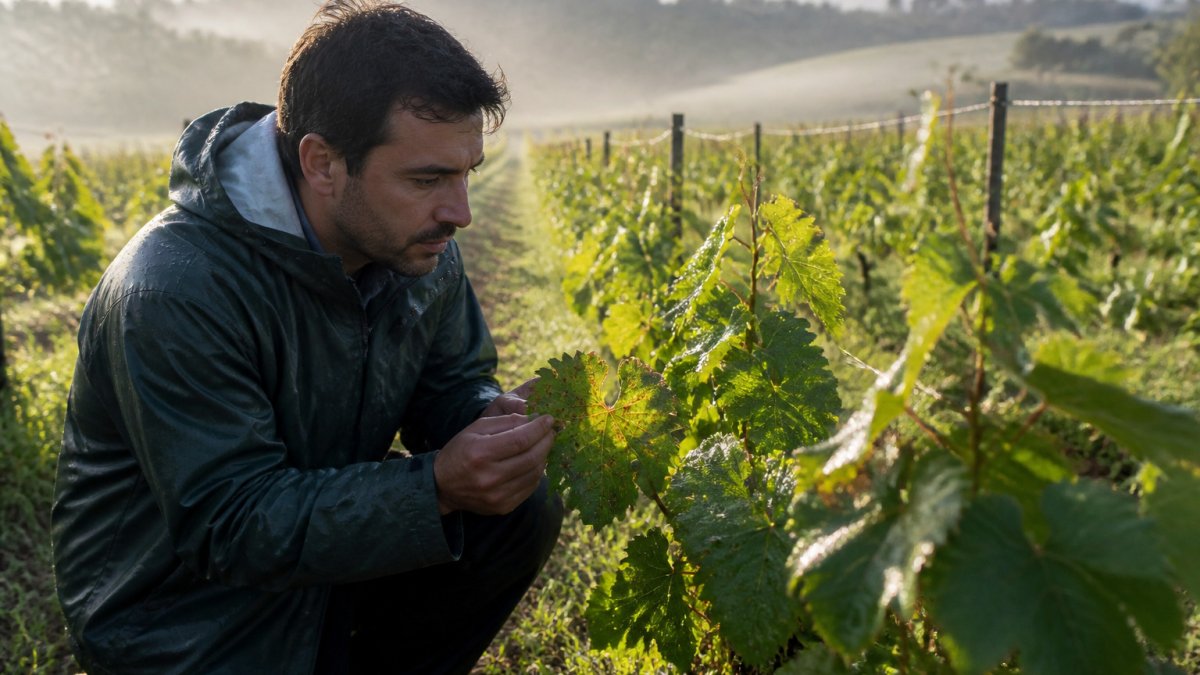
A common mistake is assuming a standard spray programme will work the same way on every variety.
The single most useful thing you can do is understand the disease triangle: a susceptible host, a virulent pathogen and favourable weather must all be present.
A step-by-step mitigation protocol looks like this:
- Map your risk before the season starts. Note which blocks are prone to morning dew, poor airflow or historic mildew pressure. These are your priority blocks for scouting and early intervention.
- Scout weekly from budburst, twice weekly in humid spells. Check the undersides of young leaves for the white down of downy mildew and the powdery grey film of powdery mildew. Look into the bunch zone, not just the canopy top.
- Open the canopy early. Shoot thinning and leaf removal around the fruit zone improve airflow and let spray penetrate. Do this before the canopy closes, not after disease appears.
- Time sprays to weather, not the calendar. Downy mildew needs warmth and leaf wetness; powdery mildew needs warmth but not free water. Use a local weather station or a disease-risk model to trigger sprays, and rotate modes of action to slow resistance.
- Keep records block by block. Note product, rate, date and the disease pressure you saw. Over two or three seasons this becomes your own variety-specific programme, far more useful than a generic textbook schedule.
- Clean up at the end of the season. Remove mummified berries and prune out wood with phomopsis lesions, because these are the inoculum source for next year.
Work closely with a local viticulture adviser who knows your region's disease pattern, and check product approvals and maximum residue limits before you buy.
The main pathogens and insects to plan for, and the practical response to each, are summarised below.
| Threat | Typical cause or trigger | Practical response |
|---|---|---|
| Downy mildew (Plasmopara viticola) | Warmth and leaf wetness | Scout undersides of young leaves; time sprays to weather |
| Powdery mildew (Erysiphe necator) | Warmth without free water | Scout weekly from budburst; rotate modes of action |
| Grey mould (Botrytis cinerea) | Tight bunches trapping moisture after rain | Open canopy early with shoot thinning and leaf removal |
| Phomopsis cane and leaf spot | Lesions carried over in wood | Prune out affected wood and clean up at season end |
| Grapevine moth, vine weevil, spotted-wing drosophila | Insect pressure, notably on ripening fruit | Monitor and manage as part of the spray programme |
Vineyard Management Challenges for Native Varieties
Day-to-day vineyard management for native varieties takes more attention than it does for widely planted grapes. Vigour, yield and ripening can vary sharply from one row to the next, and standard vineyard practices may need adjusting.
Soil health matters more than many growers expect. Healthy soil with active microbial life supports stronger root systems, which helps vines cope with drought and nutrient stress. Consider these basics:
- Test soil before planting and every few years afterwards
- Add organic matter, such as compost or cover crops, to build structure
- Avoid heavy compaction by limiting machinery use in wet weather
- Monitor vine vigour, and adjust nitrogen inputs to avoid excess growth
Watch out: over-fertilising to boost yield can produce dense canopies that trap moisture, which invites disease. Less can be more with native varieties.
Propagation and Clonal Diversity
Propagation is one of the least discussed challenges. Many native varieties have only a small number of certified clones, which limits genetic diversity in new plantings. A narrow genetic base can leave a whole vineyard exposed to the same pest or disease at once.
Manz 2022 Dona Fátima Jampal →
Practical steps help here. Source cuttings from several mother vines rather than one. Where possible, use a mix of clones within a block. Graft onto rootstocks suited to your soil, and check rootstock compatibility with the scion before ordering in bulk. Keep propagation records so you can trace a vine back to its source.
Commercial Viability and Market Acceptance
The commercial case for native varieties is strong, but it is not automatic. Smaller yields, specialist handling and a niche audience can all squeeze margins.
Most articles on native varieties stop at "niche appeal". The gap is the arithmetic. A small-scale grower deciding between a mainstream variety and a native one needs a simple return-on-investment model, and it does not have to be complicated. Build it around four lines:
- Yield per hectare. Native varieties often crop lower than mainstream ones. Use your own block records or your adviser's local figures rather than a national average, because the range is wide.
- Price per tonne or per bottle. Native fruit and wine usually command a premium, but only if the buyer values the story. A single-varietal bottling sold direct to trade will typically realise more per litre than fruit sold in bulk.
- Cost to grow. Add up labour (native varieties often need more hands-on canopy work), spray programmes, specialist advice and any extra propagation cost. These are the lines that erode the premium.
- Time to first meaningful crop. Young vines take several seasons to reach commercial yield, and grafted native vines can be slower to establish. Discount your returns accordingly.
A practical way to use this is a simple break-even calculation. Estimate your total cost per hectare for the year, divide by your expected yield in tonnes, and you have your break-even price per tonne. Compare that with what a buyer will actually pay for native fruit.
That is where market acceptance matters. Native wines tend to find loyal customers among sommeliers, specialist retailers and drinkers who want something different. A unique bottle can encourage guests to order by the glass and try something new.
Model the downside first. If the native block underperforms on yield in year three, can the business absorb it?
The best results come from pairing the wine with a clear narrative. Who made it, where it grows and why the grape matters should be easy to explain in a single sentence. The 5 Native Grape Vineyard ROI Factors That Shape Returns explore this in more depth. Likewise, Benefits of Stocking Native Grape Varieties explains how these bottles build customer loyalty.
Conserving Indigenous Grape Varieties for the Future
Conservation is about more than the wine in the glass. Many indigenous grape varieties survive only because a few growers chose to keep them alive. Once a variety disappears from the vineyard, its genetic traits and local history can be lost for good.
Growers and buyers can help. Planting and buying indigenous varieties keeps demand alive, which gives growers a reason to keep vines in the ground. Supporting producers committed to sustainable practices and cultural preservation also protects the wider landscape.
Sourcing Native Wines for Your Wine List or Shelves
If you are ready to add native wines to your list or shelves, start with a short shortlist and a clear buying brief.
Check these points before you commit:
- Single-varietal bottles let guests taste the grape on its own terms
- Consistent vintages make reordering easier and protect your margin
- Supplier reliability matters more than a low price on a single bottle
- Import paperwork and duty should be clear before the first order lands
Our Manz 2022 Dona Fátima Jampal is a practical place to start. It is a single-varietal white at £35.00, with notes of apricot, lime and citrus and a balanced acidity that suits fish and shellfish.
If you want guidance on suppliers, import rules and seasonal availability, read Sourcing Jampal Grapes for UK Menus: A 2026 Guide. For a broader view of wholesale options and licensing, see Source Premium Wines for UK Delis: A Buyer's Guide.
Frequently Asked Questions
What are the main challenges of growing native grape varieties?
Native grape varieties often struggle with low yields, uneven ripening and limited disease resistance compared with widely planted international cultivars. Many have small clonal diversity, which narrows the genetic toolkit growers can draw on when a vineyard faces stress. Commercial demand can also be hard to build, because buyers may not recognise the names. Growers usually address these issues through careful site selection, selective propagation and steady marketing, rather than expecting quick returns.
How does climate change affect native grape varieties?
Shifting temperatures and more erratic rainfall change when vines flower and ripen, which can disrupt the balance between sugar, acidity and flavour that a variety is known for. Some native varieties were selected for specific local conditions and may not adapt quickly to warmer, drier seasons. Growers often respond by adjusting canopy management, choosing later-ripening sites or trialling rootstocks suited to drought, while tracking phenology so harvest decisions stay informed.
Are native grape varieties more susceptible to pests and diseases?
Not always, but susceptibility varies widely between varieties and sites. Some native cultivars lack the resistance bred into newer crosses, so fungal diseases such as downy and powdery mildew can cause more damage if spray programmes are inconsistent. A practical protocol combines canopy airflow management, timely preventive treatments during wet periods and regular scouting, so problems are caught before they spread through the rows.
What is the difference between native, indigenous and international grape varieties?
Native and indigenous both describe grapes that developed in a specific region, though indigenous is often used for varieties originating in a particular country or area. International varieties, such as Chardonnay or Cabernet Sauvignon, have spread far beyond their origins and are grown across many wine regions. For buyers, native varieties usually offer a stronger sense of place, while international varieties offer familiar flavour profiles and easier market recognition.
Native grape varieties will always bring challenges, but they also bring character and loyalty that mainstream wines struggle to match. Get in touch with 79North Ltd to talk through your list, your customers and the native wines that could set your business apart. Let's talk.
