
Small Batch Wine Distribution: Key Benefits for Retailers
Table of Contents
- What Small Batch Wine Distribution Offers
- Greater Control Over Fermentation and Aging
- Direct-to-Consumer Relationships and Wine Clubs
- Managing Wine Import Paperwork for Restaurants
- HMRC Wine Import Requirements for Small Businesses
- Benefits of Working with Independent Wine Importers
- Sustainability and Artisanal Production as Market Differentiators
- Conclusion
Last Updated: August 17, 2026
What Small Batch Wine Distribution Offers
Small batch wine distribution represents a fundamentally different approach to how independent retailers and restaurants source their stock. Rather than relying on large-scale distributors with standardised portfolios, small batch wine distribution connects you directly to family-owned producers and innovative winemakers whose work would otherwise remain invisible in the UK market. This model transforms how you build your wine list, stock your shelves, and ultimately, serve your customers.
The distinction matters because small batch wine distribution isn't simply a smaller version of conventional wholesale. It's a different business model entirely. Where traditional distribution prioritises volume and efficiency, small batch operations prioritise discovery, relationship, and authenticity. For independent wine shops, restaurants, and specialty food retailers, this shift unlocks genuine competitive advantages that larger competitors cannot replicate.
At 79North Ltd, we work exclusively with premium, family-owned wineries from Portugal and Italy, producers who typically lack the resources or scale to navigate major distribution channels. By bridging that gap, we've observed firsthand how small batch wine distribution reshapes what independent retailers can offer their customers. The benefits extend far beyond simply having different bottles on your shelf.
Greater Control Over Fermentation and Aging
When you work with small batch wine distribution, you gain unprecedented visibility into how your wines are actually made. This isn't theoretical knowledge, it's practical control over the fermentation and aging processes that define what ends up in your customer's glass.
Small producers typically work with fermentation and aging methods that larger commercial operations abandoned decades ago. Temperature-controlled stainless steel fermentation allows winemakers to preserve delicate aromatics that industrial-scale production destroys. Extended aging in oak, sometimes 12, 18, or even 24 months, develops complexity that mass-market wines simply cannot achieve on their timeline or budget.
The critical difference is transparency. When you source through small batch wine distribution, you can discuss fermentation protocols directly with the winemaker or importer. You understand why a wine spent six months on its lees, how the batonnage process shaped its character, or what specific soil composition influenced its profile. This knowledge becomes part of your story when you're selling to customers.
Consider the Manz 2022 Dona Fátima Jampal, a white wine that exemplifies this principle. The producer fermented it in temperature-controlled stainless steel, then aged it for six months in new French oak using the batonnage process, a labour-intensive technique where the sediment is stirred regularly to build complexity. This level of detail simply doesn't exist in mass-produced alternatives. You can describe exactly what makes this wine distinctive, and that authenticity drives customer loyalty.
Small batch producers also experiment with aging in ways larger distributors would never permit. Acacia barrels, extended sur lie aging, or hybrid approaches combining stainless steel and oak, these methods become possible when your production volume doesn't demand standardisation. The result is wines with genuine character, not wines engineered to match a predetermined profile.
Direct-to-Consumer Relationships and Wine Clubs
Direct-to-consumer relationships fundamentally reshape your relationship with customers. Rather than selling inventory you've already purchased, you're facilitating a connection between your customer and a real producer story.
Small batch wine distribution enables wine club models that feel authentic because they are. Your customers aren't joining a generic wine club managed by a distributor's algorithm. They're joining a curated selection built on genuine discovery. When you source through direct relationships with producers, you can offer exclusive releases, limited vintages, or experimental batches that never reach mainstream distribution channels.
The mechanics work differently from traditional wholesale. Instead of placing orders based on what a distributor recommends, you're building your list around producers you've actually connected with. This creates natural talking points. Your staff can explain not just what a wine tastes like, but why the winemaker chose specific techniques, what challenges they faced in a particular vintage, or how their family's history shaped their approach to production.

Wine clubs built on small batch wine distribution also generate better retention because the offering feels genuinely curated rather than algorithmically selected. Customers perceive real curation, the sense that you've personally discovered something worth sharing, as more valuable than convenience. This perception translates directly into loyalty and higher lifetime value per customer.
For restaurants, direct relationships with producers create menu storytelling opportunities. Rather than listing a wine as "Portuguese white, £28," you're offering "Dona Fátima Jampal from Manz, a single-varietal white made from a grape variety the producer saved from extinction, fermented in temperature-controlled tanks and aged six months in French oak." That narrative sells at a premium, and it's authentic because you've built it on actual producer relationships.
Managing Wine Import Paperwork for Restaurants
The regulatory framework governing wine imports into the UK creates genuine complexity, but it's also where small batch wine distribution delivers tangible value. Most restaurant owners and independent retailers underestimate how much administrative burden direct importing creates.
When you import wine directly, you're responsible for navigating customs documentation, duty calculations, and compliance with food safety regulations. The paperwork alone, commercial invoices, certificates of origin, phytosanitary certificates where required, demands attention to detail that distracts from running your business. A single missing document or incorrect tariff classification can delay your shipment by weeks.
Working with an established small batch wine importer eliminates this friction. Your importer handles all documentation, manages customs clearance, and ensures compliance with current regulations. This isn't a minor convenience, it's the difference between ordering a wine and actually receiving it on schedule.
The practical benefit becomes apparent when you consider what happens without this support. Direct importing requires you to understand tariff codes, duty rates, and customs procedures that change periodically. You're also responsible for ensuring that imported wines meet UK labelling requirements, which differ from EU standards in ways that aren't always obvious. A professional importer absorbs this complexity, freeing you to focus on your actual business.
For restaurants specifically, the timing advantage matters enormously. When you need a particular wine for an event or seasonal menu change, delays caused by paperwork errors or customs misunderstandings become costly. An importer with established customs relationships can often expedite clearance, ensuring your wine arrives when you need it.
HMRC Wine Import Requirements for Small Businesses
The regulatory landscape for wine imports is governed by HM Revenue and Customs (HMRC) guidelines, which establish specific requirements for duty, labelling, and documentation. Understanding these requirements is essential, but compliance is where many small importers struggle.
HMRC requires accurate classification of wine under the correct tariff codes. Standard still wines face specific duty rates, sparkling wines face different rates, and fortified wines face yet another structure. Misclassification can result in underpayment of duty, which triggers penalties. The classification itself requires understanding the exact alcohol content, production method, and origin, details that must be verified against producer documentation.
Labelling requirements add another layer. Wines imported into the UK must display labels that comply with UK regulations, including alcohol content, allergen warnings (particularly sulphites), and producer information. These requirements differ from EU labelling standards, meaning wines legally sold in Europe may not be legal to sell in the UK without relabelling. This is a common surprise for retailers attempting direct imports.
Documentation requirements include commercial invoices, certificates of origin, and potentially phytosanitary certificates depending on the producer's location. Each document must be accurate and complete. Missing or incorrect information doesn't just slow your shipment, it creates compliance risks that can result in fines or seizure of goods.
For small businesses, the practical reality is that managing these requirements alone is rarely cost-effective. The administrative burden exceeds the savings you'd generate through eliminating an importer's margin, particularly for smaller order volumes. An experienced importer like 79North Ltd absorbs this complexity, ensuring every shipment arrives compliant and on schedule.
Benefits of Working with Independent Wine Importers
Independent wine importers occupy a unique position in the distribution supply chain. Unlike large distributors that manage thousands of SKUs across hundreds of producers, independent importers specialise in deep relationships with a curated selection of producers. This focus creates distinct advantages for retailers and restaurants.
The first advantage is genuine curation. An independent importer has visited the producers, understands their philosophy, and can articulate why their wines matter. This knowledge becomes part of what you're purchasing, not just bottles, but the context and story that makes them sellable. When your customers ask why you chose a particular wine, you're not reciting marketing copy from a distributor catalogue. You're sharing insights from someone who actually knows the producer.
The second advantage is flexibility in production methods and experimentation. Independent importers work with producers who wouldn't survive in a three-tier system requiring massive volume commitments. These are often the most innovative winemakers, people experimenting with native grape varieties, experimenting with natural fermentation, or challenging conventional approaches to aging. This experimental spirit creates distinctive wines that command premium positioning.
The third advantage is reliability within your specific niche. An independent importer focused on Portuguese and Italian family-owned producers understands your market better than a generalist distributor. They know which wines will resonate with your customer base, they understand your inventory constraints, and they can often accommodate smaller order quantities than large distributors require.
Consider the economics: a large distributor demands minimum orders that force you to commit capital to inventory you may not sell. An independent importer, working with smaller producers accustomed to modest volumes, can often work with more flexible order sizes. This matters enormously for independent retailers and restaurants managing tight cash flow.
The relationship itself becomes a competitive advantage. When you work with an independent importer, you're not one account among thousands. You're a valued partner whose feedback influences which producers they work with and which wines they prioritise. This relationship translates into early access to limited releases, the ability to special-order specific vintages, and genuine support when you need it.
Sustainability and Artisanal Production as Market Differentiators
Sustainability has moved from marketing language to genuine customer expectation. Small batch wine distribution naturally aligns with sustainability practices in ways that industrial-scale production cannot match.
Small producers typically practise sustainable viticulture by necessity, not certification. Managing a small vineyard manually allows for precision, selective harvesting, careful soil management, and minimal chemical intervention. Large-scale operations require efficiency that often conflicts with sustainability. A small producer can spend time on individual vine management; a large producer cannot.
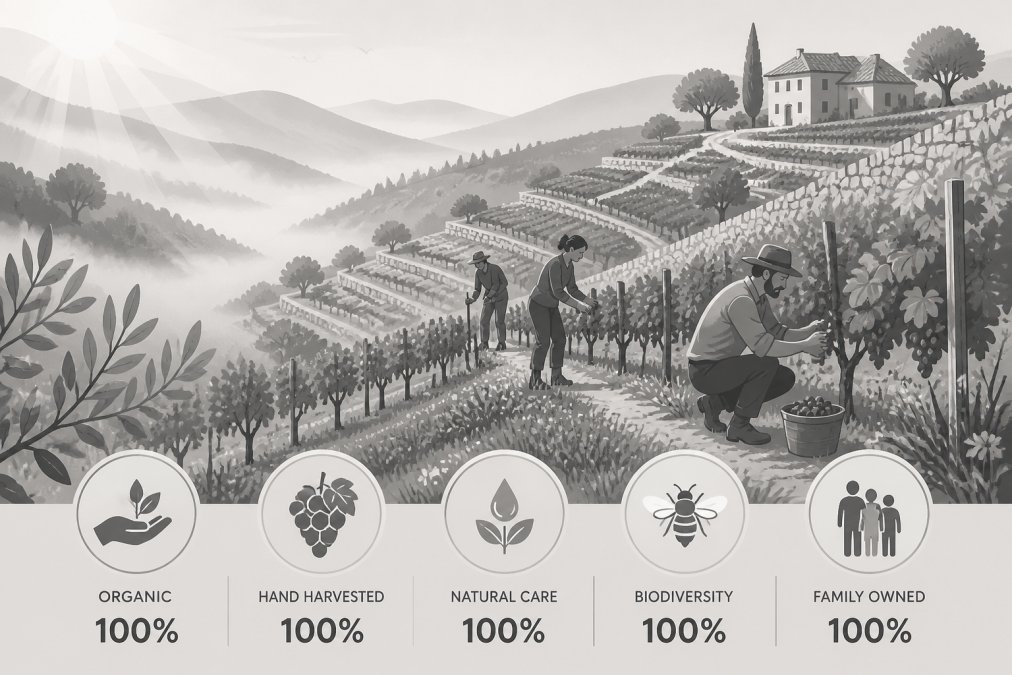
The sustainability story becomes part of your market positioning. When you source through small batch wine distribution, you can authentically claim that your wines come from producers committed to environmental stewardship. This isn't greenwashing, it's a genuine reflection of how small producers operate.
Artisanal production also commands premium positioning. Customers increasingly distinguish between wines made through industrial methods and wines made through craft approaches. Small batch wine distribution connects you directly to that artisanal positioning. You're not selling commodity wine; you're selling the work of a family that's been making wine for generations, using methods refined through experience rather than engineered for efficiency.
This positioning drives margin expansion. Wines marketed as artisanal, sustainably produced, and from small family producers command higher prices than commodity alternatives. Your customers understand they're paying for authenticity, not just alcohol content. That understanding supports premium pricing and stronger margins than you'd achieve selling mass-market wines.
The narrative also creates customer loyalty. People increasingly want to know where their wine comes from and how it's made. Small batch wine distribution allows you to tell that story authentically. Your customers aren't just buying wine, they're buying a connection to a producer and a commitment to sustainable practices. That emotional connection drives repeat purchases and word-of-mouth recommendation.
Conclusion
Small batch wine distribution reshapes how independent retailers and restaurants compete in a market dominated by large distributors. By connecting you directly to family-owned producers and innovative winemakers, this model delivers control over your sourcing, authenticity in your storytelling, and genuine differentiation in your market positioning.
The regulatory complexity, supply chain logistics, and administrative burden that make direct importing impractical become manageable when you work with an experienced importer. 79North Ltd specialises in exactly this, bridging the gap between premium Portuguese and Italian producers and independent UK retailers and restaurants. Our portfolio includes distinctive wines like the Manz 2022 Dona Fátima Jampal (£35.00), the Herdade da Calada 2020 Caladessa Reserva Tinto (£21.00), and the Casa Américo 2023 Sonante DOP Dão Tinto (£14.00), each offering the kind of authentic producer story and quality that small batch wine distribution makes possible.
Let's talk about how small batch wine distribution can transform your wine list and strengthen your competitive position.
Frequently Asked Questions
How does small batch wine distribution benefit independent retailers compared to mass-market suppliers?
Small batch wine distribution gives independent retailers access to distinctive, high-quality wines that mass-market suppliers don't carry. You gain exclusive portfolios featuring family-owned producers from Portugal and Italy, allowing you to differentiate your offering and command premium pricing. Working with importers like 79North means you're stocking wines customers can't find elsewhere, building customer loyalty and brand storytelling around authentic, artisanal production rather than competing on volume.
What are the primary logistical challenges when importing small-batch wines, and how do independent importers simplify them?
Direct sourcing from small European wineries involves managing customs documentation, HMRC compliance, minimum order volumes, and supply chain coordination. Independent wine importers handle these complexities for you. They manage HMRC wine import requirements, negotiate with producers, consolidate shipments to reduce costs, and ensure reliable supply even when production volumes are limited. This eliminates the administrative burden and risk of sourcing directly while maintaining the artisanal quality you seek.
How does small batch wine distribution impact inventory management for restaurants and shops?
Small batch wines require more strategic inventory planning because production volumes are limited and each vintage differs. However, this scarcity creates urgency and exclusivity that drives sales. Independent importers help by providing realistic production forecasts, managing allocation fairly across customers, and offering flexibility in order sizes. Unlike major distributors requiring large commitments, importers working with small producers understand the constraints and work with restaurants and shops of all sizes to build sustainable relationships.
Why is working with independent wine importers better than sourcing directly from European wineries?
Independent importers bridge the gap between small producers and UK retailers by managing regulatory compliance, logistics, payment terms, and quality assurance. They invest in relationships with family-owned wineries, understand their production cycles, and ensure consistent supply. Direct sourcing requires you to navigate HMRC requirements, customs clearance, currency risk, and minimum orders, often 6-12 bottles per selection. An importer consolidates these risks, handles paperwork, and provides expert representation so you access premium wines without the operational headache.
This article was written using GrandRanker